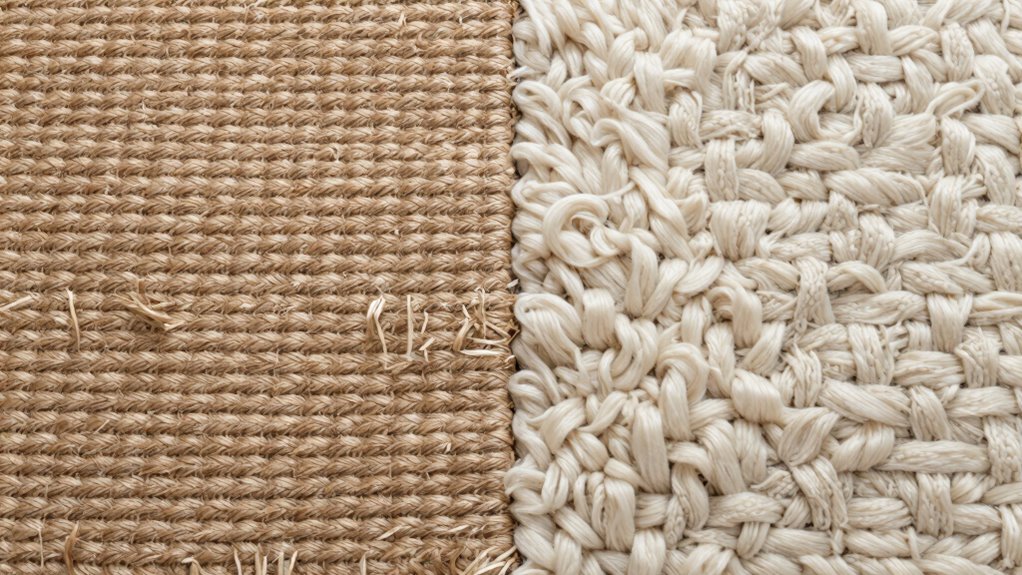

Jute rugs feel coarse and textured underfoot, offering a rustic vibe but less softness, while wool rugs are plush and comfy, providing a luxurious experience. Jute tends to wear faster in high-traffic areas and shows wear more quickly, whereas wool is more resilient and maintains its look longer. Cleaning jute requires gentle vacuuming and spot treatments, while wool benefits from regular vacuuming and mild care. Keep exploring to discover tips for maintaining their beauty and durability.

Get furniture and decor delivered free — and shop member deals
- Fast, free delivery on millions of items
- Access to Prime Big Deal Days deals on October 6–7
- Prime Video, Amazon Music and more included
Key Takeaways
- Jute rugs have a coarse, textured feel, while wool rugs are soft, plush, and more comfortable underfoot.
- Wool rugs are more durable and resilient in high-traffic areas compared to jute, which wears faster and frays over time.
- Jute requires gentle vacuuming and minimal moisture cleaning, whereas wool benefits from regular vacuuming and mild soap spot cleaning.
- Wool’s elasticity helps it maintain shape longer, while jute’s fibers are less elastic and prone to aging and fading.
- Proper maintenance, including avoiding harsh chemicals and periodic rotation, extends the lifespan of both rug types.
As an affiliate, we earn on qualifying purchases.
How Do Jute and Wool Rugs Feel Underfoot?
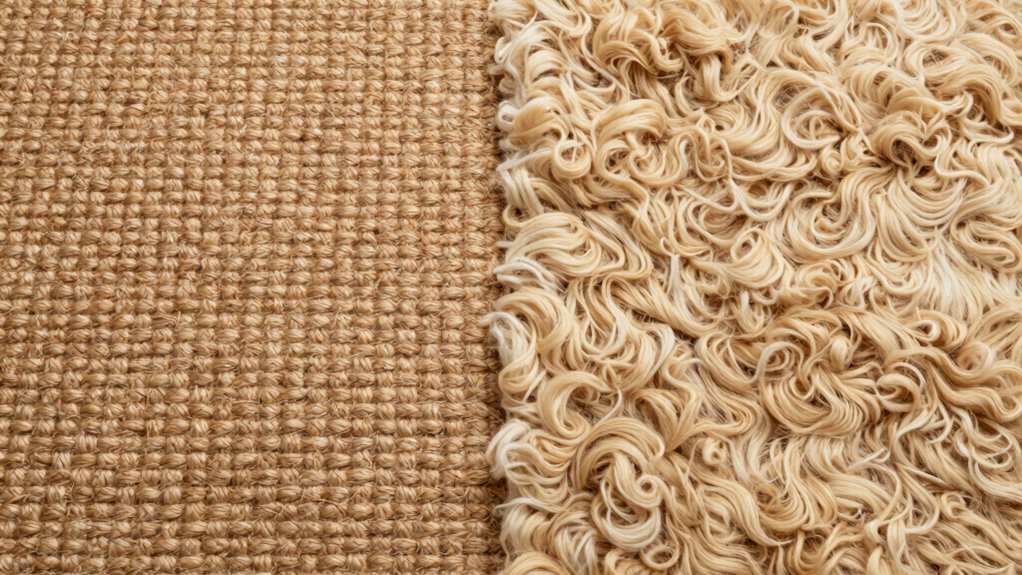
When you walk barefoot on jute and wool rugs, you’ll notice a distinct difference in how they feel underfoot. Jute rugs have a coarse, rough texture that offers less fiber softness, which can make standing or walking feel slightly abrasive. Wool rugs, on the other hand, provide a plush, cushioned surface that enhances foot comfort. Wool fibers are naturally soft and springy, making each step feel cozy and luxurious. The fiber softness of wool creates a gentle, warm sensation, perfect for areas where you want a soothing touch underfoot. Conversely, jute’s natural roughness provides a more rustic feel. If foot comfort is a priority, wool rugs clearly offer a more inviting experience, especially when you want a soft, comfortable surface to walk on daily. Additionally, wool’s textural softness can help reduce fatigue during prolonged standing.
How Durable Are Jute and Wool Rugs Over Time?
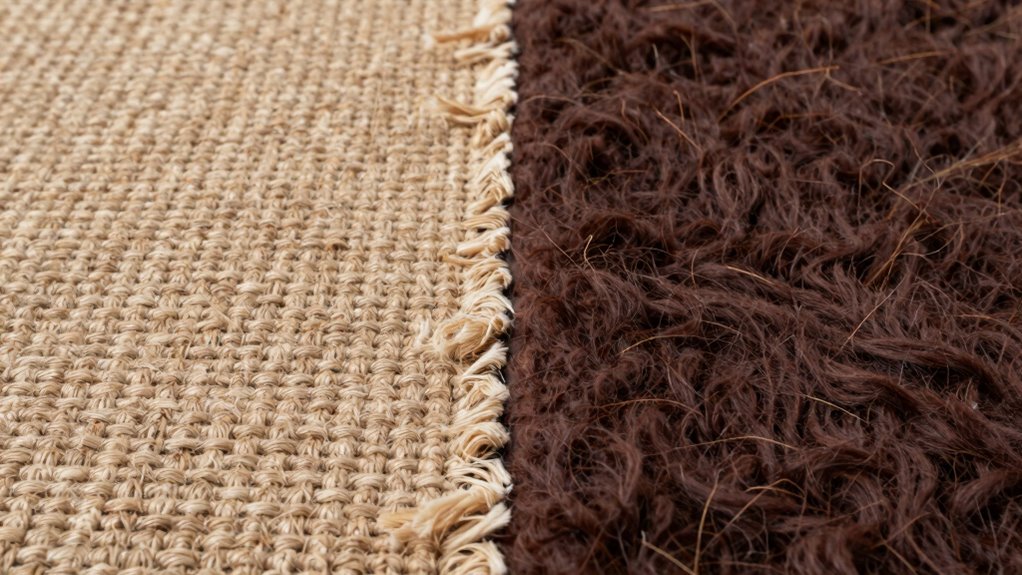
Jute and wool rugs differ markedly in their durability over time, with each material responding differently to foot traffic and environmental conditions. Jute’s fiber elasticity is lower, making it more prone to wear and fraying under heavy use. Its color retention tends to fade faster, especially in sunlight, leading to a less vibrant appearance over years. Wool rugs, on the other hand, are more resilient; their fiber elasticity allows them to bounce back from foot traffic, maintaining shape and texture longer. Wool also has excellent color retention, holding dyes well even with prolonged exposure to light. Additionally, fiber elasticity plays a crucial role in how well a rug withstands daily wear and tear, and wool’s superior elasticity gives it an edge in longevity. The natural resilience of wool fibers contributes significantly to its ability to endure long-term use better than jute. Overall, wool rugs tend to last longer and withstand daily wear better than jute, but both can show signs of aging depending on their environment and use.
How Easy Is It to Clean and Maintain Jute and Wool Rugs?
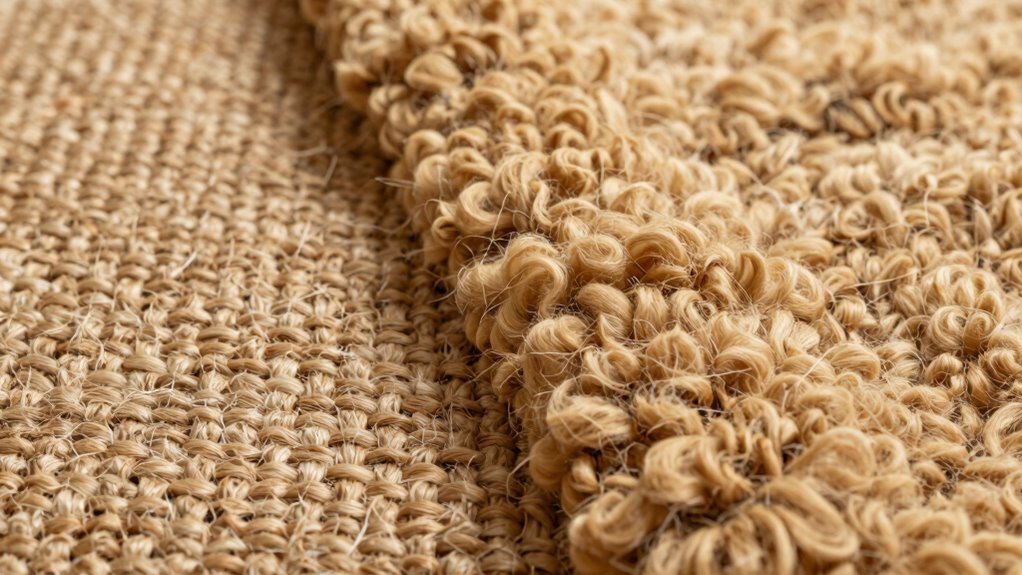
Cleaning and maintaining jute and wool rugs requires different approaches due to their distinct fibers. For jute, care tips include gentle vacuuming without a beater bar and avoiding excess moisture, which can cause mold or warping. Additionally, using appropriate cleaning techniques helps preserve the rug’s integrity. Wool rugs are more resilient to cleaning; regular vacuuming with a brush attachment helps, and spot cleaning with mild detergent works well. When it comes to allergy considerations, wool rugs can trap allergens, so frequent vacuuming is essential, especially if you have sensitivities. Jute rugs are less likely to harbor allergens but should still be kept clean and dry. Both types benefit from prompt stain removal and regular maintenance to keep them looking their best. Proper care guarantees longevity and reduces the need for deep cleaning. Understanding the fiber composition of each rug can help inform the best cleaning methods and extend their lifespan. Additionally, selecting appropriate cleaning methods based on fiber type can prevent damage and prolong the rug’s appearance.
What Are the Differences in Texture and Softness?
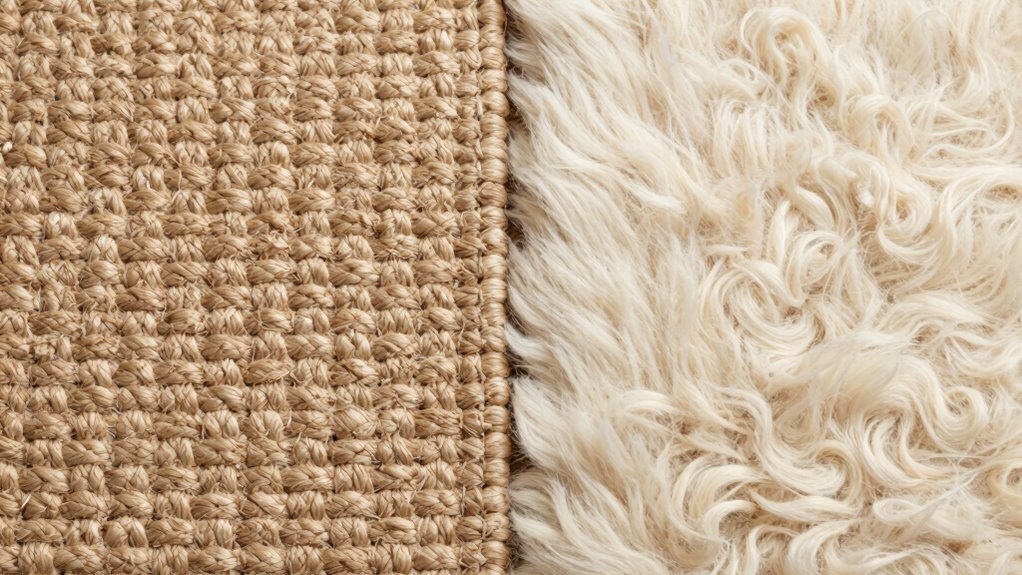
The textures and softness of jute and wool rugs differ markedly, influencing how you experience their comfort underfoot. In a texture comparison, wool rugs feel plush and cushioned, providing a cozy, inviting surface. In contrast, jute rugs have a coarse, natural feel that’s more textured and less yielding. The softness differences are significant: wool’s fibers are naturally soft and springy, making it pleasant to walk on barefoot. Jute, however, offers a rougher, more rigid texture that’s less forgiving. These tactile qualities affect your perception of comfort, with wool offering a gentle, luxurious feel, while jute presents a more rustic, firm surface. Additionally, fiber properties play a crucial role in how each material responds to wear and cleaning over time. Understanding the fiber resilience helps determine how well each rug withstands daily use and maintenance. Material durability also influences how each rug ages and retains its texture over years of use. Maintenance considerations can also influence how each rug type ages and retains its texture.
How Do Jute and Wool Rugs Wear Over Time?
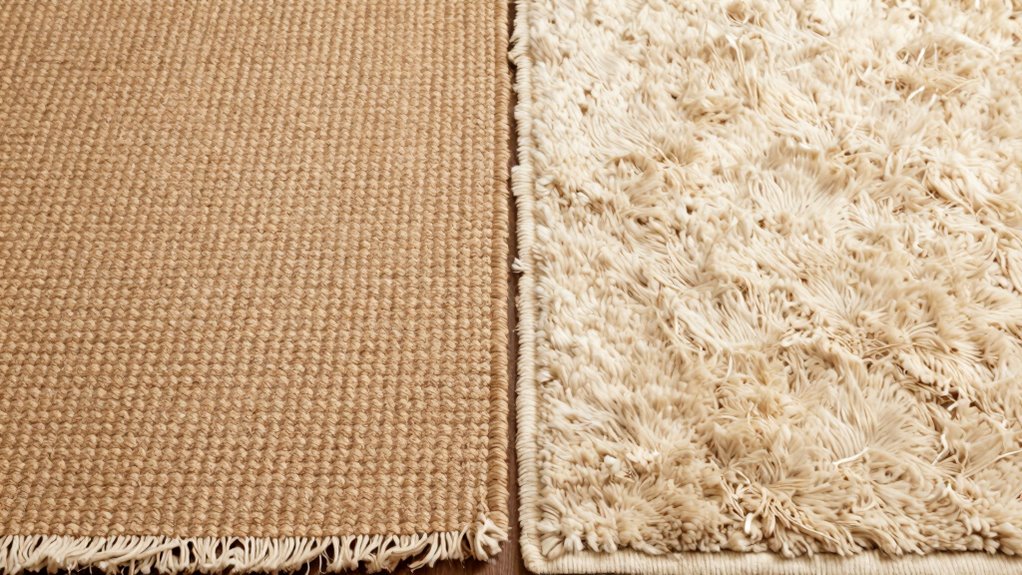
You’ll notice that how well your rug holds up depends on foot traffic and daily wear. Wool rugs tend to resist wear and tear better, making them suitable for busy areas, while jute may show signs of aging faster. Understanding these differences helps you choose a rug that stays attractive longer. Additionally, considering these wear patterns can influence how the rug ages, especially if it is not anchored securely. Proper maintenance and placement can further extend the lifespan of your rug, especially when considering daily wear patterns and environmental factors. Recognizing the material durability of each rug type can help you make informed decisions about placement and care to maximize longevity, including environmental impacts that affect material aging.
Durability Under Foot Traffic
When it comes to durability under foot traffic, the way jute and wool rugs hold up over time varies considerably. Jute tends to show wear quickly, especially in high-traffic areas, due to its fiber sensitivity and tendency to fray or thin out. While eco-friendliness makes jute a sustainable choice, it sacrifices resilience against constant foot traffic. Additionally, the fiber strength of wool contributes significantly to its longevity, allowing it to better withstand frequent use. Wool, on the other hand, offers superior durability; its dense fibers resist crushing and maintain their appearance longer. Wool’s resilience makes it suitable for busy households, although it’s less eco-friendly than jute. If you need a rug that withstands frequent use without quickly showing signs of wear, wool is generally the better option. Moreover, understanding the resilience of natural fibers can help you select a rug that aligns with your overall well-being and home environment. Additionally, proper maintenance techniques can extend the lifespan of both types of rugs and preserve their appearance over time.
Resistance to Wear and Tear
Jute and wool rugs resist wear and tear quite differently over time. Jute’s fiber resilience is lower, making it more prone to fraying and showing signs of aging quicker. Its material longevity isn’t as high, especially in high-traffic areas, leading to a worn appearance sooner. Wool, on the other hand, boasts superior fiber resilience, allowing it to withstand foot traffic and regular use better. Its natural elasticity helps it bounce back from surface damage, maintaining its appearance longer. Wool rugs tend to age gracefully, withstanding the test of time without significant deterioration. If you want a rug that holds up well over years, wool’s durability offers better resistance to wear and tear. Additionally, choosing the right rug protection can help extend the life of both materials, including proper cleaning techniques that minimize damage. Regular maintenance and professional cleaning can further prolong the beauty and integrity of wool rugs, especially when combined with seasonal rotation to prevent uneven wear.
What Are the Best Cleaning Methods for Jute Rugs?
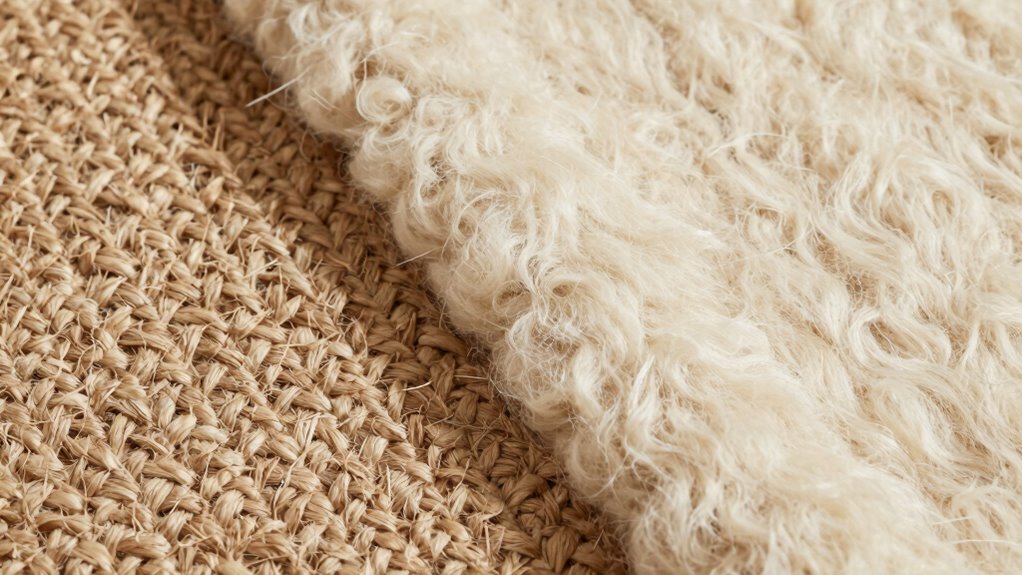
Cleaning jute rugs requires careful attention to avoid damage. You should learn effective spot cleaning techniques, proper deep cleaning procedures, and stain removal tips. Mastering these methods helps keep your jute rug looking fresh and lasting longer. Additionally, using appropriate cleaning solutions can prevent deterioration of the natural fibers.
Spot Cleaning Techniques
Since jute rugs have a natural, coarse fiber that’s prone to absorbing stains, quick and gentle spot cleaning is essential to maintain their appearance. Use a clean, white cloth to blot spills immediately—avoid rubbing, which can damage fibers. For stains, mix a small amount of mild detergent with water, then gently dab the affected area. Always test in a hidden spot first to ensure color preservation. Avoid excess moisture to prevent mold and fiber damage, supporting textile sustainability. For stubborn spots, a mixture of white vinegar and water can help lift stains without harsh chemicals. Regular spot cleaning keeps your jute rug looking fresh while protecting its natural texture and color.
| Technique | Description |
|---|---|
| Blotting spills | Quickly absorb liquids with a clean cloth |
| Mild detergent solution | Use sparingly on stains, dab gently |
| Vinegar and water | Natural stain lift, safe for fibers |
| Testing area | Check color stability before cleaning |
| Avoid excess moisture | Prevent mold, preserve fiber integrity |
Deep Cleaning Procedures
To effectively deep clean your jute rug, it’s best to avoid harsh chemicals and opt for gentle, natural methods that preserve its fibers. Start by vacuuming thoroughly to remove surface dirt and loose debris. For deeper cleaning, mix a small amount of mild, eco-friendly soap with water and gently blot the rug with a soft cloth or sponge, avoiding soaking the fibers. Natural fibers like jute are sensitive to excess moisture, so ensure you dry the rug completely afterward. You can also use a mixture of white vinegar and water as a natural disinfectant and odor neutralizer. Regular, eco-friendly cleaning helps maintain the rug’s texture and appearance while protecting its delicate fibers. Always test cleaning solutions on a small area first to prevent damage.
Stain Removal Tips
When a stain appears on your jute rug, acting quickly is key to preventing permanent damage. Because jute is made from natural fibers, it’s more susceptible to water damage and dye loss. First, blot the stain gently with a clean, dry cloth to absorb excess liquid—avoid rubbing, which can spread the stain. For stubborn spots, use a mixture of mild soap and water, applying it sparingly with a soft cloth. Always test a small hidden area first to check dye longevity, as natural fibers can fade or bleed. Never soak the rug or use harsh chemicals, as they can weaken the fibers and cause discoloration. Quick, gentle action helps preserve your jute rug’s appearance and structural integrity over time.
How Should You Care for Wool Rugs to Keep Them Looking New?
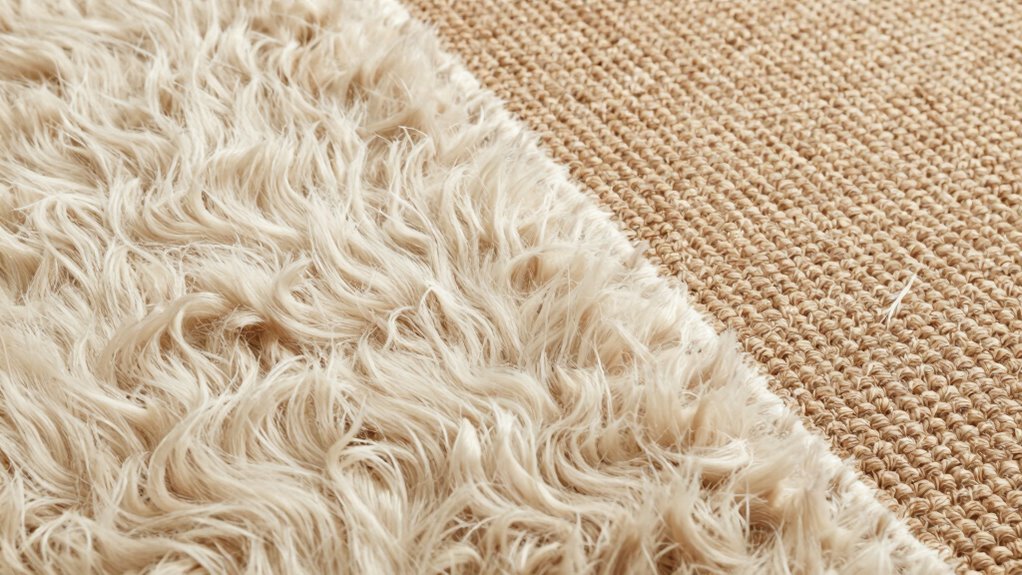
Keeping your wool rug looking its best requires regular care and attention. Since rug material differences affect how you should maintain your rug, understanding its unique needs is essential. Wool rugs are naturally resilient but can still show wear over time. To preserve their texture comparison, vacuum your rug weekly using a gentle setting to remove dirt and debris without damaging the fibers. Rotate the rug periodically to ensure even wear. Spot-clean spills immediately with a damp cloth and mild detergent. Avoid harsh chemicals or excessive moisture, which can harm wool. Professional cleaning once a year helps maintain its appearance. Regular upkeep prevents dirt buildup, keeps colors vibrant, and prolongs the rug’s lifespan, ensuring it stays cozy and attractive for years to come.
Which Rug Is More Durable for High-Traffic Areas?
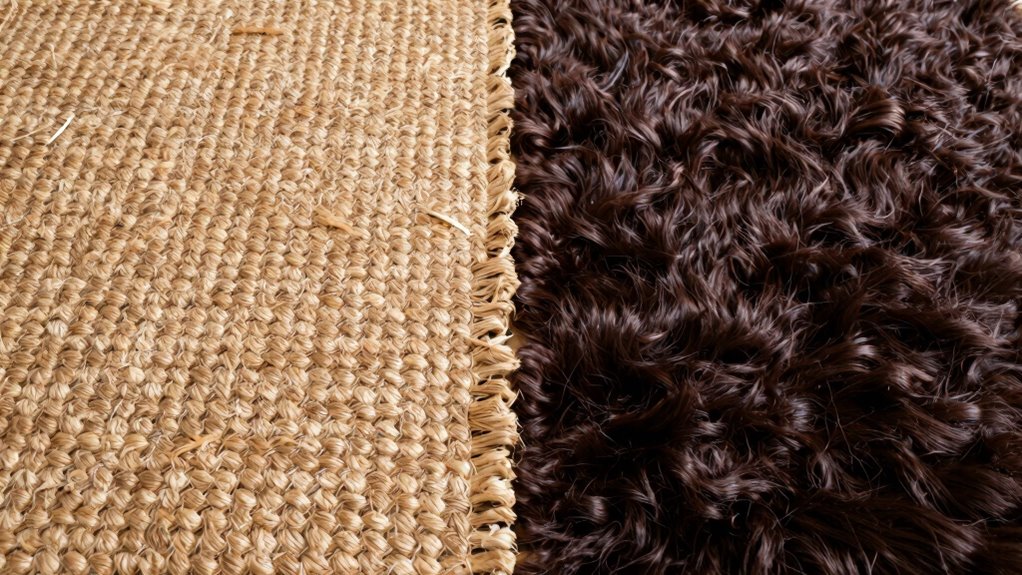
Choosing the right rug for high-traffic areas means prioritizing durability. When comparing jute and wool, consider their fiber composition. Jute fibers are coarse and strong, making them naturally resistant to wear and tear. Wool fibers are softer and more elastic, which helps them bounce back from foot traffic but may show signs of wear over time. In terms of aesthetic appeal, wool rugs often offer a plush, refined look that can hide minor damage, while jute rugs have a more rustic, textured appearance that can disguise surface wear. For high-traffic zones, wool provides better durability due to its resilient fiber structure, but if you prefer a tougher, more natural look, jute could be suitable. Your choice depends on balancing fiber strength with your home’s style.
Can You Mix Jute and Wool Rugs for a Cohesive Look?
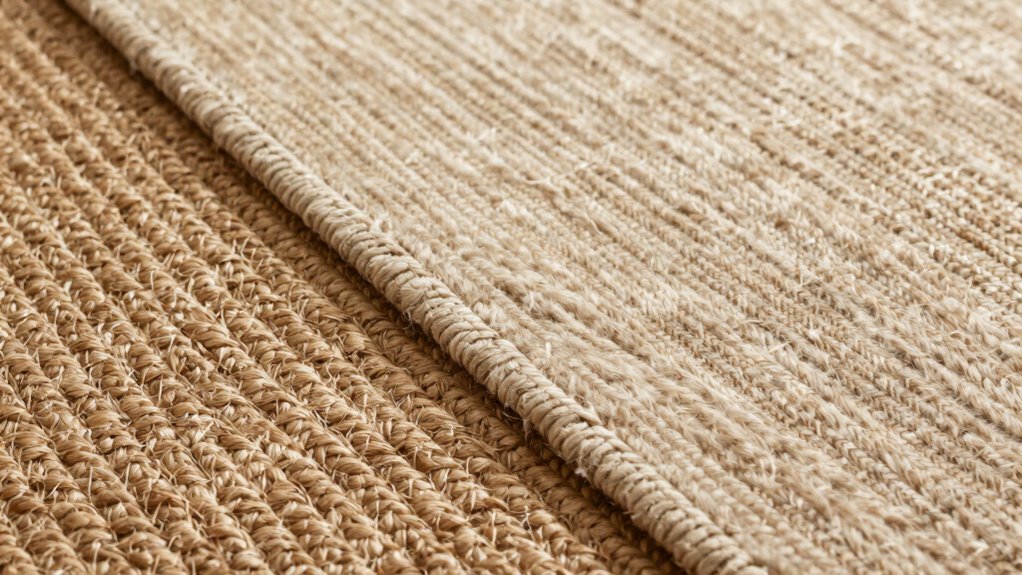
Mixing jute and wool rugs can create an appealing, layered look if done thoughtfully. To achieve a cohesive style, focus on color coordination—pair neutral tones with accent colors that complement each other. This helps unify different textures and materials. Pattern mixing is also effective; combine simple, subtle patterns with more intricate designs to add visual interest without clashing. You might place a plain wool rug alongside a patterned jute one, ensuring the overall palette remains harmonious. Keep in mind that balancing textures is key; wool’s softness contrasts nicely with jute’s coarser feel. With careful attention to color and pattern, mixing these rugs can add depth and personality to your space without sacrificing style.
Frequently Asked Questions
Are Jute and Wool Rugs Hypoallergenic?
Jute and wool rugs aren’t completely hypoallergenic, but they can be suitable if you have fiber allergies or household sensitivities. Wool may trap dust and allergens, which can trigger reactions, while jute tends to be less allergenic. Regular cleaning and vacuuming help reduce allergens. If you’re sensitive, consider choosing hypoallergenic rugs made from synthetic fibers or those specifically designed for allergy sufferers to keep your home healthier.
How Do Jute and Wool Rugs React to Pet Accidents?
Think of pet accidents like a test of resilience—your jute or wool rug needs to stand strong. Jute rugs tend to absorb liquids quickly, making pet stain removal more challenging and risking lingering odors. Wool rugs, however, resist odors better and are easier to clean. For both, quick action is key—blot the mess, avoid rubbing, and use pet-safe cleaners to protect your rug’s appearance and freshness.
Can Jute and Wool Rugs Be Dyed or Customized?
You can dye or customize jute and wool rugs, but your options differ. Wool rugs take dye well, offering vibrant, lasting colors for custom design possibilities. Jute rugs, however, are more limited; natural fibers don’t absorb dye easily, making dyeing less effective. If you want a unique look, wool provides better dyeing options, allowing you to create personalized designs that match your decor perfectly.
What Is the Environmental Impact of Producing Jute Versus Wool Rugs?
This is a battle of ecological footprints—jute rugs beat wool in sustainability! Jute is a fast-growing plant that requires minimal water and pesticides, making it highly eco-friendly. Wool, on the other hand, involves sheep farming, which can have a larger environmental impact due to land use and water consumption. If you care about sustainable sourcing, choosing jute rugs helps reduce environmental harm and supports eco-conscious practices.
Are There Specific Warranties or Guarantees for Jute and Wool Rugs?
Many jute and wool rugs come with warranty coverage or satisfaction guarantees from the manufacturer or retailer. You should check the specific warranty details, as coverage often includes defects in materials or craftsmanship. Wool rugs may offer longer guarantees due to their durability, while jute warranties might be more limited. Always read the fine print to understand what’s covered and ascertain you’re satisfied with your purchase.
Conclusion
Choosing between jute and wool rugs ultimately depends on your lifestyle and style preferences. While jute offers natural texture and affordability, wool provides softness and longevity. Notably, many find that blending both creates a unique, inviting space that balances durability with comfort. Sometimes, the best design choices happen when you least expect it—just like how a perfect rug can unexpectedly tie a room together effortlessly.
Fall Picks
fall essentials
As an affiliate, we earn on qualifying purchases.