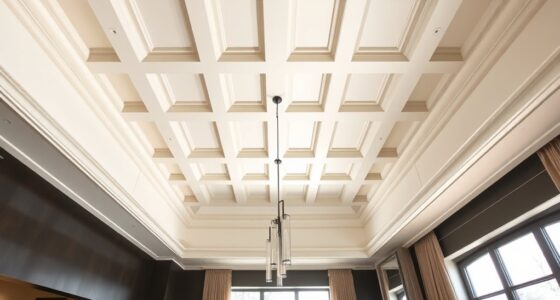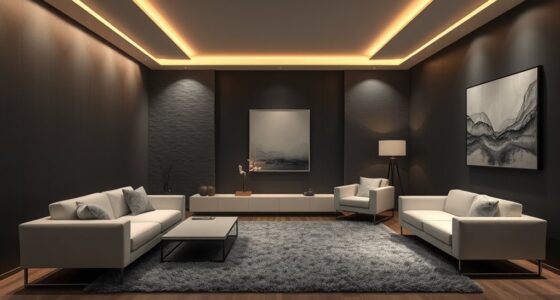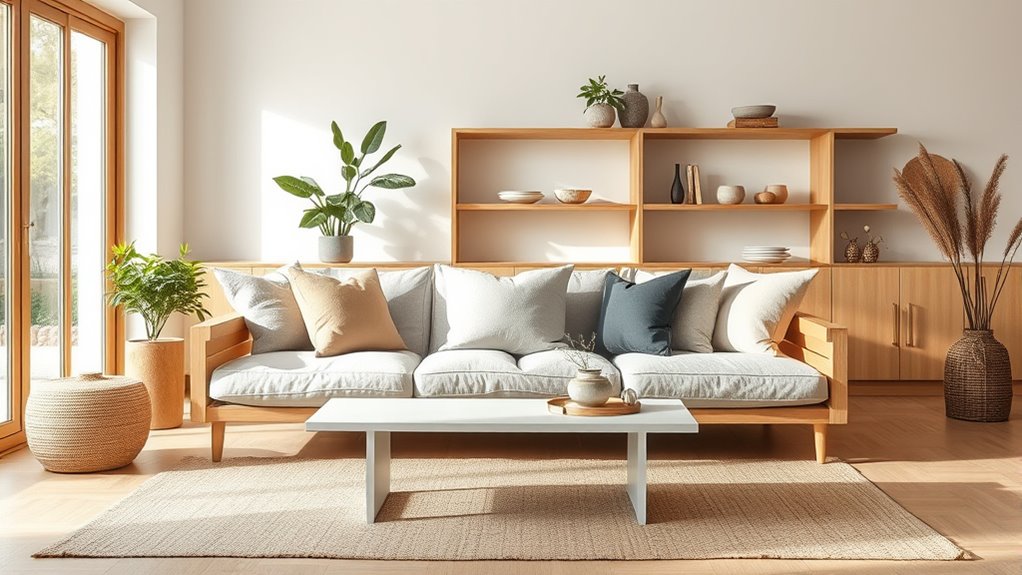

To create cozy and serene Japandi minimalism interiors, focus on blending Japanese tranquility with Scandinavian simplicity. Use natural materials like wood, stone, and linen, and stick to a muted, earthy color palette. Maximize natural light with large windows and light curtains, and keep spaces uncluttered for a calming effect. Incorporate soft textures and simple fixtures to add warmth and elegance. If you explore further, you’ll discover how these elements come together to craft your peaceful oasis.

Get furniture and decor delivered free with Prime
- Fast, free delivery on millions of items
- Prime Video, Amazon Music and more included
- Member-only deals all year
Key Takeaways
- Combine Japanese and Scandinavian elements with neutral palettes to create calm, understated interiors.
- Use natural materials like wood, stone, and linen for warmth and tactile appeal.
- Maximize natural light with large windows and soft, diffused lighting to enhance serenity.
- Maintain clutter-free spaces with clean lines and functional furniture for a peaceful atmosphere.
- Incorporate subtle textures and earthy tones to evoke coziness and promote mindfulness.
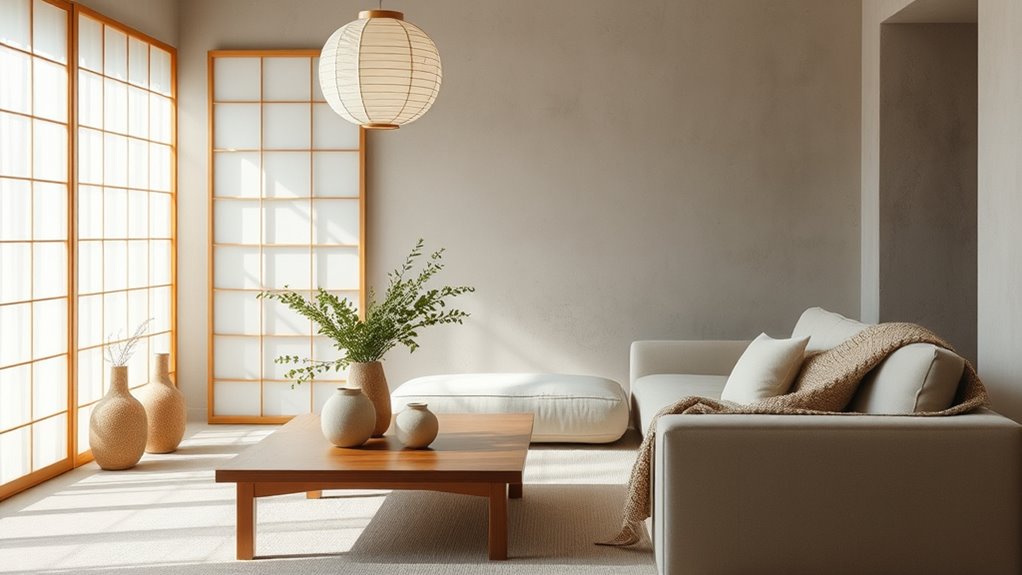
Have you ever wondered how to create a space that feels both serene and stylish? If so, Japandi minimalism might be just what you’re looking for. This design style blends the best of Japanese and Scandinavian influences, resulting in environments that exude calmness, functionality, and understated elegance. To achieve this look, start by embracing Scandinavian influences, which emphasize simplicity, light, and practicality. Scandinavian design often features clean lines, uncluttered spaces, and a neutral color palette that promotes tranquility. Incorporate these elements into your home by selecting furniture with sleek, minimal shapes and light wood finishes. The goal is to create an airy, open atmosphere that invites relaxation and ease.
Create a calm, stylish space with Scandinavian simplicity and minimalist elegance.
Natural material choices are at the heart of Japandi aesthetics. Think about using materials like wood, stone, linen, and wool, which add warmth and texture to your space. Wood, in particular, plays an essential role, whether you opt for light-colored oak or ash for your furniture and flooring. These natural materials not only enhance the visual appeal but also foster a connection to nature, which is indispensable in Japandi design. When selecting décor, prioritize handcrafted items and organic textures that feel authentic and grounding. For example, a woven basket or a ceramic vase can serve as subtle accents that reinforce the natural vibe without overwhelming the space. Additionally, understanding the expiration of materials can help maintain the longevity and beauty of your décor over time.
Color schemes in Japandi interiors lean toward muted, earthy tones—beige, soft gray, muted greens, and warm browns. These colors create a soothing backdrop that emphasizes simplicity and allows your natural material choices to stand out. Keep your walls and furniture in these gentle shades, and add pops of darker or contrasting hues sparingly through accessories like cushions or artwork. Clutter is your enemy here; maintain a tidy environment by choosing multifunctional furniture and keeping surfaces clear. This minimalist approach encourages mindfulness and makes your space feel more expansive and peaceful.
Lighting is also indispensable in achieving a serene Japandi space. Natural light should be maximized, so consider large windows and sheer curtains that diffuse sunlight softly. When artificial lighting is necessary, opt for simple fixtures with clean lines in warm tones to maintain the cozy, inviting atmosphere. With thoughtful use of Scandinavian influences, natural materials, calming colors, and strategic lighting, you can craft a Japandi interior that’s both cozy and serene—an oasis of calm amidst everyday chaos.
Japandi style minimalist furniture
As an affiliate, we earn on qualifying purchases.
As an affiliate, we earn on qualifying purchases.
Frequently Asked Questions
How Can I Incorporate Japanese and Scandinavian Elements Effectively?
You can effectively incorporate Japanese and Scandinavian elements by using fusion techniques that blend clean lines with natural textures. Focus on cultural symbolism, like minimalist Zen-inspired decor alongside Scandinavian hygge accents. Keep your color palette neutral, and add cozy textiles and simple wooden furniture to create harmony. Balance the serene simplicity of both styles, allowing each to complement the other, resulting in a cozy, yet refined space.
What Are Common Color Palettes in Japandi Interiors?
You’ll find that neutral tones and earth hues are common in Japandi interiors, creating a calming and balanced atmosphere. Think soft beiges, warm greys, and muted browns, complemented by subtle accents of black or deep green. These colors work together to keep the space serene and cozy, emphasizing simplicity and natural beauty. Stick to a pared-down palette, and you’ll achieve that quintessential Japandi look of effortless elegance and tranquility.
How Do I Choose Furniture for a Minimalist Japandi Space?
To choose furniture for a minimalist Japandi space, focus on sustainable materials like bamboo or reclaimed wood to add warmth and eco-friendliness. Opt for multi-functional furniture pieces that maximize space without clutter, such as fold-away tables or storage ottomans. Keep lines simple and clean, prioritizing quality over quantity. This approach creates a serene, cozy environment that balances functionality with the aesthetic harmony typical of Japandi design.
Are There Specific Decor Items That Define Japandi Style?
You’re drawn to decor items that blend simplicity, natural materials, and subtle elegance. Traditional tatami mats create warm, textured flooring, while woven baskets add functional charm and a touch of craftsmanship. These items embody Japandi’s essence—minimal yet meaningful, cozy yet serene. Incorporate them into your space to define the style, emphasizing harmony, balance, and a connection to nature. These pieces make your interior truly reflect Japandi’s calm, understated beauty.
How Can I Maintain a Clutter-Free Japandi Home?
To keep your japandi home clutter-free, focus on smart storage solutions like sleek shelves and hidden compartments that blend seamlessly with your decor. Establish regular cleaning routines to maintain serenity and order. Limit your decor to essential, meaningful pieces to prevent excess. By staying consistent with tidying and choosing functional storage, you’ll preserve the minimalist, cozy atmosphere that makes japandi style so inviting and peaceful.
Conclusion
Embracing japandi minimalism creates a cozy, serene space that balances simplicity with warmth. Some might think it feels too sparse or cold, but with the right textures and subtle accents, it becomes inviting and personal. You don’t have to sacrifice comfort for clean lines—just choose soft fabrics and natural elements. Ultimately, this style proves that less truly is more, offering you a peaceful retreat that’s both functional and beautifully calming.
Halloween Picks
halloween
As an affiliate, we earn on qualifying purchases.