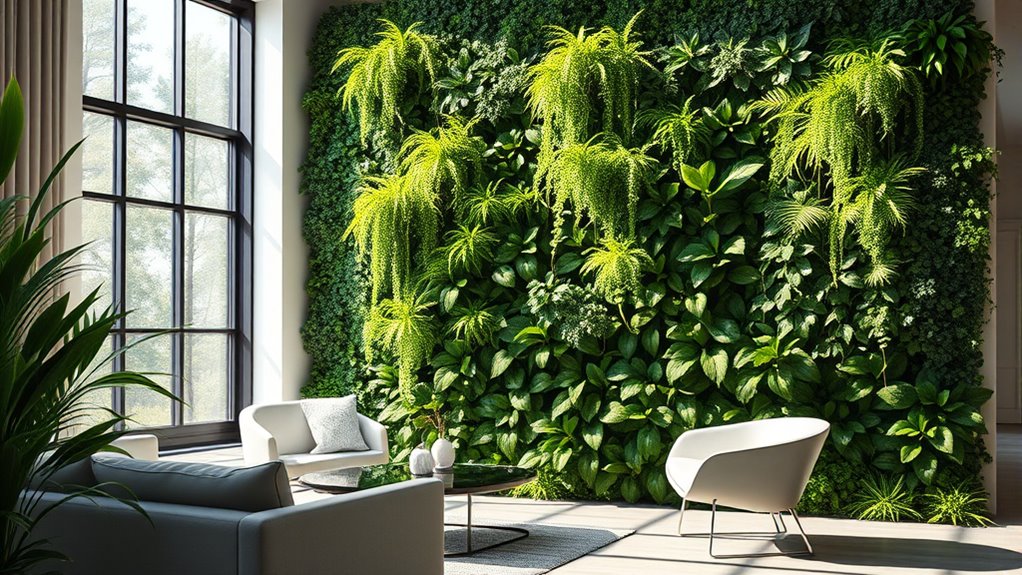

Biophilic design takes your space to the next level by incorporating lush plants, living walls, and natural materials that boost well-being and aesthetic appeal. With vibrant vertical gardens, you can improve air quality and create a calming environment. Using warm wood and stone textures enhances authenticity and comfort. Embracing these elements helps you foster a stronger connection to nature indoors. Keep exploring to discover how these innovative features can transform your environment into a truly revitalizing space.

Get furniture and decor delivered free with Prime
- Fast, free delivery on millions of items
- Prime Video, Amazon Music and more included
- Member-only deals all year
Key Takeaways
- Incorporate living walls and vertical gardens as focal points to enhance visual interest and improve indoor air quality.
- Use sustainable, low-maintenance plants to create lush, vibrant environments that promote relaxation and well-being.
- Combine natural materials like wood and stone with greenery to evoke warmth and organic authenticity.
- Engage senses through tactile elements and plant tending, fostering mindfulness and emotional connection.
- Design spaces that seamlessly integrate biophilic elements for a harmonious, calming atmosphere that boosts productivity and health.
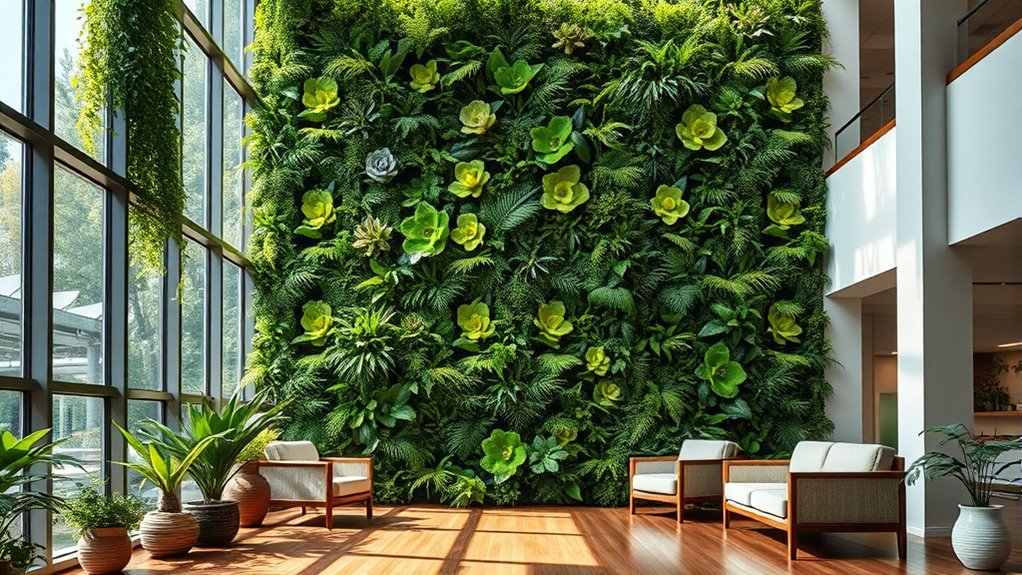
Biophilic design connects people with nature by integrating natural elements into built environments, creating spaces that feel more vibrant and calming. When you incorporate indoor greenery into your space, you immediately introduce a gust of fresh air that refreshes the mind and reduces stress. Plants aren’t just decorative; they serve as living, breathing elements that enhance your environment’s aesthetic and psychological appeal. You might find yourself drawn to lush, leafy plants that soften harsh lines or vibrant succulents that add pops of color. The key is choosing greenery that thrives indoors, providing a sustainable way to boost the ambiance without demanding too much maintenance.
Indoor greenery refreshes your space, reduces stress, and boosts your environment’s aesthetic and psychological appeal.
Natural materials further deepen this connection to nature, grounding your space in authenticity and organic beauty. Think about using wood, stone, bamboo, or cork for furniture, flooring, or accents—these materials evoke a sense of warmth and timelessness that synthetic options can’t match. When you combine natural materials with indoor greenery, the effect becomes even more powerful. For example, a wooden console table adorned with potted plants creates a cohesive look that feels both inviting and serene. Natural materials also improve the quality of your indoor air, contributing to a healthier environment overall.
Incorporating indoor greenery and natural materials isn’t just about aesthetics; it’s about creating a space where you feel more connected to the natural world. You can set up vertical gardens or living walls, which act as focal points and bring a lush, vibrant energy into your home or office. These living walls are more than just visual statements—they also improve air quality and help regulate humidity. As you tend to your plants, you engage in a calming activity that grounds you, making your environment more than just visually appealing but also emotionally nurturing.
Moreover, the tactile experience of natural materials adds another layer of sensory engagement. Running your hand over a smooth wooden surface or feeling the rough texture of stone can evoke a sense of grounding and mindfulness. When you combine these elements thoughtfully, your space transforms into a sanctuary that promotes well-being and productivity. Biophilic design isn’t just a trend; it’s a practical way to forge a stronger bond with nature, right inside your own environment. By embracing indoor greenery and natural materials, you create a harmonious setting that lifts your spirits and enhances your everyday experience.
As an affiliate, we earn on qualifying purchases.
Frequently Asked Questions
How Does Biophilic Design Impact Indoor Air Quality?
Biophilic design improves indoor air quality by actively reducing indoor pollutants and enhancing natural air purification. When you incorporate plants and living walls, they absorb toxins like VOCs and carbon dioxide, releasing fresh oxygen. This process helps create healthier environments, making the air cleaner and more breathable. You’ll notice better air quality, increased comfort, and a more vibrant space, all thanks to the natural benefits of integrating greenery indoors.
What Are the Best Plant Species for Living Walls?
Did you know that over 70% of indoor air pollution comes from volatile organic compounds? For your living wall, choose hardy, air-purifying plants like pothos, snake plants, and ferns. When it comes to plant selection, focus on species with low maintenance needs. Proper plant care guarantees they thrive, creating a vibrant, healthy living wall that improves air quality and enhances your space effortlessly.
How Does Biophilic Design Influence Mental Health?
Biophilic design boosts your mental health by providing psychological benefits like improved mood and focus. When you incorporate natural elements such as plants and living walls, you experience stress reduction and increased relaxation. These environments help you feel more connected to nature, reducing feelings of anxiety. By surrounding yourself with greenery, you create a calming space that promotes overall well-being, making it easier to manage daily stress and enhance mental clarity.
Are There Maintenance Tips for Living Walls?
Imagine your living wall as a vibrant jungle, teeming with life. To keep it thriving, you should regularly water your plants, ensuring moist roots without overwatering. Keep an eye out for pests, and promptly control any infestations to prevent damage. Trim dead or yellowing leaves, and check your watering schedule seasonally, adjusting as needed. With attentive care, your living wall remains lush, healthy, and a stunning focal point.
Can Biophilic Design Be Integrated Into Small Spaces?
Yes, you can definitely incorporate biophilic design into small spaces. Focus on urban greenery by using vertical gardens or compact planters to optimize space. You might also consider wall-mounted plant systems or mini indoor gardens that add natural elements without cluttering. These strategies enhance your environment, promote well-being, and make the most of limited space, creating a calming, nature-inspired atmosphere right in your home or office.
Conclusion
Embracing biophilic design is like opening a window to nature’s soul within your space. By incorporating plants and living walls, you don’t just decorate—you create a sanctuary that breathes life and energy into your environment. It’s as if nature’s heartbeat syncs with yours, turning your surroundings into a vibrant, living masterpiece. So go ahead, let nature’s touch turn your space into a lush, inspiring oasis where every breath feels like a fresh start.
Fall Picks
fall essentials
As an affiliate, we earn on qualifying purchases.