
TL;DR

Get furniture and decor delivered free with Prime
- Fast, free delivery on millions of items
- Prime Video, Amazon Music and more included
- Member-only deals all year
Interior designers interviewed by Livingetc say home gyms remain part of luxury residential projects, even as group workouts and fitness studios offer social alternatives. The reported shift is toward spaces planned with the home’s architecture and broader wellness needs in mind, though the report provides no market data or evidence of how widespread the trend is.
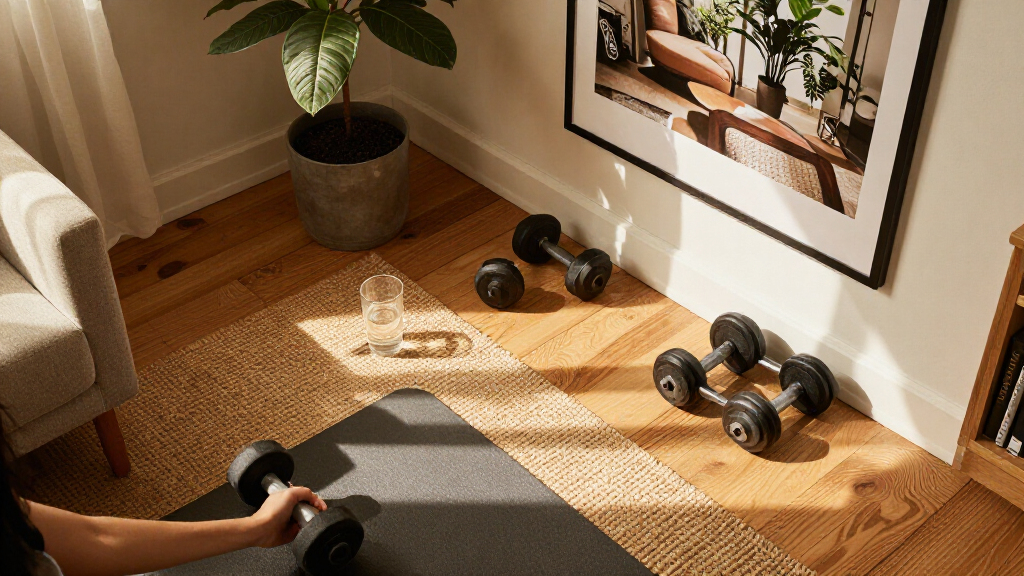
Home gyms remain in demand in luxury residential design, but designers interviewed by Livingetc say their role is changing: instead of treating them as rooms for fitness equipment alone, clients are considering them as integrated wellness spaces shaped by the home’s architecture and routines. The report comes as group workouts and fitness studios offer exercise a more social setting, but it does not establish whether those trends are reducing home-gym use.
Interior designer Nina Maya said home gyms remain an important part of the brief for modern luxury homes. She told Livingetc that the shift is in the ambition behind the spaces: designers are considering location, outlook and connections to other parts of the house earlier in the planning process. In a project at Pavilion House in Avalon, Australia, Maya described a gym with broad glazing overlooking the pool and garden, and equipment finished in walnut and white leather.
Designer Rebecca Hughes also told the publication that demand remains strong, while the focus has moved beyond function. She described gyms as part of a home’s overall design and lifestyle offering. In a historic-house project, her team paired contemporary exercise space with the property’s original timber beams, aiming to combine modern wellness facilities with the building’s character.
Gabriele Zanni, co-founder of Alama Studio, said clients increasingly want fitness areas to feel like part of the home rather than a separate equipment room. Designers cited in the report described spaces that may combine exercise with stretching and recovery amenities such as a sauna, steam room or cold plunge. Their examples and observations reflect professional experience; the article does not include sales figures, a survey or other data quantifying demand.
Why Home Workouts Still Have a Place
The report points to a design question for homeowners weighing private convenience against social fitness. Run clubs, group Pilates and boutique studios can make exercise a way to meet people, while a home gym offers a different benefit: access to movement and recovery facilities without leaving the house. The two options are not necessarily alternatives, and Livingetc does not report that one is replacing the other.
For people planning or renovating a home, the shift described by designers could affect more than equipment choices. A gym considered early in a project can be positioned for daylight, views, storage and movement between activities, rather than fitted into leftover space. The examples are chiefly from luxury residential work, so they do not show how typical these facilities are in ordinary homes or what they cost.
Products Worth Considering

Ring Alarm Pro 14-Piece Home Security Kit with Built-In eero Wi-Fi 6 Router

Levoit EverestAir-P Smart Air Purifier for Large Rooms

Levoit Vital 100S-P Air Purifier with Washable Pre-Filter
As an affiliate, we earn on qualifying purchases.
From Equipment Room to Wellness Space
Livingetc frames the report around a visible social trend: exercise increasingly takes place in groups, with run clubs, fitness classes and shared wellness activities serving as social occasions. The article asks whether that change makes a dedicated home workout area less appealing. Designers’ responses suggest that, at least in the high-end homes they work on, interest remains—but expectations for the space have broadened.
The report’s design examples range from a garden-facing gym to one adapted to a historic house. Across them, the common theme is integration with the home: equipment, materials, lighting and storage are treated as part of the interior rather than hidden necessities. The article discusses designers’ views about projects and future-facing design, including what home gyms may look like in 2027; it does not document a measured industry-wide forecast.
“We’re certainly still seeing strong demand for home gyms, although the focus has evolved over the past few years.”
— Rebecca Hughes, founder of Rebecca Hughes Interiors
How Broad Is the Demand?
The report does not provide market data, client counts or survey results to measure how many homeowners want a gym, whether demand is rising, or how it compares with interest in membership-based studios. Its interviewees work in interior design, and the examples focus largely on luxury residential projects.
It is also unclear whether social fitness trends are changing how often people use home equipment, or mainly changing how designers plan rooms for clients who already want them. Livingetc’s references to what spaces may look like in 2027 are design expectations, not a documented forecast backed by industry-wide data.
What Future Projects May Include
For now, the report points to continued interest among the designers interviewed, with more attention to how fitness areas connect to architecture, interiors and recovery. Homeowners considering a gym may want to decide early whether the space is meant for exercise alone or for several routines, since that can shape its location, lighting, storage and relationship to outdoor areas.
Whether the wider market follows the same direction remains to be seen. More representative housing or fitness-industry data would be needed to show how common these spaces are beyond luxury projects and whether social workout habits affect demand. Until then, the clearest confirmed development is a change in how some designers describe and plan home gyms—not evidence that home workouts are disappearing.
Key Questions
Are home gyms still in demand?
Designers interviewed by Livingetc said they continue to see demand, particularly in luxury residential projects. The report does not provide data measuring demand across the wider housing market.
How are home gyms changing?
The designers described a move from rooms organized mainly around exercise equipment to spaces integrated with the home’s design, with greater attention to light, views, materials, storage and other wellness activities.
Are social workouts replacing home gyms?
The report describes group fitness as a growing social option but does not show that it is replacing home gyms. The designers quoted say both private facilities and social fitness activities can have a place.
What might a modern home gym include?
Examples in the report include exercise equipment, stretching space and, in some projects, access to recovery facilities such as a sauna, steam room or cold plunge. These are examples, not a standard specification for every home gym.
Source: livingetc.com