TL;DR
The Bayeux Tapestry is on display at the British Museum through July 11, 2027, while London art spaces and design advisers are presenting renewed interest in contemporary textile wall works. Artists are drawing on historic techniques and imagery, often using hand stitching, reused cloth and natural dyes; dealers say these works can add texture and individuality to modern interiors.
The Bayeux Tapestry is on display at the British Museum through July 11, 2027, as London galleries and design advisers report renewed interest in textile wall art for contemporary homes. The nearly 70-metre-long work’s return to England for the first time in centuries has sharpened attention on a form that artists are adapting through handmade techniques, historical references and varied materials.

Get furniture and decor delivered free with Prime
- Fast, free delivery on millions of items
- Prime Video, Amazon Music and more included
- Member-only deals all year
The Bayeux Tapestry, a narrative textile measuring about 70 metres long and 50 centimetres high, depicts events leading up to the Norman conquest of England and the Battle of Hastings. It was likely made in or around Canterbury nearly a thousand years ago. The British Museum exhibition is scheduled to remain open until July 11, 2027; the supplied source describes its presentation as record-breaking but gives no attendance figures or comparison basis.
Alongside the exhibition, London’s design scene is showing how textile art is being used beyond historic settings. FELT, an art consultancy and collectible design shop founded by Francesca Wilson and Tintin Macdonald, presents handmade textiles and objects for interiors. Macdonald said the business has seen a revival in craft-led interior design, with textile wall hangings appearing as a natural development of that interest.
Artists featured by FELT include Oscar Crabb, who cuts, dyes and sews pieces by hand, using second-hand fabric and plant-based pigments including indigo, madder and weld. American artist Andrew Pierce Scott makes textile compositions from fabric offcuts, while Swedish artist Liv Enqvist uses repetitive hand stitching. At East London gallery Spazio Leone, founder Gennaro Leone recently presented work by Yumo Yuan, whose imagery draws on Chinese embroidered silk panels and includes motifs such as roosters, fish and chrysanthemums.
From London’s Galleries to Your Home
The Bayeux Tapestry is on display at the British Museum as London galleries present renewed interest in textile wall art. Contemporary makers bring historic references and visible handwork into modern rooms.
A Story Told in Cloth
The historic textile depicts events leading up to the Norman conquest of England and the Battle of Hastings.
The British Museum exhibition is scheduled to run through July 11, 2027.
London galleries and design advisers are presenting textile works for contemporary interiors.
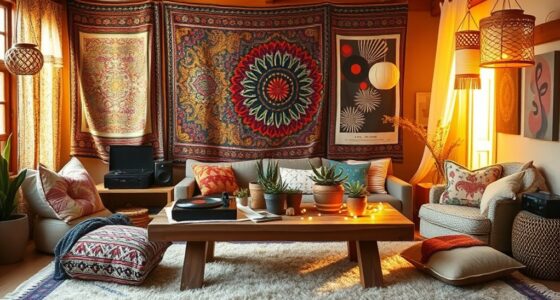
Dealers suggest textile art above beds, sofas or fireplaces.
How Artists Make It Their Own
Contemporary works draw on historical traditions while making the process visible.
Reused and repurposed
Artists use second-hand fabric and offcuts to build one-of-a-kind compositions.
Handwork on view
Stitching, uneven edges and varied dyed surfaces reveal how each piece was made.
Traditions reimagined
Artists draw on historic textile imagery and forms, including Chinese embroidered panels.
What Textile Art Adds
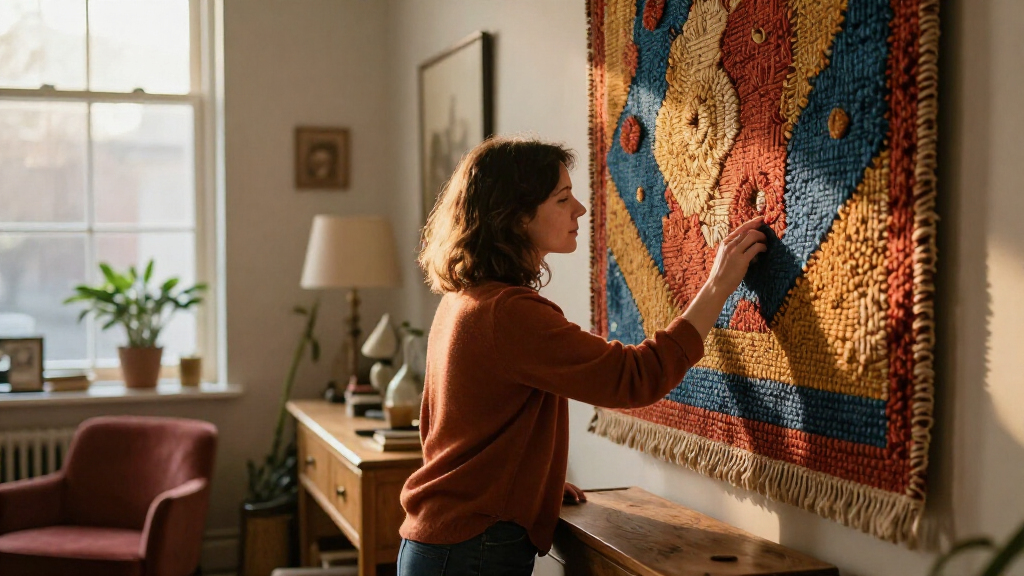
For homeowners, a textile can bring a tactile presence that framed art may not.
- Softness and texture
- Visible evidence of handwork
- A distinct material history
- Large works need thoughtful placement
- Strong presence can shape a room
- Prices and availability are not provided
Textile Art Finds Room at Home
The development connects a major museum exhibition with a practical question for homeowners: how can a large, tactile artwork work in a modern room? Textile pieces can bring softness, texture and a visible record of handwork, while their scale and strong presence can make placement challenging. Dealers and design advisers describe them as alternatives to conventional framed art, particularly above beds, sofas or fireplaces.
The appeal also reflects a shift in how decorative objects are valued. Uneven stitches, worn or fraying edges, and differences in dyed surfaces can show how a piece was made rather than conceal the process. For buyers, that can mean a one-off object with a distinct material history. The source does not provide sales figures or market data, so the scale of the reported interest cannot be measured from the information available.
The work also keeps historical forms in circulation without simply reproducing them. Artists cited in the source draw on traditions ranging from Ghanaian Fante Asafo flags to Chinese embroidered panels and the modernist structures associated with Anni Albers. Those references give contemporary textiles a range of visual languages, rather than limiting them to a single historical style.
Products Worth Considering

Dyson Car+Boat Cordless Handheld Vacuum

Arlo Pro 2K HDR Wireless Security Camera, 6th Generation, 4-Camera Pack

Coway Airmega 250S WiFi Air Purifier for Large Rooms
As an affiliate, we earn on qualifying purchases.
From Bayeux to London Galleries
The Bayeux Tapestry’s story is itself part of the renewed attention. The work records the lead-up to the Norman conquest and the Battle of Hastings, and its return to England for the British Museum exhibition is described in the source as its first return in centuries. The exact date of its departure from England is not specified there.
Historically, tapestries served both decorative and practical purposes, including helping insulate cold buildings. In modern homes, central heating has reduced that functional role, while textile wall works are increasingly presented as decorative art and collectible design. The source links this interest to a wider revival in craft-led interiors and to continuing enthusiasm for do-it-yourself and visibly handmade work.
FELT’s program includes artists who revisit historical forms and materials for present-day interiors. Spazio Leone’s show of Yumo Yuan’s work offers another example: familiar auspicious motifs appear through the weave with blurred edges, rather than as sharply defined images. These gallery examples illustrate current practice; they do not establish how widely the trend has spread across the market.
“Many of the contemporary artists we work with at FELT are investigating the historical roots of particular styles and remaking them to create something that feels fresh and relevant for contemporary interiors.”
— Francesca Wilson, FELT co-founder
The Trend’s Reach Remains Unmeasured
The material describes gallery activity and comments from design professionals, but it provides no market figures, visitor totals or buyer survey to establish how widespread the interest is. The source calls the British Museum show record-breaking without specifying the record or supplying a comparison. It also does not state the exhibition’s September opening year, though it gives the closing date as July 11, 2027.
Details about the Bayeux Tapestry’s exact date of departure from England and the full terms of its loan are not included. Nor does the source specify prices, availability or production volumes for the contemporary works it discusses. The examples should be read as a snapshot of selected London galleries and practitioners, not as proof that all collectors or homeowners are turning to tapestry.
The Exhibition Runs Until 2027
The next confirmed milestone is the end of the British Museum exhibition on July 11, 2027. Visitors can see the Bayeux Tapestry during the scheduled run; the source does not give further exhibition dates, attendance projections or details of any related program.
In the design scene, the cited galleries and advisers continue to present textile works as options for contemporary rooms. Whether that activity grows into a broader retail trend remains to be seen, particularly because no sales or audience data are provided. For now, the clearest evidence is the combination of the museum display and specific gallery programs featuring artists who reinterpret textile traditions through handwork and contemporary materials.
Key Questions
Where can visitors see the Bayeux Tapestry in London?
The British Museum is hosting the Bayeux Tapestry exhibition, which is scheduled to run through July 11, 2027.
What does the Bayeux Tapestry depict?
The approximately 70-metre-long textile depicts events leading up to the Norman conquest of England and the Battle of Hastings. It was likely stitched in or around Canterbury nearly a thousand years ago.
What distinguishes the contemporary textile works discussed?
The examples include hand stitching, reused fabric, plant-based dyes and imagery drawn from historical textile traditions. Some works show irregularities and variations that make the making process visible.
How do dealers suggest placing a tapestry at home?
Spazio Leone’s Gennaro Leone says textile works need enough space to be appreciated while still feeling connected to the room. FELT co-founder Tintin Macdonald says clients often consider large works above a bed, sofa or fireplace.
Does the source show that tapestry sales are rising?
No sales figures or market-wide data are provided. The source documents gallery exhibitions and comments from design professionals, but it does not quantify the trend among buyers.
Source: livingetc.com