
TL;DR

Get furniture and decor delivered free with Prime
- Fast, free delivery on millions of items
- Prime Video, Amazon Music and more included
- Member-only deals all year
Social media posts have brought attention to decorative marble sinks bought directly from Turkish manufacturers, where established stone-working expertise and domestic production can make bespoke pieces more affordable. The source report does not verify specific prices, delivery outcomes or buyer experiences; shoppers should confirm the stone, dimensions, shipping terms and protections before ordering.
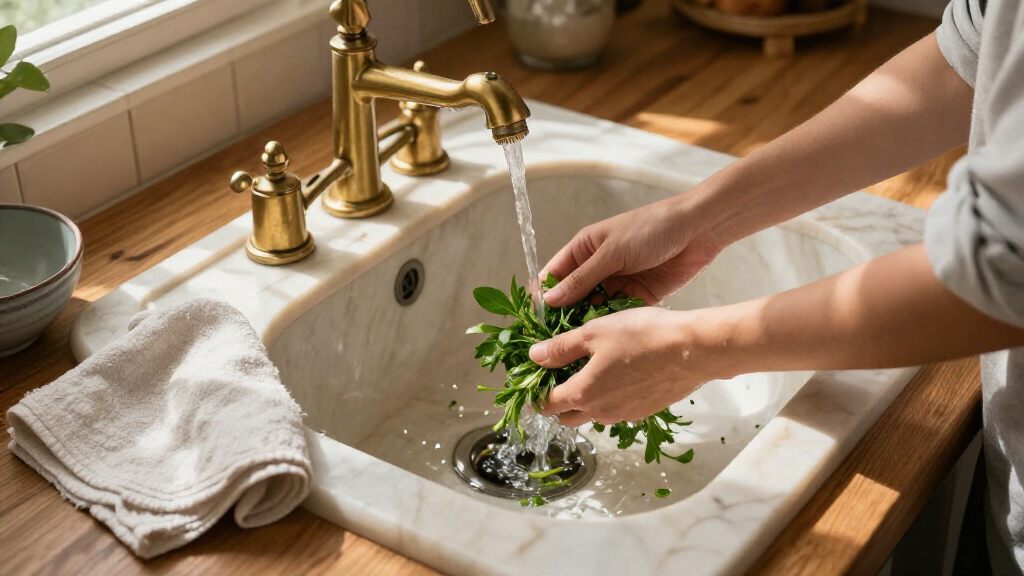
Marble sinks made in Turkey are gaining attention in home-renovation social media, with buyers sharing decorative basins ordered directly from manufacturers and describing the purchases as “worth the risk.” A recent Livingetc report links the appeal to Turkey’s established stone industry and comparatively lower production costs, while warning that buyers need to understand what stone they are purchasing and how a large, heavy item will be delivered.
The report describes a growing stream of social-media posts about people buying carved marble sinks from Turkish makers, including through online retail platforms such as Etsy. It does not provide sales figures or independently verify how widespread the trend is. Its central finding is that the low prices shown in listings can reflect Turkey’s large quarry reserves and domestic processing industry, rather than necessarily indicating a fake or inferior product.
Damla Turgut, founder of tile brand Otto Tiles & Design, told Livingetc that Turkey has a long history of working with natural stone and a mature network of quarries, processing facilities and workshops. She said Turkish marble is often “roughly half the price” of high-end Italian stones. That is her broad comparison, not a quoted price for any particular sink, and the report gives no matched products or price data to verify it.
Price is only one part of the decision. Turgut said marble varies by type and slab, and described Turkish stones as often having softer colors and more uniform veining than Italian marble. As an example, she said Turkish alternatives to Italian Calacatta Viola may have less saturated color and softer, cloudier veining. Buyers aiming to coordinate a basin with existing stone should check the specific material and request images or samples rather than rely on a general country-of-origin description.
What Lower Prices May Leave Out
A sink is a permanent, heavy fixture, so an attractive listing price does not by itself establish the full cost or suitability of a purchase. Buyers ordering from overseas may need to account for shipping, import charges, handling, installation and the difficulty of returning a damaged or unsuitable item. The source report does not document specific delivery failures or calculate these extra costs, so they should be treated as questions to investigate, not as reported outcomes.
The trend also puts a spotlight on the distinction between value and visual match. Two basins described as marble may differ in color, veining, finish and stone type. A lower price can make bespoke stonework more accessible, but it may not deliver the exact look of a more expensive Italian slab. For renovators, confirming the material and the seller’s terms before paying is more useful than judging a sink from a styled social-media image alone.
Products Worth Considering

Ring Alarm Pro 14-Piece Home Security Kit with Built-In eero Wi-Fi 6 Router

TCL 65 Inch QM8L Series SQD-Mini LED QLED 4K Smart Google TV

Dyson Ball Animal 3 Upright Vacuum
As an affiliate, we earn on qualifying purchases.
Turkey’s Stoneworking Trade
Turkey’s appeal is tied to a combination of natural resources and manufacturing experience. Turgut told Livingetc that the country has large active quarries and established facilities for processing stone, as well as workshops familiar with cutting, shaping and finishing it. She has noticed more Turkish manufacturers producing finished pieces for international interiors buyers, including sinks, fireplace surrounds and coffee tables.
The source also emphasizes that Turkey produces other natural stones, including travertine, onyx and limestone. The broader market includes a tradition of bespoke work. Designer Tanya Selway, founder of Selway Design Studio, described the hammam basin, or kurna, as a form associated with Turkey and said local makers have an understanding of its design. The report gives this as design context, not as a guarantee that every listing is traditional or handcrafted.
“Turkey has an incredibly rich history of working with natural stone, stretching back thousands of years.”
— Damla Turgut, founder of Otto Tiles & Design, speaking to Livingetc
What Buyers Still Need to Verify
The source report does not establish how many sinks are being sold, whether prices are consistently lower after shipping and import costs, or how often buyers receive products that match their listings. It also does not name or audit particular sellers. Social posts describing purchases as “worth the risk” are buyer accounts, not independent evidence of typical delivery, quality or customer-service outcomes.
Specific product details can also remain unclear in online listings: the exact stone variety, whether the basin is carved from one piece, dimensions and weight, finish, care requirements, shipping arrangements, damage coverage, return rights and any duties or taxes. Those details should be confirmed with the seller in writing. A country label alone cannot establish the quality or appearance of an individual slab.
Checks Before Placing an Order
Before paying, buyers can ask for the stone name and current photographs of the actual basin or slab, along with measurements, weight, finish and care instructions. They should request a complete delivered-cost estimate and written details on packaging, freight, insurance, customs charges, delivery access, damage claims and returns. If the basin must match other stone, a physical sample or a clear comparison against the intended material may help reduce the chance of a mismatch.
The Livingetc report offers no announcement of a new rule or industry milestone; it is an examination of a consumer trend and its practical trade-offs. Whether direct buying is worthwhile will depend on each item, seller and destination. The next useful evidence for shoppers is likely to come from the seller’s documentation and a full cost comparison with local alternatives—not from the headline price alone.
Key Questions
Why can Turkish marble sinks cost less?
Damla Turgut told Livingetc that Turkey has large quarry reserves and an established domestic stone-processing industry. She described Turkish marble as often around half the price of high-end Italian stones, but that is a general comparison, not a verified price for every sink.
Is Turkish marble the same as Italian marble?
No single description covers every stone. Turgut said Turkish marble often has softer colors and more uniform veining, while some Italian stones have sharper, bolder patterns. The particular slab and stone type matter, so buyers should check the exact material.
What should I check before ordering a sink directly?
Confirm the stone type, dimensions, weight, finish, care needs, delivery cost, import charges, damage coverage and return terms. Ask for current photographs of the actual piece and get the seller’s answers in writing.
Does the report prove that buying direct is worth the risk?
No. Livingetc describes social-media buyers who call their purchases “worth the risk,” but it provides no sales data or independent review of typical delivery and return outcomes. The value depends on the specific product, seller and total delivered cost.
Source: livingetc.com