
TL;DR

Get furniture and decor delivered free with Prime
- Fast, free delivery on millions of items
- Prime Video, Amazon Music and more included
- Member-only deals all year
Secondhand shopping is moving from a niche pastime into a more visible part of interiors retail and professional design. Market forecasts and designer-survey figures cited by Livingetc point to growing interest, though they do not establish how much of that growth comes from home furnishings or prove that resale is replacing new furniture purchases.
Secondhand furniture and vintage decor are gaining a larger place in interiors shopping and design, according to a Livingetc report citing market forecasts and a 2026 designer survey. The figures suggest resale is becoming more established, while accounts of younger shoppers at estate sales point to a change in who is seeking older, distinctive pieces.
Livingetc cites ThredUp’s 13th Annual Resale Report, which projects the global secondhand apparel market will reach about $367 billion by 2029, including roughly $74 billion in the United States. Apparel is presented as an indicator of wider resale and lifestyle trends; the figure is not a measurement of furniture sales.
For furniture, the report cites Mordor Intelligence’s estimate that the global second-hand furniture market could grow from about $47 billion in 2025 to $62.7 billion by 2031. It also references a Technavio projection of about $11.24 billion in market expansion from 2025 to 2030. These are forecasts, not confirmed future sales.
Among design professionals, Livingetc reports that 81% of designers surveyed by 1stDibs in 2026 sourced furniture or decor from the 1920s through the 1990s. The article also cites UK vintage furniture marketplace Vinterior, which said sales to interior designers were up 53% year on year in 2026. The report does not provide the survey sample size or Vinterior’s underlying sales figures.
Resale Moves Into Design Practice
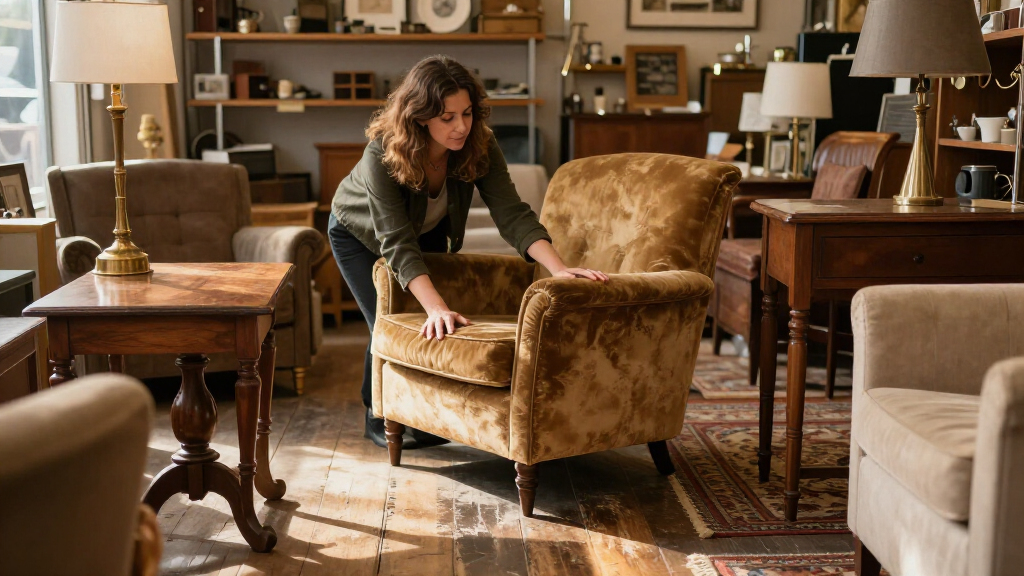
The shift matters because secondhand goods are being presented not only as lower-cost alternatives, but also as sources of character, scarcity and material quality. A used table or vintage lamp can offer a design that is less commonly repeated than mass-market pieces, while an object’s age and previous use can become part of its appeal.
That growing visibility may affect how retailers, designers and shoppers value furniture. The report describes designers incorporating older pieces into projects and younger buyers appearing at estate sales. Together, these examples suggest resale is becoming more socially visible, although they do not establish how widespread the change is across all consumers or markets.
There is also a sustainability dimension: buying used can keep an item in circulation rather than requiring a new purchase. But the source material does not quantify the environmental savings, and the benefits will depend on factors such as transport, restoration and whether a secondhand item replaces a newly manufactured one.
vintage mid-century modern coffee table
As an affiliate, we earn on qualifying purchases.
As an affiliate, we earn on qualifying purchases.
From Estate Sales to Mainstream Taste
The report contrasts earlier estate-sale crowds—often retirees, dealers and some designers—with lines that now include more Gen Z shoppers. This is the writer’s observation, not a nationally representative measure of buyer demographics. It nevertheless illustrates how a practice once treated as a specialist hunt is increasingly visible in mainstream style coverage and shopping culture.
Livingetc also describes a change in the way older materials are discussed. Visible grain, joinery and patina, along with a piece’s former setting, can serve as evidence of its history. The report gives the example of a kitchen island made by ROAR Architects from a London plane tree that once stood in Soho Square. Such projects show how reclaimed material can be used as a design feature, rather than simply as a way to cut costs.
The article’s central distinction is between buying used for affordability and buying vintage for provenance or individuality. Those motivations can overlap, but the cited figures do not show which one is driving market growth most strongly.
““What used to feel niche now feels cultural.””
— Livingetc report
Limits in the Market Evidence
The figures cited are not directly comparable: they cover different categories, markets and time periods, and some are projections rather than observed results. The apparel forecast does not establish the size or growth rate of the home-furnishings resale market. The report also does not give the methodology behind Vinterior’s year-on-year sales increase or the sample details for the 1stDibs designer survey.
It remains unclear how much resale growth reflects purchases that replace new furniture, how much is additional spending, and how prices or supply are changing. The source material offers examples of shifting taste but does not provide a broad consumer survey or a complete account of market conditions.
What Future Figures Can Show
The next useful evidence will be actual sales data that separates furniture and decor from apparel, alongside follow-up figures that can be compared with the same prior-year periods. More detail on survey methods and the number of designers reporting vintage sourcing would also help establish how representative the trend is.
For now, the report points to a clear development in interiors culture: older and secondhand pieces are receiving more attention from shoppers and design professionals. Whether that attention produces sustained market growth—and how much of it changes purchases of new furniture—will depend on future data.
Key Questions
What is the main development?
Resale and vintage furniture are becoming more visible in interior design and shopping, according to a Livingetc report citing forecasts, designer survey results and observations from estate sales.
How large is the secondhand furniture market expected to become?
Mordor Intelligence estimates the global market could grow from about $47 billion in 2025 to $62.7 billion by 2031. This is a forecast, not a confirmed future total.
Does the $367 billion figure refer to furniture?
No. ThredUp’s cited projection concerns the global secondhand apparel market by 2029. Livingetc presents apparel as a possible indicator of broader resale trends, not as a furniture-market figure.
Why are shoppers interested in vintage interiors?
The report identifies distinctive design, visible age and provenance as reasons older pieces appeal, alongside affordability and sustainability. It does not quantify the relative importance of these motivations.
Source: rss
Halloween Picks
halloween
As an affiliate, we earn on qualifying purchases.