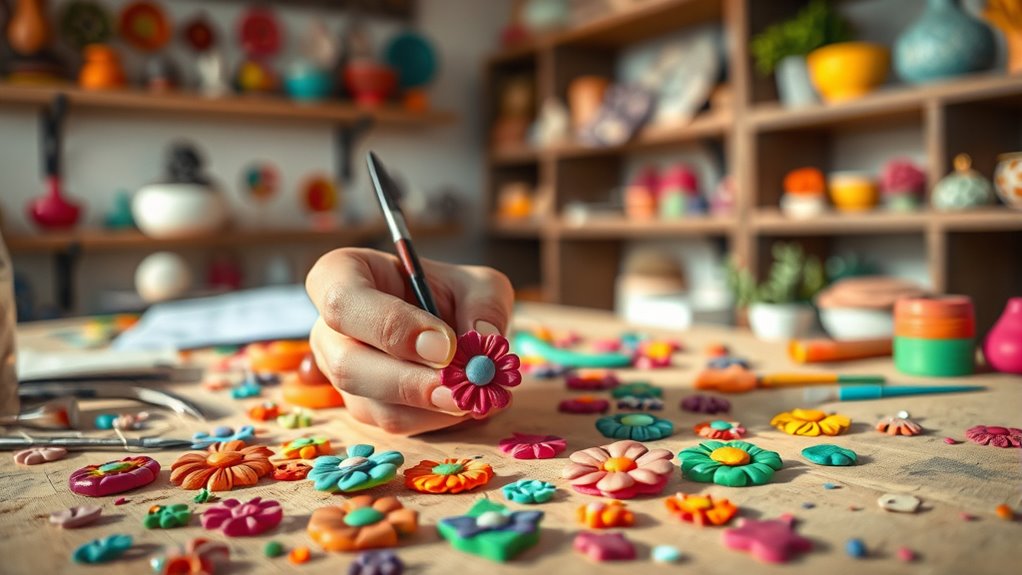

Working with polymer clay for home decor lets you create personalized, textured, and colorful pieces that enhance your space. You can blend colors seamlessly, add realistic textures with various tools, and achieve professional finishes by carefully baking and surface treating your projects. Experimenting with different techniques helps develop your skills and unique styles. The more you explore, the better your creations will look—keep going, and you’ll discover even more ways to craft stunning decor items.
Key Takeaways
- Master color blending techniques to create seamless transitions and realistic effects in your decor pieces.
- Use texture tools and methods like stamping or carving to add visual interest and depth.
- Practice layering colors and textures to develop unique, handcrafted designs.
- Follow proper baking instructions and surface finishes to ensure durability and a polished look.
- Experiment regularly to refine skills, discover personal styles, and produce professional-quality home decor.
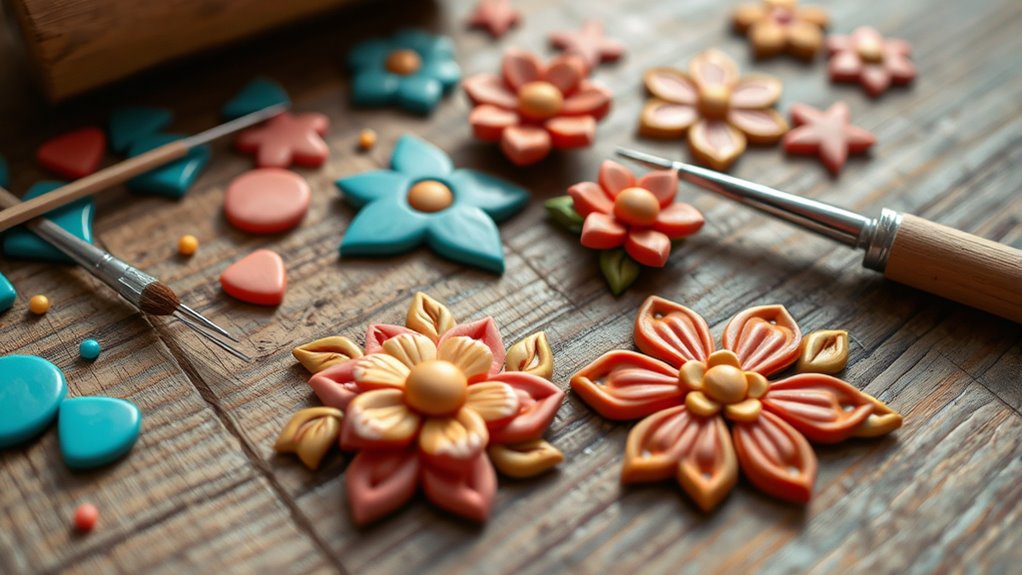
Working with polymer clay can be a rewarding and creative experience once you understand the basics. When you start exploring how to make home decor items, mastering techniques like color blending and texture creation becomes essential. Color blending allows you to mix different shades seamlessly, giving your projects a professional, polished look. You can achieve smooth gradations by kneading small amounts of clay together or by layering colors and blending them with your fingers or tools. This skill is especially useful when creating gradient effects or mimicking natural materials like stone or marble for your decor pieces. The key is to work slowly and consistently, ensuring the colors blend evenly without streaks or harsh lines. Incorporating proper color theory can further enhance your ability to create harmonious color schemes in your designs.
Master color blending in polymer clay for professional, seamless decor projects.
Texture techniques are just as important in transforming simple clay into stunning decor elements. Using various tools and methods, you can add surfaces that mimic fabric, wood grain, or even distressed finishes. For instance, pressing a textured stamp into the clay before baking can create intricate patterns, while carving with fine-point tools can add subtle details. You might also experiment with surface treatments such as sanding, buffing, or adding a gloss finish to enhance the tactile quality of your pieces. By combining different textures, you can create visual interest and depth, elevating your home decor from basic to extraordinary.
The process of blending colors and applying textures is also about patience and experimentation. Don’t hesitate to mix shades or try out different tools until you find what works best for your style. For example, blending multiple colors can lead to unexpected and beautiful results that add uniqueness to your decor items. Similarly, layering textures can give your pieces a handcrafted, artistic feel that makes them stand out. Remember, the more you practice these techniques, the more intuitive they become, and your creations will reflect your personal touch.
When working with polymer clay for home decor, keep in mind that the finish matters just as much as the design. Once you’ve blended your colors and added textures, carefully bake your pieces according to the manufacturer’s instructions. After baking, you can further enhance your creations with paint, varnish, or other finishing touches to protect the surface and give it a polished look. With patience and attention to detail, combining color blending and texture techniques allows you to craft unique, beautiful decor items that truly personalize your living space.

Ixiaoyoo 60 Colors Polymer Clay, Oven Bake DIY Modeling Clay for Kids
- 60-Color Polymer Clay Set: Includes 60 blocks and tools
- Safe and Certified: Non-toxic, ASTM D-4236 & EN71 compliant
- Perfect for Creative Projects: Ideal for miniatures, keychains, and ornaments
As an affiliate, we earn on qualifying purchases.
As an affiliate, we earn on qualifying purchases.
Frequently Asked Questions
How Do I Prevent Polymer Clay From Cracking During Baking?
To prevent polymer clay from cracking during baking, you should guarantee proper clay conditioning by kneading it thoroughly until soft and pliable. Maintain consistent temperature control in your oven, avoiding overheating beyond the recommended 265-275°F (130-135°C). Bake your project slowly and evenly, and consider adding a thin layer of clay or smoothing surfaces before baking. These steps help reduce stress and prevent cracks, resulting in a smooth, professional finish.
What Tools Are Essential for Detailed Polymer Clay Work?
You’ll need essential tools like clay blades, fine-tipped tools, and textured stamps for detailed polymer clay work. Start by conditioning your clay thoroughly to guarantee smooth shaping. Use these tools to carve, add surface textures, or create intricate designs. A sculpting tool helps with detail work, while textured stamps or needles can add surface patterns. These tools make precise, detailed work easier, giving your projects a professional finish.
How Can I Achieve a Glossy Finish on My Polymer Clay Projects?
To achieve a glossy finish on your polymer clay projects, start by applying a high-quality glossy varnish after baking. Use polishing techniques like buffing with a soft cloth or fine grit sandpaper to smooth the surface before varnishing. Multiple thin coats of glossy varnish will give your piece a vibrant shine. Be patient, and let each coat dry thoroughly to guarantee a flawless, professional-looking glossy finish.
Is It Safe to Use Polymer Clay Around Food or Children?
You should avoid using polymer clay around food or children, as it isn’t food-safe or child-safe. The chemicals in polymer clay can leach out, especially if heated or chewed, posing health risks. Keep your projects away from direct contact with food or children’s hands to guarantee safety. Always use non-toxic, food-safe materials for items that will touch food or be handled by kids, and follow manufacturer guidelines.
How Long Does Polymer Clay Typically Last as Home Decor?
Polymer clay decor typically lasts several years, but its durability depends on factors like exposure to sunlight, temperature changes, and handling. To maximize longevity, you should seal your pieces and avoid placing them in areas prone to moisture or direct sunlight. Aging considerations include potential fading or cracking over time, especially if not properly sealed. With proper care, your polymer clay home decor can stay beautiful for many years.
Conclusion
Once you start working with polymer clay, you’ll find it’s like planting seeds—you create something beautiful from simple beginnings. I once made a tiny bowl that became my favorite decor piece; it’s a reminder that patience and creativity turn humble materials into art. Just like nurturing a garden, your skills will grow with practice. Keep experimenting, stay inspired, and soon your home will reflect your unique, colorful touch.