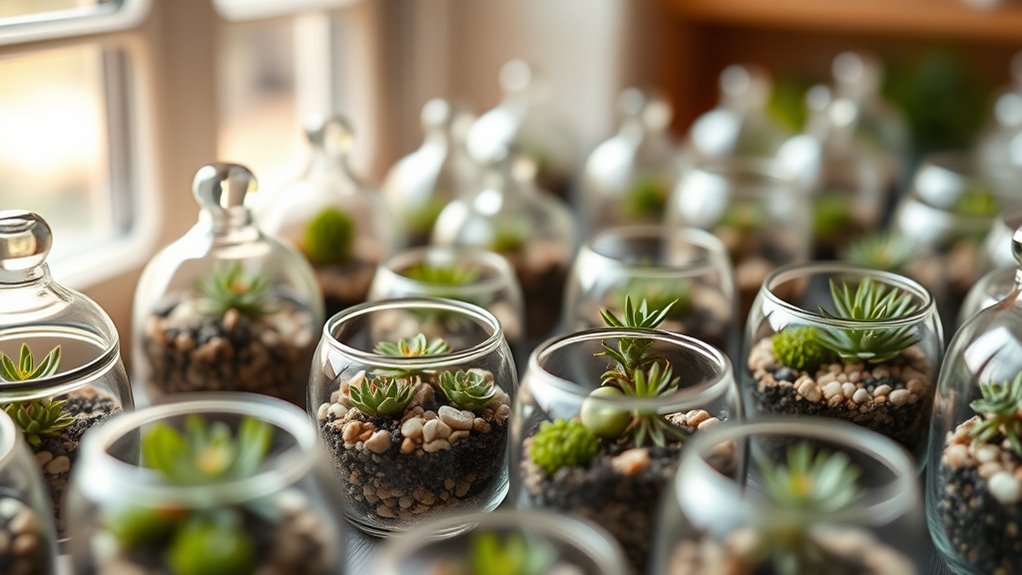

To build a miniature terrarium, start by choosing a clear glass container with an open top for easy access and airflow. Layer small pebbles or gravel at the bottom for drainage, add activated charcoal to keep it fresh, then fill with well-draining succulent soil. Carefully arrange your succulents, mixing different shapes and colors for contrast, and add decorative elements if you like. With proper setup and care, you’ll create a stunning mini world—continue exploring to learn more about perfecting your design.

Get furniture and decor delivered free with Prime
- Fast, free delivery on millions of items
- Prime Video, Amazon Music and more included
- Member-only deals all year
Key Takeaways
- Choose clear glass containers with proper ventilation and adequate size for visibility and airflow.
- Plan succulent arrangements by mixing different shapes, sizes, and colors for visual interest.
- Prepare the container with a drainage layer, activated charcoal, and well-draining soil to ensure healthy roots.
- Plant succulents carefully, considering their growth habits, and arrange them thoughtfully for balance.
- Personalize with decorative elements and maintain proper watering to keep the miniature terrarium thriving.
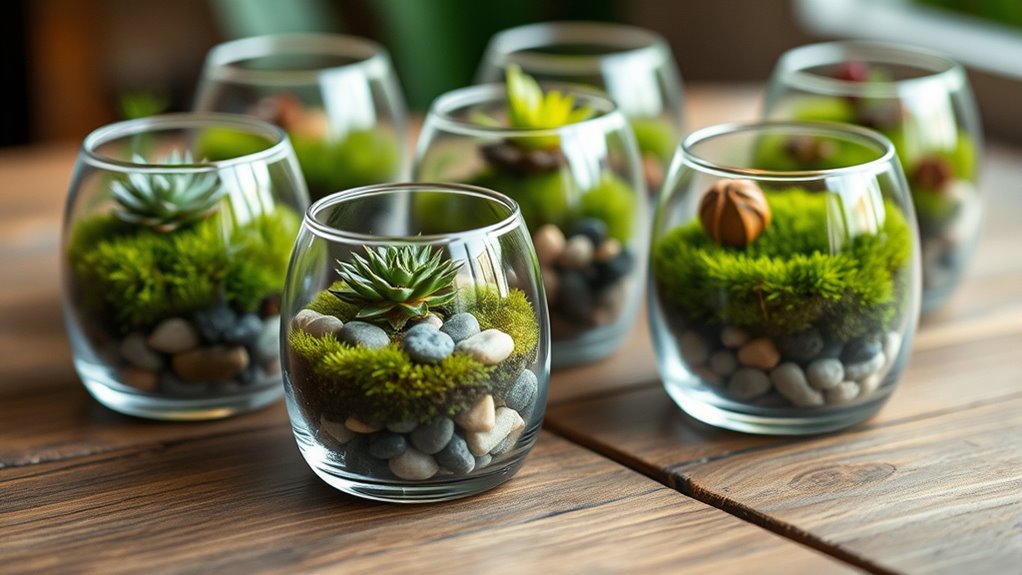
Have you ever wondered how to create a tiny, self-sustaining garden in just a small glass container? Building miniature terrariums is a rewarding craft that combines creativity, patience, and a bit of horticultural know-how. When starting out, one of the most important decisions you’ll make is choosing the right glass container. Your glass container choices can influence the overall look and functionality of your terrarium, so pick something that complements your space and suits your plants. Clear glass bowls, jars, or even vintage vases work well because they allow you to see every layer inside. Make sure the container has an opening large enough to work comfortably and, ideally, some ventilation for airflow.
Once you’ve selected your container, the next step is to plan your succulent arrangements if you’re going the succulent route. Succulents are perfect for miniature gardens because they stay small, require minimal watering, and add fascinating textures and colors. When arranging succulents, think about contrast—mixing tall, spiky varieties with rounder, plump ones creates visual interest. You might arrange a tall aloe or echeveria as a focal point surrounded by smaller, trailing succulents like string of pearls or jade plants. Consider the color palette too; combining shades of green with hints of purple, red, or silver can make your miniature garden pop.
Plan your succulent arrangements with contrasting shapes and colors for visual interest.
Before planting, prepare your glass container by adding a drainage layer. Small pebbles or gravel work well to prevent water from accumulating at the roots, which can cause rot. Then, add a layer of activated charcoal to help keep the environment fresh and prevent mold. Follow that with a well-draining succulent or cactus soil mix. This layered approach ensures your succulents have the right conditions to thrive.
When planting, gently remove each succulent from its nursery pot, loosen the roots if they’re tightly bound, and place them carefully into your prepared container. Arrange the plants as you go, keeping in mind their mature size and growth habits. After planting, give your succulents a light watering—just enough to settle the soil. Unlike traditional gardens, succulents don’t need frequent watering; in fact, overwatering is a common mistake. Let the soil dry out completely between waterings.
Building your miniature terrarium is as much about experimenting as it is about planning. With the right glass container choices and thoughtful succulent arrangements, you’ll create a charming, low-maintenance garden that brings a touch of nature indoors. Over time, you can add decorative stones, tiny figurines, or even fairy lights to personalize your tiny ecosystem. Enjoy the process, and soon you’ll have a miniature world that’s uniquely yours.
miniature terrarium glass container
As an affiliate, we earn on qualifying purchases.
As an affiliate, we earn on qualifying purchases.
Frequently Asked Questions
What Are the Best Plants for Miniature Terrariums?
You should choose succulent varieties like Echeveria, Haworthia, or Sedum for your miniature terrarium because they thrive in small, enclosed spaces. Pair these with moss selection such as sheet moss or cushion moss to add lush texture and moisture retention. These plants are low-maintenance, adapt well to confined environments, and create a vibrant, miniature landscape that stays healthy with minimal care.
How Often Should I Water My Terrarium?
You should water your terrarium when the topsoil feels dry to the touch, typically every 1-2 weeks. Maintain a consistent watering schedule to keep terrarium humidity balanced, avoiding overwatering which can cause mold or root rot. Use a spray bottle or small watering can to gently moisten the soil without overdoing it. Regularly monitor humidity levels and adjust your watering routine to keep your miniature ecosystem healthy and thriving.
Can I Use Artificial Plants in My Terrarium?
You can definitely use artificial plants in your terrarium; they’re a fantastic alternative if you want low maintenance and no watering worries. While faux greenery reduces upkeep, it’s essential to choose high-quality artificial plant alternatives that look realistic. Maintaining faux greenery is simple—just occasional dusting keeps it fresh. Using artificial plants also prevents overgrowth and provides year-round color, making your terrarium vibrant and worry-free without sacrificing style.
What Are Common Pests Found in Terrariums?
You’ll likely encounter pests like fungus gnats, springtails, or aphids in your terrarium. To identify these terrarium pests, focus on terrarium pest identification by inspecting plants and soil closely. Use natural pest control methods, such as introducing predatory insects or applying neem oil, to manage infestations safely. Regularly monitor your terrarium to catch pests early and keep your miniature ecosystem healthy.
How Do I Prevent Mold Growth in My Terrarium?
Think of your terrarium as a tiny, balanced world—keep mold at bay by practicing mold prevention techniques. You should guarantee proper airflow, avoid overwatering, and maintain appropriate humidity levels. Start with terrarium sterilization methods like cleaning with diluted bleach or alcohol before setting up. Regularly monitor for excess moisture, and remove any moldy plants promptly. This way, your miniature ecosystem stays healthy and vibrant, thriving like a well-tended garden.
Conclusion
Now that you’ve mastered the art of building miniature terrariums, you can create mesmerizing, colorful microcosms that charm and cheer. With careful curation, clever containers, and a touch of creativity, your tiny terrains will thrive and mesmerize. Remember, patience and passion produce perfection, so keep experimenting and elevating your environment. Embrace the enchanting elegance of your evolving ecosystem, and enjoy the extraordinary experience of crafting your own miniature masterpiece, making magic in miniature with mindful, meticulous methods.
Halloween Picks
halloween
As an affiliate, we earn on qualifying purchases.