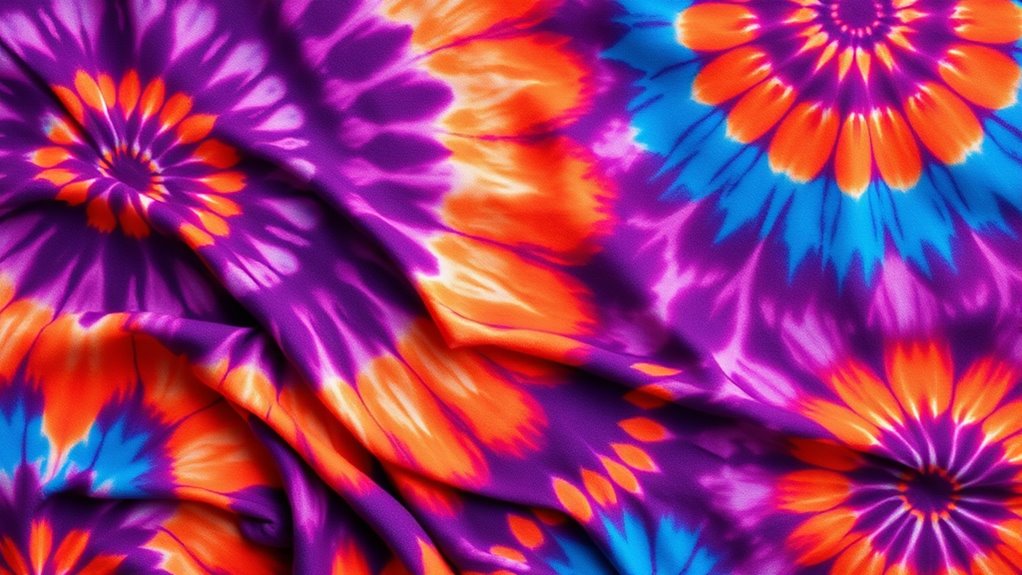
To create stunning boho textiles with tie-dye, start by choosing your fabric and selecting a vibrant color palette. Use folding, tying, or binding techniques like spiral or accordion folds to form interesting patterns. Layer colors carefully for depth, experimenting with blending shades for smooth shifts or bold contrasts. Control dye placement with brushes or squeeze bottles for sharp or subtle effects. Mastering these techniques open doors to endless creative possibilities—keep exploring for more ideas to elevate your designs.

Get furniture and decor delivered free with Prime
- Fast, free delivery on millions of items
- Prime Video, Amazon Music and more included
- Member-only deals all year
Key Takeaways
- Use folding, tying, and resist techniques to create varied patterns like spirals, stripes, or mandalas on fabric.
- Select a harmonious color palette and layer dyes to achieve depth, vibrancy, and smooth gradients.
- Experiment with fabric manipulation and dye application methods for unique boho-inspired designs.
- Test dye interactions on scrap fabric to anticipate bleeding and blending effects for desired results.
- Practice and explore different techniques to develop a personalized, free-spirited style characteristic of boho textiles.
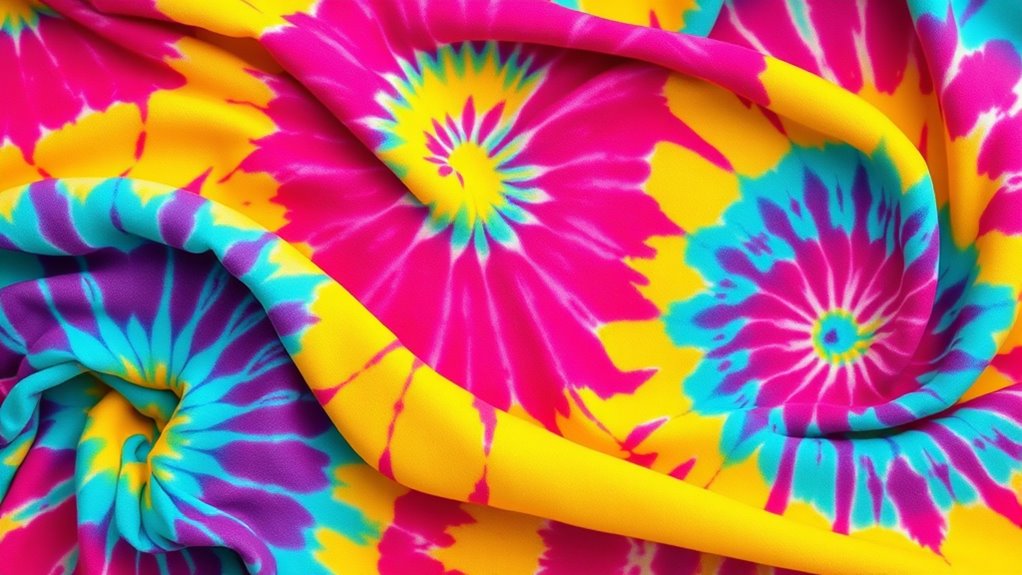
Ever wondered how to create vibrant, eye-catching designs on fabric? The secret lies in mastering the art of tie-dye techniques, which allow you to transform plain textiles into stunning boho masterpieces. A key aspect of this process is color blending, where you mix different dye shades to produce smooth *gradations* and unique hues. When you start, plan your color palette carefully, selecting shades that will blend seamlessly or create striking contrasts. As you apply the dye, think about how colors will interact on the fabric—soft pastel *gradations* or bold, jagged shifts—depending on your desired effect. This blending not only enhances the visual appeal but also adds depth and vibrancy to your design. Incorporating data analytics can help you understand which dye combinations produce the most appealing results. Pattern creation is another fundamental component. The way you fold, tie, and manipulate your fabric directly influences the pattern outcomes. For example, twisting the fabric into a spiral before dyeing results in a classic swirl pattern, while accordion-folding produces symmetrical stripes. You can also create more intricate designs by tying multiple sections with rubber bands or string, forming resist areas that resist dye and form distinct shapes. Experimenting with different folding techniques helps you develop a range of patterns, from subtle mottled effects to complex geometric arrangements. The key is to plan your pattern layout in advance but stay open to spontaneous adjustments as you see how the dye interacts with the fabric. When applying the dye, layering multiple colors can add richness and complexity to your design. You might start with a light base color and then add darker shades to certain areas, allowing some colors to blend naturally while others stay sharp and defined. This approach requires patience and a good understanding of how dyes bleed and blend on fabric. To achieve smooth color blending, work quickly but carefully, ensuring each application overlaps neatly with the previous one. Using squeeze bottles or brushes allows precise control over where the dye goes, helping you create intentional gradients and seamless *gradations*. Keep in mind that the fabric’s fiber content and the type of dye used also influence how colors blend and patterns develop, so testing on scrap fabric first can save you surprises. Ultimately, mastering dye blending and pattern creation opens up endless possibilities for your boho textiles. With practice, you’ll learn to anticipate how colors will mix and how different folding techniques result in unique patterns. As you experiment, you’ll develop your signature style—whether it’s bold and vibrant or soft and subtle—making each piece truly one-of-a-kind. Tie-dyeing is as much about personal expression as it is about technique, so enjoy the process of blending colors and creating patterns that reflect your creativity. The more you practice, the more confident you’ll become in designing textiles that radiate the free-spirited, artistic vibe characteristic of boho style.
As an affiliate, we earn on qualifying purchases.
Frequently Asked Questions
Can Tie-Dye Be Done on Synthetic Fabrics?
Yes, you can tie-dye synthetic fabric, but dye adhesion might be tricky. Synthetic fabrics like polyester don’t absorb dye as well as natural fibers, so you may need special dyes or heat-setting techniques to achieve vibrant colors. Use a dye formulated for synthetic materials and follow the instructions carefully. Keep in mind that the results may vary, and vibrant, lasting colors depend on proper dye adhesion.
How Long Does Tie-Dye Color Last on Textiles?
Your tie-dye color can last for several months to years, depending on fabric durability and how often you wash it. To prevent color fading, wash your textiles in cold water and avoid harsh detergents. Over time, some fading is normal, but proper care helps preserve the vibrancy longer. Keep in mind that synthetic fabrics may fade faster than natural ones, affecting the overall longevity of your tie-dye design.
Are Natural Dyes Better Than Synthetic for Tie-Dye?
Natural dyes are like whispering secrets from the earth, offering an eco-friendly alternative that’s gentle on the environment. They can be better if you seek vibrant, organic hues, but keep in mind that colorfastness considerations vary. Synthetic dyes often produce bolder, longer-lasting colors, yet they come with environmental costs. So, if sustainability matters most, natural dyes are your friend, though you might need to embrace a bit of fading over time.
What Safety Precautions Should Be Taken During Tie-Dyeing?
When tie-dyeing, you should wear protective gear like gloves and masks to avoid skin and inhalation issues. Make sure good ventilation in your workspace to prevent fumes from dyes and chemicals from building up. Keep your area clean and follow all safety instructions on dye labels. These precautions help you stay safe while creating vibrant, beautiful textiles. Always prioritize safety to enjoy your craft without risks.
How Do I Prevent Colors From Bleeding Into Each Other?
To keep colors from blending into each other, focus on proper fabric preparation and color fixation. You should thoroughly wash and dampen your fabric before tying to remove any residues and improve dye adherence. Use fixatives or mordants to set colors, reducing bleeding. Apply dyes carefully, working in sections, and allow each color to set completely before adding new ones. This ensures vibrant, distinct patterns with minimal bleeding.
Conclusion
Now that you’ve explored these tie-dye techniques, you’re like an artist holding a vibrant palette, ready to create stunning boho textiles. Each fold and dye bath is a brushstroke, transforming plain fabric into a masterpiece bursting with personality. With a little practice, your designs will flow effortlessly, turning your ideas into wearable art. So, go ahead—dive into the world of tie-dye and let your creativity shine like a rainbow after a storm.
Halloween Picks
halloween
As an affiliate, we earn on qualifying purchases.