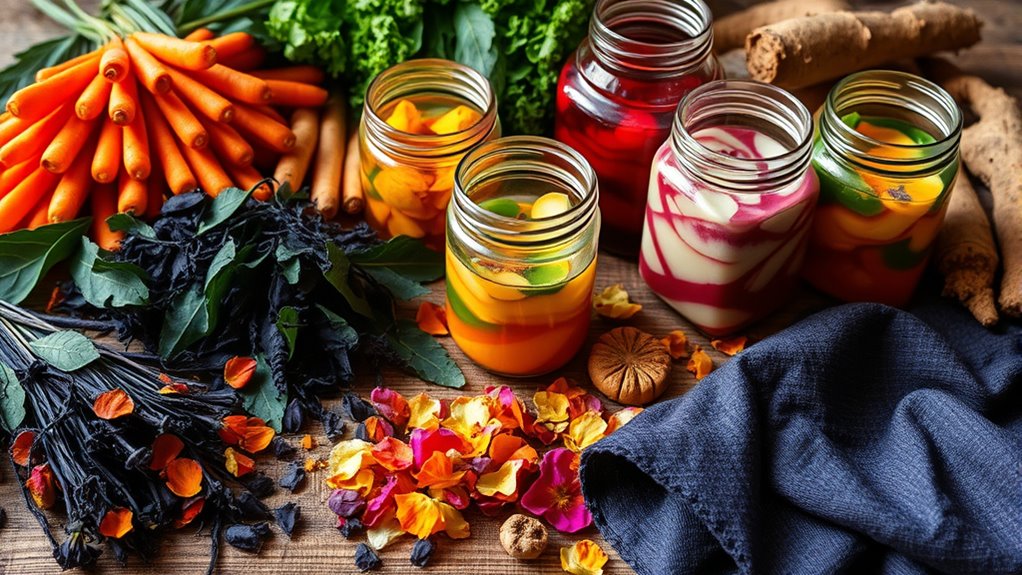

Natural dyeing with plants and vegetables lets you create vibrant, eco-friendly colors by extracting pigments through boiling or crushing plant materials like leaves, roots, or bark. You can fix these dyes onto fabrics using safe mordants like alum or iron, which enhance color and durability. Experimenting with different plants and mordants lets you discover unique shades and effects. Continue exploring to learn more about essential techniques, tips, and DIY projects for successful natural dyeing.

Get furniture and decor delivered free with Prime
- Fast, free delivery on millions of items
- Prime Video, Amazon Music and more included
- Member-only deals all year
Key Takeaways
- Extract vibrant dyes from plants like indigo, madder, turmeric, and onion skins through boiling or fermentation.
- Immerse fabrics directly in the dye bath to achieve organic, natural colors with layering and multiple dips.
- Use eco-friendly mordants such as alum and iron to fix dyes and enhance color durability.
- Experiment with different mordants and plant extracts to create unique shades and tones.
- Embrace traditional, sustainable textile practices that promote resource conservation and cultural craftsmanship.
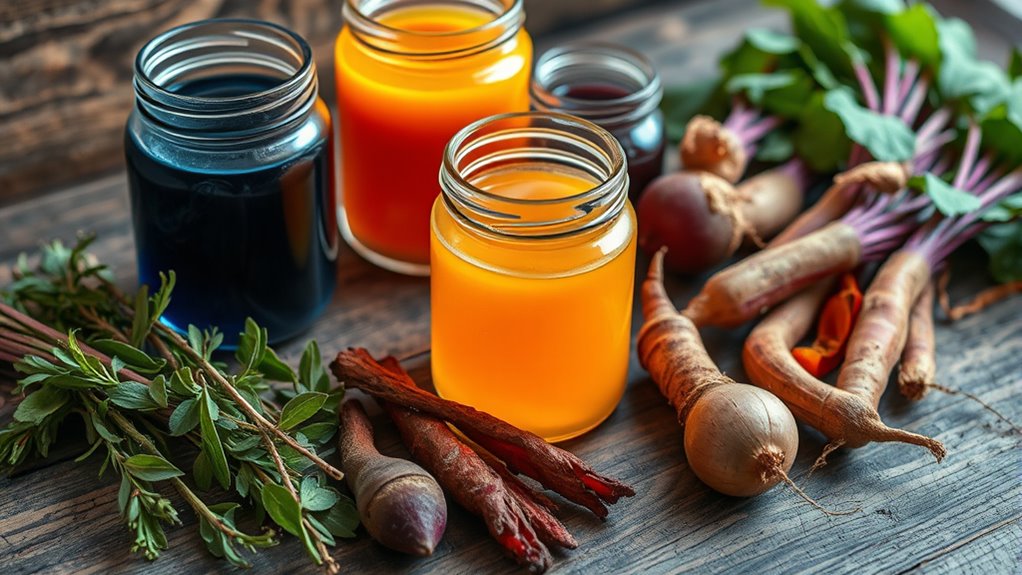
Have you ever wondered how to color textiles using natural ingredients? If so, you’re in for an exciting journey into eco-friendly dyeing. Natural dyeing involves using plant materials and vegetables to create vibrant, sustainable colors for your fabrics. The process begins with plant dye extraction, where you crush or boil plant parts like leaves, roots, or bark to release their pigments. This step is vital because it captures the essence of the plant’s color, which will then be transferred to your textiles. Once you’ve extracted the dye, you can immerse your fabric directly into the dye bath, allowing the fibers to absorb the natural hues. The result is a beautiful, organic color that reflects the plant’s unique characteristics.
A key aspect of natural dyeing is choosing the right mordant, which helps fix the dye to the fabric and enhances the color’s longevity. Instead of traditional chemical mordants, many eco-conscious dyers opt for eco-friendly mordants like alum or iron, which are less harmful to the environment. These mordants work by forming a bond with the fiber, ensuring the dye stays vibrant through multiple washes. Using eco-friendly mordants not only makes your dyeing process more sustainable but also safer for your skin and the planet. The mordanting process involves pre-treating the fabric with the mordant solution before dyeing, which helps in achieving consistent and rich colors. Different mordants can influence the final hue, allowing you to experiment with shades and intensities.
When it comes to plant dye extraction, it’s all about patience and precision. Some plants, like indigo or madder root, require specific preparation methods, such as fermentation or prolonged boiling, to *access* their full color potential. Others, like turmeric or onion skins, are ready to use after simple simmering. The key is to carefully select your plant materials based on the color you wish to achieve. Once you’ve extracted the dye, you can experiment with different fabric types and mordants to produce a range of tones. Natural dyeing is also a flexible craft—you can layer colors, dip fabrics multiple times, or combine extracts for unique effects.
Ultimately, natural dyeing with plants and vegetables offers a sustainable way to create colorful textiles, connecting you to traditional practices while respecting the environment. With some patience and experimentation, you can develop a personal palette that’s both vibrant and eco-friendly. This process not only produces beautiful results but also promotes a more conscious approach to textile art—one that values nature’s resources and minimizes waste. Whether you’re a seasoned crafter or a curious beginner, exploring plant dye extraction and eco-friendly mordants opens up endless possibilities for crafting with nature’s colors.
As an affiliate, we earn on qualifying purchases.
Frequently Asked Questions
How Long Do Natural Dyes Last on Fabrics?
Natural dyes typically last several years on fabrics when you consider dye fastness and mordant effects. Proper mordanting enhances dye adhesion, increasing longevity, while exposure to sunlight, washing, and friction can fade colors over time. To maximize durability, wash your dyed fabrics gently in cold water and store them away from direct sunlight. With good care, your natural-dyed textiles can retain vibrant colors for many seasons.
Can Natural Dyes Stain Skin Permanently?
Think of your skin as a canvas, and natural dyes as gentle watercolor paints. Usually, they don’t stain permanently because they involve delicate chemical reactions that fade over time. However, if you have skin sensitivity, some dyes might cause temporary discoloration or irritation. To avoid lasting marks, wear gloves and do a patch test. Your skin’s natural barrier usually protects it, so permanent staining remains rare.
Are Natural Dyes Suitable for All Fabric Types?
Natural dyes are suitable for most fabric types, but the results depend on the fabric’s fiber and the use of plant mordants. You should test how well the dye adheres for good color fastness, especially on delicate or synthetic fabrics. Using appropriate plant mordants can enhance dye adherence and longevity. Always do a small patch test first to ensure the fabric absorbs the dye well and achieves the desired color fastness.
How Do Climate and Seasons Affect Dye Color?
Climate impact and seasonal variation profoundly influence dye color. As you dye fabrics, you’ll notice that temperature, sunlight, and rainfall during different seasons alter the final hue. Warmer weather often intensifies colors, while cooler seasons may produce softer shades. Changes in sunlight exposure and moisture levels affect plant pigment extraction, resulting in subtle color variations. Embrace these natural differences, and you’ll create unique, seasonally inspired textiles every time.
What Safety Precautions Are Needed for Natural Dyeing?
When natural dyeing, you should wear safety equipment like gloves and masks to protect your skin and lungs from potentially harmful chemicals or plant extracts. Always work in a well-ventilated area, and handle mordants carefully to guarantee proper dye fixation and safety. Keep spills contained, and wash your hands thoroughly afterward. These precautions help prevent irritation and ensure a safe, enjoyable dyeing experience.
Conclusion
Imagine your clothes transformed by the vibrant hues of nature, each shade a brushstroke from the earth itself. By embracing plant and vegetable dyes, you’re not just coloring fabric—you’re weaving a story of sustainability and creativity. So, go ahead, pick your colors from the garden, and let your wardrobe bloom with the beauty of nature’s palette. After all, isn’t life’s most beautiful art made from the simplest, most natural ingredients?
Fall Picks
fall essentials
As an affiliate, we earn on qualifying purchases.