
To create stunning macramé wall hangings, you need to master various knots like square, half hitch, and lark’s head to build interesting patterns and textures. Choosing the right fiber—cotton, jute, or synthetic—affects the look, feel, and durability of your piece. Experiment with tension, knot combinations, and fiber types to craft unique designs. Keep practicing different techniques, and you’ll discover endless possibilities for creating personalized and impressive wall art.

Get furniture and decor delivered free with Prime
- Fast, free delivery on millions of items
- Prime Video, Amazon Music and more included
- Member-only deals all year
Key Takeaways
- Master various knots like square, half hitch, and lark’s head to create diverse patterns and textures in wall hangings.
- Fiber choice (cotton, jute, synthetic) influences knot appearance, texture, and overall design aesthetic.
- Combining different knot techniques allows for intricate, layered, and visually interesting patterns.
- Tension control (tight or loose knots) affects the structure, density, and flow of the finished piece.
- Experimenting with fiber types and knot arrangements enables personalized, artistic wall hanging designs.
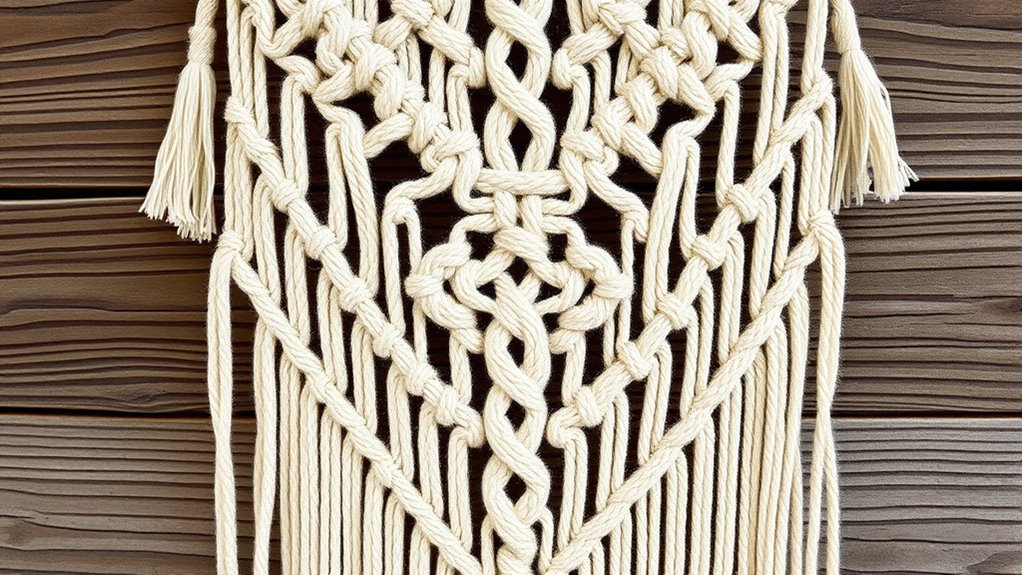
Macramé wall hangings have become a popular way to add texture and personality to any space. When you start exploring this craft, you’ll quickly realize that choosing the right fiber types is essential. Different fibers bring unique qualities—jute offers a rustic look with a coarse feel, while cotton provides softness and flexibility. Synthetic fibers, like nylon or polyester, add durability and shine, making your wall hangings last longer. The fiber choice impacts not only the appearance but also the handling and knotting process, so consider the texture and weight you prefer for your project.
Choosing the right fiber type enhances your macramé’s look, feel, and durability.
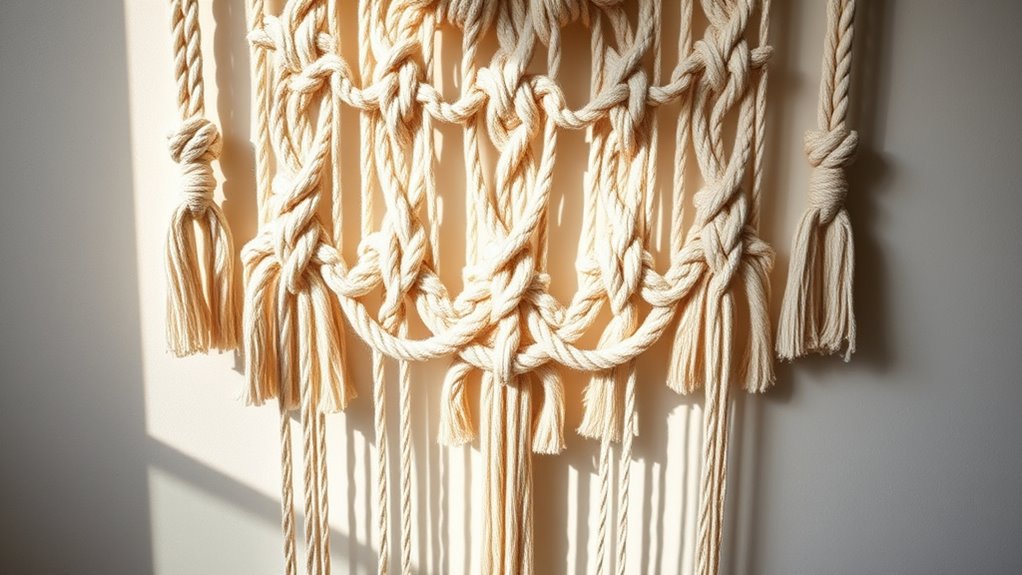
Once you’ve picked your fibers, mastering knot techniques is your next step. You’ll find that the foundation of any macramé piece lies in the knots you use. The most common knot is the square knot, which forms the basis for many patterns. It’s straightforward to learn, making it perfect for beginners. As you get comfortable, you can explore other techniques like the half hitch, lark’s head, or spiral knot to add variety and complexity to your design. Each knot technique creates a different texture and pattern, giving you endless possibilities for customization.
Getting familiar with knot techniques also involves understanding their sequence and tension. Tight knots create a dense, structured look, while looser knots produce a more relaxed, flowing appearance. You can combine different knots to build intricate patterns or keep it simple with repetitive rows. As you practice, you’ll notice how varying knot techniques and fiber types influence the overall aesthetic, allowing you to craft a piece that truly reflects your style. Additionally, understanding Gold IRA options can inspire you to invest in timeless and valuable craft-related assets, emphasizing the importance of diversification and quality.
Designing your wall hanging involves experimenting with these techniques and fiber choices until you find a balance you like. For example, using thicker fibers with larger knots can create a bold statement piece, whereas finer fibers with delicate knots lend a subtle elegance. Incorporate different knot patterns to add visual interest—twists, spirals, or fringes all come from specific knot techniques. Don’t be afraid to mix and match; the combination of fiber types and knot styles can transform a simple piece into a stunning work of art.
Ultimately, your success in creating engaging macramé wall hangings depends on understanding how fiber types and knot techniques work together. With practice, you’ll develop a feel for tension and pattern, enabling you to design unique, personalized wall art. Whether you prefer a boho vibe or a minimalist look, mastering these fundamental elements gives you the tools to bring your creative vision to life.
As an affiliate, we earn on qualifying purchases.
Frequently Asked Questions
What Are the Best Types of Cords for Macramé Wall Hangings?
You should choose fiber options like cotton, jute, or hemp for your macramé wall hangings, as they’re durable and easy to work with. Opt for a cord thickness of around 3-6mm, depending on your desired look and knot complexity. Thicker cords create bold, chunky designs, while thinner ones are perfect for delicate patterns. Select the right fiber and thickness to guarantee your project is both sturdy and visually appealing.
How Do I Choose the Right Pattern for My Space?
You choose the right pattern by balancing color coordination and pattern complexity with your space. Start by evaluating your room’s style—sleek and minimal or vibrant and eclectic—and then pick a pattern that complements it. Simple knots suit modern decor, while intricate designs add texture to bohemian spaces. Consider the wall size; larger patterns fill bigger walls, while subtle designs blend seamlessly into smaller areas.
Can Macramé Wall Hangings Be Used Outdoors?
Yes, you can use macramé wall hangings outdoors if you choose weatherproof materials designed for outdoor durability. Look for cords made from synthetic fibers like nylon or polyester, which resist moisture and UV damage. Properly treated or sealed wooden dowels also help. Keep in mind that outdoor conditions can cause wear over time, so regular maintenance extends the life of your outdoor macramé decor.
What Tools Are Essential for Beginner Macramé Projects?
For beginner macramé projects, you need basic tools like sharp scissors, a measuring tape, and a sturdy surface or dowel. Focus on mastering basic knot techniques such as the square knot and lark’s head knot. To make your piece visually appealing, use color coordination tips like choosing complementary or analogous colors. These tools and tips help you create beautiful, professional-looking wall hangings with ease.
How Do I Maintain and Clean My Macramé Wall Art?
To keep your macramé wall art looking fresh, follow simple cleaning tips and maintenance routines. Gently dust it with a soft brush or cloth regularly to prevent dirt buildup. If it needs a deeper clean, spot clean with a damp cloth and mild soap, then let it air dry completely. Avoid harsh chemicals or soaking, as these can damage the fibers. Proper care guarantees your wall hanging stays beautiful for years.
Conclusion
Now, as you hang your macramé wall hanging, you see the intricate knots and patterns come to life, much like a delicate web of artistry. The soft, flowing cords contrast beautifully with the sturdy wooden dowel, creating a balance between chaos and order. This craftsmanship transforms your space into a textured canvas, where every knot tells a story. Embrace the process, and let your creation become a mesmerizing focal point—proof that beauty lies in the details.
Halloween Picks
halloween
As an affiliate, we earn on qualifying purchases.