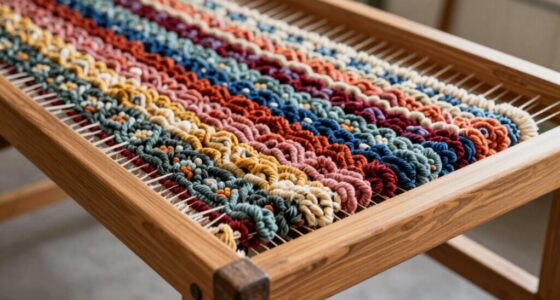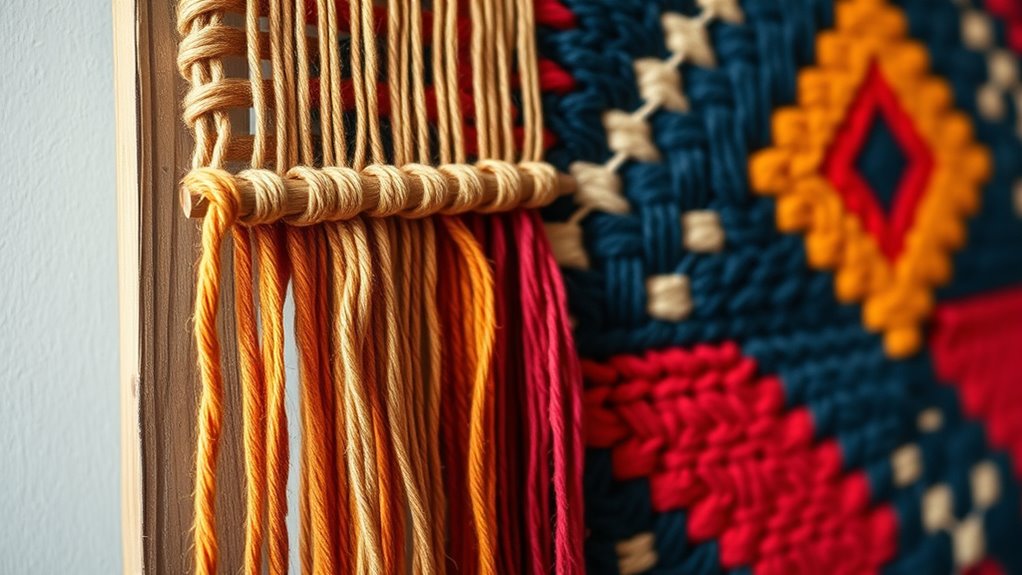

To create DIY wall hangings with a weaving loom, choose fibers like wool or cotton for texture and style. Use simple techniques such as plain or twill weave and add embellishments like fringes or beads for visual interest. Mix different fibers and weaving styles to make your piece unique, and plan your design beforehand. Keep your tension even and embrace imperfections for charm. Continue exploring to discover more tips and ideas for stunning woven art.

Get furniture and decor delivered free with Prime
- Fast, free delivery on millions of items
- Prime Video, Amazon Music and more included
- Member-only deals all year
Key Takeaways
- Choose appropriate fibers like wool, cotton, or synthetic blends based on desired texture and appearance.
- Select weaving techniques such as plain weave, twill, or rya knots to add visual interest and dimension.
- Plan your design with sketches, selecting patterns, colors, and fiber combinations before starting the project.
- Maintain even tension during weaving to ensure a polished, professional-looking wall hanging.
- Add final touches like fringes, beads, or feathers to personalize and enhance your DIY wall art.
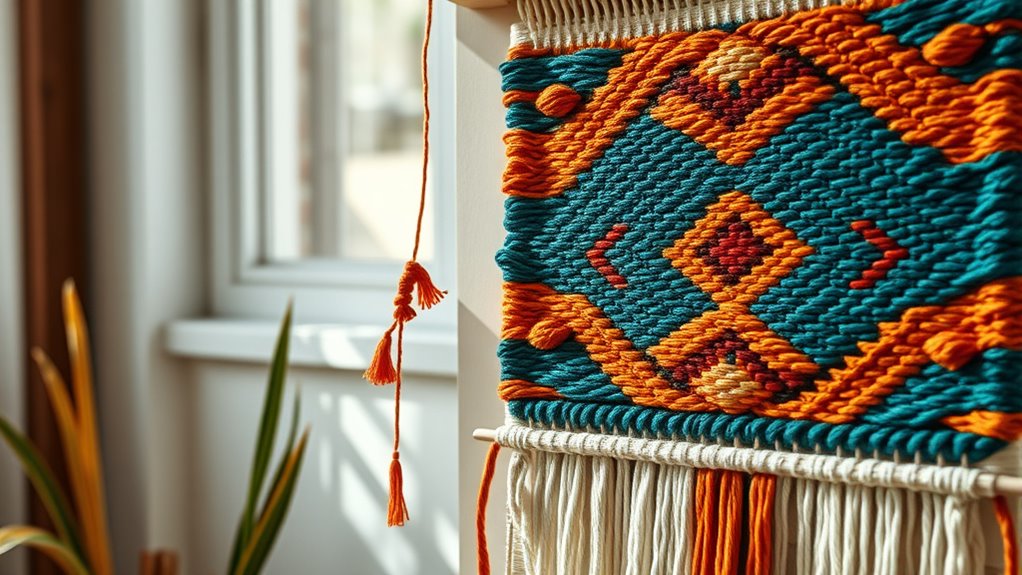
Are you ready to explore the creative possibilities of weaving loom projects? Crafting your own DIY wall hanging is a fantastic way to add personality and texture to any space. To begin, you’ll want to understand the different fiber types available, as each brings a unique look and feel to your finished piece. Wool offers warmth and softness, perfect for cozy, textured designs. Cotton provides a smooth, matte finish that works well for minimalist styles. Jute and hemp bring rustic textures, ideal for boho or earthy themes. Synthetic fibers like acrylic are versatile and durable, making them suitable for both indoor and outdoor displays. Knowing your fiber options helps you choose the right materials to match your aesthetic and functional needs. Once you’ve selected your fibers, you can experiment with various weaving techniques to create visual interest. Basic techniques like plain weave are straightforward and serve as a foundation, but expanding into patterns such as twill or rya knots adds depth and complexity. Twill weaving introduces diagonal lines, giving your wall hanging a sense of movement, while rya knots create plush, tassel-like textures that pop out from the background. Incorporating different weaving techniques allows you to play with texture, color, and pattern, transforming simple fibers into a stunning art piece. As you start your project, consider mixing fibers and techniques to achieve a layered, dynamic effect. For example, combining thick wool with delicate cotton in a twill pattern can produce a striking contrast. You might also experiment with adding fringes, beads, or feathers to enhance the tactile quality and visual appeal of your design. Remember, the key to a successful wall hanging lies in your creativity and willingness to try new approaches. It’s helpful to sketch out your design beforehand, selecting color schemes and patterns that reflect your style. When weaving, keep your tension even to avoid warping your piece and ensure a polished finish. Additionally, understanding the history of pinball machines highlights how technological advances have influenced mechanical and electronic components, which can inspire innovative techniques in fiber arts. As you progress, step back periodically to assess your work, making adjustments as needed. The beauty of DIY weaving is that it’s a forgiving craft—mistakes can be incorporated as part of the charm, or corrected with minimal fuss. With patience and practice, you’ll develop your skills in various weaving techniques and discover which fiber types work best for your projects. Soon, you’ll be creating beautiful, personalized wall hangings that showcase your craftsmanship and artistic flair, turning a simple loom into a focal point of your home decor.
weaving loom kit for wall hangings
As an affiliate, we earn on qualifying purchases.
As an affiliate, we earn on qualifying purchases.
Frequently Asked Questions
What Types of Yarn Are Best for Wall Hangings?
You should choose soft, medium to bulky yarns like wool, cotton, or acrylic for wall hangings. These fibers offer rich textures and good durability. Blending different fiber textures adds depth and interest, while using a mix of colors helps create stunning visual effects. Opt for yarns that are easy to work with and hold their shape, ensuring your wall hanging looks professional and vibrant.
How Do I Choose the Right Loom Size?
Choosing the right loom size can feel intimidating, but start by considering your wall space and the complexity of your weaving techniques. Larger looms give you more room for detailed patterns, while smaller ones are easier to manage and maintain. Keep in mind that proper loom maintenance guarantees your project stays smooth. A well-chosen loom balances size and function, allowing your creativity to flourish without compromise or frustration.
Can Beginners Successfully Complete Weaving Projects?
Yes, beginners can successfully complete weaving projects. Start with simple designs and fiber types like cotton or wool, which are easy to work with. Practice basic design techniques such as plain weave or adding textures gradually. Don’t rush; focus on learning the process. As you gain confidence, experiment with different fiber types and more complex design techniques to create unique, beautiful wall hangings that showcase your skills.
What Safety Precautions Should I Take While Weaving?
You should always prioritize workspace safety by keeping your area clean and well-lit. Wear appropriate safety gear, like eye protection and finger guards if necessary, to prevent injuries. Use sharp tools carefully and store them safely when not in use. Make certain your weaving materials are organized to avoid tripping hazards. Taking these precautions helps you enjoy your weaving project safely and comfortably, minimizing risks and making your creative process more enjoyable.
How Do I Fix Mistakes or Uneven Tension?
Imagine your project as a delicate dance—mistakes and uneven tension are just part of the rhythm. To fix these, gently loosen or tighten your tension adjustment until it feels right. For mistake correction, carefully lift and reweave the affected yarn, blending it seamlessly. Patience is key; taking your time guarantees your wall hanging turns out beautifully balanced and even, showcasing your skill and creativity.
Conclusion
Now that you’ve mastered weaving loom projects, you’re ready to craft mesmerizing wall hangings that showcase your style. With patience and passion, you’ll produce pieces that pop with personality and pizzazz. Remember, practice perfects your technique and makes your creations more charming. So, soak up the skills, stay steady, and let your creativity soar. Before long, your beautiful, bold wall hangings will become a beloved part of your home’s unique story.
Fall Picks
fall essentials
As an affiliate, we earn on qualifying purchases.