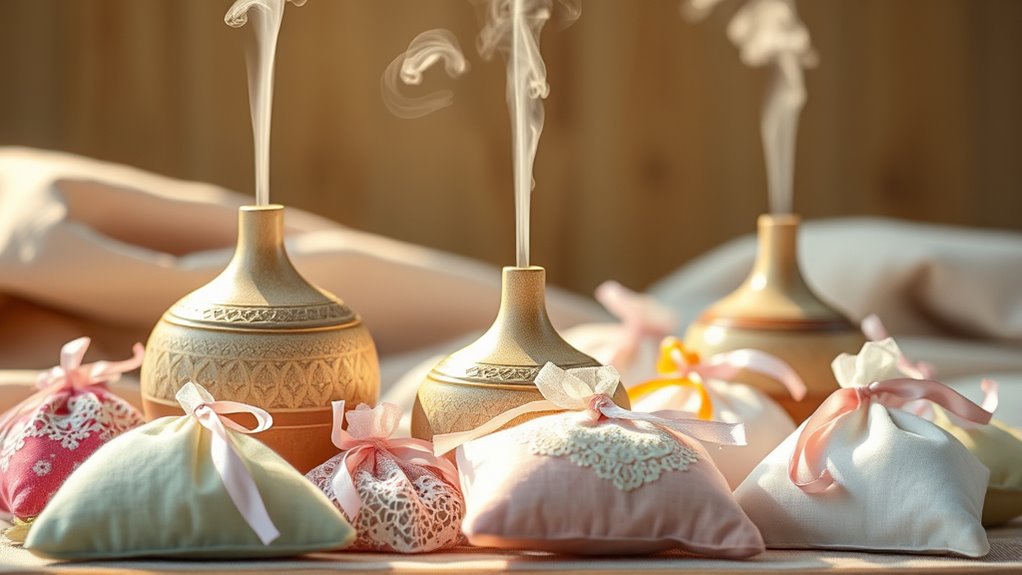

You can easily create DIY aromatherapy diffusers using simple items like small jars, bowls, or bottles. Add water and a few drops of your favorite essential oils to ultrasonic or evaporative diffusers, or warm oils with a candle for heat-based options. Scented sachets can be made by filling small fabric bags with dried herbs, spices, or essential oils. Experimenting with different blends makes your space uniquely relaxing. Keep exploring these ideas to personalize your scent experience even more.

Get furniture and decor delivered free with Prime
- Fast, free delivery on millions of items
- Prime Video, Amazon Music and more included
- Member-only deals all year
Key Takeaways
- Create ultrasonic diffusers using small containers filled with water and essential oils for quick, dispersed aromatherapy.
- Make scented sachets by filling fabric pouches with dried herbs, essential oils, or potpourri for continuous scent.
- Use small glass bottles with nozzles to craft nebulizing diffusers with direct essential oil application for concentrated aroma.
- Design heat-based diffusers with ceramic bowls and candles or warm water to gently release essential oil fragrances.
- Customize scents by blending various essential oils in diffusers and sachets for personalized aromatherapy experiences.
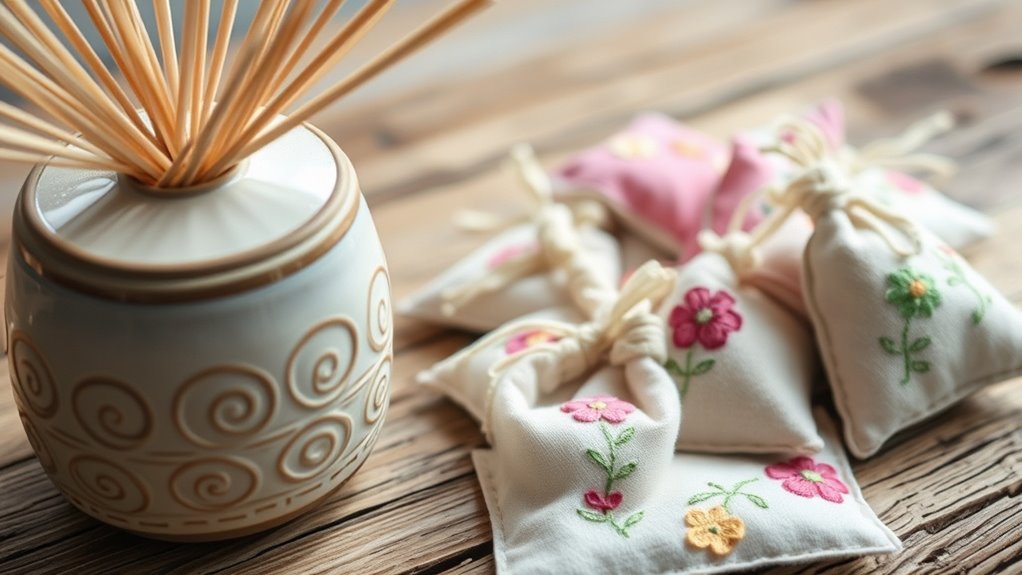
Creating your own aromatherapy diffuser at home is a simple and rewarding way to enjoy the benefits of essential oils. With the right approach, you can craft a diffuser that suits your space, style, and preferences. When exploring diffuser types, you’ll find options like ultrasonic, nebulizing, heat-based, and evaporative diffusers. Each type offers unique advantages and works differently with essential oils, so understanding these differences helps you select the best one for your needs. For example, ultrasonic diffusers are popular because they use water and ultrasonic waves to disperse a fine mist of essential oils, providing both humidification and aromatherapy. Nebulizing diffusers, on the other hand, are highly concentrated and don’t require water, making them ideal for powerful scent delivery. Heat diffusers are simple devices that warm essential oils to release aroma, often using candle or electric heat, while evaporative diffusers rely on fans to spread the scent from essential oils absorbed on pads or filters.
Once you’ve chosen the diffuser type that fits your lifestyle, making your own at home is straightforward. For ultrasonic diffusers, you’ll need a small container or a repurposed object like a glass jar, some water, and a few drops of essential oils. Simply fill the container with water, add your preferred essential oils—lavender for relaxation, eucalyptus for clarity—and plug in the diffuser. You’ll notice how quickly the scent fills your space, creating a calming environment. If you opt for a nebulizing diffuser, you’ll need a small glass or plastic bottle and a few essential oils. Attach the diffuser’s nozzle, add the oils directly into the bottle, and turn it on. This method produces a strong, pure aroma, perfect for targeted scenting.
Making your own diffuser at home is simple with water, essential oils, and a small container.
For DIY heat-based diffusers, you can use a small dish or ceramic bowl, add a few drops of essential oils, and warm it gently with a candle or a warm water bath. This method is simple but requires caution to prevent accidents. Evaporative diffusers can be crafted with a fan and a piece of porous material like a paper towel or cloth. Drop essential oils onto the material and position it in front of the fan; the breeze will carry the scent around your space. Additionally, choosing high-quality essential oils ensures a more pleasant and effective aromatherapy experience.
Whichever diffuser type you choose, the key to success is experimenting with different essential oils to find your favorites. You can blend oils to create custom scents or switch them out based on your mood or needs. Making your own diffuser at home not only saves money but also allows you to tailor the aromatherapy experience precisely to your liking. With a little creativity and basic supplies, you’ll enjoy a continuous, personalized scent that elevates your environment effortlessly.
ultrasonic essential oil diffuser
As an affiliate, we earn on qualifying purchases.
As an affiliate, we earn on qualifying purchases.
Frequently Asked Questions
Can I Reuse Essential Oils in Different Diffusers Safely?
You shouldn’t reuse essential oils in different diffusers without considering oil purity and diffuser compatibility. Reusing oils can cause buildup or cross-contamination, especially if the diffuser isn’t designed for multiple uses. Always clean your diffuser thoroughly, and check if the oils are pure and suitable for your device. Using high-quality, pure oils guarantees safety and maintains diffuser performance, preventing any potential issues with residue or scent mixing.
How Do I Choose the Best Scents for Relaxation?
To choose the best scents for relaxation, focus on essential oils with proven aromatherapy benefits like lavender, chamomile, and bergamot. Use scent selection tips such as selecting calming aromas, balancing intensity, and considering personal preferences. Trust your senses and experiment with different combinations to find what relaxes you most. Remember, the right scent can markedly enhance your wellness routine and create a soothing atmosphere.
Are There Any Safety Tips for Children Around Diffusers?
Like a vigilant guardian at the gates of a castle, you must prioritize child safety around diffusers. Keep diffusers out of children’s reach and avoid placing them near furniture or bedding where they could be knocked over. Never leave a diffuser unattended while in use, and opt for child-safe, natural essential oils. These precautions guarantee a safe environment, allowing your little ones to enjoy the calming benefits without risk.
How Long Do Homemade Diffusers Typically Last?
Homemade diffusers typically last about 1 to 3 months, depending on the diffuser type and usage. The diffuser lifespan varies based on the materials used and how often you refresh the oils. To maximize scent longevity, regularly flip or re-soak the scent sticks or pads, and replace them when the scent diminishes. Proper maintenance helps you enjoy your diffuser’s aroma longer and guarantees safety for everyone around it.
Can I Combine Multiple Scents in One Diffuser?
Yes, you can combine multiple scents in one diffuser. To do this effectively, focus on layering fragrances and scent blending to create a harmonious aroma. Start with complementary scents and adjust the ratios until you get the desired balance. Keep in mind that some scents may overpower others, so experiment carefully. This way, you personalize your diffuser’s aroma and enjoy a unique, multi-layered scent experience every time.
Conclusion
Creating your own aromatherapy diffusers and scented sachets isn’t just fun — it’s a simple way to bring calming scents into your space. When you make them yourself, you control the ingredients, ensuring a natural touch. Plus, the process can be relaxing and rewarding, turning your home into a soothing sanctuary. So, why not try these DIY projects today? You’ll enjoy the fresh, personalized aroma, and feel the stress melt away, one scent at a time.
Fall Picks
fall essentials
As an affiliate, we earn on qualifying purchases.