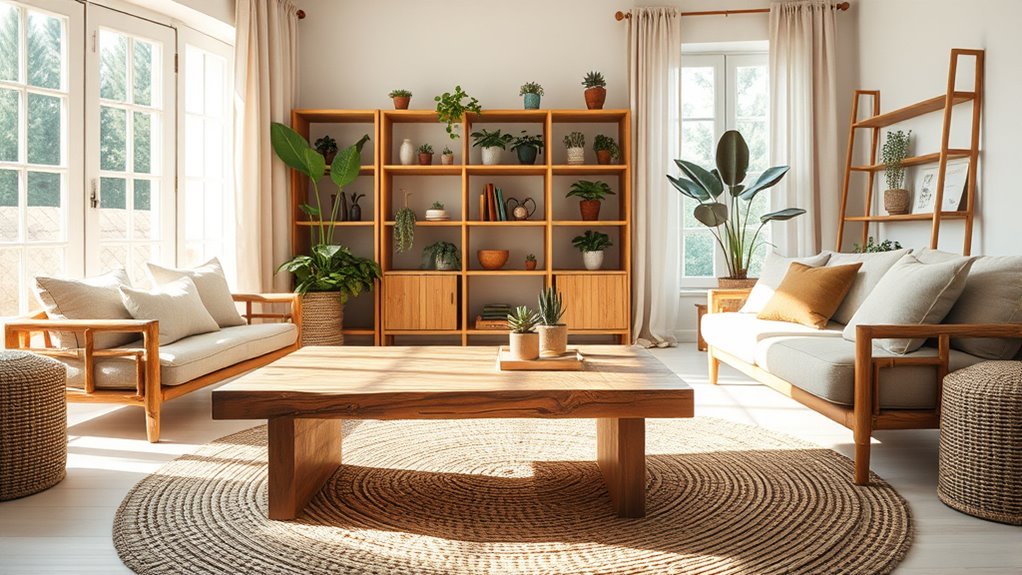

To create sustainable home decor, choose eco-friendly furniture made from materials like reclaimed wood, bamboo, or recycled metal. Recycle and repurpose existing pieces to extend their life and reduce waste. Opt for biodegradable finishes that protect furniture without harmful chemicals. Prioritize durability and quality to make certain your items last longer. Supporting brands with transparent sourcing also helps. Keep exploring to discover more simple ways to make your home greener and more stylish.

Get furniture and decor delivered free with Prime
- Fast, free delivery on millions of items
- Prime Video, Amazon Music and more included
- Member-only deals all year
Key Takeaways
- Opt for furniture made from sustainable materials like bamboo, reclaimed wood, or recycled metals to reduce environmental impact.
- Use biodegradable finishes such as plant-based oils and water-based varnishes to protect furniture eco-friendly.
- Recycle or repurpose old furniture to extend its lifespan and minimize waste in landfills.
- Choose brands with transparent sourcing and eco-conscious manufacturing practices for sustainable home decor.
- Prioritize durable, high-quality furniture that lasts longer, reducing the need for frequent replacements.
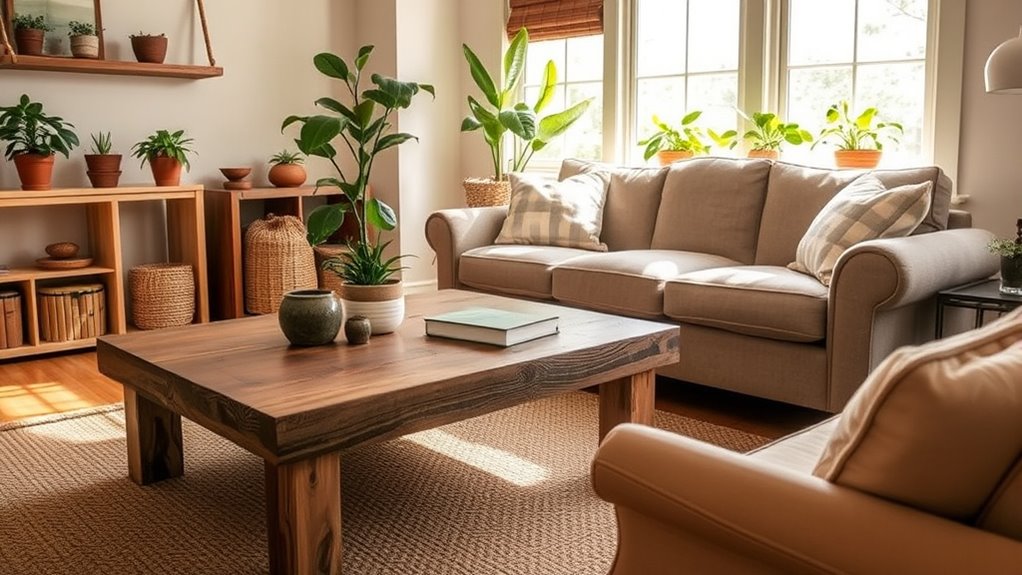
Creating a sustainable home decor is an effective way to reduce your environmental impact while making your living space more stylish and inviting. One of the simplest ways to do this is by recycling furniture. Instead of discarding old pieces, consider giving them a new life through sanding, repainting, or repurposing. Recycling furniture not only keeps usable items out of landfills but also preserves resources by reducing demand for new materials. For example, you might transform vintage wooden chairs into unique accent pieces or turn outdated dressers into stylish storage units. This approach allows you to add character to your home while practicing eco-conscious habits.
Recycling furniture breathes new life into your space and helps protect the environment.
In addition to recycling furniture, paying attention to finishes can make a significant difference. Biodegradable finishes are an excellent choice because they’re derived from natural sources and break down safely in the environment. These finishes, such as plant-based oils, waxes, or water-based varnishes, provide a protective coating for your furniture without introducing toxic chemicals. When selecting materials, look for products labeled as biodegradable or environmentally friendly, and always check for certifications that verify their eco-credentials. Using biodegradable finishes guarantees that your furniture remains durable and beautiful while minimizing your carbon footprint and reducing indoor air pollution caused by synthetic chemicals.
You can also extend your eco-friendly efforts by choosing furniture made from sustainable materials, like bamboo, reclaimed wood, or recycled metal. These materials are renewable and often require less energy to produce. When shopping, opt for brands committed to transparency about their sourcing and manufacturing processes. This not only supports sustainable practices but also guarantees you’re investing in quality, longer-lasting pieces. Additionally, consider the design and construction quality of furniture to ensure it’s built to last, reducing the need for frequent replacements. Incorporating sustainable materials into your decor is an essential step toward a greener lifestyle.
Incorporating eco-friendly furniture and finishes into your home isn’t just about reducing environmental harm; it’s also about creating a space that reflects your values. Recycling furniture and choosing biodegradable finishes are practical, impactful steps you can take today. They help lower waste, decrease reliance on non-renewable resources, and contribute to a healthier indoor environment. By making thoughtful decisions about the materials you use and how you treat your furnishings, you’re fostering a more sustainable lifestyle and inspiring others to do the same. Your home becomes more than just a living space – it becomes a statement of your commitment to caring for the planet.
eco-friendly reclaimed wood furniture
As an affiliate, we earn on qualifying purchases.
As an affiliate, we earn on qualifying purchases.
Frequently Asked Questions
How Do I Verify the Eco-Friendliness of Furniture Brands?
To verify a furniture brand’s eco-friendliness, start by checking their sourcing transparency—do they disclose where and how they source materials? Research their brand reputation for sustainability practices and certifications like FSC or GREENGUARD. Look for customer reviews and third-party audits that confirm eco-friendly efforts. This helps confirm you’re supporting brands committed to environmentally responsible practices, making your choice impactful for a sustainable home.
Are Recycled Materials as Durable as New Ones?
Recycled materials can be just as durable as new ones if they’re properly processed. Reclaimed wood, for example, often has excellent strength and durability, especially when carefully selected and treated. Recycled metals and plastics also boast comparable durability, making them reliable choices for furniture. Keep in mind that the durability of reclaimed wood depends on its age and treatment, so always verify the specific material’s strength and quality before purchasing.
What Certifications Indicate Sustainable Furniture Sourcing?
You should look for certification standards like FSC, PEFC, and GREENGUARD, which verify sustainable furniture sourcing. These certifications guarantee that materials come from responsibly managed forests and that sourcing transparency is maintained throughout production. By choosing furniture with these labels, you can confidently support eco-friendly practices, knowing the products meet strict environmental and social criteria, helping you create a sustainable home while reducing your ecological footprint.
Can Eco-Friendly Furniture Be Cost-Effective Long-Term?
Eco-friendly furniture can definitely be cost-effective long-term. You’ll notice cost savings through reduced replacement needs because of its long-term durability. Although the initial investment might be higher, eco-friendly pieces often last longer and require less maintenance, saving you money over time. Plus, choosing sustainable materials supports environmental health, making your home both stylish and eco-conscious. So, investing in eco-friendly furniture pays off in the long run.
How Do I Maintain and Clean Eco-Friendly Home Decor Items?
Wondering how to keep your eco-friendly decor pristine? You should prioritize eco-friendly cleaning methods, like using natural solutions such as vinegar and baking soda, which are gentle and effective. Regular maintenance tips include avoiding harsh chemicals, wiping surfaces with soft cloths, and protecting items from excessive moisture and sunlight. By following these simple steps, you’ll preserve your decor’s beauty and eco integrity, ensuring it remains stunning and sustainable for years to come.
Conclusion
By choosing eco-friendly furniture and sustainable materials, you’re making a positive impact on the environment. Did you know that the furniture industry contributes nearly 10% of global carbon emissions? Every small change, like opting for reclaimed wood or organic textiles, adds up. You have the power to create a beautiful, eco-conscious home that supports a healthier planet. So go ahead—decorate sustainably and inspire others to do the same!
Fall Picks
fall essentials
As an affiliate, we earn on qualifying purchases.