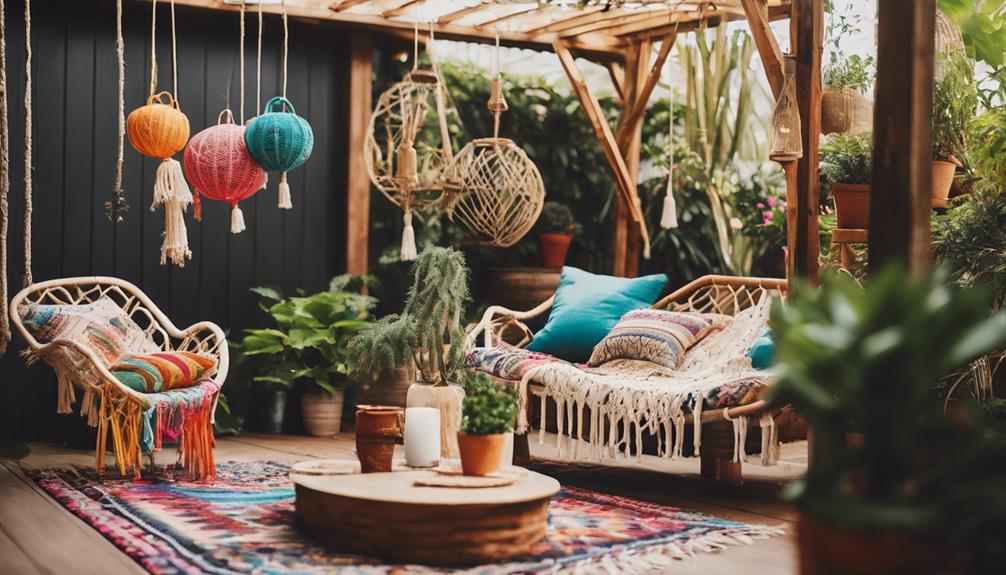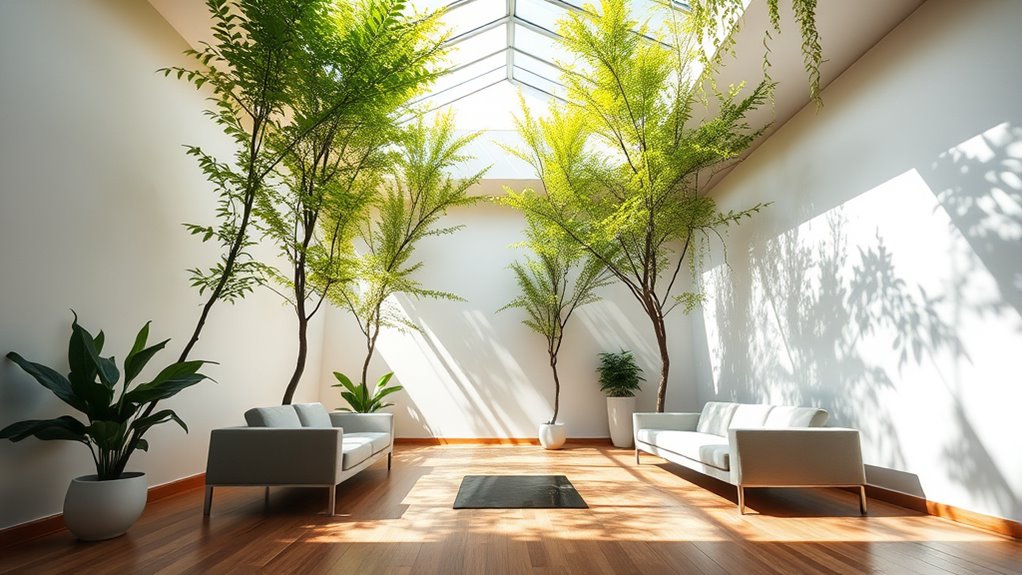

Indoor trees and biophilic focal points can transform your space into a calming, vibrant oasis. By incorporating large plants like ficus, palms, or rubber trees, you add natural beauty, warmth, and texture while creating striking visual features. These elements not only enhance your decor but also improve air quality and boost your mood. With proper care, they become integrated parts of your wellness and design routine—keep exploring to discover how to incorporate them seamlessly into your home.

Get furniture and decor delivered free with Prime
- Fast, free delivery on millions of items
- Prime Video, Amazon Music and more included
- Member-only deals all year
Key Takeaways
- Indoor trees serve as striking focal points that enhance aesthetic appeal and create a calming, natural atmosphere.
- They improve air quality by filtering toxins and increasing breathability indoors.
- Incorporating greenery boosts mood, reduces stress, and promotes wellness within interior spaces.
- Proper placement and maintenance of indoor trees optimize space, lighting, and overall decor harmony.
- Using biophilic focal points encourages mindfulness and fosters a personalized, inviting environment.
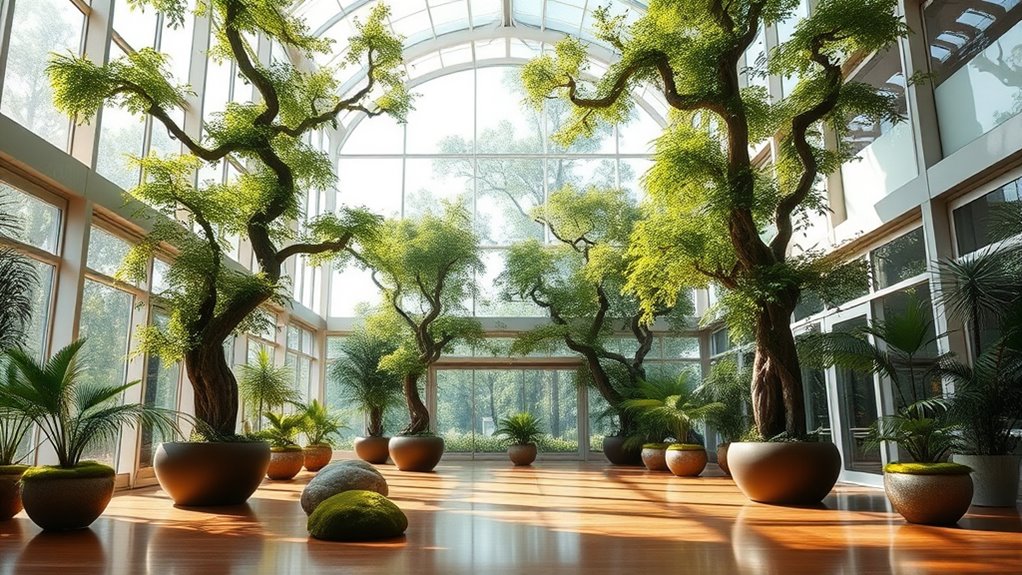
Bringing indoor trees and biophilic focal points into your space can transform any room into a calming, vibrant environment. These natural elements not only elevate the aesthetic appeal but also contribute considerably to air purification. When you introduce lush greenery indoors, you’re creating a living artwork that draws the eye and fosters a sense of tranquility. Large indoor trees, such as ficus or rubber plants, serve as striking focal points that immediately command attention, anchoring your decor with their impressive stature and lush foliage. They soften sharp lines and modern furnishings, adding warmth and organic texture that make your space feel more inviting.
Indoor trees and biophilic focal points create calming, vibrant spaces while enhancing air quality and adding natural warmth.
Beyond their visual impact, indoor trees actively improve air quality. Many popular indoor species are known for their air-purifying properties, removing toxins like formaldehyde, benzene, and trichloroethylene from the air. This not only enhances your environment’s health but also creates a fresher, more breathable atmosphere. As you tend to these plants, you’ll notice the air feels cleaner, and the space becomes more energizing. The presence of greenery can even boost your mood and reduce stress, turning your home or office into a wellness retreat.
Aesthetic enhancement goes beyond just the visual appeal; it influences how you feel in your space. The natural beauty of indoor trees introduces a sense of harmony and balance, grounding your interior design with a touch of nature’s serenity. Whether you’re aiming for a minimalist look with sleek, tall trees or a lush, jungle-like vibe with an assortment of plants, these focal points help craft a personalized oasis. You can position a tall ficus near a window to frame the view, or place a dramatic palm in a corner to create depth and dimension. The key is selecting trees that suit your space, lighting, and maintenance preferences to ensure they thrive and continue to beautify your environment.
Incorporating biophilic focal points like indoor trees also encourages mindfulness and routine care, which can be grounding in a busy world. As you water, prune, and tend to your plants, you’re engaging with nature directly, which can be incredibly therapeutic. Additionally, understanding the proper use and maintenance of paint sprayers can help keep your indoor environment clean and safe while decorating or renovating your space. This ongoing interaction fosters a deeper connection to your environment, making your space not just aesthetically pleasing but also emotionally nourishing. Whether used as central features or accent pieces, indoor trees and biophilic focal points serve as powerful tools to elevate your space’s aesthetic and air quality, creating a healthier, more inviting atmosphere you’ll enjoy every day.
As an affiliate, we earn on qualifying purchases.
Frequently Asked Questions
Which Indoor Trees Require the Least Maintenance?
If you want low maintenance species, consider choosing a snake plant or a pothos. These indoor trees require minimal care, thriving with infrequent watering and indirect light. To keep them healthy, follow easy care tips like allowing the soil to dry between waterings and avoiding direct sunlight. You’ll enjoy the benefits of indoor greenery without the hassle, making them perfect for busy or beginner plant enthusiasts.
How Do Indoor Trees Improve Air Quality?
Indoor trees act as natural air purifiers, transforming your space into a breathing oasis. They absorb carbon dioxide and release fresh oxygen, much like lungs working tirelessly for you. By filtering toxins and pollutants from the air, they improve air quality and promote better health. With their vibrant presence, these trees make your environment cleaner and more invigorating, turning your home into a sanctuary of fresh, purified air.
What Are the Best Lighting Conditions for Indoor Trees?
You should provide indoor trees with bright, indirect natural sunlight for ideal growth. If natural light is limited, supplement with artificial lighting like grow lights, ensuring they mimic the spectrum of natural sunlight. Keep the light source at an appropriate distance to prevent leaf burn and promote healthy development. Balancing natural sunlight with artificial lighting helps your indoor trees thrive and stay vibrant year-round.
How Often Should Indoor Trees Be Watered?
Ever wondered how to keep your indoor trees thriving? You should water them when the soil moisture feels dry to the touch, typically every 1-2 weeks, but it varies by species and environment. A proper watering schedule guarantees healthy growth and prevents overwatering. Check soil moisture regularly, and adjust your routine as needed. Remember, consistent care is key to lush, vibrant indoor trees.
Can Indoor Trees Help Reduce Stress and Increase Productivity?
Indoor trees can considerably reduce stress and boost your productivity. When you have these lush green focal points around, they create a calming environment that eases anxiety and enhances focus. By incorporating indoor trees into your space, you not only improve air quality but also foster a connection to nature, which research shows can lead to better mental well-being and increased efficiency in your daily tasks.
Conclusion
Bringing bold, beautiful indoor trees and biophilic focal points into your space transforms your environment into a vibrant, vivacious venue. By blending greenery with grandeur, you create a calming, mesmerizing corner that charms and rejuvenates. Embrace the essence of earth’s elegance and elevate your interior with effortless energy. Let lush leaves and lively focal points fuel your foundation of freshness, fostering a flourishing, feel-good space where you can breathe, bloom, and believe in a better, brighter balance.
Halloween Picks
halloween
As an affiliate, we earn on qualifying purchases.