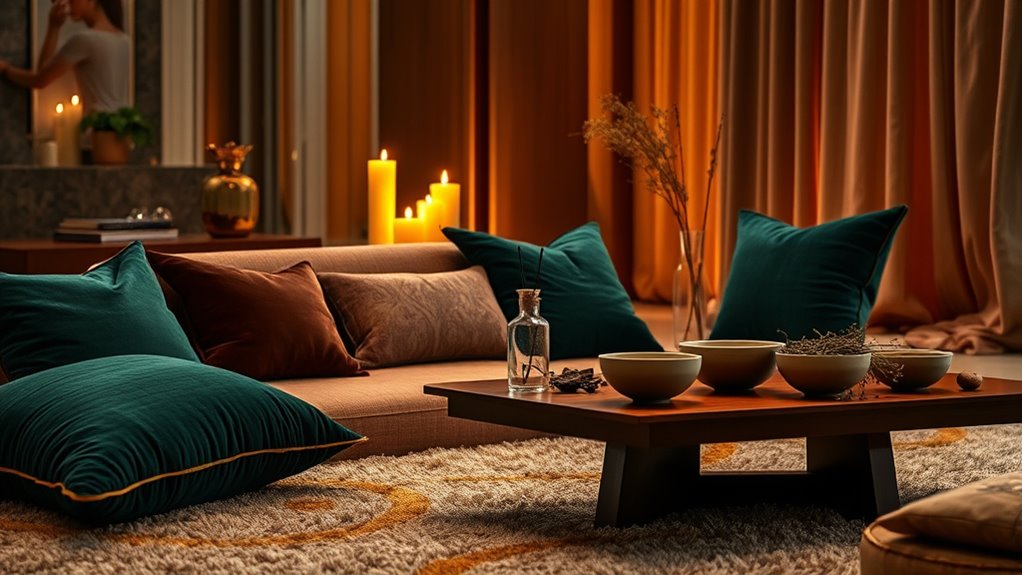

Sensorial interior design actively involves your senses to create immersive, harmonious spaces. By carefully combining tactile textures like plush fabrics, inviting scents such as lavender, soothing sounds, and thoughtfully chosen lighting, you can evoke emotions, boost well-being, and foster comfort. This approach encourages you to experience your environment beyond visuals. If you want to explore how to balance and tailor these elements effectively, there’s much more to discover that can transform your space into a multisensory haven.

Get furniture and decor delivered free with Prime
- Fast, free delivery on millions of items
- Prime Video, Amazon Music and more included
- Member-only deals all year
Key Takeaways
- Integrate varied textures like velvet, rugs, and marble to stimulate touch and add visual depth.
- Use fragrant elements such as candles and essential oils to evoke emotions and enhance mood.
- Incorporate soundscapes and adjustable lighting to create a balanced, immersive atmosphere.
- Achieve sensory harmony by thoughtfully combining textures, scents, sounds, and lighting.
- Design spaces that enrich daily life through multisensory engagement, fostering comfort and emotional well-being.

Sensorial interior design focuses on engaging your senses to create a more immersive and memorable space. When you pay attention to tactile textures, you invite touch into your environment, making it feel more inviting and layered. Imagine running your hand over plush velvet cushions, the roughness of woven rugs under your feet, or the sleek coolness of marble countertops. These tactile textures stimulate your sense of touch, making your space feel alive and dynamic. By combining different textures, you add depth and contrast, ensuring that your environment isn’t just seen but also felt. This sensory engagement encourages you to explore your surroundings more intentionally, creating a richer experience every time you step into the room.
Aromatic elements play a crucial role in enhancing your space’s sensorial qualities. Scents have a unique power to evoke emotions, memories, and even influence your mood. Incorporating fragrant candles, essential oils, or fresh flowers can transform a room into a calming sanctuary or an energizing hub. For example, lavender and chamomile can promote relaxation, while citrus or peppermint invigorate your senses and boost alertness. When you thoughtfully select aromatic elements, you turn your environment into a multisensory experience that goes beyond visual appeal. These scents can also serve as subtle signals of comfort and familiarity, helping you feel more at home in your space.
Beyond just textures and aromas, you can also consider how sound and light contribute to a sensorial interior. Soft background music or the gentle hum of nature sounds can soothe or invigorate, depending on your intent. Similarly, the quality and warmth of lighting can influence your mood—warm, dim lights create intimacy and comfort, while bright, cool lighting energizes a space. When you combine these elements, you craft a holistic environment that appeals to all your senses, making your space more engaging and emotionally resonant.
Ultimately, sensorial interior design isn’t about overwhelming your senses but rather creating a balanced environment where each element works harmoniously. When you incorporate tactile textures and aromatic elements thoughtfully, you deepen your connection to the space. It becomes more than just a room; it turns into an experience, a refuge that stimulates your senses and enriches your daily life. By paying attention to these details, you transform your environment into a place where you feel truly connected, comfortable, and inspired every time you walk in. Additionally, being aware of support hours for various entertainment venues can help you plan your visits more effectively, ensuring you make the most of your sensory-rich experience.
As an affiliate, we earn on qualifying purchases.
Frequently Asked Questions
How Can Scent Influence Mood in Interior Spaces?
Scent can notably influence your mood by creating a calming or energizing atmosphere. You can harness aromatherapy benefits through essential oils like lavender for relaxation or citrus for alertness. Using scent layering techniques, you blend different fragrances to enhance the desired effect, making your space more inviting. By intentionally incorporating these methods, you transform your interior into a mood-boosting environment that truly engages your senses.
What Materials Are Best for Tactile Sensory Engagement?
You should choose textured fabrics and natural woods for tactile sensory engagement because they offer rich, inviting surfaces that stimulate your sense of touch. Some might think these materials are delicate or high-maintenance, but their durability and warmth make them perfect for creating cozy, inviting spaces. Natural woods provide a smooth yet varied feel, while textured fabrics add depth and comfort, making your environment more engaging and emotionally soothing.
How to Balance Multiple Sensory Elements Without Overwhelming?
To balance multiple sensory elements without overwhelming, you should layer textures thoughtfully, ensuring they complement each other and create harmony. Select lighting that enhances the textures and colors without overpowering the space. Use subtle variations and contrasts to guide the senses smoothly. Keep a visual balance, and incorporate calming elements to prevent sensory overload, allowing each element to shine without competing for attention.
Are There Specific Colors That Enhance Sensory Experiences?
Bright, warm colors like reds and oranges boost energy, aligning with color psychology to enhance sensory engagement. Soft blues and greens promote calm, creating visual harmony that balances stimulation. You should select colors based on the mood you want to evoke, ensuring they complement each other to avoid overwhelm. Using a mix of vibrant and muted tones allows your space to stimulate senses without overpowering, creating a dynamic yet harmonious environment.
How Does Soundproofing Affect the Sensorial Design?
Soundproofing enhances your sensorial interior design by reducing noise distractions and creating a calming environment. Using acoustic paneling absorbs sound, making the space feel more intimate and comfortable. Sound masking adds a gentle background noise to cover disruptive sounds, improving focus and relaxation. Together, these elements help you engage more fully with your space, allowing your senses to relax and respond positively without overwhelming noise interruptions.
Conclusion
As you step into a space crafted with all your senses in mind, imagine how each detail pulls you deeper into its embrace. The subtle scent, the soft texture beneath your fingertips, the gentle hum in the background—all working together to create an experience you can’t quite forget. But what if there’s more? A hidden layer, a secret element waiting to surprise you. Keep exploring—your senses are just beginning to awaken to what’s possible.
Fall Picks
fall essentials
As an affiliate, we earn on qualifying purchases.