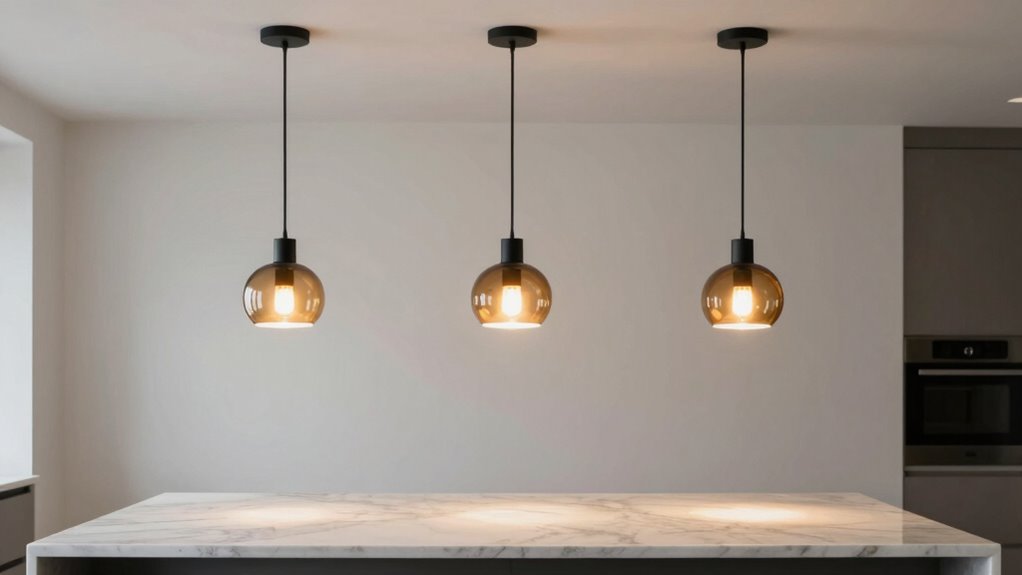

To achieve perfect lighting with your kitchen island pendants, space them about 24-30 inches apart for an 8-foot island, and hang them 30-36 inches above the countertop. This ensures even light distribution, minimizes shadows, and avoids glare. Adjust the height based on your ceiling type and fixture size for a balanced look. If you keep these guidelines in mind, you’ll create a stylish and functional space—there’s more to perfecting your setup below.
Key Takeaways
- Space pendants 24-30 inches apart for islands 6-8 feet long to ensure even light distribution and avoid shadows.
- Hang pendants 30-36 inches above the countertop for optimal task lighting and to prevent glare.
- Measure your island’s length and width accurately to determine proper pendant placement and spacing.
- Adjust pendant height based on ceiling height and fixture size to maintain balance and functionality.
- Match pendant style and color with your kitchen design, ensuring consistent height and spacing for visual harmony.

ELYCCUPA 20”Hand Woven Rattan Chandelier Boho Pendant Light Adjustable Coastal Pendant Light for Kitchen Island Dining Living Room, White, UL Listed
Elegant Design: This exquisite woven rattan chandelier is crafted with intricate wicker weaving, delicately embedded with rattan, creating…
As an affiliate, we earn on qualifying purchases.
As an affiliate, we earn on qualifying purchases.
Why Proper Spacing and Height Are Key for Kitchen Island Pendants

Proper spacing and height are essential to maximize the functionality and visual appeal of your kitchen island pendants. When hung at the right height, your fixtures can create a welcoming lighting ambiance that enhances the room’s overall vibe. Proper spacing ensures each pendant has enough room to shine without crowding, preventing a cluttered look. It also helps distribute light evenly across the island, making cooking and prep easier. Fixture styles matter too; choosing the right style and spacing can highlight your kitchen’s design theme. Too close, and they may block sightlines or feel overwhelming; too far apart, and the lighting may seem disconnected. Paying attention to these details guarantees your pendants serve both a practical and aesthetic purpose. Additionally, considering the lighting requirements of your space can help determine the optimal height and spacing for both function and style. Ensuring correct fixture placement can significantly improve both the ambiance and usability of your kitchen. For optimal results, consulting lighting layout planning guidelines can help you achieve the perfect balance. Proper planning also involves understanding room proportions, which can influence how your pendants should be spaced and hung for the best visual effect.

Brushed Nickel Pendant Lights,Modern Farmhouse Pendant Light,Light Fixture Kitchen Pendant Mini Hanging Light for Sink Island,Adjustable Height,Home Décor Lighting (Brushed Nickel 2 pack Stem Rod)
Downrod Stiff Poles for brushed nickel pendant light – this modern pendant light come with threaded straight rods…
As an affiliate, we earn on qualifying purchases.
As an affiliate, we earn on qualifying purchases.
How to Measure Your Kitchen Island for Perfect Pendant Placement
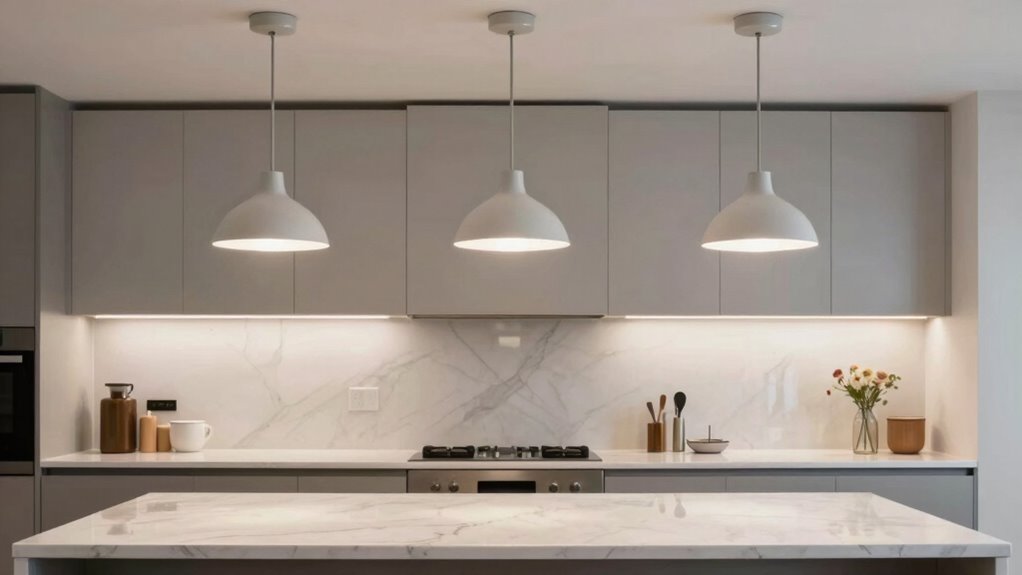
Start by measuring the length and width of your kitchen island to determine the best placement for your pendants. Then, decide on the spacing between each pendant to make certain a balanced look. Accurate measurements will help you achieve a cohesive and visually appealing setup. Considering the symbolism of clocks and time can also inspire your design choices, adding a layer of meaningful decor to your space. Remember that understanding zodiac traits and personalities can guide your selection of styles that reflect your personal energy and ambiance preferences. Additionally, paying attention to lighting placement principles ensures your pendants provide both function and aesthetic harmony.
Measure Length and Width
To guarantee your pendant lights look balanced and well-proportioned, you need to accurately measure your kitchen island’s length and width. Using proper measuring techniques ensures your pendant placement aligns with your space and design considerations. Start by measuring the longest side of your island, noting the exact length. Then, measure the width at its widest point. Use a tape measure for precise readings, avoiding guesswork. Keep in mind the overall size of your kitchen and the scale of other elements to maintain harmony. These measurements serve as the foundation for selecting the right number and size of pendants, helping you avoid overcrowding or under-illumination. Accurate measurements are essential for creating a cohesive, functional, and visually appealing lighting setup. Additionally, understanding standard spacing guidelines can help you determine the optimal distance between pendants for a balanced look. Proper measurement techniques are crucial to ensure your pendant arrangement complements your kitchen’s layout and style. Paying attention to lighting placement can also enhance the overall ambiance and functionality of your space. Incorporating precise measurements can further improve your lighting design by ensuring all fixtures are correctly aligned and spaced for maximum aesthetic appeal. Moreover, considering lighting aesthetics can ensure that your pendants enhance the overall style and ambiance of your kitchen.
Determine Pendant Spacing
Once you’ve measured your kitchen island, the next step is determining the ideal spacing for your pendant lights to achieve a balanced look. Proper spacing guarantees your fixtures complement your island’s size and style. Consider these key points:
- For a standard 6-8 foot island, space pendants 24-30 inches apart to maintain visual harmony.
- Choose fixture styles that match your overall decor, whether modern, rustic, or industrial, ensuring style consistency.
- Keep in mind color coordination; pendants in complementary or contrasting colors can enhance the design.
- Avoid placing pendants too close or too far apart—aim for even spacing that highlights your island without overcrowding.
- Remember to consider lighting placement to ensure your pendants provide adequate illumination and create a welcoming ambiance.
- To achieve a balanced look, consider ideal pendant height so the fixtures are proportionate to your island and eye level.
This approach guarantees a cohesive, stylish, and functional lighting setup.

CAFULAM Modern Black Farmhouse Pendant Light with Glass Shade,Industrial Pendant Lighting, Adjustable Hanging Light Fixtures, Farmhouse Pendant Lighting
【PENDANTS PERFECT FOR YOUR SPACE】 – The matte black pendant light is ideal for a variety of spaces,…
As an affiliate, we earn on qualifying purchases.
As an affiliate, we earn on qualifying purchases.
What Is the Best Distance Between Pendant Lights?
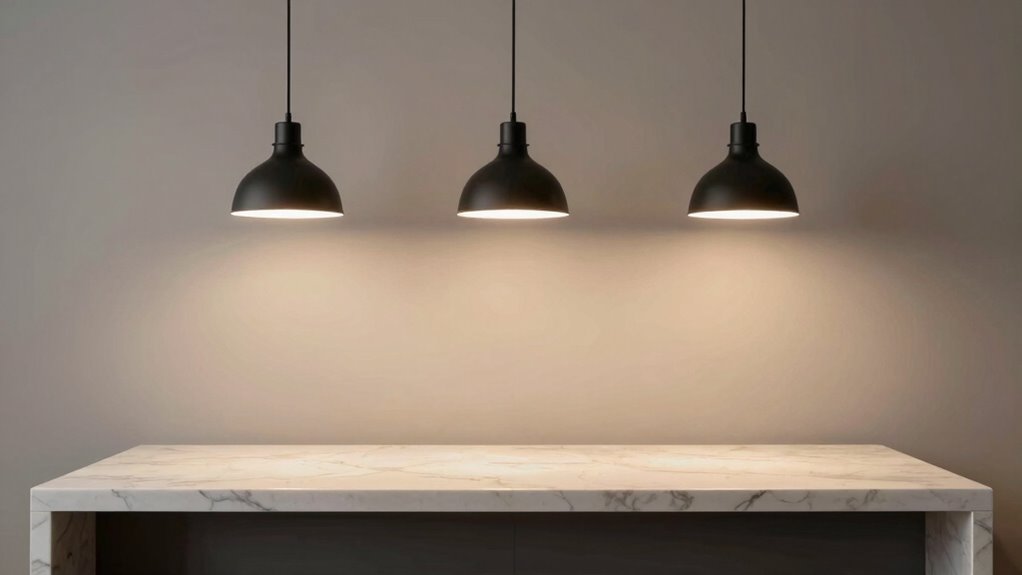
Finding the right distance between pendant lights is key to achieving even lighting and a balanced look. You’ll want to follow ideal spacing guidelines to prevent glare and shadows on your island. Proper placement also considers the lighting distribution, ensuring each pendant contributes to a cohesive illumination. When planning your layout, it’s helpful to measure the space accurately to ensure consistent spacing throughout. Let’s explore how to space your pendants for both function and style. Incorporating sustainable practices, such as choosing eco-friendly lighting options, can also enhance your kitchen’s overall sustainability and reduce energy consumption. Additionally, paying attention to the appropriate height of pendant lights ensures they are both functional and aesthetically pleasing. Properly considering natural light can further optimize your kitchen lighting setup and create a harmonious environment.
Optimal Spacing Guidelines
Determining the ideal distance between pendant lights is essential for both functionality and aesthetics. Proper spacing enhances lighting design and guarantees electrical safety. To achieve the best results, consider these guidelines:
- Maintain 24-30 inches between pendant centers for balanced illumination.
- Space fixtures evenly along the length of your island, considering its size.
- Ensure pendants hang at a height that prevents obstruction and glare.
- Verify wiring and electrical connections meet safety standards, avoiding overcrowding.
- Incorporate lighting zones to customize illumination levels and improve overall ambiance. Additionally, paying attention to sound healing science principles can create a more harmonious and relaxing kitchen environment, especially with the integration of calming acoustic elements. Implementing proper fixture placement is crucial for achieving an even distribution of light and maintaining visual balance. Proper spacing also supports net+ certification benefits, ensuring your lighting setup aligns with safety and quality standards. Following these spacing rules creates a cohesive look and ideal lighting distribution. Proper placement minimizes shadows and glare, making your kitchen both stylish and safe. Keep in mind that precise spacing supports good lighting design, functionality, and electrical safety.
Avoiding Glare and Shadows
Proper spacing between pendant lights not only creates a balanced look but also helps prevent glare and shadows that can hinder functionality. To achieve effective ambient lighting and task illumination, keep pendants a comfortable distance apart—typically 24 to 30 inches. This spacing avoids overlapping shadows and reduces glare, ensuring even light distribution across your workspace. Use the table below as a quick reference:
| Pendant Spacing | Effect | Ideal Use |
|---|---|---|
| Less than 24″ | More shadows, glare possible | Decorative accents |
| 24-30″ | Even lighting, minimal glare | Cooking, prepping areas |
| Over 30″ | Less ambient overlap | Ambient lighting, accent decor |
Adjust based on pendant size and bulb brightness to optimize both task illumination and overall ambiance. Additionally, considering lighting placement guidelines can help you achieve the perfect balance between functionality and aesthetics.
Balancing Light and Space
To achieve a balanced look and ideal functionality, you need to find the right distance between your pendant lights. Proper spacing ensures you get both ambient lighting and task illumination without overcrowding or gaps.
- Keep pendants about 24-30 inches apart for even light distribution.
- Aim for a height that allows about 30-36 inches above the countertop for optimal task lighting.
- Consider the size of your pendants; larger fixtures need more space between them.
- Ensure the lighting doesn’t create glare or shadows, maintaining a harmonious balance.
Spacing too close can cause glare and diminish ambient lighting, while too far apart may leave areas poorly lit. Finding the right distance enhances both the aesthetic and functionality of your kitchen.
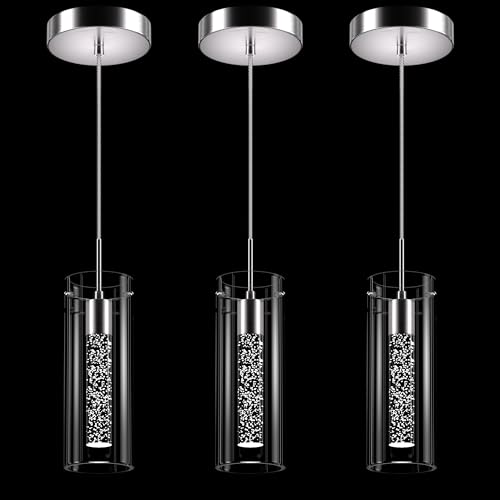
Esfos Pendant Ceiling Light Fixture, LED Kitchen Lighting Crystal Pendant Lights Kitchen Island, 1-Light Integrated Kitchen Hanging Light Fixture Modern Island Light with Bubble Glass Three Pack
Modern Pendant Lights: Simple design line, graceful taste, Esfos pendant light for kitchen island is eye-catching and can…
As an affiliate, we earn on qualifying purchases.
As an affiliate, we earn on qualifying purchases.
How High Should Pendant Lights Hang Over Your Kitchen Island?
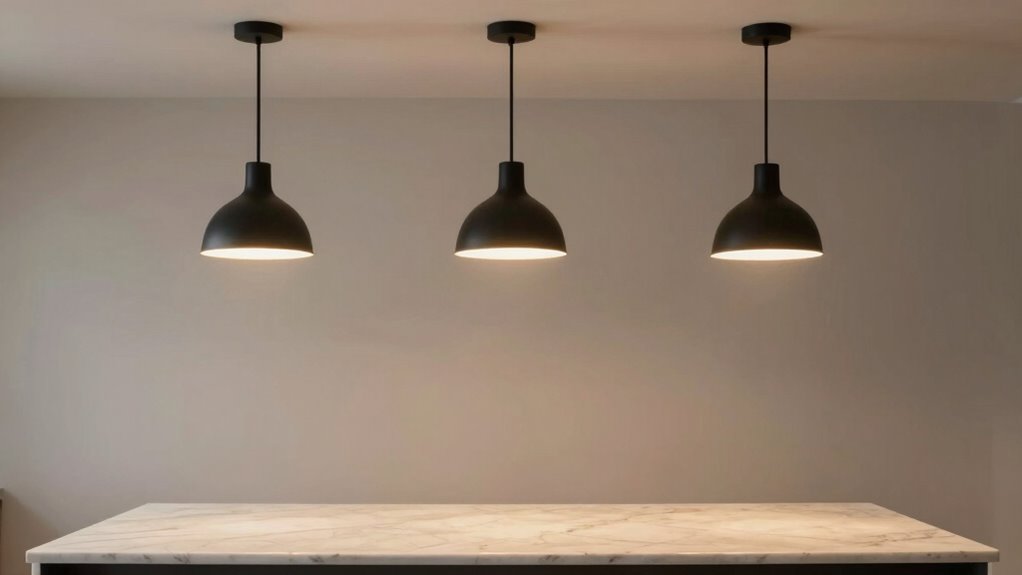
When hanging pendant lights over your kitchen island, the right height can make all the difference in both style and functionality. Typically, pendants should hang about 30 to 36 inches above the countertop, ensuring ample lighting without obstructing views. Consider your color coordination; choose pendant finishes that complement your cabinet colors and overall kitchen palette. Material styles also matter—sleek metals suit modern designs, while warm wood tones fit rustic themes. If your ceiling is higher, you might need longer cords to keep the pendants at ideal height. Conversely, for standard ceilings, adjustable cords help fine-tune placement. The goal is to create a balanced look that provides effective task lighting while enhancing your kitchen’s aesthetic.
Tips for Styling and Positioning Pendants for Both Looks and Function
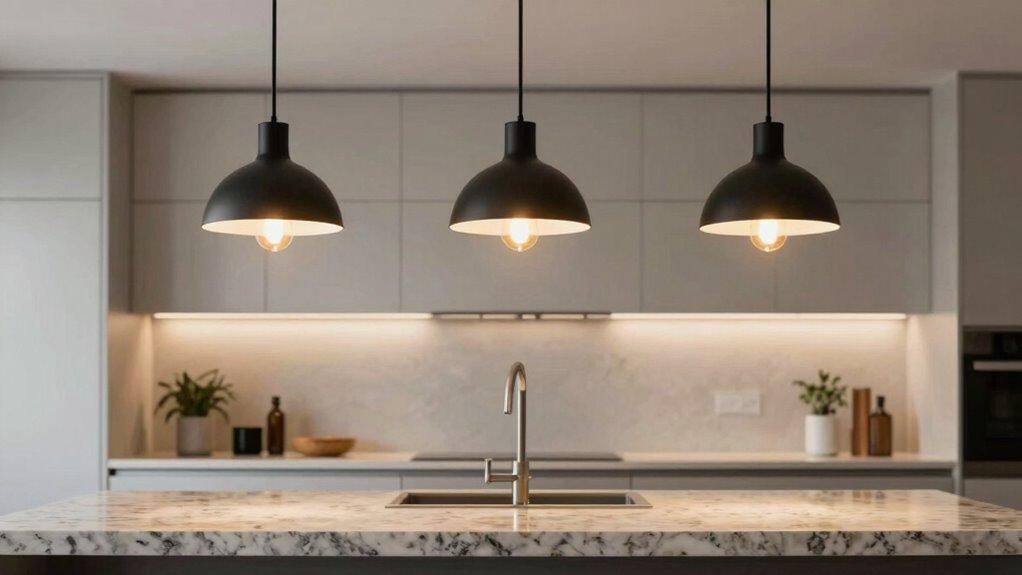
Choosing the right placement and style for your pendant lights can transform both the look and functionality of your kitchen. To achieve this, consider these tips:
Proper pendant placement and style enhance your kitchen’s beauty and usability.
- Match pendant colors with your kitchen’s color coordination to create a cohesive look.
- Select materials that complement your countertops and cabinetry for visual harmony.
- Hang pendants at equal heights to ensure balanced lighting and aesthetic appeal.
- Vary pendant styles slightly if you want an eclectic vibe, but keep materials consistent for unity.
These strategies help you blend form and function, ensuring your pendants enhance your space’s style while providing effective lighting. Thoughtful styling and positioning make your kitchen both beautiful and practical.
Common Installation Mistakes and How to Avoid Them
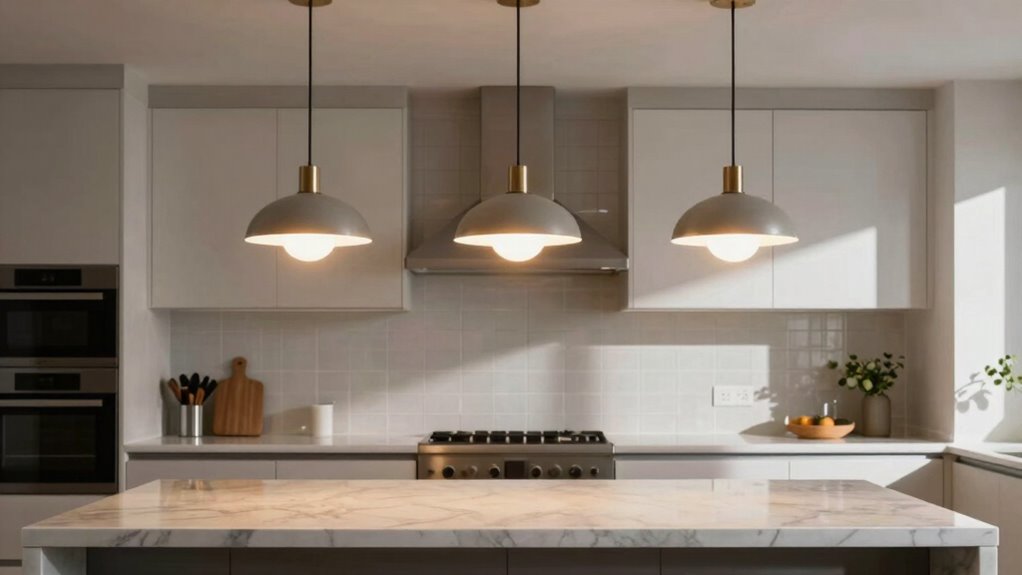
Installing pendant lights might seem straightforward, but overlooking common mistakes can lead to costly issues and less effective lighting. One mistake is choosing the wrong lighting color, which can affect the overall ambiance of your kitchen. Selecting a color temperature that’s too warm or cool might not match your space’s mood or other lighting. Additionally, pay attention to pendant material; mismatched or fragile materials can cause installation problems or damage over time. Ensure you measure spacing carefully—too close or too far apart diminishes both look and function. Avoid rushing the process, and double-check connections and mounting hardware. Proper planning prevents issues with uneven lighting, glare, or fixture instability, helping you achieve a polished, cohesive look with excellent lighting performance.
Adjusting Pendant Height Over Time for Optimal Lighting
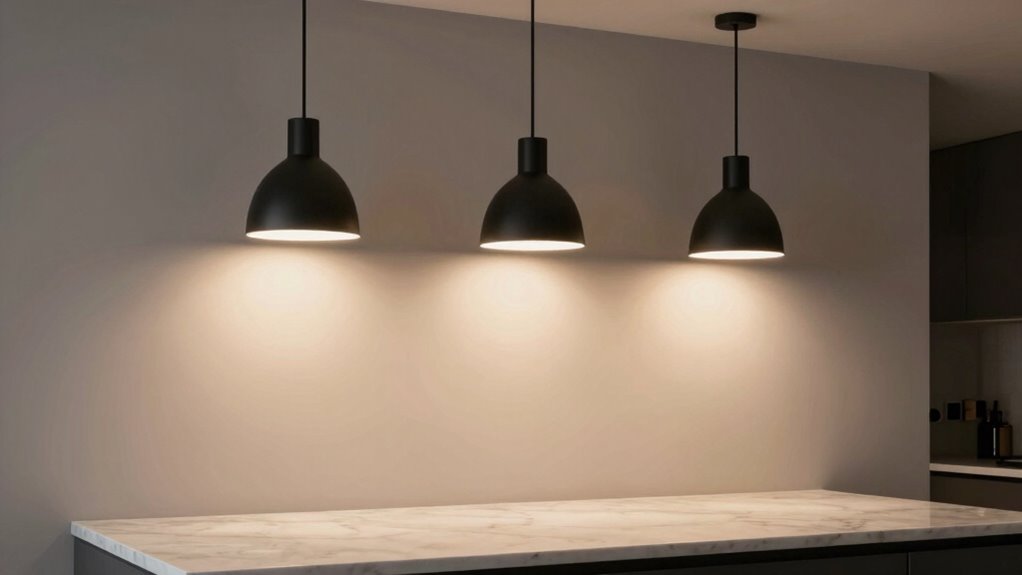
Over time, the ideal height of your pendant lights may need modification to maintain superior lighting and aesthetics. As you use your kitchen, you might notice differences in lighting needs or style preferences. To optimize, consider these steps:
- Use dimmer switches to fine-tune brightness and create the perfect ambiance.
- Adjust pendant heights based on changing pendant styles or new kitchen layouts.
- Ensure pendants aren’t too low to avoid obstruction or glare.
- Regularly check alignment and spacing, especially if you add or replace fixtures.
Frequently Asked Questions
Can Pendant Lights Be Installed for Different Kitchen Island Shapes?
Yes, you can install pendant lights for different kitchen island shapes. For linear islands, choose linear or multiple fixtures for even coverage, while round islands work well with a single pendant or a cluster. Fixed pendants provide a clean look, but adjustable pendants allow you to customize height based on your needs. Mixing shapes and styles adds visual interest, so select pendants that complement your island’s design and functionality.
What Materials Are Best for Adjustable Pendant Heights?
You should choose materials like glass, metal, or plastic for adjustable pendant heights because they’re durable and easy to modify. These materials work well with dimming options, allowing you to control brightness, and can be paired with bulbs that have adjustable color temperature, so you can set the perfect ambiance. Opt for lightweight materials to make height adjustments smoother, ensuring your lighting stays functional and stylish.
How Do Pendant Spacing and Height Affect Kitchen Ambiance?
You can create a warm, inviting kitchen ambiance by carefully considering pendant spacing and height. Proper spacing guarantees balanced lighting layers, avoiding shadows, while adjustable heights allow you to tailor the glow to fit different times of day or activities. Keep the pendants in harmony with your color coordination, enhancing the overall style. When you get these details right, your kitchen becomes both functional and beautifully lit.
Are There Safety Guidelines for Pendant Light Weight and Wiring?
Like a ship adhering to the lighthouse’s guiding beam, you should follow safety standards for pendant light weight and wiring. Always check electrical codes to guarantee your fixtures are safe and compliant. Use fixtures within recommended weight limits to prevent accidents, and hire a qualified electrician for wiring. These steps protect your home and loved ones, ensuring your beautiful lighting setup is both stunning and safe.
How Can I Customize Pendant Lighting for Different Kitchen Styles?
You can customize pendant lighting for different kitchen styles by choosing lighting fixtures that match your decor, such as sleek modern designs or rustic fixtures. Mix and match fixtures for design flexibility, and consider adjusting finishes, shapes, and sizes to complement your overall look. You might also incorporate dimmable bulbs or layered lighting to enhance ambiance. Personalizing your pendant lighting helps create a cohesive, stylish kitchen that reflects your unique taste.
Conclusion
With the right spacing and height, your kitchen island pendants become the stars of your space, casting a warm glow that invites everyone in. Think of them as the perfect chorus—harmonizing style and function effortlessly. When you follow these tips, your lighting will shine bright like a guiding beacon, transforming your kitchen into a cozy, stylish haven. So, measure, hang, and adjust—you’re crafting a masterpiece that’s both beautiful and brilliantly lit.