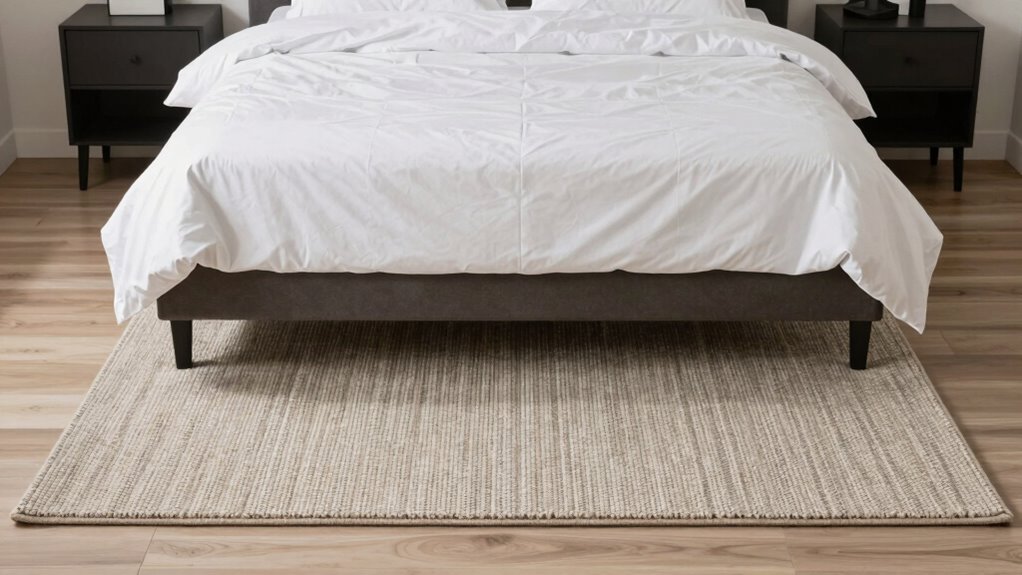

When choosing where your bedroom rug should start and stop, aim for a balanced look by extending it beyond your bed sides and foot by about 18-24 inches. In larger rooms, consider bigger rugs that anchor your furniture, while smaller spaces may benefit from rugs stopping at the bed edges. Proper placement creates harmony without clutter. If you’re curious about precise measurements and tips for perfect placement, keep exploring to make your space feel cohesive and stylish.
Key Takeaways
- Extend the rug 18-24 inches beyond each side and foot of the bed for balanced appearance.
- For larger bedrooms, choose rugs that can fit under the entire bed and furniture for a cohesive look.
- In smaller rooms, position the rug so it stops at the sides of the bed to avoid clutter.
- Ensure the rug starts a few inches away from the wall to prevent a cramped or disjointed feel.
- Align the rug with major furniture pieces and doorways to create visual harmony and functional space.
What Are Standard Bedroom Rug Sizes and How Do I Choose the Right One?
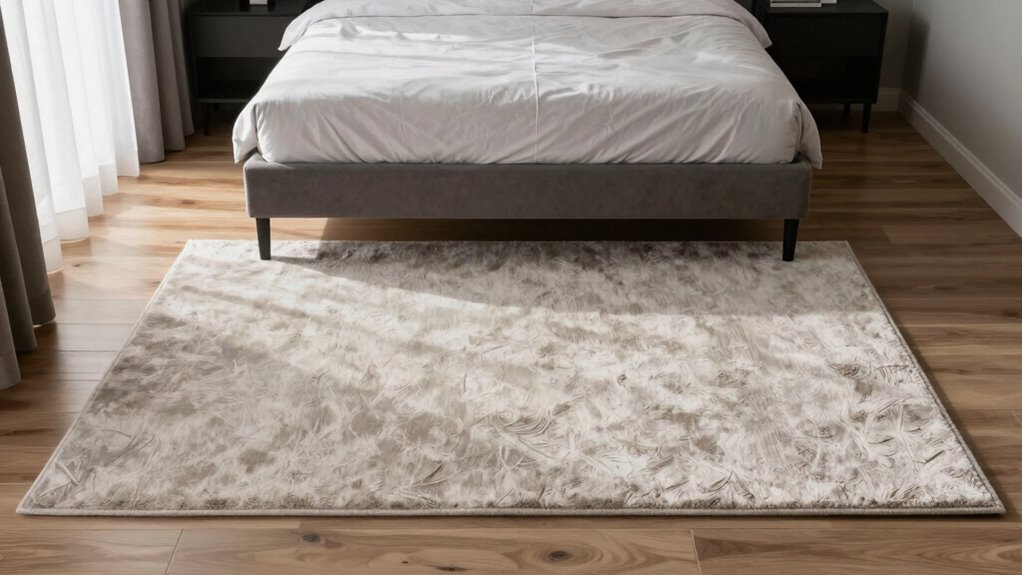
Choosing the right bedroom rug size starts with understanding common standards. Area rugs come in various sizes, typically ranging from small accent pieces to large, room-filling options. Standard sizes include 5×8 feet, 8×10 feet, and 9×12 feet, which suit different bedroom layouts. When selecting your rug, consider the rug materials, as they impact durability, comfort, and style. Wool, cotton, and synthetic fibers each offer unique benefits, influencing how the rug feels underfoot and how well it withstands wear. Larger rugs can anchor the space, while smaller ones add accents. Knowing these standard sizes and materials helps you make an informed decision, ensuring your rug complements your room’s proportions and style perfectly. Additionally, understanding standard rug sizes can help you better visualize how the rug will fit within your space.
How to Measure Your Room and Decide Where Your Rug Should Start

To guarantee your rug fits perfectly and enhances your bedroom’s layout, start by accurately measuring the space. Begin by noting the door placement and how it swings to avoid blocking pathways. Measure from the door to determine where the rug should start, ensuring it doesn’t interfere with opening or closing. Also, consider the window height to decide if the rug should extend beneath the window or stop before it. Use a tape measure for precise dimensions. Here’s a quick guide:
| Measurement Point | Description |
|---|---|
| Wall to Door | Avoid rug blocking door movement |
| Window Height | Rug placement relative to window |
| Room Length | Overall room size |
| Bed Placement | Positioning relative to rug |
| Door Swing Path | Ensure smooth door operation |
Accurate measurements make a balanced, functional rug placement. Additionally, understanding power tool safety can help you measure more effectively with tools like laser distance finders for greater precision. Being familiar with proper measuring techniques ensures that your measurements are accurate and consistent, leading to a better fit for your rug.
Where Should a Rug End in Relation to Your Bed and Furniture? Tips for Balance
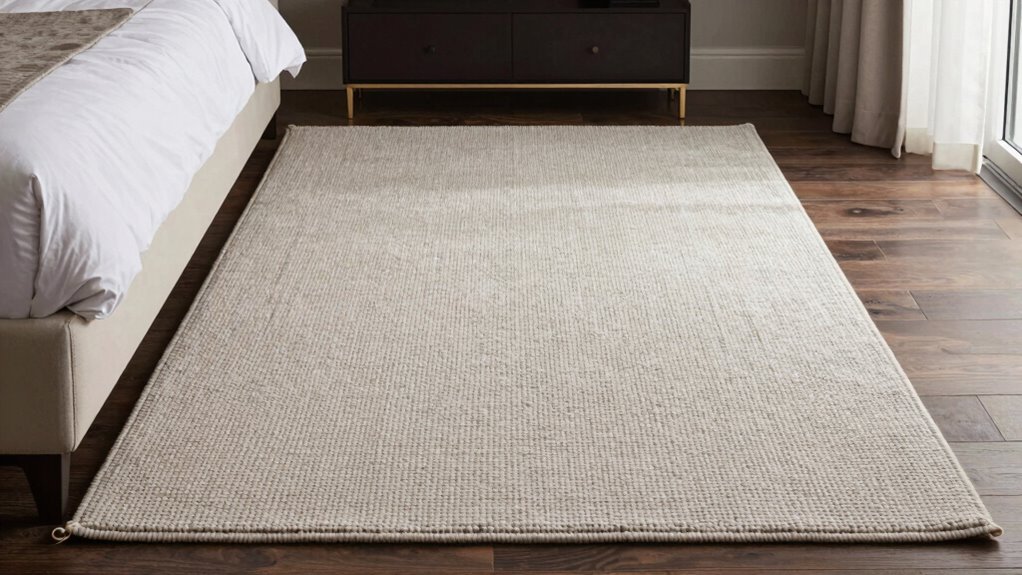
When determining where your rug should end in relation to your bed and furniture, aim for a balanced look that enhances the room’s harmony. Proper bedroom rug placement guarantees the rug extends enough to anchor the space without overwhelming it. Typically, the rug should extend beyond the sides and foot of the bed by about 18-24 inches, creating a cohesive furniture balance. If you have a larger bedroom, consider a bigger rug that allows all furniture pieces, like nightstands, to sit comfortably on it. For smaller rooms, a rug that stops just at the sides of the bed can work well. The goal is to achieve visual cohesion, so your rug complements your furniture layout without making the space feel cluttered or disconnected. Additionally, mount leveling kits can help ensure the rug stays flat and secure, especially on uneven flooring. Incorporating natural textures through eco-friendly materials like sustainable printmaking paper can also contribute to eco-friendly decorating choices if you incorporate natural textures into your space. Ensuring proper rug placement can also help prevent slipping hazards and improve safety in your bedroom.
Common Mistakes to Avoid When Picking and Placing Your Bedroom Rug
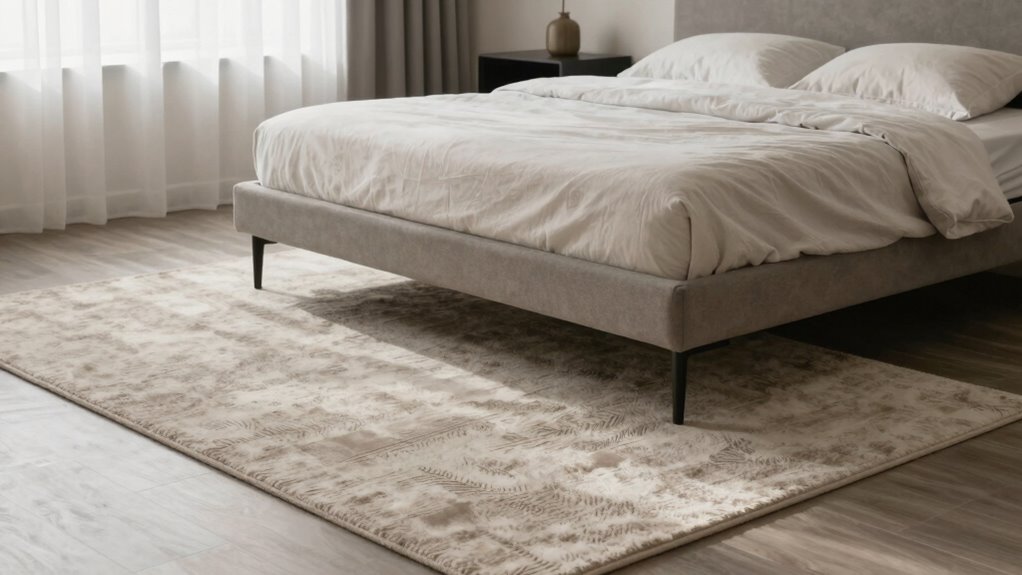
One common mistake is selecting a rug that’s too small or too large for your space, which can throw off the room’s balance. To avoid this, focus on creating rug placement illusions that enhance your room’s proportions. Keep these tips in mind:
Avoid choosing a rug that’s too small or large; aim for balanced, proportionate placement.
- Choose a rug size that anchors your furniture, not just the bed.
- Use color coordination tips to match your rug with your bedding and decor.
- Ensure the rug extends beyond the sides of your bed for a cohesive look.
- Avoid placing the rug too close to walls, which can make the room feel disjointed.
- Remember that a well-placed rug should complement, not overwhelm, your furniture.
- Consider visual balance when selecting your rug to ensure harmony in your bedroom design.
- Additionally, understanding room proportions can help you select the most appropriate rug size for your space.
- Keep in mind that furniture placement plays a crucial role in achieving a balanced and inviting bedroom aesthetic.
- Being mindful of proportional harmony can further enhance the overall aesthetic and comfort of your bedroom.
- Incorporating natural light into your room’s design can also influence how the rug’s size and placement appear.
Using Your Room Layout to Perfectly Position Your Rug

Your room layout plays a crucial role in determining the ideal placement of your rug. To enhance your bedroom decor, consider the furniture arrangement and the flow of movement. Use rug placement tips to create balance; for example, position the rug so that it anchors the bed while leaving some space around the sides. If your furniture is centered, opt for a rug that extends beyond the edges to frame the space. For a more cohesive look, align the rug with key furniture pieces, like nightstands or a dresser. Remember, a well-placed rug can define zones and make your room feel inviting. Measure carefully to ensure your rug complements the layout without overwhelming or underwhelming the space. Additionally, consider how water damage and cleaning factors might influence your rug choice and placement for long-term durability. Choosing a rug with durable materials and proper backing can help maintain its appearance despite cleaning and potential exposure to moisture. Incorporating rugs made of moisture-resistant fabrics can further prolong their lifespan in the bedroom environment. To further protect your investment, think about using waterproof rug pads that can prevent slipping and add an extra layer of moisture resistance. Also, selecting the right carpet padding can improve comfort and insulate your room from cold floors.
Frequently Asked Questions
Can a Rug Be Too Large or Too Small for a Bedroom?
Yes, a rug can be too large or too small for your bedroom. If the bedroom rug is too small, it might look out of place and not provide enough coziness under your feet. Conversely, a rug that’s too large can overwhelm the space and hide your furniture. Aim for a rug size that complements your room’s dimensions, making sure it enhances the overall look without overpowering or underwhelming the space.
Should the Rug Be Centered Under the Bed or Offset?
You should aim for bedroom symmetry by centering the rug under your bed, creating a balanced and harmonious look. Proper rug alignment enhances the room’s aesthetic, making it feel more inviting and polished. Offsetting the rug can work if you prefer a casual vibe, but for a neat, cohesive appearance, aligning it directly beneath the bed is your best bet. Trust your style preferences and enjoy the cozy ambiance.
How Do I Choose a Rug Shape to Complement My Room?
You should choose a rug shape that complements your room’s overall design. If you have a rectangular space, a rectangular rug enhances pattern coordination and creates visual harmony. For a more dynamic look, opt for a round rug to add softness and contrast. Consider your existing color palette to guarantee color harmony. The right shape helps balance your room’s layout, making it feel inviting and cohesive.
What Materials Are Best for Bedroom Rugs to Ensure Comfort?
Think of your bedroom rug as a cozy hug for your feet. Wool is like a trusty friend—durable and soft, perfect for daily comfort and easy to maintain. Cotton offers breathability and is simple to clean, ideal for a relaxing space. Synthetic fibers like nylon provide durability and stain resistance, making them practical choices. Choose materials that balance comfort with durability and easy maintenance, creating a sanctuary you’ll love.
How Often Should I Rotate or Replace My Bedroom Rug?
You should rotate your bedroom rug every 6 to 12 months to guarantee even wear and maintain its appearance. Regular maintenance tips, like vacuuming and spot cleaning, help prolong its life. Consider seasonal updates by replacing or revitalizing your rug when it shows significant signs of wear or fading, especially after heavy use or spills. Doing so keeps your space looking fresh and cozy, enhancing comfort and style.
Conclusion
Choosing the right rug size can elevate your bedroom’s style and comfort. Did you know that a well-placed rug can make your room appear up to 20% larger? By measuring carefully and considering your furniture layout, you create a balanced, inviting space. Avoid common placement mistakes, and trust your instincts. With these tips, you’ll confidently select a rug that complements your room perfectly and enhances your overall decor.