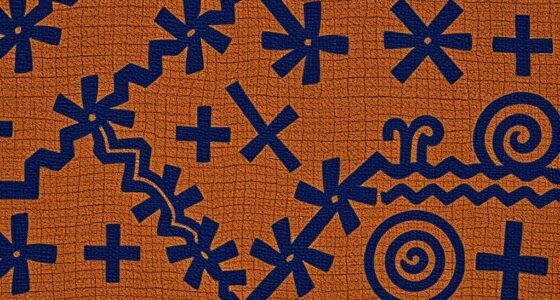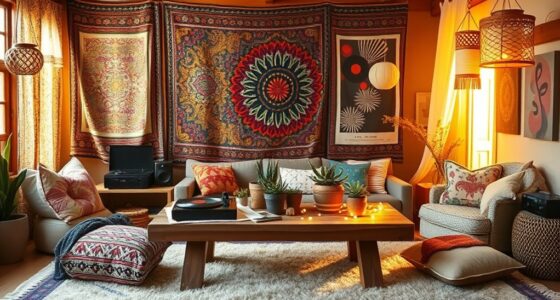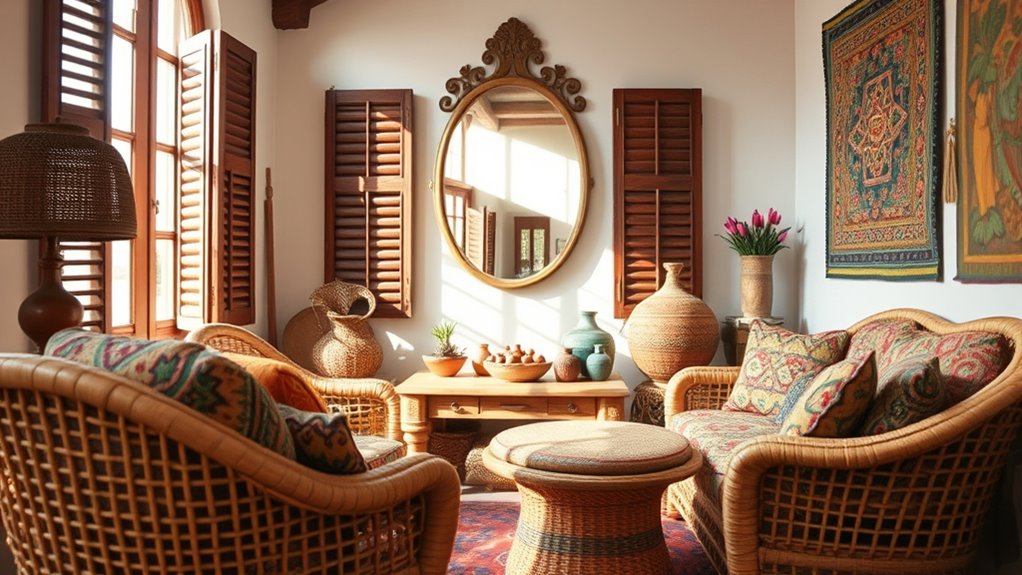

Colonialism has played a key role in shaping boho aesthetics by exporting and commercializing cultural symbols, textiles, and motifs from colonized regions. This often led to their romanticized and sometimes distorted portrayal in Western markets. You might notice how these elements are used without understanding their true cultural meaning or significance. Recognizing this history can help you see beyond surface appearances and appreciate the deeper story behind the style. To explore more, you’ll find interesting insights below.

Get furniture and decor delivered free with Prime
- Fast, free delivery on millions of items
- Prime Video, Amazon Music and more included
- Member-only deals all year
Key Takeaways
- Boho aesthetics draw from diverse cultural textiles and motifs, often rooted in colonial histories of cultural extraction.
- Colonial powers historically commodified and exoticized non-Western artifacts, influencing boho’s eclectic style.
- Elements in boho fashion reflect a legacy of cultural borrowing intertwined with unequal power dynamics.
- Commercialization of cultural symbols in boho fashion can reinforce stereotypes and misrepresentations.
- Recognizing colonial roots encourages respectful engagement with cultural influences and promotes ethical appreciation.
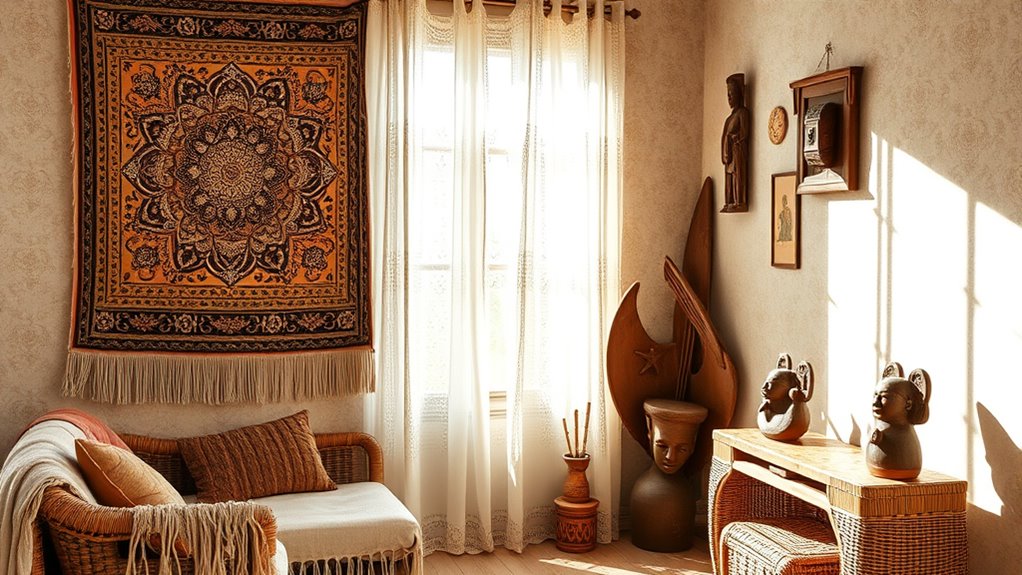
Have you ever wondered how colonial history influences the boho aesthetic we see today? The answer lies in the complex web of historical influence and cultural exchanges that have shaped this eclectic style. Boho, short for bohemian, draws heavily from diverse cultures, often blending traditional textiles, patterns, and accessories. However, this blending isn’t always straightforward; it raises questions about cultural appropriation — when elements from marginalized cultures are used without understanding or respecting their origins. This tension highlights the colonial roots embedded in the aesthetic. Colonial powers historically collected and displayed artifacts from colonized regions, often taking cultural symbols out of context and commodifying them. Today’s boho style, with its mix of tribal prints, handcrafted jewelry, and ethnic motifs, echoes that history of extraction and appropriation. While many enthusiasts see boho as a celebration of global diversity, it’s essential to recognize that some aspects are rooted in a history of unequal power dynamics. Recognizing this helps you understand that the style is not just about free-spirited expression but also about a legacy of colonial influence that has shaped how cultures are shared — and sometimes misrepresented. Moreover, the commercialization of these cultural elements has often led to the exoticization of cultures, reinforcing stereotypes rather than fostering genuine appreciation. The historical influence of colonialism has left a lasting imprint on how cultures are perceived and represented. Colonial encounters often involved the extraction of artistic traditions, which were then packaged and marketed as exotic or primitive. This process helped create a romanticized view of non-Western cultures, a view that still seeps into boho aesthetics today. When you incorporate these elements into your space or wardrobe, it’s worth considering their origins and significance. Are you appreciating their craftsmanship and cultural importance, or are you appropriating them without understanding their context? This awareness can deepen your appreciation and prevent unintentional disrespect. The influence of colonialism is also evident in the way certain symbols, textiles, and motifs are popularized in Western markets, often stripped of their original meaning. As you embrace boho styles, you become part of a broader conversation about cultural exchange versus cultural exploitation. Acknowledging this history doesn’t mean rejecting the aesthetic but encouraging a more mindful and respectful approach to incorporating global influences. Ultimately, understanding the colonial roots behind boho aesthetics invites you to engage more thoughtfully with the style. It’s about recognizing the complex history that has shaped it, respecting the cultures it draws from, and being conscious of how you participate in this ongoing cultural dialogue. By doing so, you can enjoy the beauty of boho fashion and decor while honoring its rich, multifaceted history. This awareness allows you to celebrate diversity in a way that is both authentic and respectful, ensuring that your appreciation of boho isn’t just about aesthetics but also about understanding and honoring the cultures involved.
As an affiliate, we earn on qualifying purchases.
Frequently Asked Questions
How Did Colonial Trade Routes Influence Boho Design Elements?
You can see how trade routes and cultural exchanges influenced boho design elements by incorporating diverse textiles, patterns, and artifacts from different regions. As you explore boho aesthetics, you’ll notice a mix of Moroccan, Indian, and Middle Eastern influences, thanks to historic trade routes that facilitated the exchange of ideas and materials. This eclectic blend embodies a global, laid-back vibe, reflecting the rich history of cultural interactions.
Are There Ethical Concerns With Cultural Appropriation in Boho Fashion?
You should consider that over 60% of consumers now prioritize ethical fashion choices. Cultural sensitivity is vital to avoid appropriating styles without understanding their significance, which raises serious fashion ethics concerns. When embracing boho fashion, be mindful of respecting original cultures, supporting authentic artisans, and avoiding stereotypes. By doing so, you help promote respectful appreciation rather than cultural exploitation, fostering a more conscious and ethical approach to style.
Which Specific Colonial Regions Contributed to Boho Aesthetic Motifs?
You should know that regions like India, North Africa, and Southeast Asia contributed to boho aesthetic motifs through indigenous textile techniques and colonial art influences. These areas offered rich patterns, vibrant colors, and craftsmanship that inspired boho fashion. However, it’s important to recognize that these influences often stem from colonial histories, raising ethical questions about cultural appropriation and the need to honor original artisans and their traditions.
How Has Colonial History Shaped Contemporary Perceptions of Boho Culture?
You might think boho culture is just a free-spirited vibe, but colonial history has woven a complex tapestry of cultural exchange and global influence that defines it. This history shapes how we perceive boho today, blending diverse traditions into a fashionable mosaic. You see, colonial interactions sparked a vibrant cross-pollination of ideas and aesthetics, making boho a symbol of cultural fusion—sometimes celebrated, sometimes criticized—reflecting our shared, complicated past.
Can Boho Aesthetics Be Truly Authentic Without Colonial Influences?
You can pursue authentic boho aesthetics by focusing on cultural authenticity and respecting their origins. While aesthetic evolution has incorporated diverse influences, it is crucial to acknowledge and honor traditional craftsmanship and symbolism. By engaging genuinely with the cultures that inspire your style, you guarantee your boho aesthetic remains respectful and authentic, rather than appropriative. Thoughtful appreciation and informed choices help you create a meaningful, authentic boho look rooted in genuine cultural understanding.
Conclusion
Understanding how colonialism shaped boho aesthetics helps you see its layered history. Nearly 70% of boho design elements draw inspiration from cultures affected by colonial powers, highlighting a complex blend of appreciation and appropriation. Recognizing this history encourages you to appreciate the beauty while remaining mindful of its origins. By doing so, you can embrace boho style thoughtfully, honoring its diverse roots and fostering a more conscious, respectful approach to this eclectic aesthetic.
Fall Picks
fall essentials
As an affiliate, we earn on qualifying purchases.