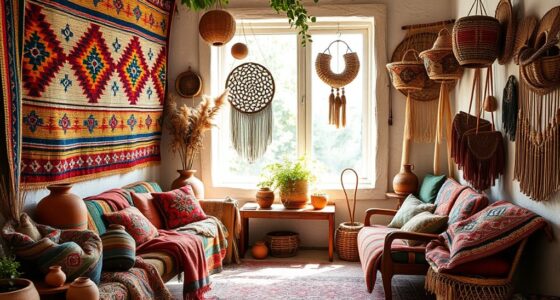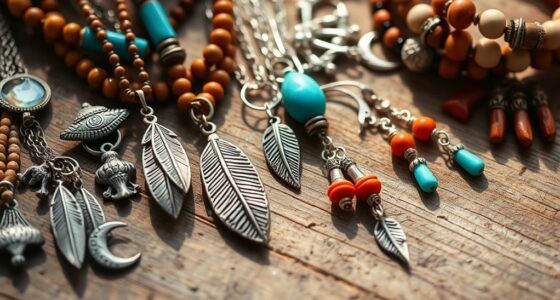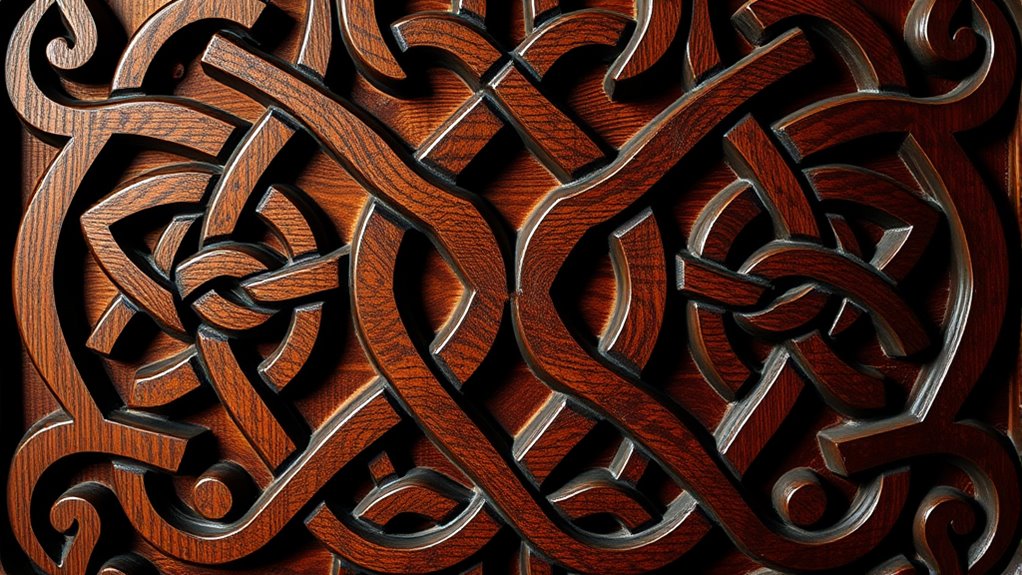

Celtic knotwork patterns have a rich history rooted in Irish and Scottish art, symbolizing eternity and interconnectedness. You can find these intricate designs in home decor like wall art, textiles, and furniture, often crafted from metals, wood, or textiles using traditional techniques. They add spiritual symbolism and cultural meaning to your space. If you keep exploring, you’ll discover how to incorporate these timeless motifs into your own decor and personal accessories.

Get furniture and decor delivered free with Prime
- Fast, free delivery on millions of items
- Prime Video, Amazon Music and more included
- Member-only deals all year
Key Takeaways
- Celtic knotwork patterns serve as decorative accents in furniture, textiles, wall art, and murals, adding visual interest and cultural symbolism.
- These intricate designs are embedded into architectural elements like wall panels, stone crosses, and church embellishments for spiritual and aesthetic appeal.
- Modern decor incorporates Celtic knot motifs into items such as pillows, throws, and jewelry, blending tradition with contemporary style.
- Knotwork patterns are used as focal points in framed artwork or murals, emphasizing interconnectedness and cultural heritage.
- Creating Celtic decor involves traditional techniques like engraving, wood carving, and digital planning to ensure authentic and balanced designs.
As an affiliate, we earn on qualifying purchases.
Historical Origins of Celtic Knotwork in Design

Celtic knotwork has roots that stretch back over a thousand years, serving as a distinctive feature of early Irish and Scottish art. You can see its influence in medieval manuscripts, where intricate knot patterns decorate religious texts and illuminated pages. These designs also appear in ancient carvings on stone monuments, showcasing their importance in Celtic culture. The knots often symbolize eternity and interconnectedness, reflecting spiritual beliefs. Artists and craftsmen of the time used simple tools to carve or ink these continuous loops, which have endured through centuries. By studying these early examples, you gain insight into the cultural and religious significance that Celtic knotwork held in ancient societies. The symbolism of eternity is a central theme that underscores their lasting appeal and meaning. Their enduring presence highlights the timeless appeal and profound symbolism of these early designs.
Symbolic Meanings Embedded in Knot Patterns
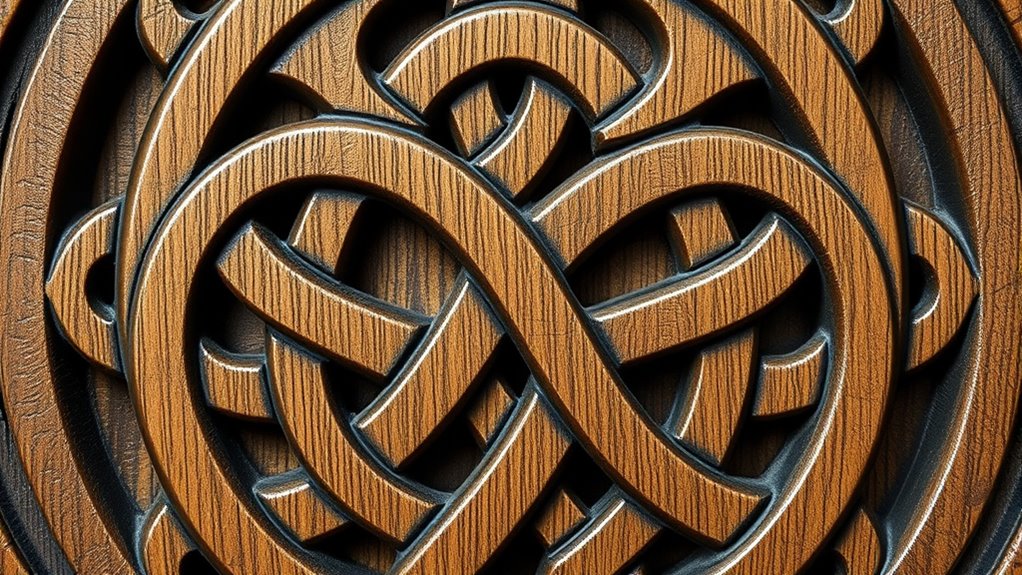
Celtic knot patterns often carry deep symbolic meanings that go beyond their intricate designs. You’ll find symbols of eternal life, representing the ongoing cycle of existence, woven into many patterns. These motifs also reflect interconnected spirituality and nature’s growth, emphasizing unity and renewal. Additionally, the complexity of knotwork can symbolize the interconnectedness of all things in Kia Tuning and the importance of harmony in design.
Eternal Life Symbols
Have you ever wondered what the intricate knotwork symbolizes beyond its decorative appeal? In celtic art, knot symbolism often represents eternity and the cyclical nature of life. The endless loops, with no beginning or end, embody the concept of eternal life and spiritual continuity. These symbols serve as a reminder that life persists beyond physical death, emphasizing renewal and everlasting connection. The intertwining lines highlight the unity of all things and the enduring bond between the physical and spiritual spheres. When you see these knot patterns, recognize their deeper meaning: a visual expression of hope, immortality, and the perpetual cycle of existence. Such symbolism adds profound depth to the beauty of celtic art, making it more than just ornamentation. The interconnectedness of the patterns reflects the interconnectedness of all living beings and the universe itself.
Interconnected Spirituality
The intricate knot patterns do more than symbolize eternity; they also embody interconnectedness on a spiritual level. In medieval manuscripts, these designs often reflect religious symbolism, representing the unity of body, mind, and spirit. When you observe the continuous lines, you’re seeing more than decorative art—you’re witnessing a visual metaphor for the interconnectedness of all life. Each loop and intertwining path signifies the harmony between different spiritual elements, emphasizing that nothing exists in isolation. These patterns remind you that your spiritual journey is linked with others and the divine. By understanding the symbolism embedded in knotwork, you deepen your appreciation for how ancient cultures expressed their beliefs through intricate, meaningful designs. Recognizing the symbolism behind patterns can further enrich your connection to their spiritual significance.
Nature and Growth
Ever wonder how knotwork patterns symbolize growth and renewal? You’ll notice the abundant use of flora motifs, such as intertwined vines and leaves, representing vitality and ongoing cycles of life. These motifs mirror nature’s perpetual renewal, emphasizing the significance of growth in spiritual and physical domains. Animal symbolism also plays a pivotal role; creatures like birds, snakes, and fish are woven into the designs, embodying transformation, rebirth, and resilience. By integrating these elements, knot patterns convey a sense of natural harmony and continuous development. You can see how these symbols encourage a connection to the natural world, reminding you that growth is an ongoing process rooted in the cycles of nature. This fusion of flora motifs and animal symbolism deepens the meaning behind Celtic knotwork’s intricate beauty. Additionally, understanding the symbolic meanings embedded in these patterns can enhance your appreciation of their cultural significance.
Common Materials and Techniques Used for Celtic Decor
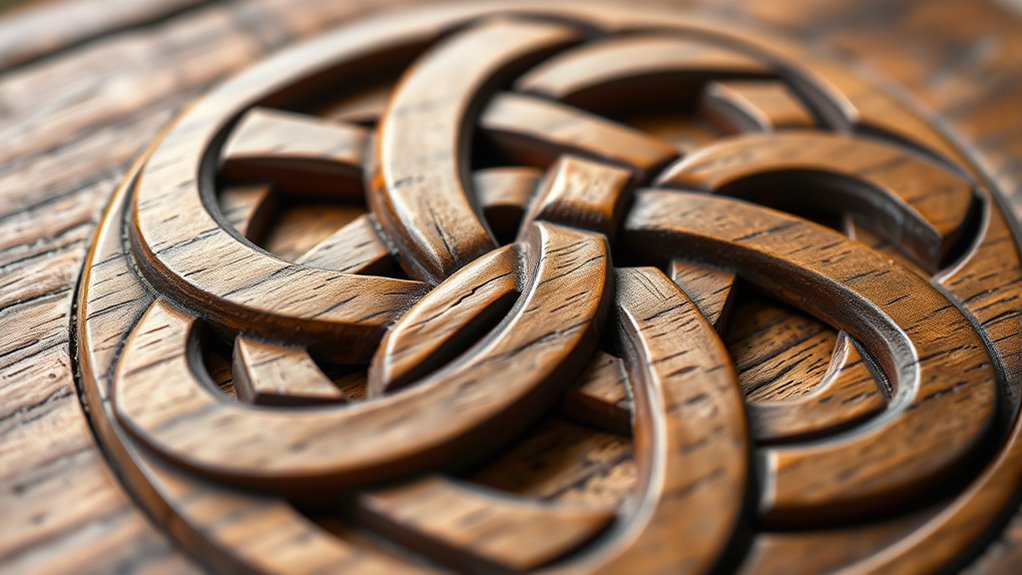
Celtic decor relies on a variety of traditional materials and techniques that bring intricate knotwork designs to life. Metalwork techniques are essential, as artisans skillfully shape bronze, silver, and gold into detailed Celtic symbols and patterns. These metals are often engraved or embossed with knot motifs, adding texture and richness. Natural dyeing also plays a crucial role, using plant-based dyes to color textiles and leathers with earthy tones that complement the knotwork. Wood carving is another common method, where artisans etch or carve patterns directly into furniture or religious objects. These techniques preserve ancient craftsmanship, creating authentic Celtic decor pieces that reflect a deep cultural heritage. The combination of materials and methods ensures the timeless appeal and intricate beauty of Celtic knotwork in decor. Additionally, metalworking techniques enable the creation of durable and ornate decorative items that highlight Celtic artistry.
Incorporating Celtic Knotwork Into Modern Interior Design
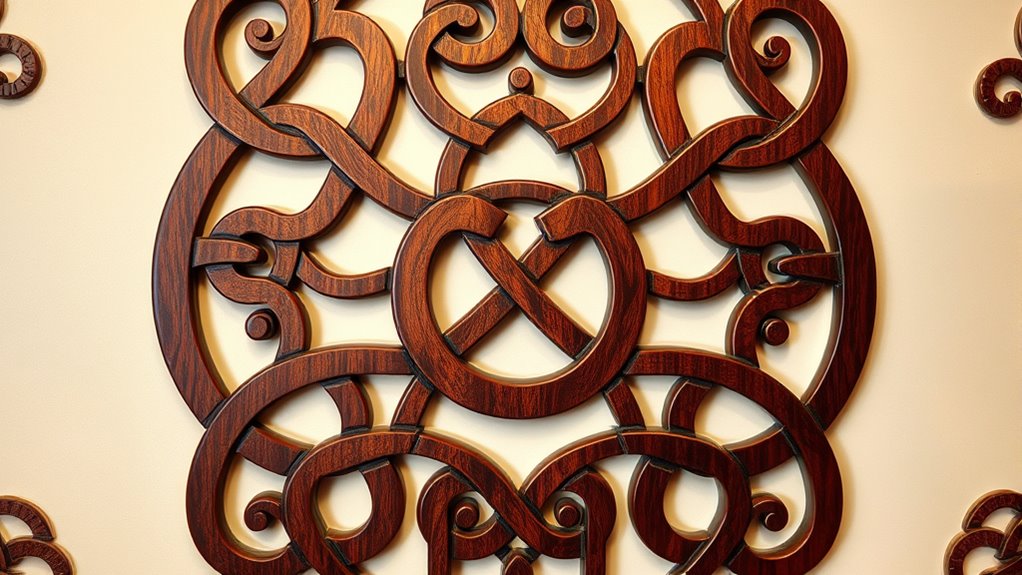
Incorporating Celtic knotwork into modern interior design offers a unique way to blend ancient artistry with contemporary aesthetics. You can use these intricate patterns as modern interior accents that add character and depth to your space. By integrating Celtic knotwork into furniture, wall art, or textiles, you create a seamless contemporary design integration that feels both timeless and fresh. Consider these ideas:
- Embedding knotwork patterns into sleek wall panels or murals
- Using knot-inspired motifs for decorative pillows or throws
- Incorporating Celtic designs into minimalist furniture pieces
- Framing knotwork artwork as focal points in living or dining areas
- Exploring interior design symbolism to deepen the cultural significance of your decor choices
These subtle yet striking details help you elevate your decor, making it stand out while honoring Celtic heritage. The key is to balance tradition with modern simplicity for a cohesive look.
Cultural Significance in Jewelry and Personal Accessories
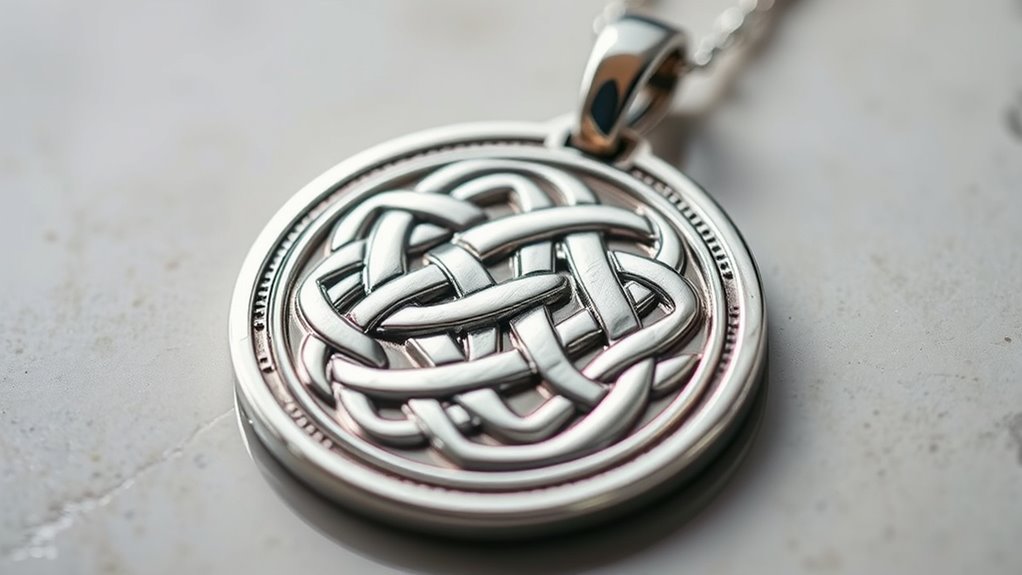
Celtic knotwork in jewelry often symbolizes the interconnectedness of life and eternity through its intertwined lines. Wearing these designs expresses your heritage and personal identity, connecting you to ancient traditions. As modern jewelry trends incorporate knotwork, they blend cultural significance with contemporary style, making each piece meaningful. Additionally, the intricate patterns can be seen as a reflection of complex cultural symbolism, adding depth to their aesthetic appeal.
Symbolism of Intertwined Lines
The intertwined lines of Celtic knotwork carry deep symbolic meaning that resonates across various cultures, especially in jewelry and personal accessories. This intertwined symbolism reflects ideas of eternity, unity, and life’s interconnectedness. The artistic complexity of these patterns captures your attention and invites deeper interpretation. You might notice how the endless loops symbolize unbreakable bonds or spiritual growth. Wearing knotwork jewelry allows you to carry these meanings personally. The craftsmanship highlights the skill involved in creating intricate, continuous designs that embody more than mere decoration. These symbols serve as reminders of personal relationships, spiritual beliefs, or cultural heritage. Their enduring appeal lies in their ability to combine artistic complexity with meaningful symbolism. Additionally, the precise craftsmanship involved in creating these patterns showcases the cultural significance and meticulous artistry behind traditional Celtic designs.
Heritage and Identity Expressions
Jewelry and personal accessories featuring knotwork patterns serve as powerful symbols of cultural heritage and individual identity. You can see celtic art’s influence in these pieces, with intricate decorative motifs that connect you to ancient traditions. Wearing such jewelry allows you to express your appreciation for Celtic history and craftsmanship. These patterns often symbolize unity, eternity, and interconnectedness, reflecting core cultural values. When you choose a knotwork pendant or bracelet, you’re embracing a visual language that honors ancestral roots. The craftsmanship and symbolism embedded in these accessories serve as a personal badge of heritage. They remind you of a shared cultural identity, bridging past and present through timeless decorative motifs.
Modern Jewelry Trends
Modern jewelry trends celebrate age-old symbols like knotwork patterns, blending tradition with contemporary style. You’ll see these designs in necklaces, rings, and bracelets, connecting modern fashion with cultural roots. Knotwork often reflects ancient rituals, symbolizing eternity and interconnectedness. Mythological motifs are also popular, representing stories and beliefs from past civilizations. Wearing jewelry with Celtic knotwork can evoke spiritual significance and personal identity. These pieces serve as both fashion statements and meaningful tokens, honoring history while fitting current aesthetics. Incorporating cultural symbolism into contemporary jewelry allows wearers to express their heritage and personal stories. Whether worn daily or on special occasions, they remind you of the enduring power of ancient symbols. Embrace these trends to showcase your appreciation for mythology, heritage, and timeless artistry.
Famous Examples of Celtic Knotwork in Architecture
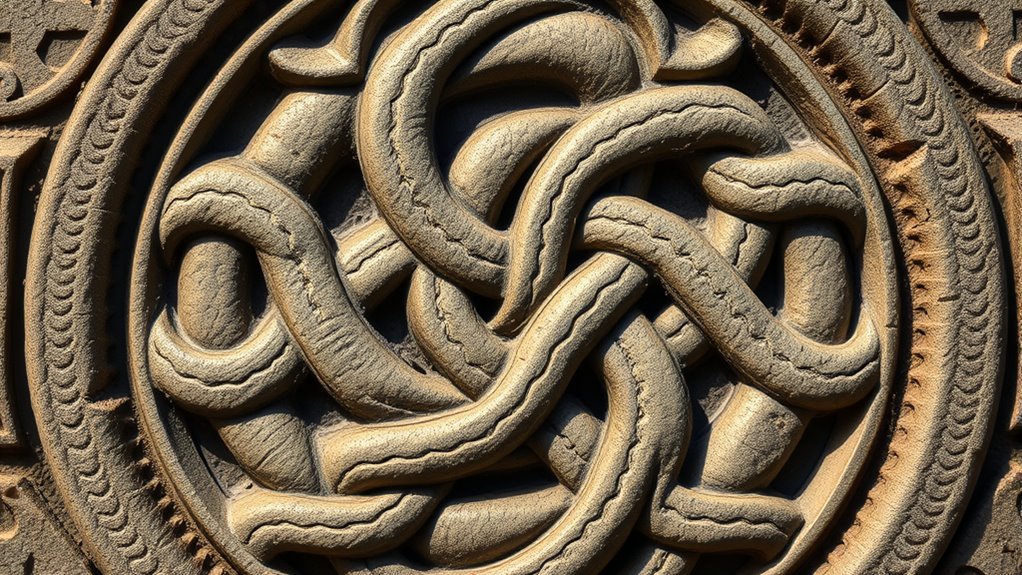
Several iconic structures showcase Celtic knotwork as a striking decorative element, illustrating its importance in architectural history. You can find this intricate art in medieval manuscripts and religious artifacts, where it symbolizes eternity and interconnectedness. Notable examples include monastic churches and ancient stone crosses across Ireland and Scotland, where knotwork embellishes doorways, windows, and capitals. The Book of Kells, a masterwork of illuminated manuscript art, features complex knot patterns that highlight its spiritual significance. Similarly, high crosses like the Monasterboice Cross display detailed carvings of Celtic knots, blending artistic beauty with religious symbolism. These structures demonstrate how Celtic knotwork has persisted through centuries, enriching architecture with its timeless, interconnected designs and its cultural significance as a symbol of unity and eternity.
Tips for Creating Your Own Celtic Knot Designs
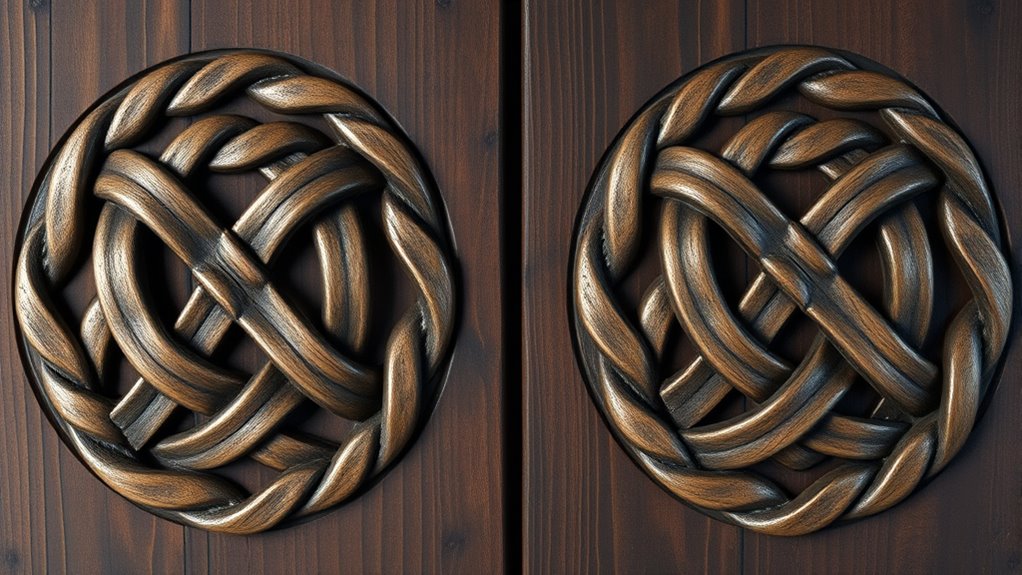
Creating your own Celtic knot designs can be a rewarding way to connect with this ancient art form. To start, embrace meditative patterns by drawing repetitive loops and interlacing lines, which help develop a steady hand and focus your mind. Seek artistic inspiration from traditional motifs and modern interpretations to spark creativity. Use grid paper or digital tools to plan your design, ensuring symmetry and balance. Experiment with different thicknesses and colors to add depth and personal flair. Remember, patience is key—refining your work over time will improve your skills. Engaging regularly with these tips will help you craft intricate knots that reflect your unique style and deepen your appreciation for Celtic artistry. Practice with simple, repetitive patterns. Study traditional knotwork for inspiration. Use grid or digital templates for precision. Incorporate personal elements for originality. Additionally, understanding the significance of symbolic meanings in Celtic art can enrich your designs and connect you more deeply to this cultural tradition.
Frequently Asked Questions
How Do Celtic Knot Patterns Influence Contemporary Graphic Design?
Celtic knot patterns influence contemporary graphic design by inspiring intricate motifs in interior decoration and fashion accessories. You can see these patterns used to add a timeless, symbolic touch to modern decor and jewelry, emphasizing craftsmanship and heritage. As you incorporate Celtic knots into your projects, they bring a sense of continuity and cultural depth, making your designs stand out with their unique, interwoven artistry that resonates across various styles.
Are There Regional Variations in Celtic Knotwork Styles?
You’ll notice regional variations in Celtic knotwork styles, much like different dialects in a language. For example, Irish motifs often feature intricate, interwoven designs symbolizing eternity, while Scottish styles emphasize bolder, more geometric patterns. These differences come from local craftsmanship, cultural influences, and historical context. Exploring regional motifs reveals a rich tapestry of tradition, showing how local artisans adapt timeless designs to reflect their unique heritage.
What Are the Best Preservation Methods for Ancient Celtic Artifacts?
You should use careful restoration techniques, like consolidating fragile areas and cleaning with gentle, non-invasive methods. Environmental controls are essential; maintain stable temperature, humidity, and avoid direct sunlight to prevent deterioration. Store artifacts in acid-free materials and display them in climate-controlled cases. Regular monitoring ensures their preservation. By combining expert restoration techniques with proper environmental controls, you safeguard ancient Celtic artifacts for future generations to appreciate.
Can Celtic Knot Patterns Be Adapted for Tattoo Designs?
Yes, you can definitely adapt Celtic knot patterns for tattoo designs. Imagine intricate loops and endless lines that symbolize eternity and interconnectedness, perfect for tattoo symbolism. You’ll love how these patterns can be customized to reflect your personal story, blending tradition with modern style. Whether you want bold, striking lines or delicate, detailed work, Celtic knots offer versatile options to create a meaningful and unique tattoo that resonates with you.
How Do Celtic Knots Compare to Other Cultural Knot Traditions?
You’ll find Celtic knots unique because they emphasize intertwined symbolism and endless loops, representing eternity and interconnectedness. Compared to other cultural knot traditions, like Chinese or African styles, Celtic knots often highlight continuous, unbroken designs that symbolize unity and eternity. While each tradition carries its own cultural symbolism, Celtic knots stand out for their intricate, flowing patterns that reflect spiritual and cultural meanings deeply rooted in Celtic history.
Conclusion
Celtic knotwork’s intricate designs have fascinated people for centuries, with over 60% of Irish artifacts featuring these symbols. By understanding their history and meaning, you can appreciate their cultural richness and incorporate them into your own decor or jewelry. Whether you’re designing a custom piece or decorating your home, embracing Celtic knot patterns adds timeless elegance and symbolism. Immerse yourself in this beautiful tradition and let your creativity weave new stories with these ancient, captivating designs.
Halloween Picks
halloween
As an affiliate, we earn on qualifying purchases.