
TL;DR
Luxury throw pillows are decorative cushions distinguished by their fabrics, fill, construction, design, and finish; the word “luxury” has no single regulated definition. To choose well, compare the cover and insert together, check seams and care instructions, and pick textures and sizes that suit your furniture and daily routine.
A velvet pillow can make a plain sofa feel dressed for the evening, but a beautiful cover that pills, stains, or sits flat after a week may not feel like a luxury for long. The word luxury does not follow one official standard. It can describe a blend of materials, workmanship, design, and finish, so you need to look at the details behind the label.

Get furniture and decor delivered free with Prime
- Fast, free delivery on millions of items
- Prime Video, Amazon Music and more included
- Member-only deals all year
This guide helps you choose luxury throw pillows for the way you actually live: lounging with a book, sharing the sofa with a dog, or keeping a guest bed polished without making it hard to sleep in. You’ll learn what to check in a cover and insert, how to size pillows for your furniture, how to mix color and pattern, and when a premium price may earn its keep.
Treat “luxury” as a description, not a regulated quality grade; check the actual fabric, fill, seams, and finish.
Match fabric care to the room: a busy family sofa may suit cotton better than a delicate silk cover.
Compare insert and cover sizes together, and follow the maker’s advice before sizing up an insert.
Use a shared color or theme to mix patterns, then vary pattern scale and texture for a layered look.
Include the insert and care costs when you compare prices, and follow the care label to protect the pillow.
What Makes a Throw Pillow Feel Luxurious?
A luxury throw pillow usually brings together quality fabric, a comfortable fill, careful construction, and considered design; no single feature or price tag defines it. These parts work together: a handsome fabric can still feel disappointing if the insert collapses, while a supportive insert may not make a pillow worthwhile if the cover is rough or difficult to care for. The difference often shows up when you touch the cloth, inspect a seam, and see how the pillow holds its shape on a sofa. Those details tell you more than the word “luxury” on a product page.
Imagine two square cushions in the same soft blue. One has thin fabric, loose stitching, and a cover that wrinkles around a flat insert. The other has a smooth closure, even seams, and a cover that sits snugly around a supportive insert. From across the room, they may look similar; after an evening of leaning against them, the second is more likely to feel carefully made. That difference matters because pillows are handled and compressed repeatedly, not simply viewed as part of a room.
Check for secure closures, consistent stitching, and cleanly finished edges. These features help the cover stay aligned and reduce points where everyday pulling or washing might cause wear. If the pillow contains feathers, a feather-proof inner casing can help stop quills from poking through the cover, which improves comfort and protects the outer fabric. A well-made zipper should open and close smoothly, and the fabric should meet neatly at the corners rather than bunching into lumpy peaks. A tidy finish is useful evidence of care in construction, though it cannot by itself guarantee that every material will wear well.
“Handmade,” “artisan-made,” and “sustainable” can mean different things from one brand to another. Those labels may describe valuable qualities, but they do not tell you exactly what you are buying or how the pillow will perform. If a claim matters to you, look for specifics: what materials the maker uses, where production happens, or which certification supports the claim. Think of it like checking the ingredients on a jar: a clear description makes the purchase easier to judge and lets you decide whether the claimed value matters to your priorities.
Products Worth Considering

Dyson Airwrap i.d. 6-in-1 Multi-Styler and Dryer

Philips Hue Amarant Outdoor Smart Light Bar, Black

Dyson V8 Cyclone Cordless Vacuum
As an affiliate, we earn on qualifying purchases.
Choose a Fabric That Fits Your Everyday Life
Luxury throw pillows can be covered in linen, velvet, silk, wool, or high-quality cotton, and each fabric brings its own hand feel and care needs. The best-looking fabric in a showroom is not automatically the best one for your home: texture, sunlight, pets, and cleaning all affect how it will look after months of use. Choose by considering where the pillow will sit and who will use it. A silky accent on a formal bed faces a different routine from a pale cushion on the family-room sofa.
Picture a sunny sitting room with a linen pillow in a warm, natural shade. Its slightly relaxed texture gives the space a soft, lived-in look, while many linen and cotton covers are relatively straightforward to live with. Velvet offers a deeper, plush feel and catches the light in shifting bands, adding visual richness even in a single color; that same pile can show pressure marks or need gentler care, depending on the fabric. Silk can look luminous and feel cool against your hand, yet it may be delicate around spills and rough use. The tradeoff is practical: a more delicate cover can deliver a distinctive finish, but it may be best placed where you can enjoy it without constant worry.
Before buying, check the care label and cleaning method. A removable cover can make upkeep simpler, but removable does not automatically mean machine-washable. Cleaning instructions affect the real cost of ownership: professional cleaning takes time and money, while an unsuitable wash can shrink or damage a cover. For example, if your toddler brings a berry-stained hand to the sofa, a washable cotton cover may be easier to manage than silk that calls for professional cleaning.
Sunlight, pets, frequent use, and spills all affect how a pillow looks over time. Direct sun can fade a color, while claws and repeated friction can catch or flatten some textures. If you love a delicate fabric, use it where hands and bright windows are less likely to wear it down. For a busy room, choose a fabric whose care routine you can realistically follow. The prettiest cushion is less enjoyable when you’re worried about every cup of tea, and a slightly less delicate fabric may give you more freedom to use the room normally.
Pick an Insert That Feels Right When You Sit Down
The insert determines much of a pillow’s loft, support, softness, and shape, so compare it with the cover before you buy. It is the part you feel when you lean back, and it also affects whether the cover looks full or slack. Down and feather fills feel plush and moldable; they can be reshaped, but may need regular fluffing to restore their loft. Down alternative and polyester fills offer synthetic choices that may suit your care preferences or budget, though their feel and resilience vary by product. The best fit depends on how you use the pillow and which materials you want in your home.
For a movie-night sofa, a feather-and-down insert can feel soft and easy to reshape after you lean against it. For a reading chair, you might want a firmer cushion that stays behind your lower back; a very soft insert may feel cozy at first but compress enough to provide little support. Someone avoiding animal-derived fill may prefer a synthetic alternative, accepting that different products can have different levels of softness and recovery. If you have a known allergy, read the product’s material details and ask a qualified clinician about your own situation.
Check whether the listing includes an insert. Some sellers price a cover on its own, so a low starting price might not reflect what the finished pillow will cost. The insert also influences the finished look, meaning two buyers with the same cover may end up with cushions that feel and sit differently. Consider insert size and cover size together: a slightly larger insert can help create a full look when the maker recommends that pairing, but forcing an oversized insert into a small cover can strain seams or distort the corners.
Here’s a practical example: if a 20-inch cover looks slack with a 20-inch insert, ask the maker whether a 22-inch insert is suitable for that design. A fuller insert may give the cushion a plumper outline, but it can also make the pillow firmer and put more tension on the closure. Pillow shapes and construction vary, so follow the product guidance rather than assuming one sizing rule works for every cushion.
Size and Arrange Pillows Without Losing Your Seat
The right pillow arrangement balances furniture size, comfort, and visual weight. A pillow takes up actual seating space, so the arrangement needs to work when someone sits down as well as when the room is viewed from across the room. Large sofas can handle larger cushions, while compact chairs usually need smaller pillows that leave you room to sit. There is no universal number of pillows for a sofa or bed; the arrangement works when it looks balanced and still feels usable.
Start by measuring the seat or bed area, then think about what the pillows need to do. Square pillows are versatile for layering and leaning against. A lumbar pillow can support your lower back in a chair, and a bolster can add a long, sculptural line to a bed. On a narrow loveseat, two oversized squares might crowd the seats; one square and a smaller lumbar can add texture while leaving space to stretch out. Choosing shapes for a purpose helps each pillow earn the room it occupies.
- Measure the furniture: note the width and depth of the seating area, along with how much usable space you want to keep. This makes it easier to spot when a decorative arrangement will leave too little room for comfortable seating.
- Choose a lead size and shape: select a square for flexible layering, or a lumbar for targeted back support. Use the lead pillow to set the scale, then add smaller pieces only if they serve the room.
- Test the arrangement: sit down, lean back, and check whether you can still settle in comfortably. If you have to move every cushion before sitting, the arrangement may be visually successful but impractical for daily use.
- Adjust the insert and spacing: reshape the cushions so covers sit neatly without pulling at their seams. Good spacing keeps each pillow visible and helps prevent a crowded, bulky appearance.
Think about a deep three-seat sofa where each cushion occupies part of the seat. Several pillows may make it look inviting in a photograph, but if guests have to move them to sit, the styling is working against the room. Keep a clear place to land. A modest arrangement can feel more welcoming because it invites people to use the sofa rather than treat it as a display.
Mix Colors, Patterns, and Textures for a Cohesive Room
A layered pillow arrangement feels intentional when colors share a thread and patterns vary in scale. Repeating a color gives the eye a connection between separate prints, while changing their scale keeps them from competing for attention. You can mix prints without making the sofa look busy: pair one larger motif with a smaller pattern and a solid fabric that repeats a color already in the room. Texture adds another layer even when the palette stays quiet.
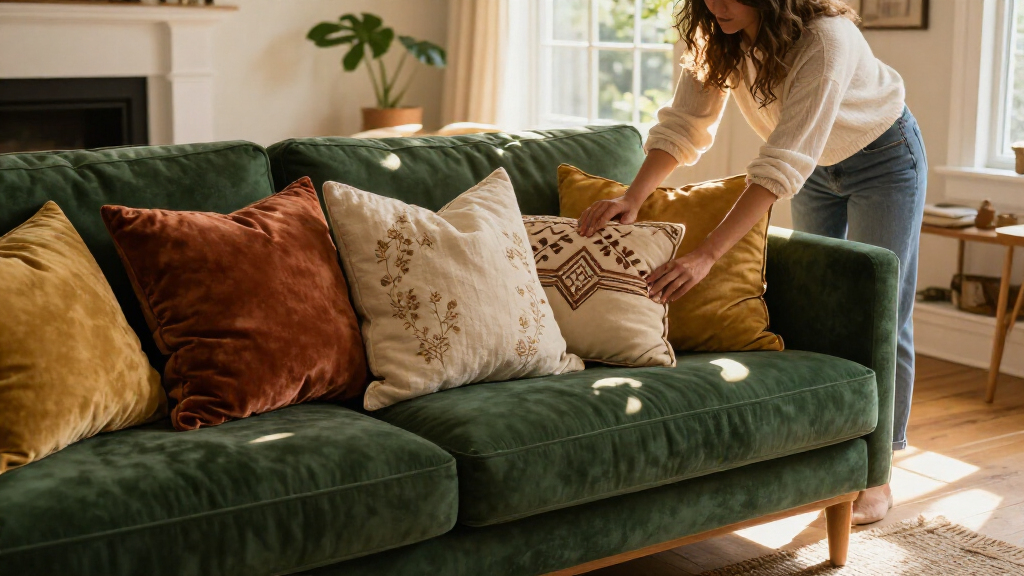
Imagine a living room with a cream sofa, a rust-colored rug, and dark wood furniture. You might combine one large floral pillow that picks up the rust, a smaller geometric print in cream and brown, and a solid velvet cushion for a soft, light-catching finish. The shared colors tie the mix together; the different pattern sizes keep each pillow legible. The solid gives the eye a place to rest, so the arrangement can feel varied without becoming visually crowded.
Luxury throw pillows can add color and texture without replacing your larger furniture, and they can help make seating feel more inviting. If you’re wondering what “decorative cushions” are, they’re cushions used to add style and, depending on their shape and fill, comfort. They are distinguished by their fabrics, patterns, trim, size, and finish; a decorative cushion may be made for looks, daily use, or both. In practice, that distinction matters: a richly trimmed accent may be better suited to a bed or occasional chair, while a simpler, comfortable cushion can do double duty on a frequently used sofa.
Try changing one element at a time. If your room already has a patterned rug, choose simpler pillows with a tactile weave or velvet surface. In a mostly neutral room, a bold print can bring a little energy. A set of matching pillows may look tidy, but mixing textures can make the room feel more collected and personal. Keeping one element consistent, such as a shared color, lets you experiment with another without losing the room’s overall sense of cohesion.
Decide Whether the Price Earns Its Place
A high price may reflect fabric quality, skilled labor, design, or small-batch production, but it does not guarantee that a pillow will be comfortable, durable, or right for your home. Price is a clue about what a seller is charging, not proof of how the pillow will perform. Compare the cover, insert, construction, cleaning needs, and included extras. The full product details matter more than the number printed on the tag.
Suppose you find two similarly sized cushions: one costs more but includes a carefully finished cover and an insert, while the other appears cheaper but is cover-only and needs professional cleaning. Their starting prices do not tell the whole story. Add up what you’ll actually pay, then ask whether the materials and care routine suit your household. A lower initial price may become less attractive once you add a separate insert or repeated cleaning, while a higher price may still be poor value if its materials do not fit your use.
You may value one statement pillow in a special fabric more than several less expensive cushions. Or you may prefer a practical cotton cover you can use every day without fuss. Neither approach is automatically better. A premium choice earns its place when its comfort, appearance, and construction match what you need from it, and when you are willing to follow the care routine that helps preserve it.
For a large sofa, consider buying one pillow first and living with it for a few days. Sit against it, check how it looks in morning light, and read the care label again when you have it in hand. That small trial can tell you whether you want to build a set around the fabric or return to a simpler, easier-care option. It also helps you judge the actual scale and feel in your room, which a product photograph and price cannot fully convey.
Keep Your Pillows Looking Full and Feeling Fresh
Regular fluffing, sensible placement, and label-led cleaning help preserve a pillow’s shape and appearance. The insert compresses under regular use, while the cover can fade or wear from friction and sunlight, so simple habits can slow visible changes. Start with the care instructions because fabrics respond differently to water, heat, and cleaning products. A removable cover may simplify the job, but the label still decides whether it can go in a washing machine.
After a week of use, a pillow may look compressed where someone leaned against it every evening. Give it a gentle shake and reshape the corners; rotate it so the same side does not take all the wear. Keep delicate fabrics away from strong sunlight, which can fade colors, and address spills according to the maker’s directions rather than rubbing at them with a random cleaner. Rubbing or using an untested product can spread a stain or alter the fabric’s texture, so follow the recommended method before treating the whole mark.
If your home has pets, place more delicate cushions where paws and claws are less likely to catch the fabric. For example, use a sturdier cotton pillow at the busy end of the sofa and save silk or delicate velvet for a bedroom or occasional chair. That way you can enjoy the more fragile piece without asking it to handle every muddy-paw afternoon. Placement is a useful compromise: you keep the fabric you love while reducing the wear that could make it look tired quickly.
Indoor pillows should stay indoors unless they’re specifically made for outdoor use. Moisture and sunlight can stain, fade, or wear down indoor fabrics. To keep a fuller shape, follow the insert maker’s care advice and avoid forcing the cover over an insert that pulls tightly on the seams. Preventing too much tension matters because it can stress the closure and shorten the life of both the cover and insert.
Frequently Asked Questions
Are luxury throw pillows worth the price?
They can be worth it if the materials, construction, comfort, and care requirements fit your needs. Compare the full cost, including the insert if it is sold separately, instead of judging by the cover price alone.
How many pillows should I put on a sofa?
There’s no fixed number. Choose an arrangement that looks balanced and leaves enough room for people to sit comfortably; a compact loveseat may need fewer or smaller pillows than a deep sectional.
Should an insert be larger than its cover?
Sometimes a slightly larger insert creates a fuller shape, but the right size depends on the cover’s design and the maker’s guidance. An insert that is too large can strain the seams or distort the corners.
How do I clean luxury throw pillows?
Follow the care label. Some removable covers can be washed, while others need spot or professional cleaning; never assume that a zipper means the cover is machine-washable.
Can I use indoor luxury pillows outside?
Use them outdoors only if they’re specifically made for outdoor conditions. Sun and moisture can fade, stain, or damage indoor fabrics, even when the pillows look sturdy.
Conclusion
Choose a pillow by how it feels in your hand, how it sits on your furniture, and how much care it asks of you. Fabric, fill, construction, and cleaning needs reveal more than a luxury label ever can.
Measure your seating, check whether an insert is included, and pick a cover you can live with on an ordinary Tuesday. The best cushion is the one that makes your room feel more inviting—and still leaves you a comfortable place to sit.