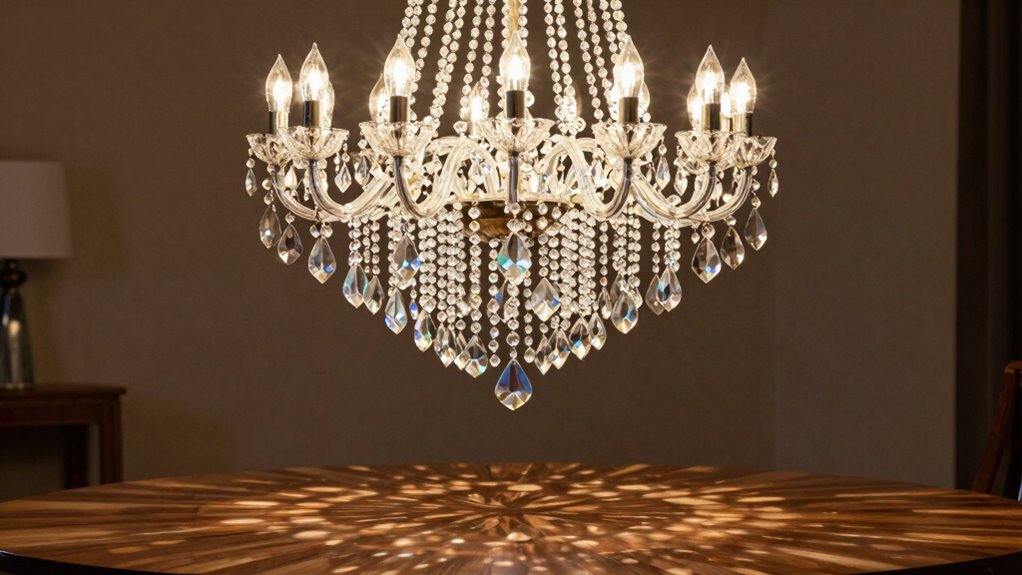

When hanging a chandelier over a table, aim for the fixture to be 30 to 36 inches above the surface. This height provides balanced lighting, doesn’t obstruct views or conversations, and guarantees safety and comfort. Adjustable chains or rods help you fine-tune the placement, especially in rooms with higher ceilings. If you want to get your chandelier just right and learn more tips, keep exploring these helpful guidelines.

Get furniture and decor delivered free with Prime
- Fast, free delivery on millions of items
- Prime Video, Amazon Music and more included
- Member-only deals all year
Key Takeaways
- Generally, hang chandeliers 30–36 inches above dining tables for optimal lighting and visual balance.
- Adjust chandelier height based on ceiling height: higher ceilings may require longer chains for proportion.
- For kitchens, suspend fixtures 30–36 inches above islands or bars to ensure adequate task lighting.
- Maintain at least 7 feet clearance from the floor in entryways and foyers for safety and accessibility.
- Use adjustable chains or rods to fine-tune chandelier height for room size, function, and aesthetic harmony.
As an affiliate, we earn on qualifying purchases.
Why Does Chandelier Height Matter for Your Room?
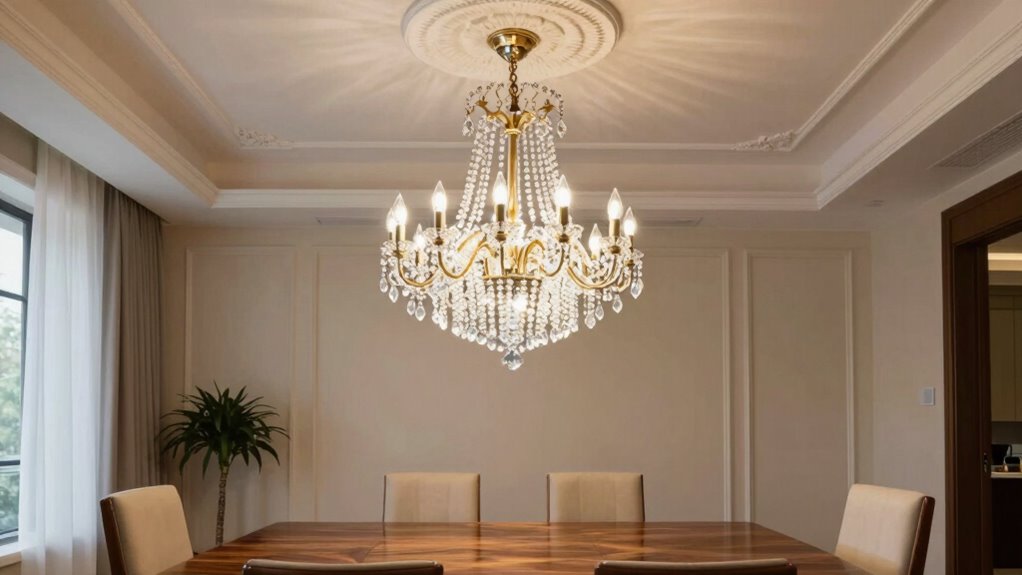
Have you ever noticed how a chandelier’s height can drastically change a room’s appearance and functionality? The right height influences lighting ambiance, creating a warm, inviting glow or a bright, energetic atmosphere. When hung too high, the chandelier can feel distant and unnoticeable; too low, it may obstruct views or hinder movement. Proper height also affects energy efficiency by ensuring light is distributed evenly, reducing the need for additional lighting. A well-placed chandelier enhances the room’s style without overwhelming it. It balances aesthetics with practicality, making your space more comfortable and visually appealing. Paying attention to height ensures your chandelier complements the room’s purpose and design, maximizing both its beauty and functionality. Additionally, understanding lighting placement can help you select the most effective lighting solutions for your space.
How Do You Measure the Perfect Chandelier Height for Your Space?
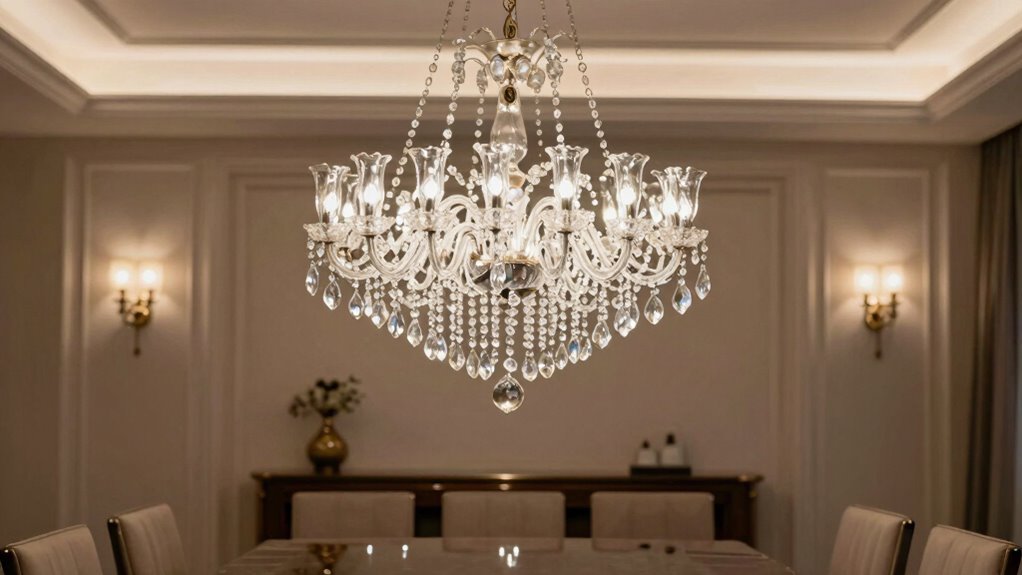
Measuring the perfect chandelier height begins with understanding your room’s purpose and layout. To determine ideal lighting placement, consider these key steps:
- Identify the main function of the space—whether it’s dining, lounging, or working.
- Measure the ceiling height to decide on a fixture height that balances aesthetics and practicality.
- Decide on a hanging height that allows enough clearance while highlighting the fixture’s design.
Keep in mind, your chandelier’s fixture height should complement the room’s proportions and ensure enough space for movement. For rooms with standard ceilings, hanging it 30-36 inches above a table or 7 feet above the floor in open areas usually works best. This ensures proper lighting placement while maintaining visual harmony.
What Is the Standard Chandelier Height Over a Dining Table?
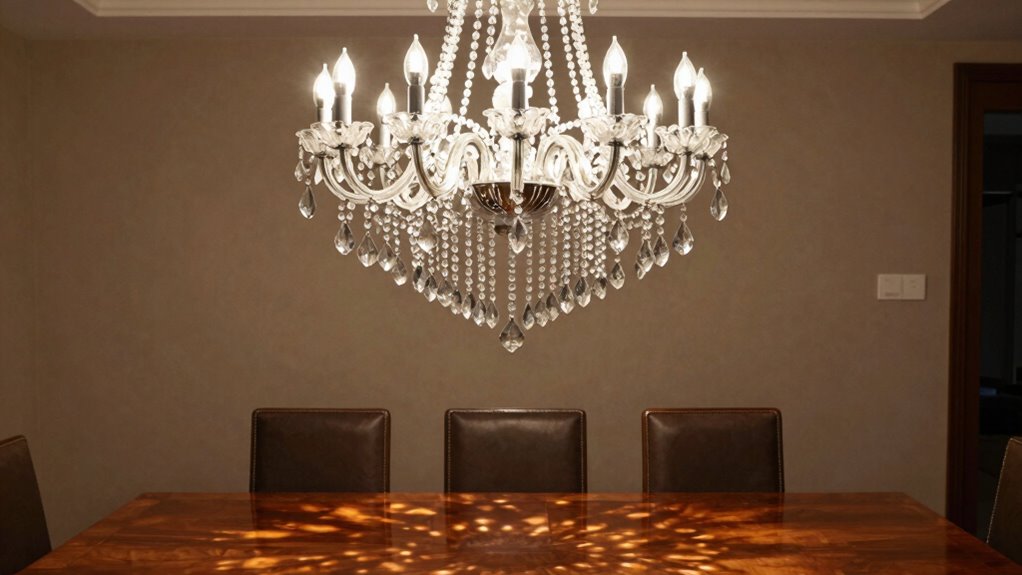
The standard chandelier height over a dining table typically ranges between 30 and 36 inches above the table surface. To guarantee proper lighting tips, you want the fixture to hang low enough for illumination but high enough to avoid obstructing views or conversations. When selecting a fixture, consider its size and style; larger chandeliers may require a slightly higher hanging point to maintain balance. If your ceiling is higher than 8 feet, adding an extra inch or two can keep the chandelier proportionate. Remember, the goal is to create a comfortable ambiance while providing ample light. Proper fixture selection and height placement are essential for both aesthetics and functionality, making sure your dining space feels inviting and well-lit. Additionally, paying attention to stair proportions and overall room planning can enhance the harmony of your space. Ensuring that your chandelier’s height aligns with room proportions enhances visual balance and comfort.
How High Should a Chandelier Hang in Foyers and Entryways?

When hanging a chandelier in your foyer or entryway, finding the right height is key to both style and safety. You need to contemplate your ceiling height, ensuring the fixture is visible but not obstructive. Striking the right balance helps create an inviting space that’s both functional and visually appealing. Additionally, considering indoor plant care guidelines can enhance the overall ambiance, making the area more welcoming.
Optimal Hanging Height
Ever wonder how high a chandelier should hang in your foyer or entryway? To achieve the perfect lighting ambiance, aim for a height that balances style and function. Consider these key points:
- Hang your chandelier so that the bottom is at least 7 feet above the floor for comfortable clearance.
- For high ceilings, adjust the height to ensure the fixture doesn’t overwhelm the space or block sightlines. Consulting typical chandelier hanging heights can help guide your decision.
- Match chandelier styles to your space; larger fixtures need more height, while delicate designs can hang slightly lower without crowding the area. Proper body jewelry measurements and materials can also influence the fixture size choice.
- Remember that projector placement impacts how your lighting and decor come together, ensuring both practical illumination and aesthetic appeal. Additionally, considering the environmental factors like natural light can help optimize the chandelier’s placement.
Optimal hanging height depends on ceiling height and fixture size, helping you create an inviting entrance that highlights your chandelier style while providing adequate illumination.
Ceiling Height Considerations
Ceiling height plays a crucial role in determining the ideal chandelier hanging point in your foyer or entryway. Higher ceilings allow for a longer drop, creating a dramatic focal point without overwhelming the space. Conversely, lower ceilings require a shorter suspension to prevent the chandelier from crowding the room or obstructing views. Proper hanging height enhances lighting ambiance by ensuring the light disperses evenly and illuminates the area effectively. It also maintains aesthetic balance, preventing the fixture from seeming out of proportion or too close to walls and furniture. To find the right height, consider both the ceiling’s height and the overall scale of your entryway. When adjusted correctly, your chandelier can serve as a stunning centerpiece while preserving functionality and visual harmony. Additionally, being aware of potential scam risks when purchasing lighting fixtures online can help protect your investment. Understanding standard chandelier heights can also guide your selection for different space types.
Visibility and Safety
Choosing the right hanging height for your chandelier guarantees it remains both visible and safe for everyone entering the space. Proper height prevents accidents and reduces light pollution by directing illumination effectively. To maximize safety and visibility, consider these tips:
- Keep the bottom of the chandelier at least 7 feet above the floor to avoid head bumps.
- Ensure the fixture is visible from all angles to prevent accidental collisions.
- Use energy-efficient bulbs and consider dimmable options to control light levels and minimize light pollution.
These steps help maintain a well-lit, safe environment while promoting energy efficiency. Proper placement not only enhances visual appeal but also ensures the chandelier complements your space without causing glare or light pollution issues.
How Do You Adjust Chandelier Height Over Kitchen Islands and Breakfast Bars?
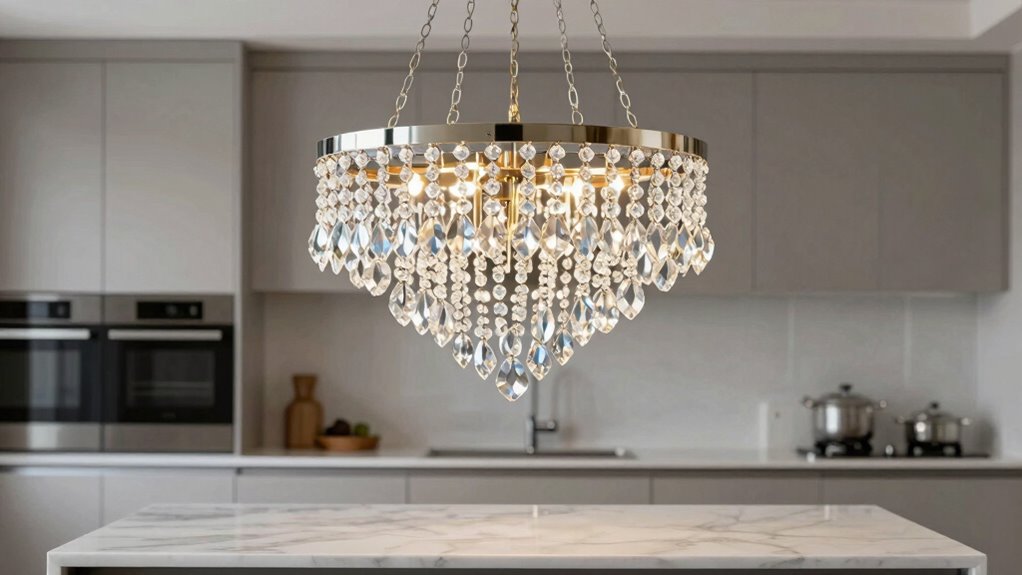
To get the perfect look and functionality, you need to adjust your chandelier to the ideal hanging height over your kitchen island or breakfast bar. Consider the chandelier’s size and how much task lighting you need, as these factors influence the best height. When in doubt, aim for about 30-36 inches above the counter for a balanced, practical setup. Additionally, ensure the chandelier’s design style complements your overall decor to create a cohesive aesthetic.
Ideal Hanging Height
Wondering how high to hang your chandelier over a kitchen island or breakfast bar? The ideal hanging height balances aesthetics and function. Generally, follow these design principles:
- Keep the bottom of the chandelier about 30-36 inches above the countertop.
- Consider the size of your lighting fixtures; larger fixtures may need to hang slightly higher.
- Ensure enough clearance for comfortable movement underneath, typically at least 78 inches from the floor.
- When selecting a chandelier, choose one with a chamber vacuum sealing gear that complements your space’s size and style.
- Additionally, appropriate hanging height can enhance the overall ambiance and visual harmony of your kitchen design.
- Paying attention to topical authority in lighting design can help you select fixtures that are both stylish and functional for your space.
- Consulting with a lighting specialist can provide personalized recommendations tailored to your room’s proportions and decor.
- Remember that the visual impact of your chandelier depends on proper placement, which can also influence the room’s perceived proportions and balance.
This height creates a balanced look and provides sufficient illumination. Remember, lighting fixtures should complement your space without obstructing views or work areas. Adjustments may be necessary based on ceiling height and personal preference, but these guidelines ensure you’re on the right track for a stylish, functional setup.
Adjusting for Function
Adjusting the chandelier height for function involves fine-tuning its position to guarantee both practical use and visual harmony. For kitchen islands and breakfast bars, you want enough clearance for comfortable movement while ensuring lighting is effective. Use dimming controls to adapt brightness for tasks or ambiance, enhancing energy efficiency. Consider the table-to-fixture height below:
| Functionality | Recommended Height |
|---|---|
| Task lighting over work surfaces | 30–34 inches above the countertop |
| Ambient lighting for dining | 36–40 inches above the table or bar |
| Dimming controls | Enable flexible lighting levels |
| Energy efficiency | Use LED bulbs and dimmers to save energy |
Properly adjusting chandelier height can also impact the overall aesthetic appeal of your space, creating a balanced and inviting atmosphere. lighting placement plays a critical role in achieving optimal functionality and ambiance. Additionally, paying attention to room proportions ensures the chandelier complements the space without overpowering or underlighting it. A well-placed chandelier can serve as both a functional light source and a focal decorative element, enhancing your overall interior design. Considering ceiling height can help determine the most appropriate chandelier length for your specific room, ensuring harmony and proportion.
What Common Mistakes Should You Avoid When Hanging a Chandelier?
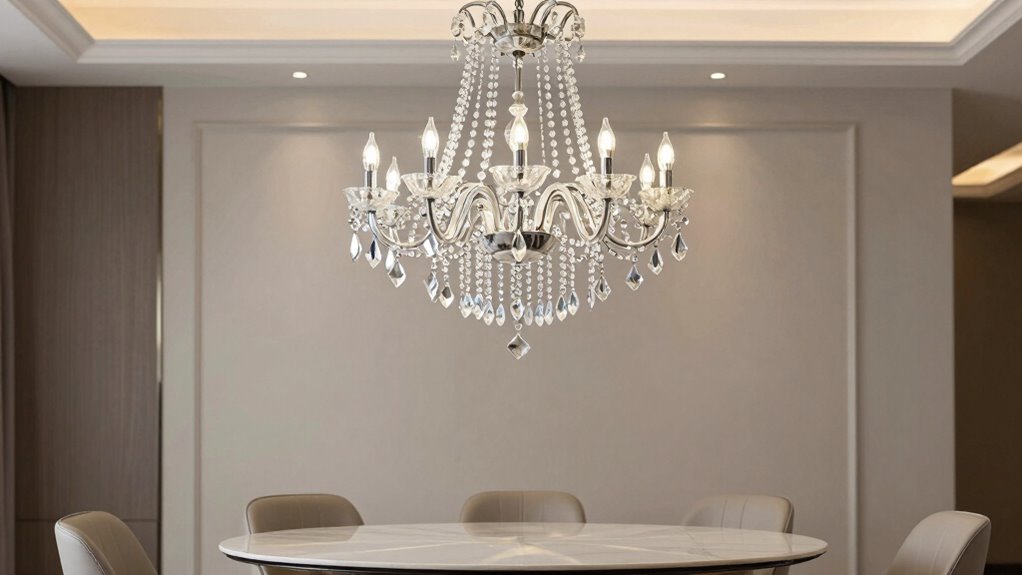
Hanging a chandelier might seem straightforward, but making common mistakes can compromise both its appearance and safety. To guarantee proper fixture installation and lighting safety, avoid these pitfalls:
- Hanging the fixture too high or low, which disrupts the intended ambiance and function.
- Ignoring ceiling height, leading to an unbalanced look or unsafe hanging height.
- Forgetting to secure the chandelier properly, risking accidents or damage over time.
- Failing to consider lighting safety standards, which can lead to electrical issues and hazards.
- Neglecting to verify that the mounting hardware is rated for the fixture’s weight and properly installed can result in dangerous situations.
Always measure carefully and follow recommended hanging heights for your space. Improper installation can cause the fixture to sway or fall, posing safety risks. Additionally, neglecting lighting safety standards can lead to electrical issues. Taking the time to double-check measurements and secure the fixture ensures your chandelier is both beautiful and safe for everyone.
How Does Ceiling Height Affect Your Chandelier Hanging Height?
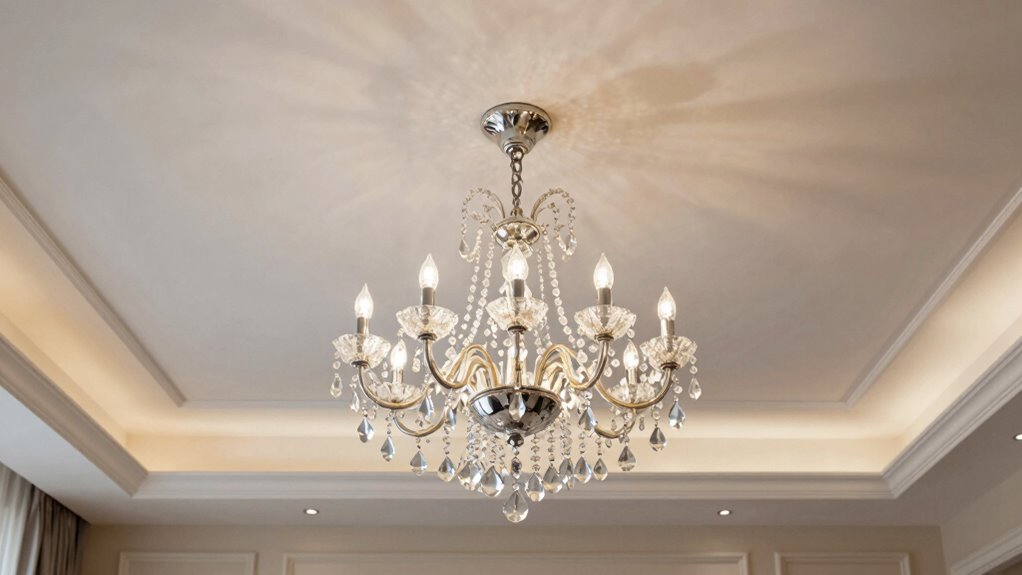
Ceiling height plays a crucial role in determining the ideal hanging height for your chandelier. If you have a high ceiling, you can hang the fixture higher to maintain a balanced lighting ambiance and avoid overwhelming the space. Conversely, with lower ceilings, you’ll want to hang the chandelier closer to ensure it doesn’t obstruct sightlines or make the room feel cramped. Your ceiling design also influences placement—vaulted or tray ceilings often require different hanging strategies compared to flat ceilings. Properly adjusting the chandelier’s height ensures maximum illumination while enhancing your room’s aesthetic. Ultimately, understanding how ceiling height impacts your lighting setup helps you create a harmonious and functional space that highlights your ceiling design and maintains good lighting ambiance.
When Should You Use Adjustable Chains or Rods for Your Chandelier?

Using adjustable chains or rods becomes essential when you want flexibility in positioning your chandelier, especially in spaces with varying ceiling heights or unique design features. They allow you to fine-tune the hanging height for ideal light distribution and aesthetic balance. Consider these key points:
- When you need precise height control to match different room functions or furniture placement.
- If you want to incorporate dimming options, adjustable rods make it easier to set the perfect light level.
- During installation, they offer easier setup, helping you avoid uneven hanging or clearance issues.
Using adjustable chains or rods also provides versatility for future changes in your room layout. Follow installation tips carefully to ensure stability and safety, and verify dimming compatibility for the best lighting experience.
How Can You Ensure Your Chandelier Enhances Your Room’s Design?
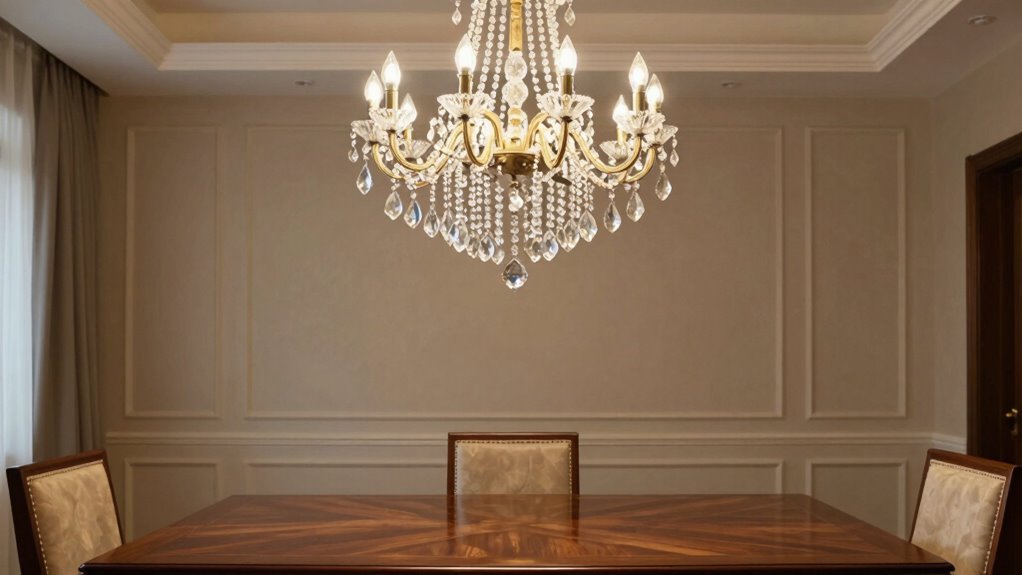
To guarantee your chandelier enhances your room’s design, start by choosing a style that complements your existing decor. Consider decorative accents that tie the fixture into your overall theme, whether modern, vintage, or eclectic. Pay attention to materials, finishes, and shapes that harmonize with other elements in the space. Properly selected lighting ambiance is also essential; a chandelier should provide sufficient illumination without overpowering the room’s atmosphere. Adjust the size and scale to suit the space’s proportions, ensuring it doesn’t look out of place. By thoughtfully integrating decorative accents and lighting ambiance, your chandelier becomes a focal point that elevates your room’s aesthetic, creating a cohesive and inviting environment.
Frequently Asked Questions
Can You Hang a Chandelier Lower for Decorative Purposes?
Yes, you can hang a chandelier lower for decorative aesthetics, but you should consider the visual balance and safety. Lowering it enhances the room’s style and creates a focal point, especially over dining tables or sitting areas. Just make certain it’s not so low that it obstructs views or movement. Measure carefully to maintain harmony with the space and avoid compromising the chandelier’s functionality or safety.
What Are the Safety Considerations When Hanging a Chandelier?
When hanging a chandelier, prioritize lifting safety by using proper equipment and techniques to prevent accidents. Always follow electrical code requirements to guarantee safe wiring and grounding. Check the fixture’s weight limits and secure mounting points firmly to avoid falls. Turn off power before working and double-check connections. By adhering to safety standards and electrical codes, you protect yourself and ensure your chandelier is safely installed.
How Does Room Function Influence Chandelier Height Choices?
In a dining room, your ceiling height greatly influences chandelier placement. If the ceiling is standard height, hang the chandelier so it’s about 30 to 36 inches above the table for ideal balance and function. For higher ceilings, you can hang the fixture slightly lower to maintain visual interest and guarantee enough light. Always consider room size and function to keep the space inviting and practical.
Is It Necessary to Hire a Professional for Chandelier Installation?
You don’t always need to hire a professional for chandelier installation. With DIY tips, you can handle it yourself, saving on cost considerations. Make sure to turn off power, use the right tools, and follow the chandelier’s installation instructions carefully. If you’re unsure about electrical work or the fixture’s weight, it’s safer to hire a pro to avoid accidents or damage. Always prioritize safety and proper installation.
How Can Lighting Height Impact Room Ambiance?
Lighting height substantially impacts your room’s ambiance and design harmony. When you position fixtures at the right height, they enhance lighting aesthetics, creating a warm, inviting atmosphere. If your lights hang too low or high, it can disrupt the visual flow and make the space feel unbalanced. You should consider the room’s purpose and furniture arrangement, ensuring your lighting complements the overall design and enhances the mood you want to set.
Conclusion
Ultimately, choosing the right chandelier height transforms your space into something special. By following the right measurements and avoiding common mistakes, you’ll create a balanced, stylish look that highlights your room’s best features. Isn’t it worth taking the time to get it just right, so your chandelier becomes a stunning focal point rather than an awkward distraction? With a little effort, you’ll enjoy a beautifully illuminated room that feels perfectly designed for you.
Fall Picks
fall essentials
As an affiliate, we earn on qualifying purchases.