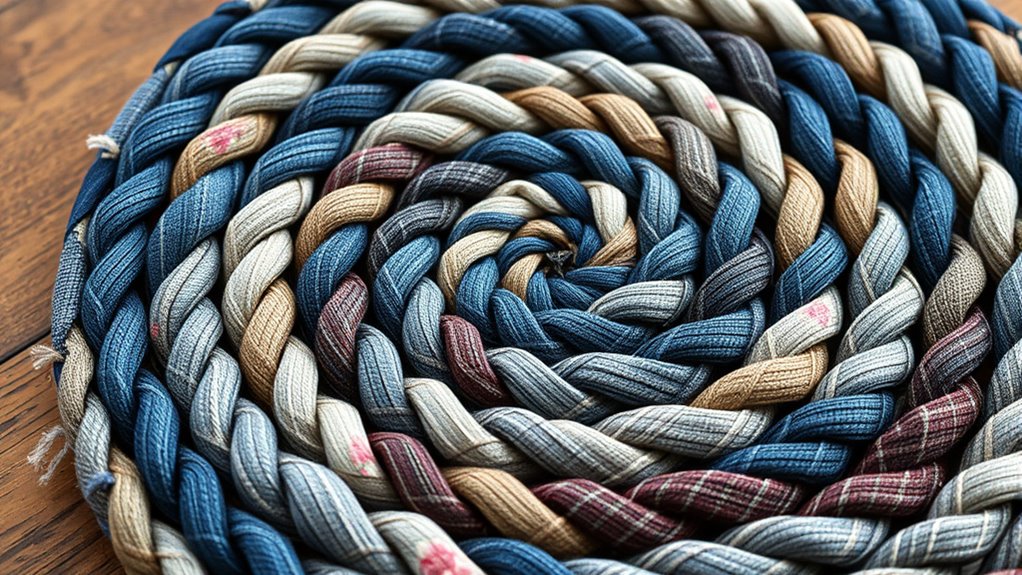

By braiding old fabrics into upcycled textile rugs, you turn discarded materials into unique, eco-friendly decor for your home. Using durable textiles like denim or tightly woven cotton guarantees your rug will last through daily use. The process is simple, fun, and allows you to customize with colors and textures that match your style. Embracing this craft not only reduces waste but also creates beautiful, personalized pieces—keep exploring to learn more about crafting your perfect upcycled rug.

Get furniture and decor delivered free — and shop member deals
- Fast, free delivery on millions of items
- Access to Prime Big Deal Days deals on October 6–7
- Prime Video, Amazon Music and more included
Key Takeaways
- Braiding old fabrics creates durable, eco-friendly rugs that transform waste into functional home decor.
- Selecting strong textiles like denim or canvas ensures the rug’s longevity and resistance to wear.
- The braiding technique is simple, allowing for personalized, customizable designs to match various interior styles.
- Upcycled textile rugs promote sustainability by repurposing discarded fabrics and reducing landfill waste.
- Mixing textures and colors in braids enhances visual interest and adds unique character to each handcrafted rug.
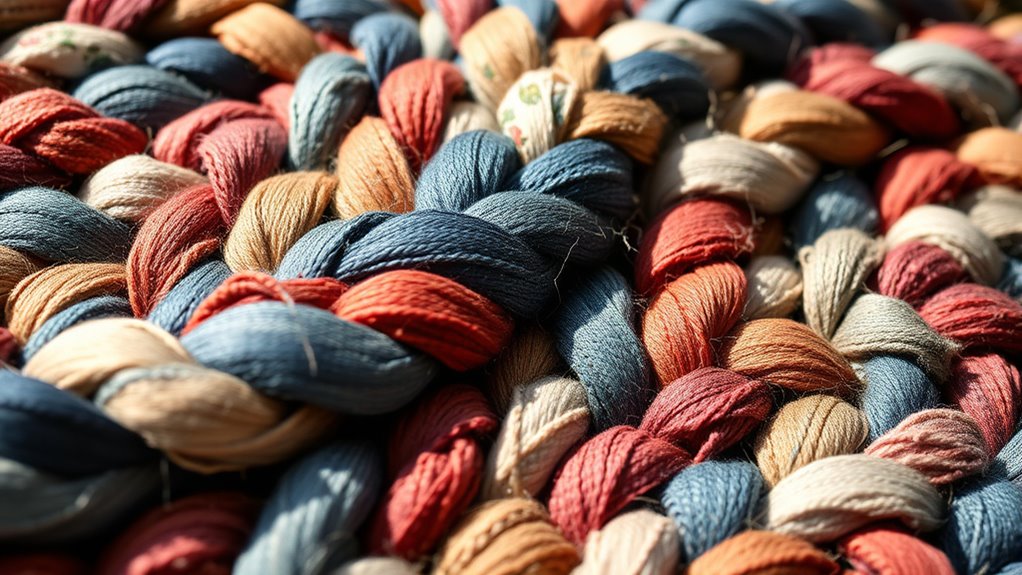
Upcycled textile rugs are an innovative and eco-friendly way to add warmth and character to your space while reducing waste. When you choose to create or purchase these rugs, you’re engaging in sustainable crafting, turning old fabrics into something functional and beautiful. This approach not only minimizes landfill waste but also highlights the creative potential of discarded textiles. By repurposing fabrics, you get a unique, one-of-a-kind piece that tells a story, making your home more personalized and environmentally conscious.
Upcycled textile rugs transform waste into beautiful, eco-friendly, and personalized home accents.
As you explore making or selecting upcycled textile rugs, you’ll notice that material durability plays a vital role. The fabrics used in upcycling vary widely, from worn-out T-shirts to vintage sheets or leftover scraps from previous projects. The key is to select materials that can withstand daily wear and tear, guaranteeing your rug remains a lasting addition to your decor. Durable textiles like denim, canvas, or tightly woven cotton tend to hold up well over time, maintaining their appearance and integrity even with frequent foot traffic. When you understand the importance of material durability, you can choose fabrics that not only look good but also stand the test of time, reducing the need for frequent replacements.
Creating a braided rug from old fabrics involves more than just weaving strips together; it’s about thoughtfully selecting textiles that balance aesthetic appeal with resilience. You might mix different textures and colors, but always keep in mind how the fabrics will perform under use. Braiding old textiles is a sustainable crafting technique that emphasizes resourcefulness—transforming what might be discarded into a functional piece of art. The process is simple enough to do at home, yet impactful, as it extends the life of fabrics that would otherwise be thrown away. You can even incorporate fabrics with sentimental value, giving your rug a personal touch while championing eco-conscious living.
Furthermore, upcycled textile rugs are versatile and customizable. Whether you prefer a rustic, bohemian vibe or a more modern, minimalist look, you can tailor your braids to match your style. The durability of the materials ensures your creation will last, giving you a sustainable solution that’s both practical and stylish. Understanding production quantity variance and other cost management principles can help you better plan your crafting projects and budget effectively. As you explore this craft, you’ll find that it’s rewarding to breathe new life into old textiles, turning waste into a durable, beautiful rug that enhances your home’s warmth and charm. Ultimately, embracing sustainable crafting through upcycled textile rugs allows you to reduce waste, celebrate creativity, and enjoy a durable, eco-friendly piece that reflects your commitment to the environment.
As an affiliate, we earn on qualifying purchases.
Frequently Asked Questions
What Types of Fabrics Work Best for Upcycling Into Rugs?
You should choose durable fabrics like denim, cotton, or wool for upcycling into rugs. These materials hold up well with upcycling techniques like braiding and knotting. Mix fabric color combinations to create vibrant, eye-catching designs. Avoid delicate fabrics that wear quickly. By selecting sturdy fabrics and experimenting with color combinations, you’ll craft unique, long-lasting rugs that showcase your creativity and sustainable spirit.
How Durable Are Upcycled Textile Rugs Compared to New Ones?
Upcycled textile rugs are surprisingly durable, especially when you choose sturdy fabrics like denim or heavy cotton, which offer better material longevity. You’ll find they hold up well with regular maintenance, such as spot cleaning and occasional deep cleaning. While they might not last as long as brand-new rugs made from synthetic materials, with proper care, your upcycled rug can serve you beautifully for years, combining eco-friendliness with practicality.
Can Upcycled Rugs Be Washed or Cleaned Easily?
You can definitely clean upcycled textile rugs with the right approach—it’s not rocket science! Regular vacuuming helps keep dust at bay, while gentle cleaning techniques like spot cleaning with mild soap work wonders. For stubborn stains, prompt stain removal is key. Just avoid harsh chemicals, and your rug will last longer. Think of it as giving your rug a fresh start—easy to care for and keeps your space looking great!
Are Upcycled Textile Rugs Suitable for High-Traffic Areas?
Yes, upcycled textile rugs are suitable for high-traffic areas, especially if they have good abrasion resistance. You’ll find they hold up well against daily wear, though they might experience some color fading over time. To keep them looking vibrant, rotate the rug regularly and avoid excessive exposure to direct sunlight. Proper care helps maintain their durability and appearance, making them a practical choice for busy spaces.
What Is the Average Cost of Creating an Upcycled Textile Rug?
Creating an upcycled textile rug is like weaving a story from old fabric treasures. You’ll find that the cost considerations vary, typically ranging from $50 to $200 depending on size and complexity. Material sourcing plays a key role—using reclaimed fabrics keeps costs low and eco-friendly. Your expenses hinge on fabric quality and tools, but with some creativity, you can craft a beautiful rug without breaking the bank.
Conclusion
By choosing upcycled textile rugs, you’re not just saving money or adding unique charm to your space—you’re making a real difference. These rugs turn old fabrics into beautiful, eco-friendly decor, proving that one person’s trash can truly be another’s treasure. When you embrace upcycling, you’re hitting two birds with one stone: reducing waste and creating something special. So, don’t wait for a sign—this is your chance to be part of the solution and make a lasting impact.
Halloween Picks
halloween
As an affiliate, we earn on qualifying purchases.