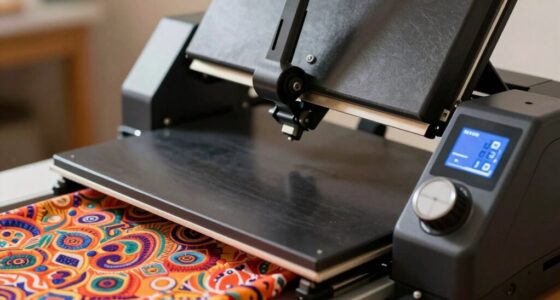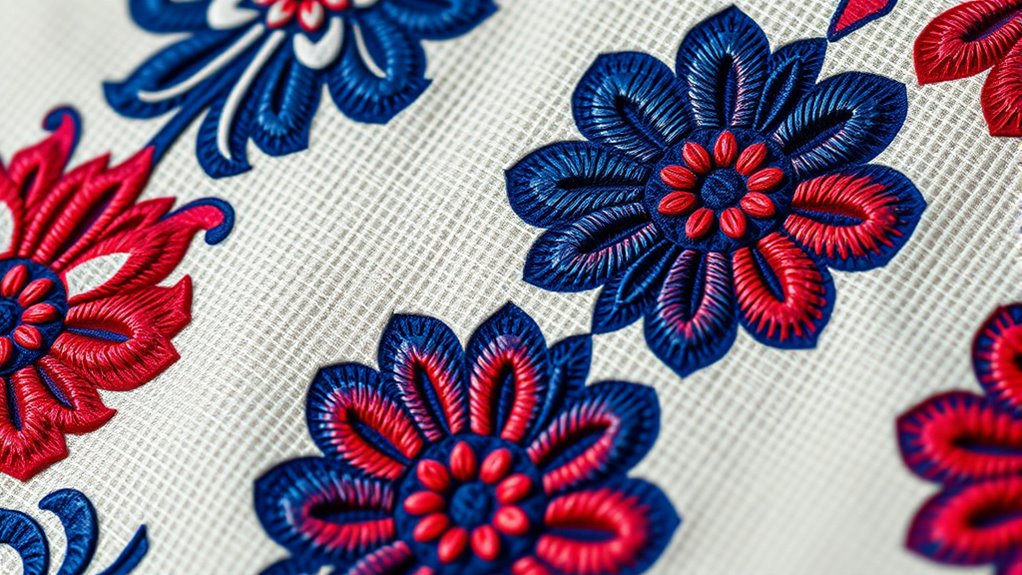

Block printing on fabric is a traditional technique where artisans carve wooden blocks with intricate designs and press them onto fabric to create beautiful patterns. You’ll see vibrant, handcrafted textiles with unique motifs that reflect cultural stories and heritage. Each piece is carefully printed by hand, making every fabric one-of-a-kind. The process involves precise carving, dyeing, and repetitive stamping, combining craftsmanship and tradition. If you explore further, you’ll discover the rich history behind this artistic craft.

Get furniture and decor delivered free with Prime
- Fast, free delivery on millions of items
- Prime Video, Amazon Music and more included
- Member-only deals all year
Key Takeaways
- Block printing uses carved wooden blocks to stamp intricate patterns onto fabric, showcasing traditional craftsmanship.
- Fabric is dyed and prepared to ensure vibrant, uniform backgrounds that highlight printed motifs.
- Artisans carve detailed motifs into wooden blocks, which are then inked or dyed for printing.
- The printing process involves precise alignment and repeated stamping to create complex, continuous patterns.
- These handcrafted textiles reflect cultural heritage and require careful maintenance to preserve vibrancy.
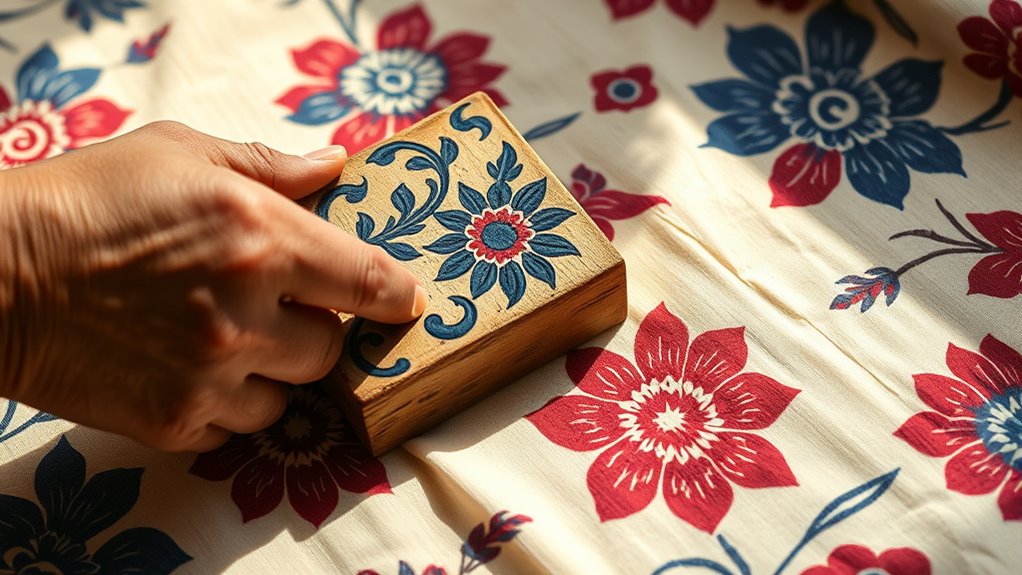
Have you ever wondered how vibrant designs appear on fabrics? The magic often lies in the art of textile printing, specifically block printing, which has been practiced for centuries. The technique involves using carved wooden blocks to stamp patterns onto fabric, creating intricate designs that bring textiles to life. Before the actual printing begins, the fabric undergoes fabric dyeing, a process that prepares the material to absorb colors uniformly. The dyeing process ensures that the fabric’s base color enhances the printed design, making the colors pop and the motifs stand out. Once the fabric is dyed and dried, artisans carefully align the carved blocks, often featuring traditional motifs passed down through generations, to create harmonious and culturally rich patterns.
The traditional motifs used in block printing are a key element that gives each piece its unique identity. These motifs might include floral patterns, geometric shapes, or symbolic images representing local stories or beliefs. The carving of the wooden blocks requires exceptional craftsmanship, as each motif must be carved with precision to ensure that when inked and stamped, the design appears sharp and consistent. When applying the ink or dye to the carved block, artisans are meticulous, ensuring the entire surface is evenly coated to avoid smudges or uneven prints. They then press the block firmly onto the fabric, transferring the design with each press. This process is repeated meticulously, often with multiple blocks for complex, multicolored patterns.
The beauty of block printing lies in its ability to produce detailed designs with a handcrafted touch, making each piece slightly unique. Unlike mass-produced printing methods, this technique allows for variations that add character and authenticity to the fabric. The use of traditional motifs not only preserves cultural heritage but also makes the fabric more meaningful. When you see a piece of fabric decorated with these motifs, you’re witnessing a story told through patterns that have been cherished for generations. Additionally, proper cleaning techniques after printing are essential to preserve the vibrancy and quality of the designs. The entire process, from fabric dyeing to the careful stamping of traditional motifs, reflects a deep respect for craftsmanship and cultural artistry. It’s a slow, deliberate art that results in textiles with rich, vibrant designs that celebrate history, tradition, and creativity.
wooden block printing stamps for fabric
As an affiliate, we earn on qualifying purchases.
As an affiliate, we earn on qualifying purchases.
Frequently Asked Questions
What Are the Main Types of Block Printing Techniques?
You can explore various block printing techniques like direct, reverse, and resist printing. With each, you create intricate stamp patterns by hand using carved wooden or rubber blocks. You have the flexibility to experiment with color combinations, blending different shades to achieve unique effects. This hands-on approach allows you to produce vibrant, detailed designs on fabric, making each piece one-of-a-kind and showcasing your creative skills.
How Do You Prepare Fabric for Block Printing?
Ever had that feeling of anticipation before creating art? To prepare fabric for block printing, first choose the right fabric, like cotton or silk, based on your project. Then, make certain your surface is smooth and clean by washing and ironing it thoroughly. This removes dirt and wrinkles, allowing the ink to transfer evenly. Proper surface preparation ensures your designs come out crisp, vibrant, and professional-looking every time.
What Are the Common Dyes Used in Block Printing?
You typically use natural dyes like indigo, madder, and turmeric, which are eco-friendly and give vibrant colors. Synthetic dyes such as acid, reactive, or disperse dyes are also popular because they produce bright, long-lasting hues and are easier to work with. Your choice depends on the desired color, fabric type, and environmental considerations. Both natural and synthetic dyes can create stunning designs when applied with proper techniques.
How Do You Care for Block-Printed Fabrics?
Imagine your vibrant, hand-printed fabric as a cherished treasure. To care for it, gently hand wash with mild, cold water to keep colors bright and fabric intact. Avoid harsh detergents and direct sunlight to prevent fading. Fabric maintenance is key, so handle with care. When not in use, store it in a cool, dark place. This way, your block-printed masterpiece remains vivid and beautiful for years to come.
What Are the Historical Origins of Textile Block Printing?
You’ll find that textile block printing has ancient roots, originating in India around the 4th century CE. This handcraft’s cultural significance grew as artisans used carved wooden blocks to create intricate patterns, symbolizing tradition and identity. Over centuries, it spread across Asia and the Middle East, evolving into a cherished craft that reflects rich history and artistry, still appreciated today for its craftsmanship and cultural importance.
Conclusion
Now that you’ve uncovered the secrets of block printing, imagine the possibilities waiting for you. With just a few tools and your creativity, you can transform plain fabric into stunning art. But beware—there’s always more to explore, more patterns to master, and new techniques to discover. Will your next masterpiece be the one that turns heads? Keep experimenting, and who knows? The world of textile printing might just hold your greatest design yet.
Halloween Picks
halloween
As an affiliate, we earn on qualifying purchases.