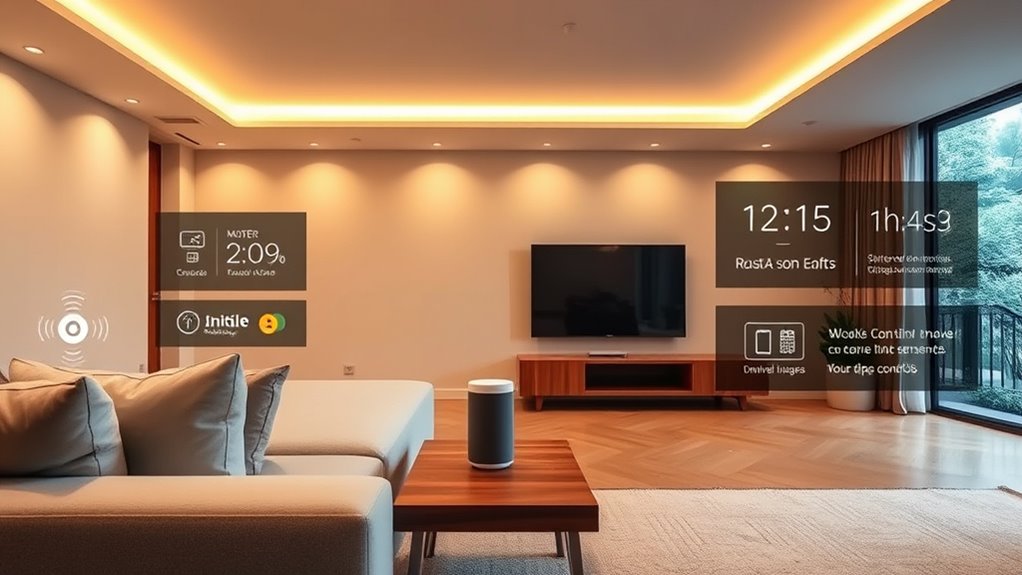

Integrating voice commands and sensors makes your home smarter, more comfortable, and energy-efficient. You can control lighting, climate, and security with simple voice prompts or sensors that detect activity and occupancy. This setup automates routines, saves energy, and improves safety effortlessly. As your home adapts to your lifestyle, you’ll enjoy a seamless experience. If you continue exploring, you’ll discover how to optimize your smart space for maximum comfort and efficiency.

Get furniture and decor delivered free with Prime
- Fast, free delivery on millions of items
- Prime Video, Amazon Music and more included
- Member-only deals all year
Key Takeaways
- Strategically place sensors for optimal coverage to enhance security and energy efficiency.
- Integrate voice assistants to enable hands-free control of lighting, climate, and security systems.
- Automate routines based on sensor triggers and voice commands for a personalized, responsive home environment.
- Use sensors to detect occupancy, automatically adjusting lighting and appliances to conserve energy.
- Ensure seamless connectivity between voice control devices and sensors for a cohesive smart home system.
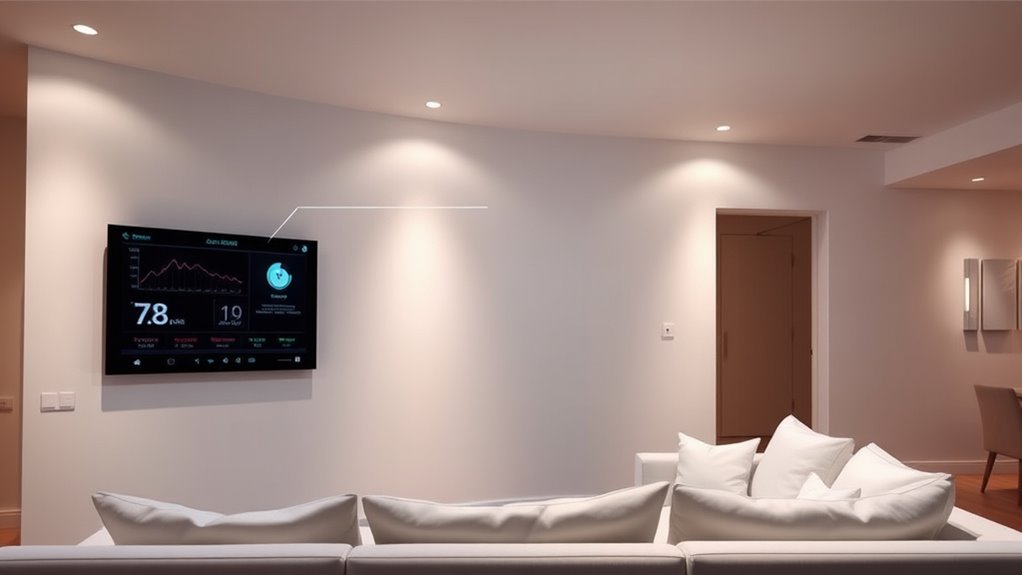
Smart home design transforms the way you live by seamlessly integrating technology to enhance comfort, security, and efficiency. When you incorporate voice controls and sensors into your home, you’re creating an environment that responds intuitively to your needs, making daily routines smoother and more convenient. One of the key benefits of this integration is improved energy efficiency. Smart thermostats, for example, learn your schedule and adjust temperatures automatically, reducing energy waste and lowering utility bills. Motion sensors can detect when rooms are unoccupied and turn off lights or appliances, further conserving energy. These features not only help you save money but also contribute to a more sustainable lifestyle. Additionally, the use of sensor placement is crucial for optimizing their effectiveness and ensuring comprehensive coverage throughout your home.
Security is another major aspect of smart home design that benefits from voice commands and sensors. With security systems integrated into your smart home, you can monitor your property remotely, receive real-time alerts about any unusual activity, and even control locks and cameras with simple voice commands. Sensors placed around your home can detect motion, glass breakage, or door openings, instantly notifying you of potential security breaches. This layered approach to security gives you peace of mind, knowing that your home is protected around the clock. Plus, the convenience of voice-controlled security systems means you don’t need to fumble with keys or manually check locks; you can lock doors or activate alarms with a quick voice command, whether you’re inside or away.
Implementing voice and sensor technology also streamlines your daily routines, making your home more responsive and personalized. For example, with voice assistants, you can set routines that automatically adjust lighting, climate, and security settings based on your preferences or time of day. Sensors can trigger lighting when you enter a room or notify you if someone is detected when you’re away. This automation not only adds a layer of security but also enhances your comfort by creating a home environment that adapts to your lifestyle.
smart home voice control devices
As an affiliate, we earn on qualifying purchases.
As an affiliate, we earn on qualifying purchases.
Frequently Asked Questions
How Secure Are Smart Home Voice Commands From Hacking?
Smart home voice command security varies, but it’s generally quite secure if you take proper precautions. To prevent hacking, use strong, unique passwords and enable multi-factor authentication. Regularly update your device firmware and disable voice command features when not in use. These hacking prevention steps help protect your system from unauthorized access, ensuring your voice commands stay private and secure, giving you peace of mind in your connected home.
Can Sensors Differentiate Between Residents and Intruders?
Think of sensors as vigilant guardians in your home’s fortress, capable of biometric identification to tell residents apart from intruders. While sensor accuracy varies, advanced systems can differentiate between familiar faces and unknown visitors, adding a layer of security. However, no system is perfect; some intruders may mimic biometric traits. You should regularly update and calibrate sensors to maintain their ability to accurately distinguish residents from intruders.
What Is the Cost Range for Full Smart Home Integration?
The cost estimation for full smart home integration typically ranges from $15,000 to $50,000, depending on the complexity and devices chosen. You should focus on budget planning by prioritizing your must-have features and gradually expanding your system. Keep in mind that professional installation, high-end devices, and advanced automation can increase costs, so factor these into your overall budget to make sure you get the most value from your smart home investment.
How Do Smart Sensors Conserve Energy Effectively?
Did you know smart sensors can cut energy use by up to 30%? You can maximize their effectiveness by using energy-efficient lighting and ensuring proper sensor calibration. When sensors accurately detect motion or light levels, they turn lights on or off only when needed, preventing waste. This precise control helps you save energy and lower utility bills while maintaining a comfortable home environment.
Are There Privacy Concerns With Voice-Activated Home Systems?
Yes, there are privacy concerns with voice-activated home systems. You might worry about unauthorized access or data breaches. To protect yourself, make certain the system uses strong data encryption and always review privacy settings. It’s important that you give informed user consent before your data is collected or shared. By staying aware and proactive, you can enjoy the convenience of voice systems while safeguarding your privacy effectively.
Conclusion
By integrating voice control and sensors into your smart home, you’re not just modernizing your space—you’re creating a seamless, intuitive environment. Some experts believe this connected approach could even predict your needs before you do, transforming how you live daily. While the technology is still evolving, embracing these innovations now means you’re ahead of the curve. So, why not take the leap and turn your home into a smarter, more responsive sanctuary?
Fall Picks
fall essentials
As an affiliate, we earn on qualifying purchases.