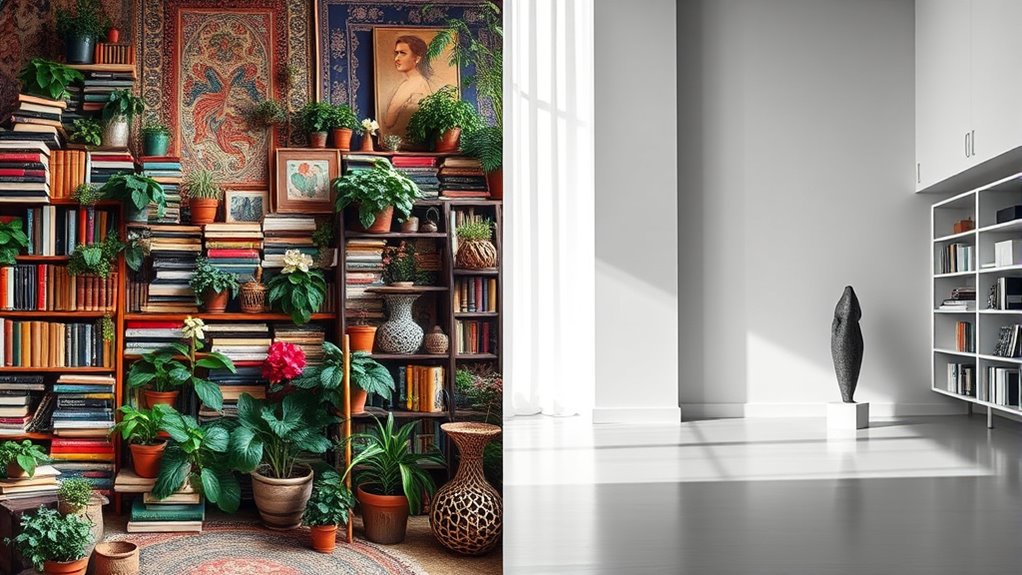

Finding your balance between maximalism and minimalism means blending bold personality with calming simplicity. You can do this by choosing statement pieces and vibrant colors that reflect your individuality, while also maintaining open spaces and clean lines for serenity. Incorporate meaningful accessories without clutter, and layer textures for visual interest. If you want to craft a space that feels true to you—dynamic yet peaceful—there’s more to discover about harmonizing these contrasting styles.

Get furniture and decor delivered free with Prime
- Fast, free delivery on millions of items
- Prime Video, Amazon Music and more included
- Member-only deals all year
Key Takeaways
- Assess your personality and lifestyle to determine whether bold, layered decor or clean, simple design resonates more with you.
- Incorporate statement art and accessories thoughtfully, balancing vibrant pieces with neutral backgrounds for visual harmony.
- Use color palettes that blend energetic hues with calming tones to create a personalized, balanced environment.
- Optimize space with strategic storage to maintain minimalism’s clarity while allowing for expressive maximalist elements.
- Experiment with mixing elements from both styles gradually, focusing on comfort and authenticity for a space that evolves with you.
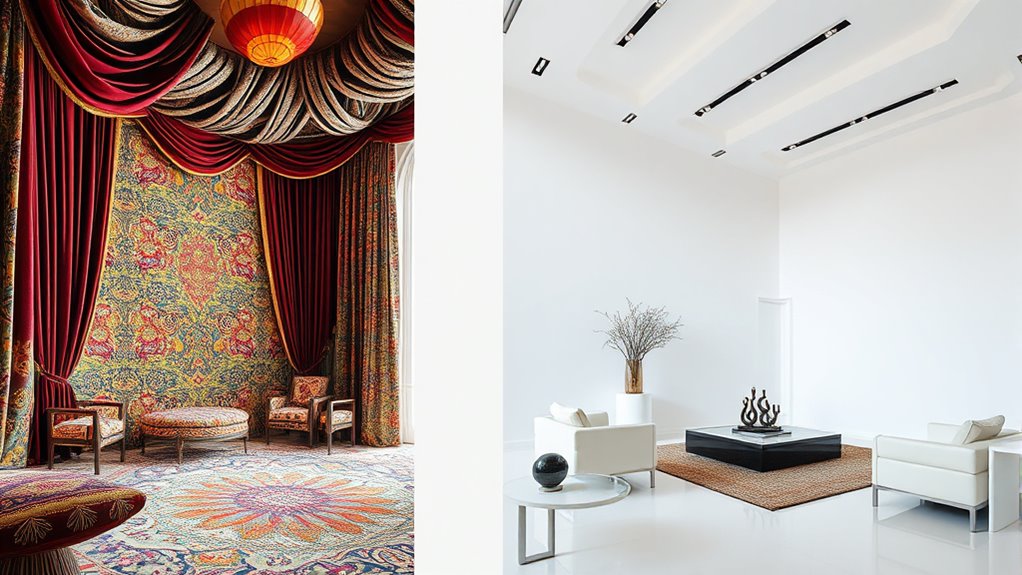
Have you ever wondered whether more is truly better or if simplicity holds greater value? When it comes to decorating your space, this question can guide you toward a style that feels authentic and comfortable. Maximalism and minimalism represent two ends of the design spectrum, each offering unique advantages. Maximalism embraces boldness and personality, filling your environment with decorative accessories that tell a story. You might layer vibrant color palettes, mixing patterns and textures to create a lively, engaging atmosphere. Every piece, from statement art to intricate throw pillows, adds to the richness of the space, making it feel curated and expressive. The key is understanding that maximalism isn’t about clutter but about intentionality—each item should serve a purpose or evoke emotion, contributing to a cohesive whole.
On the other hand, minimalism champions simplicity and clarity. It’s about stripping away excess to focus on what truly matters. You’ll find yourself choosing a restrained color palette—perhaps just a handful of neutral tones or subtle accents—to foster calm and order. Decorative accessories are carefully selected for their significance, often fewer in number but higher in quality. This approach emphasizes clean lines, open space, and functional design, making the environment feel peaceful and uncluttered. Minimalism encourages you to evaluate every object, asking if it adds value or merely fills space. It’s about creating a sanctuary that promotes relaxation and mindfulness, where less becomes more and every element has a purpose. Incorporating storage solutions can help maintain this balance by keeping clutter out of sight and preserving the minimalist aesthetic.
Finding your balance between these styles isn’t about strict adherence to one or the other. Instead, it’s about understanding your personality and lifestyle. Maybe you love the energy of maximalism but crave moments of minimalist calm. Perhaps you prefer a sleek, simple base with just a few well-chosen decorative accessories that add personality without overwhelming. Your color palette can be flexible, combining bold hues with subdued shades to suit your mood and needs. You might incorporate a few statement pieces amid a mostly neutral backdrop, blending the two approaches seamlessly. The goal is to create a space that reflects who you are—whether that’s vibrant and eclectic or serene and streamlined.
Ultimately, your interior should feel like a reflection of your personality, balancing visual interest with comfort. Whether you lean toward maximalism’s expressive richness or minimalism’s tranquil simplicity, understanding how to use decorative accessories and color palettes effectively will help you craft a space that’s uniquely yours. It’s not about choosing one style permanently but about adapting and blending elements to suit your evolving tastes. When you find that harmony, you’ll create a living environment that energizes and calms you in equal measure.
statement wall art for living room
As an affiliate, we earn on qualifying purchases.
As an affiliate, we earn on qualifying purchases.
Frequently Asked Questions
How Can I Combine Elements of Both Styles Effectively?
To combine both styles effectively, start by layering textures to add depth without overwhelming the space. Balance bold, vibrant color schemes with minimalist elements like clean lines and simple furniture. You can mix a statement piece with subtle accessories, ensuring the overall look feels cohesive. By thoughtfully integrating textures and balancing colors, you create a harmonious blend that reflects your personal style, embracing both maximalism and minimalism seamlessly.
What Are Common Mistakes When Blending Maximalism and Minimalism?
You might make the mistake of poor decor blending, which creates clutter instead of harmony. Avoid style misalignment by not overloading a space with too many contrasting elements. Keep a clear focus, balancing bold maximalist pieces with minimalist foundations. If you’re not mindful, the mix can feel disjointed. Instead, guarantee each piece complements the overall aesthetic, maintaining cohesion while showcasing your unique style.
Which Style Is Better for Small Spaces?
In small spaces, minimalism is your superhero, making rooms feel twice as big. You should focus on decorating techniques that emphasize open, clutter-free layouts and use a cohesive color palette to create a sense of harmony. Minimalism’s clean lines and simple designs prevent overwhelming the space, while strategic accents add personality. Embrace this style to maximize your small space’s potential, transforming it into a calming oasis rather than a cramped corner.
How Do I Determine My Personal Style Preference?
To determine your personal style preference, start with personal reflection—think about what environments make you feel comfortable and inspired. Then, engage in style experimentation by trying out different looks, colors, and decor styles. Pay attention to what resonates with you and feels authentic. Over time, you’ll notice patterns and preferences emerging, helping you define whether you lean more towards maximalism, minimalism, or a blend of both.
Can Changing Trends Influence My Style Balance Over Time?
Yes, changing trends can influence your style balance over time. As trend shifts occur, you might find yourself experimenting with new looks or reevaluating your preferences. Embrace these style evolutions by staying open-minded and adapting your wardrobe accordingly. This ongoing process allows you to refine your personal style, blending elements of maximalism or minimalism as you grow and your tastes evolve with the fashion landscape.
Conclusion
Ultimately, finding your balance between maximalism and minimalism means embracing what truly resonates with you. Imagine decorating your living room with bold artwork and vibrant textiles, but also keeping clutter at bay to create a calming space. Like Sarah, who combined colorful accessories with simple furniture, you can craft a personalized environment that feels authentic and peaceful. Trust your instincts, experiment, and enjoy the journey to a space that reflects your unique style and needs.
Halloween Picks
halloween
As an affiliate, we earn on qualifying purchases.