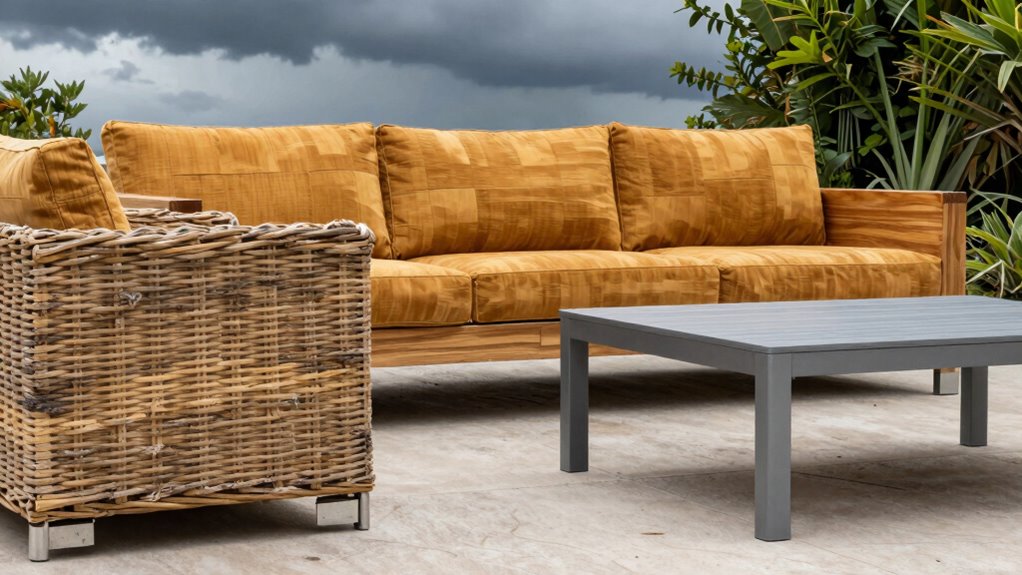
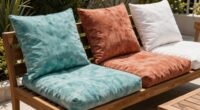
If you want patio sectionals that stand up to real weather, aluminum is your best bet for durability, resisting rust, wind, and requiring minimal upkeep. Teak also performs well thanks to its natural oils that repel water and pests, but it needs occasional maintenance to keep its color. Wicker can block the elements with protective coatings but is more vulnerable to UV rays and moisture over time. For more tips on choosing the right material for your climate, keep exploring.

Get furniture and decor delivered free — and shop member deals
- Fast, free delivery on millions of items
- Access to Prime Big Deal Days deals on October 6–7
- Prime Video, Amazon Music and more included
Key Takeaways
- Aluminum is highly resistant to rust and corrosion, making it ideal for wet and salty environments.
- Teak’s natural oils provide excellent moisture and pest resistance, suitable for all weather conditions.
- Wicker, especially synthetic, offers decent UV and weather resistance but requires protective coatings and seasonal storage.
- Natural wicker is more vulnerable to moisture, pests, and UV damage, reducing its longevity in harsh weather.
- Proper maintenance and protective treatments significantly extend the lifespan of all materials in real weather conditions.
aluminum patio sectional furniture
As an affiliate, we earn on qualifying purchases.
As an affiliate, we earn on qualifying purchases.
What Materials Are Used in Patio Sectionals and How Do They Differ?
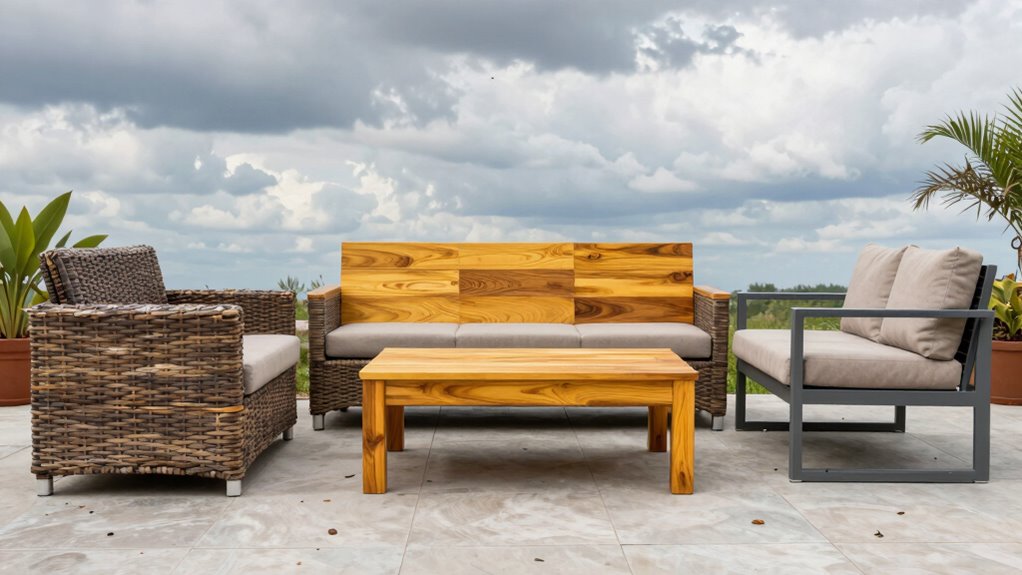
When choosing patio sectionals, understanding the materials used is essential because they directly impact durability, comfort, and style. Many options incorporate weatherproof coatings to withstand the elements, protecting against moisture and UV damage. Wicker, for example, often features synthetic fibers with protective finishes that enhance weather resistance, while teak naturally contains oils that repel water. Aluminum frames are lightweight yet durable, especially when coated with weatherproof finishes to prevent rust. Additionally, material sustainability plays a key role; eco-friendly options like sustainably harvested teak or recycled aluminum reduce environmental impact. Knowing how these materials are treated and their weather resistance helps you select a sectional that’s both long-lasting and environmentally responsible. Proper maintenance, such as water damage prevention, can significantly extend the lifespan of your patio furniture. Selecting corrosion-resistant metals like aluminum can further enhance durability in humid climates. Moreover, understanding material treatments can guide you in choosing furniture that requires less upkeep over time.
How Do Wicker, Teak, and Aluminum Perform in Rain and Moisture?
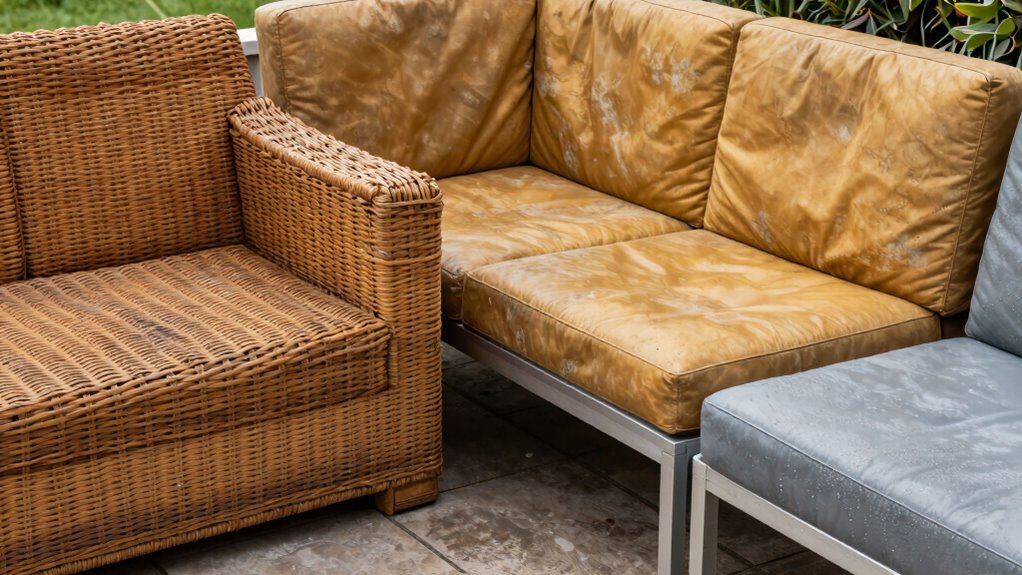
Wicker, teak, and aluminum each handle rain and moisture differently, affecting how well your patio sectional withstands wet conditions. Wicker, especially synthetic types, offers decent moisture resistance but benefits from UV protection to prevent fading and cracking. Natural wicker is more vulnerable to moisture and pests, requiring regular treatment. Teak is naturally oily, making it highly resistant to water, pests, and decay; however, it still needs UV protection to keep its color vibrant. Aluminum resists rust and corrosion well, making it ideal for wet environments, but it can become less attractive if exposed to prolonged moisture without proper coating. Overall, aluminum requires minimal maintenance, while teak and synthetic wicker need ongoing care to maintain their durability in rainy, moist conditions.
How Resistant Are These Materials to Sun and UV Damage?
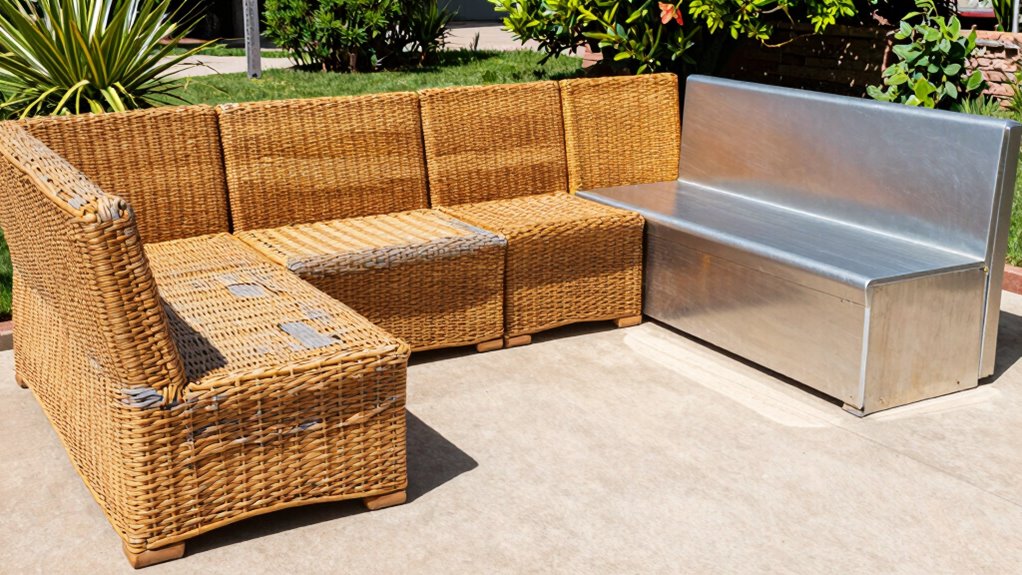
These materials face varying levels of resistance to sun and UV damage, which can impact their appearance and longevity over time. Wicker, especially synthetic varieties, often offers good UV protection, helping prevent color fading and brittleness. Teak naturally contains oils that shield it from UV rays, maintaining its color longer, though prolonged exposure can still cause some fading. Aluminum resists UV damage well, as it doesn’t fade or weaken from sunlight, but painted or coated finishes may degrade without proper care. You should consider how each material handles UV exposure because excessive sun can lead to color fading, cracking, or deterioration. Choosing options with built-in UV protection or applying protective treatments can extend your patio furniture’s lifespan and keep it looking vibrant longer. Additionally, UV-resistant coatings and regular maintenance can further enhance their durability against sun damage. Proper material selection based on UV resistance can significantly improve the longevity of your outdoor furniture, especially when considering factors like weather exposure and maintenance routines.
How Well Do Wicker, Teak, and Aluminum Withstand Windy Conditions?
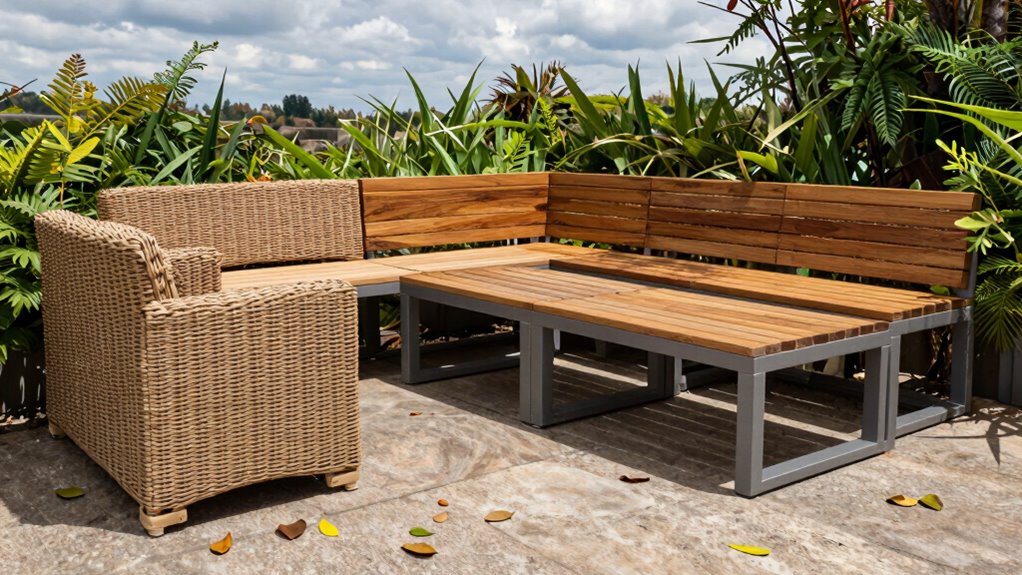
Wicker, teak, and aluminum each respond differently to windy conditions, and understanding their strengths can help you choose the right furniture for your outdoor space. Wicker’s material flexibility allows it to bend without breaking, but heavy wind can cause loose weaves or tipping if not secured. Teak is sturdy and dense, providing resistance against wind, but its weight makes it less flexible. Aluminum is lightweight and highly adaptable, which helps it resist wind’s force but can lead to tipping if not anchored. Imagine:
- Wicker swaying gently but maintaining integrity.
- Teak staying grounded with minimal movement.
- Aluminum shifting slightly but easily repositioned.
Knowing these differences helps you select furniture that withstands windy conditions and remains durable over time.
How Easy Is It to Maintain and Repair These Materials Over Time?
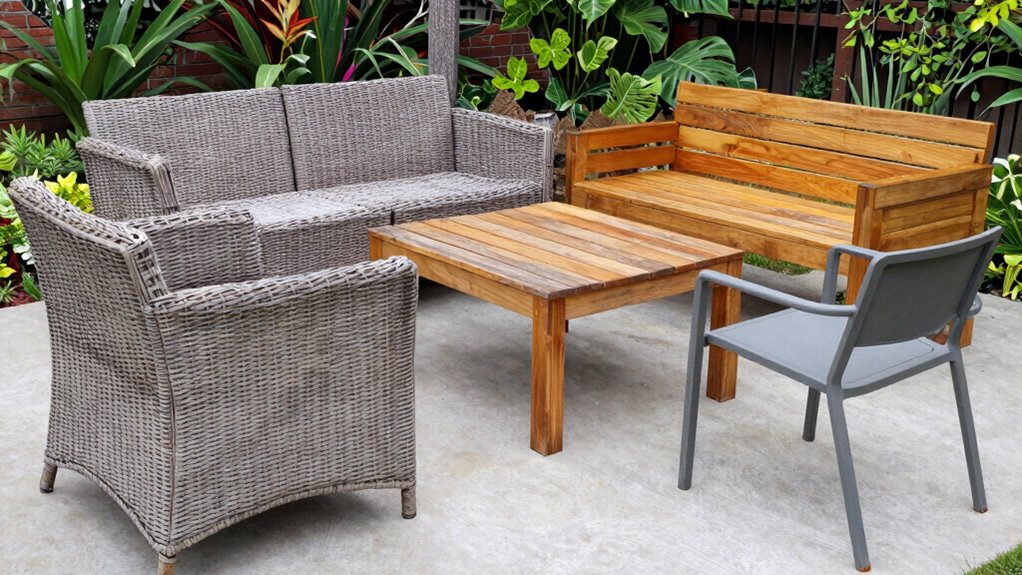
Maintaining and repairing outdoor furniture depends heavily on the material’s durability and the effort required to keep it in good condition. With wicker, regular cleaning techniques like gentle brushing and mild soap help prevent dirt buildup, but repairs can be costly if wicker strands break. Teak requires minimal upkeep—applying teak oil periodically restores its appearance, and minor scratches are easy to fix, keeping repair costs low. Aluminum furniture is the easiest to maintain; simply wash with soap and water to keep it looking new, and repairs, like fixing dents or scratches, are usually inexpensive. Overall, teak offers a good balance of ease and affordability in maintenance, while aluminum scores high for low repair costs. Wicker demands more effort, especially for repairs, making it less convenient over time. Durability also plays a significant role in how well outdoor furniture withstands weather elements and the need for ongoing repairs. Choosing weather-resistant materials can significantly reduce long-term maintenance efforts and costs.
Which Material Offers the Best Weather Resistance and Value?
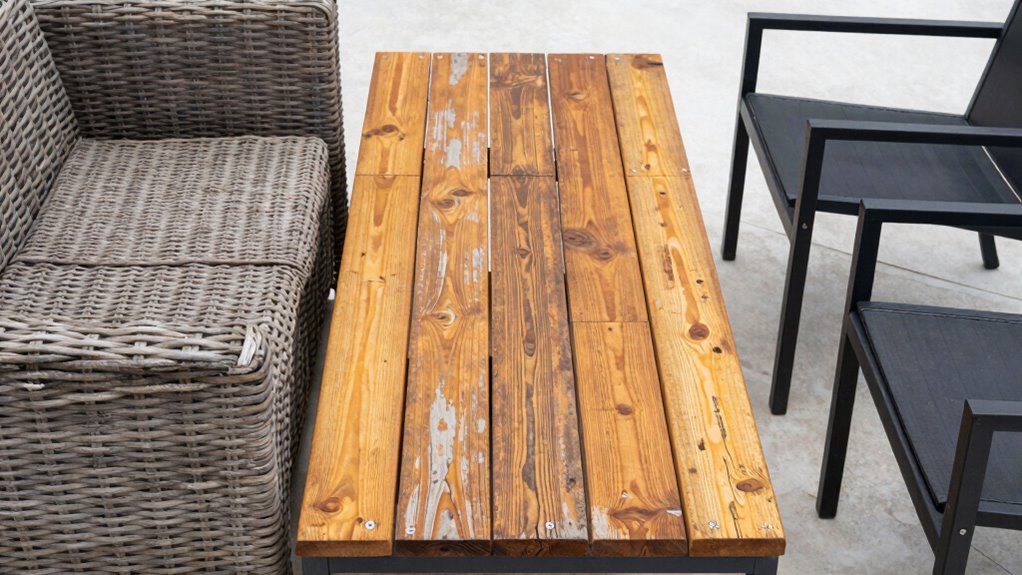
When considering weather resistance and value, teak stands out as an excellent choice because it naturally withstands rain, sun, and humidity without requiring extensive treatment. Its dense grain and oil content help it resist moisture and pests, making it highly durable. Plus, teak offers seasonal color options that deepen over time, adding character. Its manufacturing process involves slow-growing trees, ensuring quality and strength. Imagine these benefits: 1. You enjoy a rich, golden hue that ages gracefully, reducing the need for repainting. 2. The natural oils protect against weather, so your furniture stays resilient through storms. 3. The sturdy construction means fewer repairs, offering long-term value. Additionally, understanding the flushing mechanisms and maintenance of your outdoor furniture can help preserve its appearance and functionality over time. Incorporating proper maintenance practices can further extend the lifespan of your patio sectional, making teak an even more worthwhile investment. Regular cleaning and protective treatments can also enhance weather resistance, ensuring your furniture remains beautiful and durable season after season. To maximize longevity, choosing furniture with weather-resistant finishes can provide an extra layer of protection against the elements, helping to preserve its appearance and structural integrity over time.
What Are the Aesthetic Pros and Cons of Wicker, Teak, and Aluminum?

Choosing the right material for your patio sectional also means considering how it looks and feels in your outdoor space. Wicker offers a charming, textured appearance with a cozy, natural vibe that blends well with rustic or bohemian styles. Its texture variety adds visual interest but can sometimes appear less sleek. Teak provides a smooth, elegant finish with rich, warm tones that develop a beautiful patina over time, giving it a classic, timeless look. Aluminum, on the other hand, offers a modern, clean aesthetic with sleek lines and a smooth surface, perfect for contemporary spaces. Its design versatility allows for minimalistic or bold styles. Each material’s aesthetic pros and cons depend on your preferred style and the aesthetic appeal you want to introduce to your outdoor setting. Additionally, material durability plays a crucial role in how well each option withstands exposure to the elements over time. Considering the weather resistance of each material can help you select a patio sectional that endures real weather conditions effectively. Incorporating insights from content quality and topical authority can also guide you toward durable and visually appealing choices.
How Do Cost and Longevity Compare for These Patio Materials?
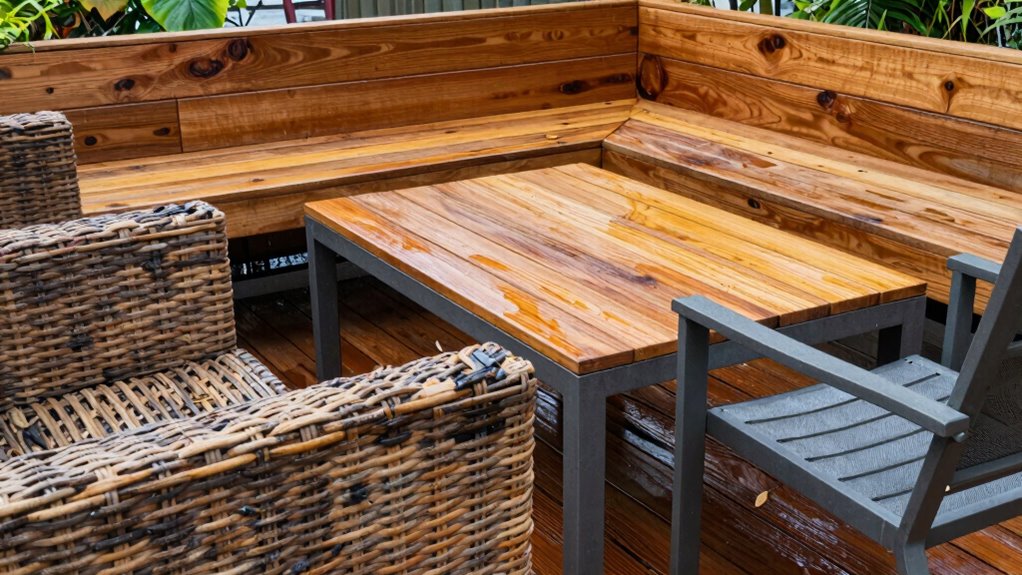
The cost and longevity of patio materials vary considerably, impacting your long-term investment. When considering a cost comparison, think about:
- Wicker offers an affordable initial price but may need replacement or maintenance sooner. Material lifespan factors such as exposure to sun, rain, and wind can significantly influence how long wicker furniture remains functional and attractive. Additionally, weather resistance plays a crucial role in how well wicker can withstand outdoor elements over time. Proper UV protection can help mitigate fading and deterioration caused by sun exposure.
- Teak has a higher upfront cost but ages gracefully, developing a beautiful patina over time.
- Aluminum is typically mid-range in price, with excellent resistance to weather and minimal upkeep.
- Proper maintenance and care can significantly extend the lifespan of each material, making material durability an essential factor in your decision.
- Additionally, understanding climate suitability can help you select materials better suited for your climate, ensuring longer-lasting furniture. Regular cleaning and protective treatments can further enhance longevity across all options.
Which Material Is Best for Your Climate and Outdoor Lifestyle?
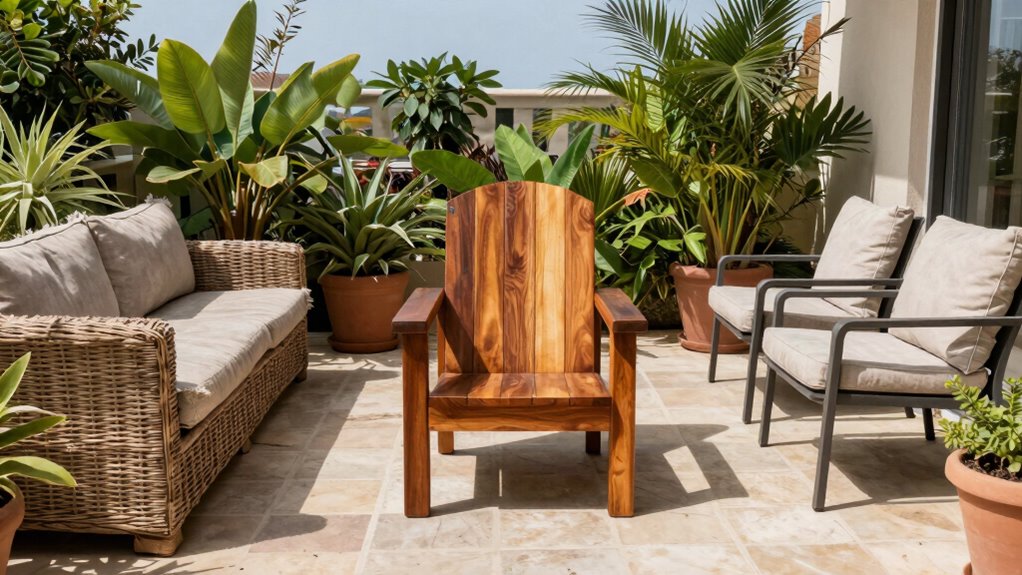
Choosing the right material depends on how well it withstands your climate and how much maintenance you’re willing to do. Some options are more durable in harsh conditions, while others may need frequent upkeep to last. Consider your outdoor lifestyle to find the material that offers the best balance of resilience and ease of care.
Durability in Climate Conditions
When selecting patio sectionals, considering how well their materials withstand your local climate is essential. For example, if you face harsh winters, teak’s natural oils resist moisture, while aluminum’s corrosion resistance makes it ideal for salty air. In milder conditions, wicker provides flexible seasonal color options, allowing you to switch up your look. Think about these scenarios:
- Heavy rain and snow demand durable, weatherproof materials like aluminum or teak.
- Hot, sunny summers benefit from wicker’s UV-resistant coatings.
- Frequent temperature swings make furniture stacking techniques vital for storage and longevity.
Matching your climate with the right material ensures your sectional survives, and seasonal color options keep your space fresh. Prioritize durability for outdoor lifestyles that demand resilience year-round.
Maintenance and Longevity
Selecting the right patio sectional depends heavily on how much maintenance you’re willing to do and how long you want it to last. If you prefer minimal upkeep, aluminum is a low-maintenance choice, resisting rust and requiring just occasional cleaning. Wicker needs regular cleaning and seasonal storage to prevent weather damage, especially in harsher climates. Teak, while durable, benefits from periodic oiling to maintain its appearance but can often stay outdoors year-round if properly cared for. Consider whether you’ll keep your sectional indoors during winter or leave it outside year-round. Seasonal storage can extend the life of more delicate materials like wicker and teak, but aluminum generally requires less effort. Your climate and outdoor lifestyle will heavily influence which material offers the best balance of longevity and ease of maintenance.
Frequently Asked Questions
How Do These Materials Handle Extreme Weather Conditions Like Snow or Hail?
When facing extreme weather like snow or hail, your aluminum patio sectional handles it best due to its high wind resistance and resistance to material corrosion. Teak can withstand some weather but may weather over time, while wicker is more vulnerable to damage and may deteriorate faster. If durability in harsh conditions matters, aluminum is your top choice for long-lasting resilience.
Are There Eco-Friendly or Sustainable Options Among Patio Sectional Materials?
You’ll find eco-friendly materials like recycled wicker, sustainably sourced teak, and recycled aluminum as great sustainable options for patio sectionals. These choices reduce environmental impact while offering durability and style. By choosing furniture made from eco-friendly materials, you support sustainable practices and enjoy long-lasting outdoor pieces. Look for products with eco-certifications or from brands committed to sustainability, and you’ll make a positive impact on the planet without sacrificing quality.
Can Different Materials Be Combined in a Single Patio Sectional?
Combining materials in a patio sectional is like blending flavors in a smoothie—you get a unique, personalized piece. You can absolutely mix materials, but focus on material compatibility and design integration to guarantee cohesion. For example, pairing wicker with aluminum creates a modern yet cozy vibe, while matching teak with cushions adds warmth. Just make sure the different elements complement each other in style and function for a seamless look.
How Do These Materials Affect Outdoor Furniture Weight and Portability?
Your outdoor furniture’s weight and portability depend on the material. Wicker is lightweight but less durable, making it easier to move but prone to wear. Teak is heavier due to its dense wood, offering excellent durability but less portable. Aluminum strikes a balance with lightweight, durable material that’s easy to relocate. Consider your space and durability needs to choose a material that aligns with your lifestyle and weather resilience.
What Safety Considerations Are Associated With Each Material During Storms?
During storms, you should be extra cautious with your patio furniture, especially regarding fire risk and rust prevention. Wicker can catch fire if sparks fly, so keep it away from open flames. Teak resists rust but isn’t fireproof, so avoid electrical hazards nearby. Aluminum is lightweight and easy to move, but it can become a dangerous projectile in high winds. Secure or store furniture safely during storms to stay safe.
Conclusion
Ultimately, choosing between wicker, teak, and aluminum is like picking the perfect dance partner—each has its own rhythm and charm. Wicker weaves a cozy, rustic vibe; teak stands tall like a seasoned guardian of your patio; aluminum whirls with sleek modernity. Consider your climate, style, and how much effort you want to invest. Whichever you choose, let your patio be a stage where weather can’t steal the show, and your outdoor space shines bright for years to come.
Fall Picks
fall essentials
As an affiliate, we earn on qualifying purchases.