
To skillfully mix vintage and contemporary patterns, start by choosing a cohesive color palette to unify your space. Vary pattern sizes—large vintage designs make bold statements, while smaller modern patterns add subtle accents. Limit your pattern combinations to three or four key elements for balance. Begin with accessories like cushions or rugs, then gradually add larger pieces. Keep harmony in mind, and if you keep going, you’ll discover even more tips to create a vibrant, cohesive look.

Get furniture and decor delivered free — and shop member deals
- Fast, free delivery on millions of items
- Access to Prime Big Deal Days deals on October 6–7
- Prime Video, Amazon Music and more included
Key Takeaways
- Balance large vintage patterns with smaller modern accents to create visual harmony.
- Use a consistent color palette across patterns to unify vintage and contemporary elements.
- Mix different pattern scales, pairing bold vintage designs with subtle modern motifs for contrast.
- Incorporate accessories like cushions and rugs gradually to test pattern compatibility.
- Limit pattern combinations to three or four elements to maintain cohesion and prevent visual clutter.
Mixing vintage and contemporary patterns can create a dynamic and personalized look that reflects your unique style. When you combine different patterns, you’re not just mixing designs; you’re telling a visual story. The key to making this work seamlessly is understanding how to manage pattern clash and color coordination. It’s easy to feel overwhelmed by the boldness of mixing different styles, but with a few simple guidelines, you can pull off a stunning, cohesive look.
Mix vintage and contemporary patterns to create a vibrant, cohesive, and personalized space that tells your visual story.
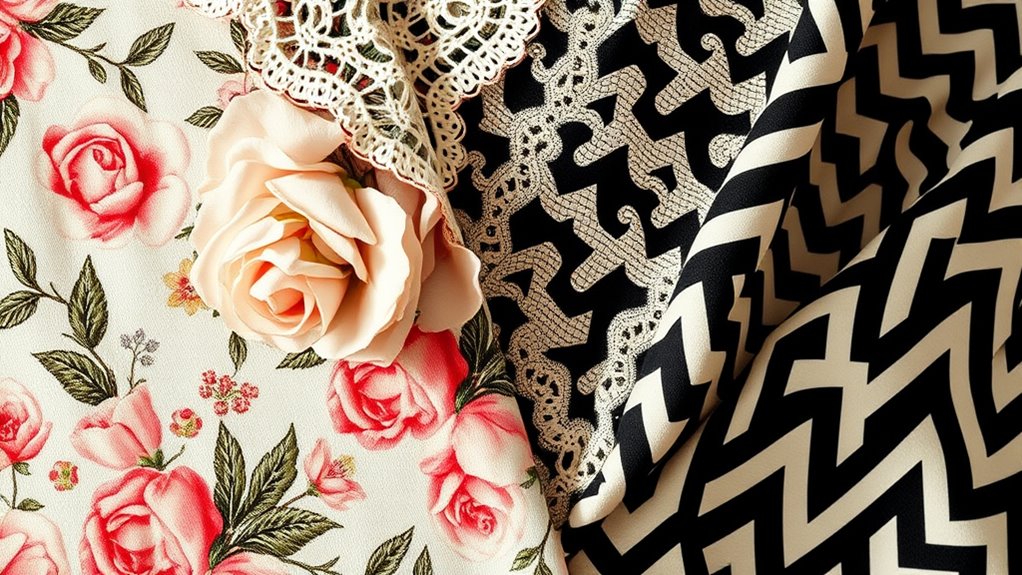
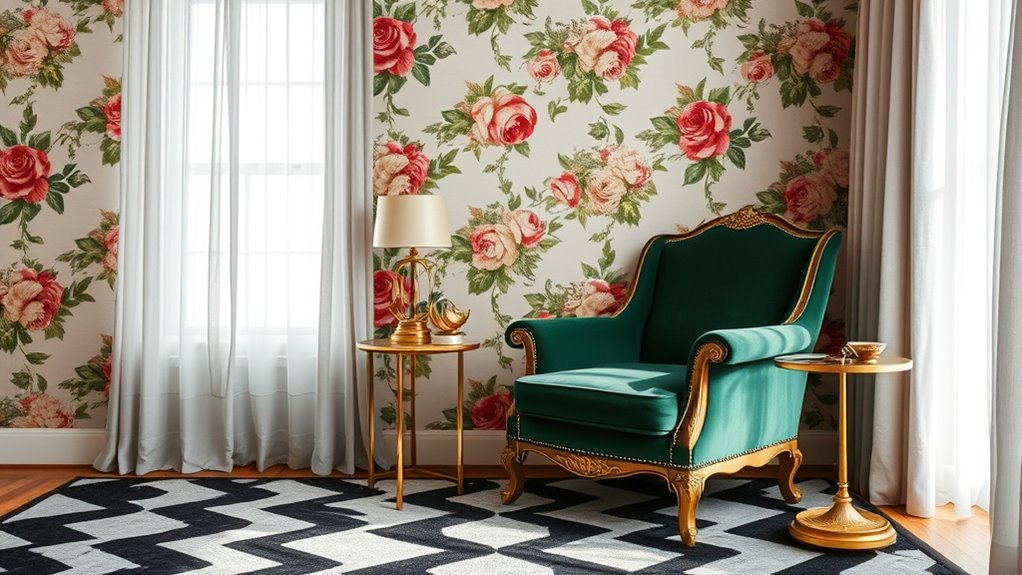
Start by considering the scale of your patterns. Larger, more prominent designs from vintage pieces can serve as a bold statement, while smaller, modern patterns can act as subtle accents. This variation in size helps avoid pattern clash, which occurs when patterns compete for attention rather than complement each other. If you’re pairing a large floral vintage wallpaper with a contemporary geometric throw pillow, make sure the colors in both patterns harmonize. This is where color coordination comes into play. Sticking to a consistent color palette helps that your patterns don’t clash visually. For example, if your vintage floral features shades of blue and green, choose contemporary patterns that incorporate those same hues. This creates unity and balance within the space.
Don’t be afraid to experiment, but keep your eye on the overall color scheme. When you introduce different patterns, try to echo a common color across them. This ties everything together and reduces the risk of pattern clash. For instance, a vintage striped curtain in navy and white paired with a modern abstract art piece that includes hints of navy will feel intentional rather than chaotic. It’s about creating a visual flow that guides the eye smoothly from one pattern to the next. If you’re unsure, start small—perhaps with accessories like cushions or rugs—and gradually add larger patterned pieces once you’re comfortable with the look.
Another helpful tip is to limit your pattern combinations to a few key elements. Too many different patterns can overwhelm the space and make it feel cluttered. A good rule of thumb is to stick to three or four patterns that are varied in scale but connected through color or theme. Mix a vintage floral with a contemporary geometric, but keep the color schemes aligned to anchor the design. Remember, the goal is harmony, not uniformity. By carefully balancing pattern clash and color coordination, you create a space that feels lively, inviting, and distinctly yours. Incorporating self-watering plant pots into your decor can also add a touch of practicality and style, seamlessly blending form and function. With practice, mixing vintage and contemporary patterns becomes a creative adventure that enhances your home’s personality.
vintage and contemporary patterned cushions
As an affiliate, we earn on qualifying purchases.
As an affiliate, we earn on qualifying purchases.
Frequently Asked Questions
How Do I Choose Which Patterns to Mix?
To choose which patterns to mix, start by considering pattern scale—pair larger, bolder prints with smaller, subtler ones for balance. Focus on pattern placement by placing contrasting patterns next to each other to create visual interest. Stick to a cohesive color palette to unify the look. Trust your instincts—if the combination feels harmonious and lively, you’re on the right track. Experiment and have fun with your mix!
What Colors Work Best When Combining Vintage and Modern Patterns?
Think of color pairing as the glue that holds your pattern harmony together. When mixing vintage and modern patterns, stick to a neutral palette like blacks, whites, and beiges, then add pops of color for vibrancy. Soft pastels or bold jewel tones work well, creating contrast without clashing. By balancing these colors, you guarantee your patterns complement each other, making your outfit or space feel cohesive and effortlessly stylish.
Are There Specific Styles of Vintage Patterns That Pair Better With Contemporary Designs?
You should pair floral motifs with more streamlined geometric designs for a balanced look. Vintage patterns with intricate floral details work well with sleek, modern geometric shapes, creating a stylish contrast. Opt for vintage patterns with bold florals or delicate lace, and combine them with contemporary patterns featuring clean lines or abstract shapes. This approach helps you achieve a harmonious blend of classic charm and modern flair in your decor.
How Can I Balance Patterns Without Overwhelming the Space?
To balance patterns without overwhelming your space, start by varying the pattern scale—use large, bold designs with smaller, subtle ones. Keep your color palette cohesive, choosing complementary or neutral tones to unify different patterns. Limit the number of patterns to two or three in a room, and spread them out evenly. This approach creates visual harmony, allowing each pattern to stand out without clashing or dominating the space.
What Accessories Can Help Unify Mixed Patterns in a Room?
You can unify mixed patterns with accessory accents like solid-colored pillows, throws, or rugs that complement the pattern contrast. Choose accessories in neutral or matching tones to create cohesion without overwhelming the space. Incorporate metallic or textured accents to add interest and tie different patterns together. These subtle touches help balance vintage and contemporary elements, making your room look harmonious and thoughtfully styled.
Conclusion
By blending vintage and contemporary patterns, you create a unique, stylish look that reflects your personality. Don’t you want your wardrobe to tell a story that’s both timeless and fresh? Embrace the mix, experiment boldly, and trust your instincts. After all, fashion is about expressing yourself—so why not make every outfit a delightful conversation between the past and present? Step out confidently and let your style speak volumes.
Halloween Picks
halloween
As an affiliate, we earn on qualifying purchases.