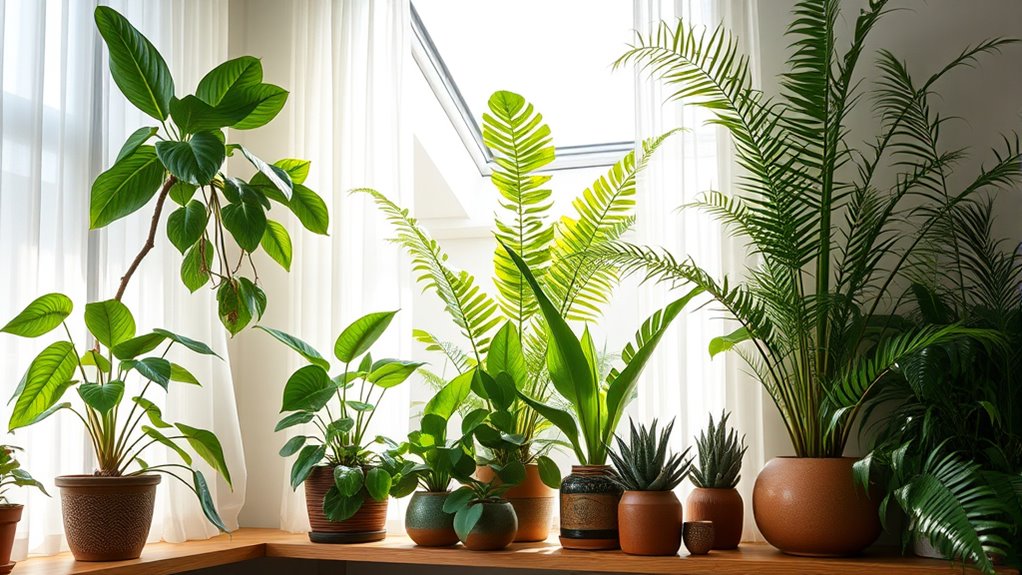

To optimize your indoor plants’ health, match their light needs with the right placement. Low-light plants like Snake Plants can go near north-facing windows or shaded spots, while bright indirect light plants like Pothos thrive by east-facing windows. For direct sunlight lovers, place succulents near south-facing windows, and use artificial grow lights for consistent exposure. Moving plants seasonally and rotating them guarantees even growth, and paying attention to signs of stress helps prevent damage. Keep exploring for more tips!
Key Takeaways
- Categorize plants by their light requirements: low, indirect, direct, or full sun, for optimal placement.
- Position plants near windows based on orientation: south for maximum light, north for low-light needs.
- Adjust plant placement seasonally to match changing sunlight angles and intensity.
- Use grow lights for low-light areas, operating 12-16 hours daily at 12-24 inches above plants.
- Rotate plants weekly and monitor for signs of light stress to ensure even growth and prevent damage.
Understanding Light Intensity and Its Effect on Plants
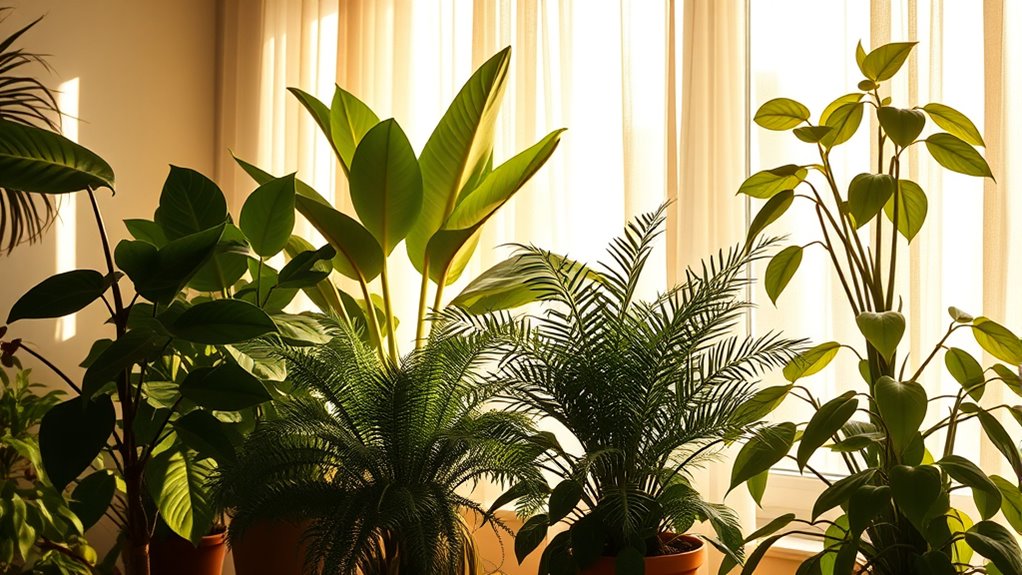
Understanding light intensity is essential because it directly influences how well your indoor plants grow and thrive. The light spectrum, which includes different wavelengths of sunlight, affects plant processes like photosynthesis. When choosing where to place your plants, consider how light filtration impacts the available light. For example, windows with heavy curtains filter out certain wavelengths, reducing the light spectrum reaching your plants. Bright, direct sunlight provides a full spectrum, ideal for many plants, while filtered or indirect light offers a gentler spectrum suitable for others. Recognizing how light intensity and spectrum interact helps you optimize placement, ensuring your plants receive the right type and amount of light to flourish indoors. Additionally, understanding the contrast ratio of your space can help you select the optimal location by evaluating how light and dark areas influence plant health.
Categorizing Indoor Plants by Light Requirements
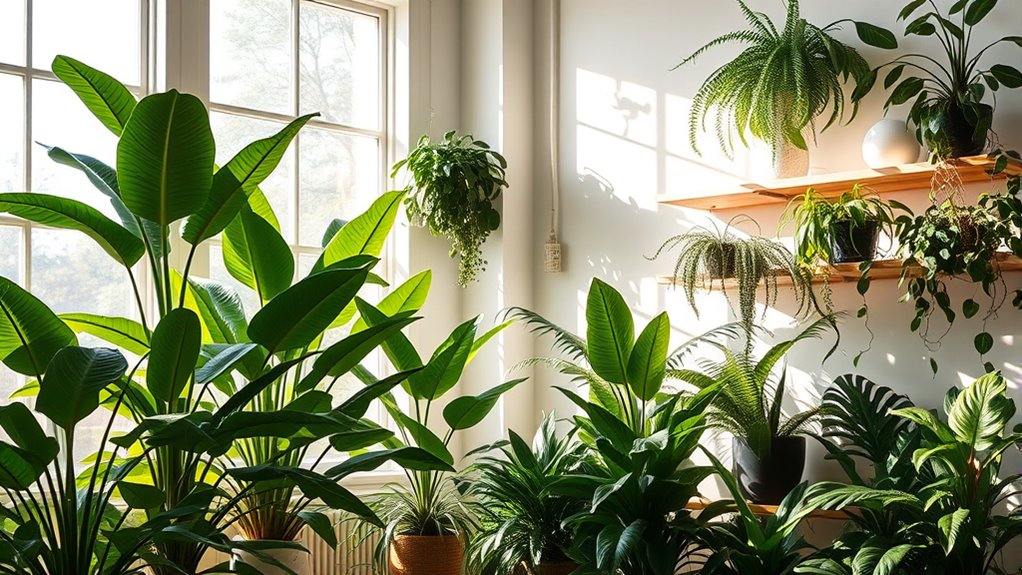
Indoor plants vary widely in their light needs, making it essential to categorize them to guarantee they thrive. Understanding their plant growth habits helps you determine their ideal environment. For example, some plants thrive in low light with indirect filtering, while others need direct sunlight. Using light filtering techniques like sheer curtains can modify light exposure for plants with moderate needs. Categorizing plants by their requirements simplifies placement and encourages healthy growth. Here’s a quick guide:
| Light Requirement | Suitable Plants |
|---|---|
| Low Light | Snake Plant, ZZ Plant |
| Bright Indirect | Pothos, Peace Lily |
| Direct Sunlight | Cacti, Succulents |
| Full Sun | Aloe Vera, Jade Plant |
This helps you match plants to their preferred conditions, ensuring vibrant growth habits. Understanding light requirements is crucial for maintaining healthy indoor plants.
Positioning Plants Near Windows for Optimal Sunlight
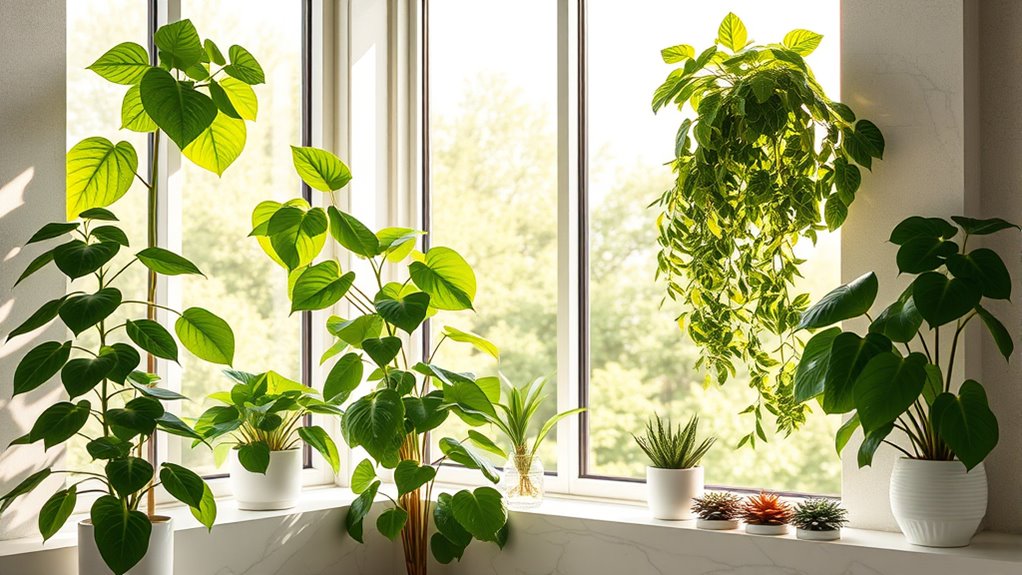
Where you place your plants by the window can make a big difference in their health. Pay attention to the window’s orientation and how much sunlight it provides throughout the day. Remember, avoiding direct sunlight is key for some plants to prevent leaf scorch. Proper placement can also help prevent issues like overexposure to sunlight, which can harm sensitive plants.
Window Orientation Matters
The orientation of your windows plays a crucial role in how much light your indoor plants receive. Different window directions affect interior lighting and plant health. Here’s how to optimize placement based on window orientation:
- South-facing windows provide the most sunlight, ideal for sun-loving plants like succulents and herbs.
- East-facing windows offer gentle morning light, perfect for plants that prefer indirect sunlight.
- North-facing windows deliver less direct light, suitable for low-light plants like ferns or snake plants.
- For optimal growth, consider the light needs of your plants and adjust their placement accordingly to prevent overexposure or insufficient light.
Understanding your window’s orientation helps you position plants for maximum interior lighting without overexposure. Proper placement ensures your plants thrive, whether they need bright, indirect, or low light. Adjusting your plant locations based on window direction boosts their growth and health.
Sunlight Duration Needed
To guarantee your plants receive the right amount of light, it’s important to take into account their sunlight duration needs and how to position them near windows accordingly. Most indoor plants thrive with several hours of indirect sunlight daily; some require only 2-4 hours, while others need up to 6 hours. Adjust their placement based on this, ensuring they’re not exposed to harsh, direct sunlight for extended periods, which can dry out soil moisture too quickly. Proper positioning helps maintain consistent watering frequency, preventing over- or underwatering. Keep an eye on soil moisture levels—plants in brighter spots may need less frequent watering, as they dry out faster. Additionally, considering the noise levels of modern heat pumps can help you choose quieter heating solutions that won’t disturb your indoor environment while caring for your plants. Regularly monitor both sunlight duration and soil conditions to support healthy growth.
Avoid Direct Sunlight
While placing your plants near windows maximizes their access to natural light, exposing them to direct sunlight can cause more harm than good. Direct sun can scorch leaves, especially for plants with low shade tolerance, and disrupt their health. To prevent this, position your plants where they receive indirect light or filtered sunlight. Here are some ways to achieve this:
- Place shade-tolerant plants away from direct rays, near sheer curtains or frosted glass.
- Use sheer curtains or blinds to diffuse the light spectrum, reducing intensity.
- Rotate plants periodically to ensure even exposure without risking leaf burn.
- Understanding light spectrum helps you optimize their placement, ensuring they get the right light spectrum without the stress of harsh direct sunlight.
Adapting Placement for Low-Light Tolerance Plants
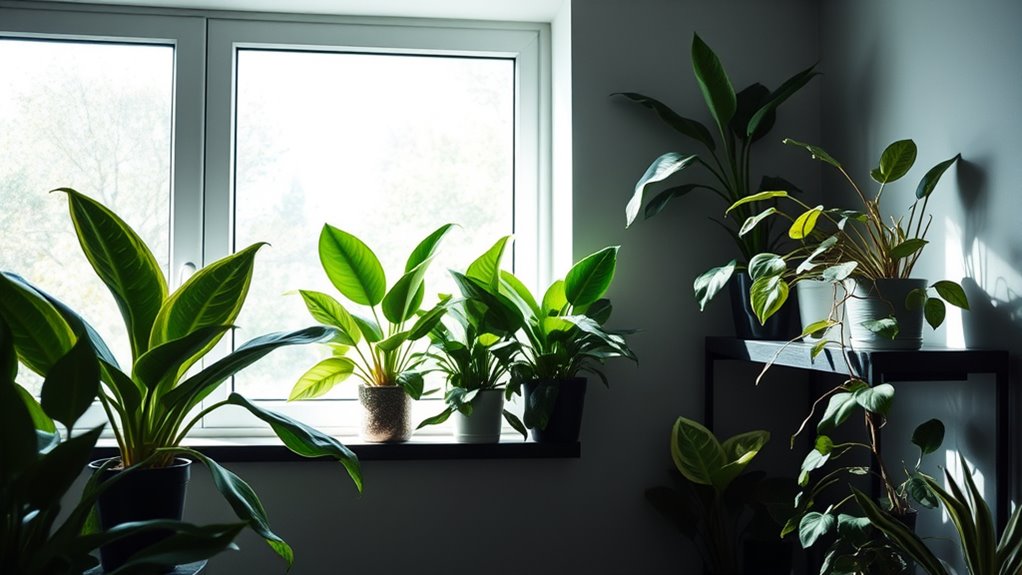
Since low-light plants are more tolerant of shaded areas, you can experiment with different spots in your home to find their best placement. Shade-tolerant plants adapt well to low light, making them versatile choices for dim corners or north-facing windows. Observe how they respond over time—if they stretch toward light or their leaves yellow, adjust their position accordingly. Avoid placing them in direct sunlight, which can harm their delicate leaves. Instead, find spots with filtered or indirect light, such as behind sheer curtains or farther from windows. By understanding their low light adaptation, you guarantee these plants thrive without the need for bright, direct sun. Regularly monitor their health to refine their placement for ideal growth and vitality. Recognizing light requirements helps optimize plant placement and ensures healthy growth.
Using Artificial Lighting to Supplement Natural Light
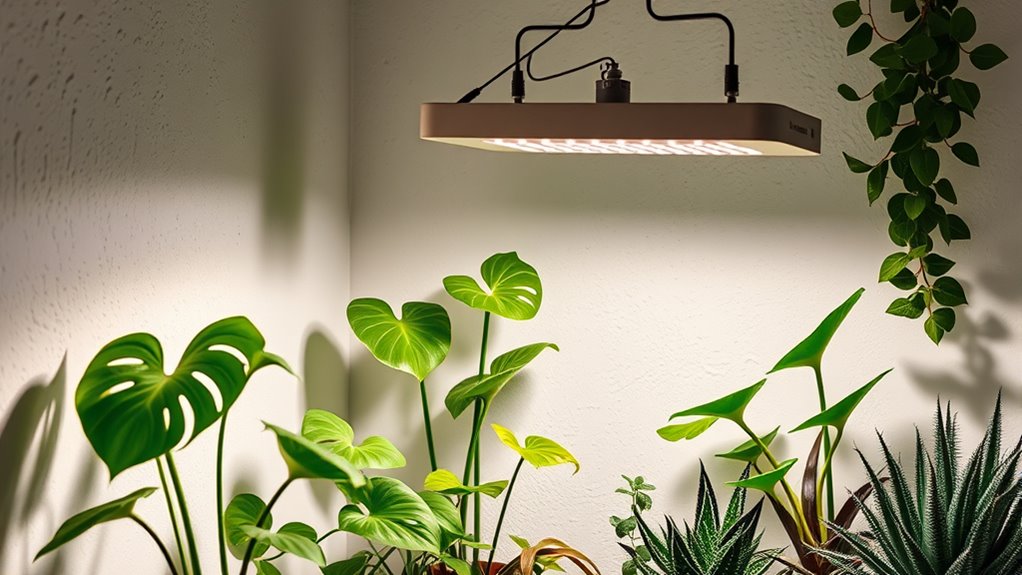
When natural light falls short, artificial lighting becomes an essential tool to keep your indoor plants healthy and vibrant. It helps supplement insufficient sunlight, ensuring consistent plant growth. To use artificial lighting effectively, consider these options: Grow lights: Specialized LED or fluorescent fixtures that mimic natural sunlight, promoting healthy plant growth. Positioning: Place lights 12-24 inches above your plants, adjusting based on plant type and light intensity. Duration: Keep lights on for 12-16 hours daily to replicate natural daylight cycles, encouraging steady growth. Additionally, understanding the light needs of your specific plants can help optimize their health and growth.
Tips for Rotating and Moving Plants to Ensure Even Growth
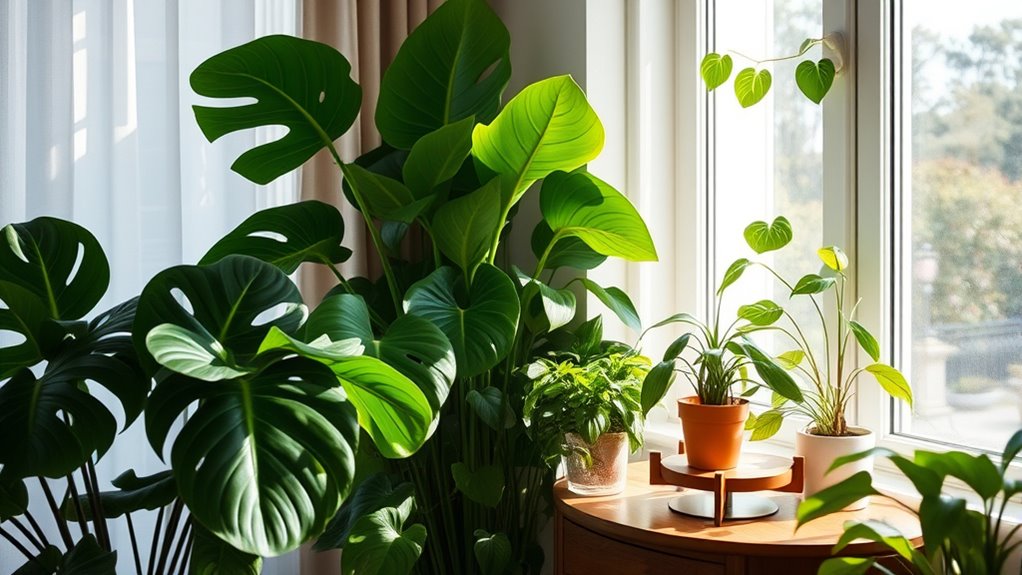
To promote even growth, make sure to rotate your plants regularly so all sides get equal light. Adjust their placement with the seasons as light patterns change throughout the year. Keep a close eye on their exposure and move them as needed to prevent uneven development. Incorporating knowledge about light needs can help you optimize placement and ensure your plants thrive.
Rotate Regularly for Uniform Growth
Regularly rotating your indoor plants guarantees they grow evenly and maintain a healthy appearance. When you change their position, you make certain all sides receive balanced exposure to the light spectrum, promoting uniform plant growth. To do this effectively, consider these steps:
- Rotate weekly: Turn your plants a quarter turn every week to prevent uneven stretching.
- Adjust placement: Move plants closer or farther from windows to optimize light exposure.
- Monitor growth: Keep an eye on new growth patterns, and rotate as needed to correct uneven development.
- Consider light needs: Recognize that different plants have varying requirements, so tailor rotation and placement to their specific needs.
This routine helps your plants develop symmetrically and prevents leaning toward the light source. Consistent rotation ensures they absorb light evenly, encouraging healthy, balanced growth.
Adjust Placement Seasonally
As seasons change, so do the light conditions in your home, making it essential to adjust your plant placement accordingly. Seasonal light variation affects how much light your plants receive, so rotating them ensures even growth. During winter, sunlight filters through windows at a lower angle, often reducing direct light; move plants closer to windows or adjust their orientation. In summer, increased sunlight may cause leaves to scorch, so place plants further from direct window light or use sheer curtains for filtering. Regularly shifting your plants, especially those near windows, helps prevent uneven stretching or legginess caused by inconsistent light exposure. Additionally, understanding best beaches can inspire you to incorporate natural light into your home decor, creating a more vibrant environment for your plants. By adapting their placement with the seasons, you optimize growth and keep your indoor garden healthy year-round.
Monitor Light Exposure Consistently
Keeping an eye on your plants’ light exposure is key to their healthy growth. To guarantee even growth, regularly rotate or move your plants so they receive consistent light. Here are some tips:
- Check soil moisture weekly and adjust watering frequency to prevent overwatering or drought stress.
- Rotate plants a quarter turn weekly to promote balanced growth and prevent leaning toward a light source.
- Move plants to different spots if they start to stretch or become leggy, ensuring they get light from multiple angles.
- Be mindful of the plant’s light needs to tailor placement and rotation schedules for optimal growth.
Recognizing Signs of Improper Light Conditions
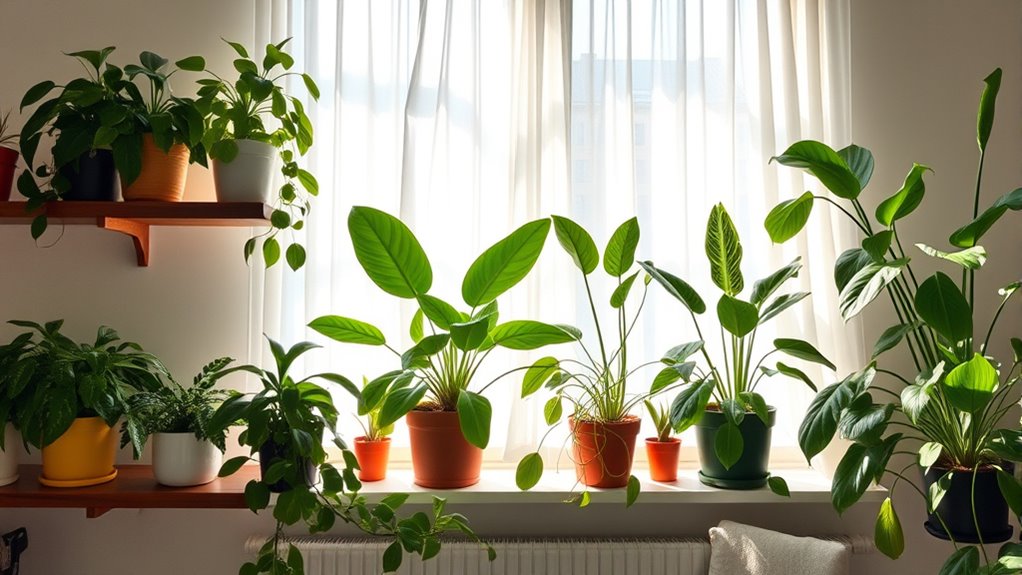
When your indoor plants show signs of distress, it’s often a clear indicator that their light conditions aren’t ideal. Plant light stress can manifest through various symptoms, with leaf color change being a common sign. If leaves turn yellow or pale, your plant may be getting too much direct light or not enough light, depending on the species. Similarly, stunted growth or leggy, elongated stems can indicate insufficient light. On the other hand, scorched or brown leaf edges suggest excessive sunlight. By observing these signs, you can adjust placement to guarantee your plants receive proper light. Recognizing these cues early helps prevent long-term damage and keeps your indoor garden healthy and thriving. Utilizing appropriate lighting techniques can significantly improve plant health and growth.
Frequently Asked Questions
How Do I Measure Light Levels Accurately in My Indoor Space?
To measure light levels accurately, you should use a light meter, which gives precise readings of natural light in your space. Place the meter at plant level where your indoor plants sit, and take readings at different times of day to understand how light varies. This way, you can guarantee your plants get enough natural light and adjust their placement if needed, promoting healthy growth.
Can Plants Adapt to Different Light Conditions Over Time?
Yes, plants can adapt to different light conditions over time through plant adaptation and light acclimation. When you change their environment, they gradually adjust their leaves and growth patterns to optimize light absorption. To support this process, make sure you provide consistent exposure and avoid sudden changes. Be patient, as your plants need time to acclimate, and you’ll notice healthier growth as they adapt to their new lighting conditions.
What Are the Best Window Orientations for Specific Plant Types?
You should position plants based on their light requirements, and studies show that about 80% of indoor plants thrive best with direct or bright indirect light. For sun-loving plants, place them near south or west-facing windows to maximize sunlight. Shady plants do well near east or north-facing windows, where they get softer light. Proper plant placement based on window orientation guarantees your indoor garden stays healthy and vibrant.
How Often Should I Adjust Plant Placement as Seasons Change?
You should adjust your plant placement seasonally to accommodate light shifts. As seasons change, sunlight intensity and angles vary, so consider repositioning your plants every few months. Use plant repositioning strategies like rotating plants regularly and moving them closer or farther from windows to guarantee they get the right amount of light. This keeps your indoor plants healthy, thriving, and well-lit throughout the year, no matter the seasonal light shifts.
Are There Any Safety Concerns With Using Artificial Grow Lights Indoors?
Artificial grow lights are generally safe if you follow LED safety precautions, but be aware of artificial light hazards like eye strain or skin irritation from prolonged exposure. Always install lights properly, avoid direct eye contact, and keep the lights at recommended distances. Regularly check for overheating or damaged wiring to prevent fire risks. By taking these precautions, you can enjoy healthy plants without compromising your safety indoors.
Conclusion
By understanding your indoor plants’ light needs, you become their guiding star, leading them to thrive and flourish. Think of your space as a carefully curated garden, where each plant finds its perfect spot under the sun or with a gentle glow from artificial light. With a little attention and care, you’ll watch your green companions dance happily in their ideal conditions—turning your home into a lush, vibrant oasis that’s alive with growth and beauty.