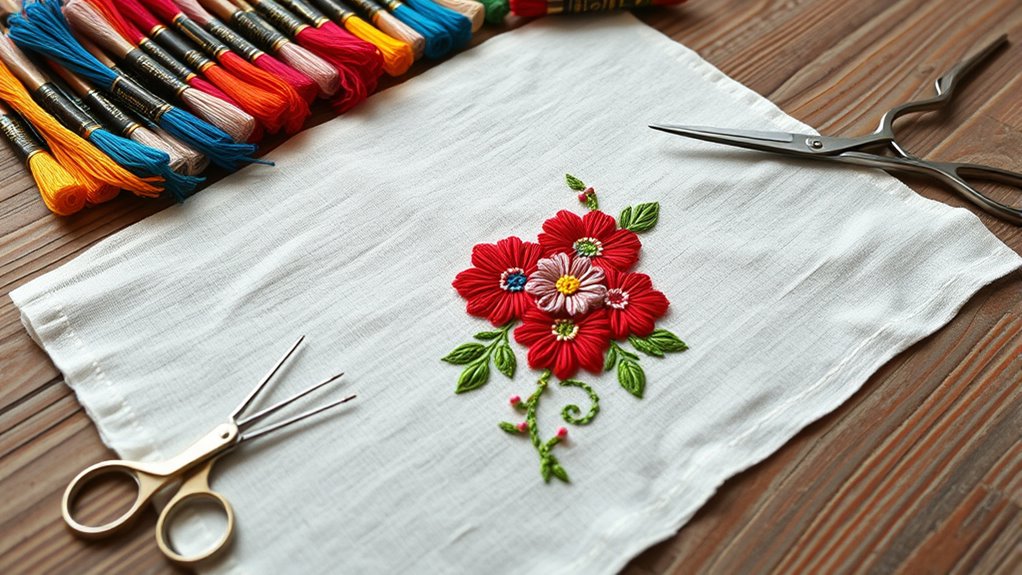
To start your first embroidery kit, pick lightweight cotton or linen for a stable base and practice basic stitches like running, backstitch, and satin stitch on scrap fabric. Keep your thread tension even, use a hoop to keep fabric taut, and split your embroidery floss into strands for the desired thickness. Begin with simple designs to build confidence. If you follow these tips, you’ll soon *discover* more techniques to improve your embroidery skills.

Get furniture and decor delivered free — and shop member deals
- Fast, free delivery on millions of items
- Access to Prime Big Deal Days deals on October 6–7
- Prime Video, Amazon Music and more included
Key Takeaways
- Choose lightweight, stable fabrics like cotton or linen to ensure smooth stitches and easy handling.
- Start with simple stitches such as running, backstitch, or satin stitch on scrap fabric.
- Use an embroidery hoop or frame to keep fabric taut and maintain consistent tension.
- Divide embroidery floss into strands and practice maintaining even tension for professional-looking stitches.
- Begin with small, simple designs to build confidence before progressing to more complex patterns.
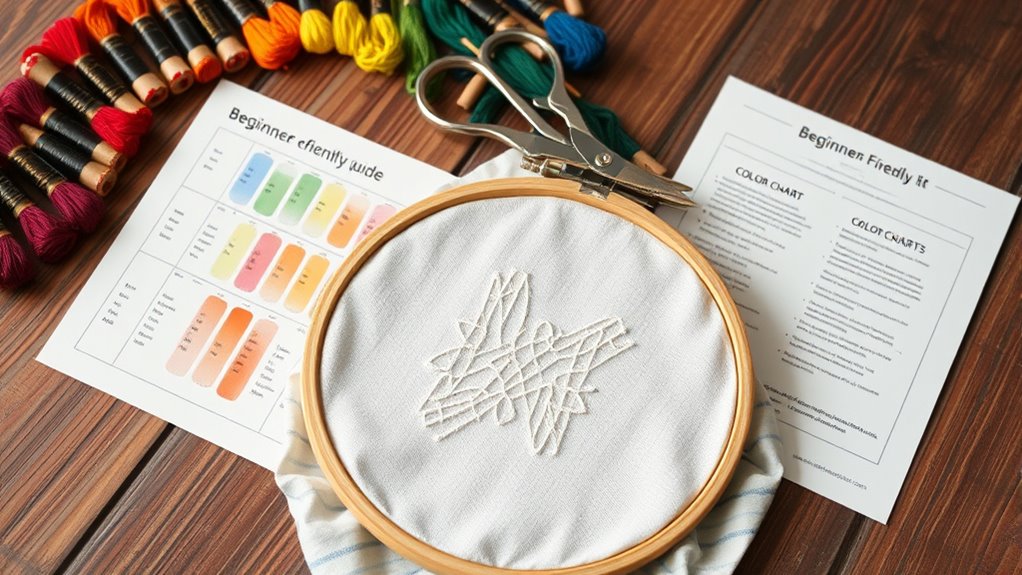
Have you ever wondered how intricate designs are created on fabric? The secret lies in mastering basic embroidery skills, starting with understanding stitch techniques and fabric selection. When you’re just beginning, it’s essential to choose the right fabric because your success depends on a good foundation. For beginners, lightweight cotton or linen works well since they’re easy to work with and hold stitches securely. Avoid stretchy or slippery fabrics until you gain more confidence, as they can make stitching more difficult.
Once you’ve selected your fabric, you need to learn the stitch techniques that form the building blocks of embroidery. Simple stitches like the running stitch, backstitch, and satin stitch are perfect starting points. The running stitch creates dashed lines and is great for outlining your design, while the backstitch produces solid lines that resemble sewing machine stitches. Satin stitch fills in larger areas with a smooth, shiny surface, adding vibrant color and texture. Practice these stitches on scrap fabric before working on your main piece so that you get comfortable with the movements and tension.
Start with simple stitches like running, backstitch, and satin to build your embroidery foundation.
Mastering stitch techniques involves paying attention to your thread tension and hand movements. Keep your stitches even and consistent for a professional look. Use a hoop or frame to keep the fabric taut, which makes stitching more precise and easier to handle. When working with your chosen fabric, thread your needle with a length of embroidery floss—usually about 18 inches—to prevent tangling. Divide the floss into strands (most embroidery floss has six), and select the number of strands based on the desired thickness of your stitch. Thinner stitches look delicate, while thicker ones create bold, textured effects.
As you practice, experiment with different stitch techniques and fabric types to see how they interact. You’ll find that some fabrics work better with certain stitches, and certain techniques will give your embroidery a unique character. Additionally, understanding color accuracy can help you select threads that match your intended design colors more precisely, resulting in a more vibrant finished piece. Always start with simple designs to build your confidence, then gradually move on to more complex patterns. Remember, the key is patience and consistency. When you combine good fabric selection with effective stitch techniques, you’ll see your embroidery skills improve rapidly. Before long, you’ll be creating beautiful, detailed designs that showcase your growing craftsmanship.
embroidery starter kit for beginners
As an affiliate, we earn on qualifying purchases.
As an affiliate, we earn on qualifying purchases.
Frequently Asked Questions
What Are the Best Fabrics for Beginners?
For beginners, cotton fabric types are your best choice because they’re easy to work with and widely available. Look for even, tightly woven fabrics like cotton Aida cloth or linen, which help keep stitches neat. Beginner tips include choosing fabrics that aren’t too stiff or stretchy, making your embroidery smoother. These fabrics provide a stable surface, so your stitches stay even and your project turns out great.
How Do I Choose the Right Embroidery Hoop Size?
To choose the right embroidery hoop size, consider your embroidery patterns and project size. Opt for a hoop that comfortably fits your design, providing enough space for tension adjustments without pulling too tight or loose. A smaller hoop gives better control for detailed work, while a larger hoop suits bigger patterns. Always check hoop tension to keep your fabric taut, ensuring smooth stitches and professional results.
What Types of Embroidery Stitches Should I Learn First?
Ready to open the secrets of embroidery? Start with basic stitch techniques like the running stitch, backstitch, and satin stitch—they’re the foundation for more complex designs. Experiment with different thread types, such as cotton or embroidery floss, to see how they affect your work. Master these stitches first, and you’ll build confidence to tackle intricate patterns and create stunning embroidery projects that truly stand out.
How Do I Care for Embroidered Items?
To care for embroidered items, you should handle fabric care cautiously to preserve your embroidery. Gently hand wash in cold water with mild detergent, avoiding harsh chemicals or scrubbing. Lay your embroidery flat to dry, and if needed, iron on low heat with a cloth over the embroidery to prevent damage. Proper fabric care ensures your embroidery stays vibrant and preserved over time.
Can I Use Embroidery on Clothing or Accessories?
Yes, you can definitely use embroidery on clothing or accessories. Embroidering on shoes adds a personalized touch, and embroidery on bags makes them unique. Just guarantee you use the right stitches and fabric stabilizer to prevent puckering or fraying. For shoes, choose durable threads and waterproof your design. On bags, consider the weight of your embroidery to avoid sagging. With care, your embroidered items will stand out beautifully!
Conclusion
As you finish your first stitches, imagine your fabric coming alive with vibrant threads dancing in your hands. The tiny knots and colorful patterns are a reflection of your creativity and patience. Feel the texture beneath your fingertips, knowing each stitch brings your vision closer to reality. With every new project, your skills will grow, transforming simple fabric into a masterpiece. Keep practicing, and soon, embroidery will become a beautiful part of your artistic journey.
Fall Picks
fall essentials
As an affiliate, we earn on qualifying purchases.