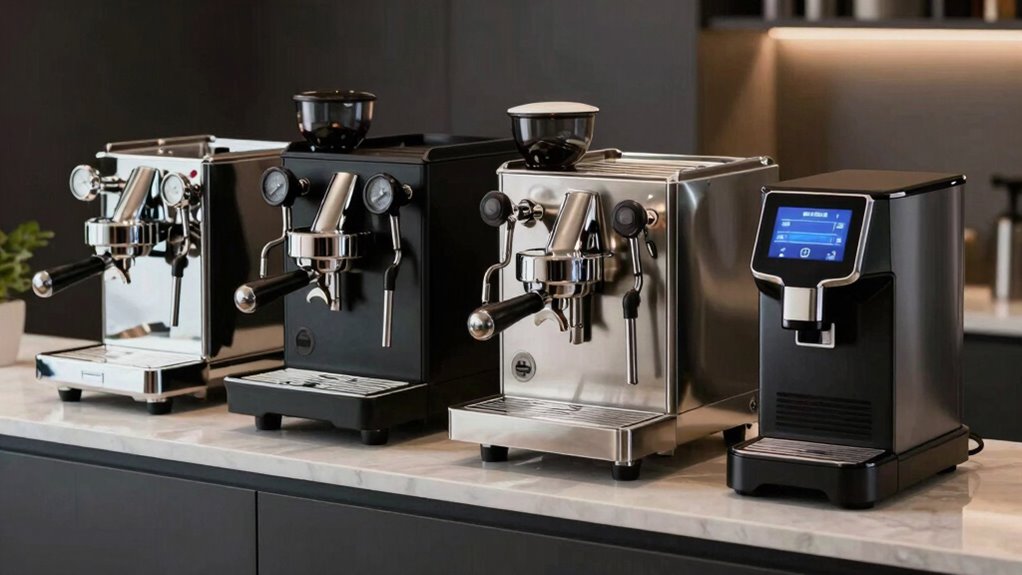
Choosing the right espresso machine depends on your brewing needs, budget, and space. Single boilers are simple and affordable but require patience to switch between brewing and steaming. HX machines offer better temperature stability and quick changeover for under-the-counter convenience. Dual boilers excel at simultaneous brewing and steaming, providing top consistency but at a higher cost. Super-automatics make brewing easy with automated features, perfect for beginners. Keep exploring to find the best fit for you.
Key Takeaways
- Single boiler machines are simple and budget-friendly but require waiting between brewing and steaming.
- HX machines use one boiler with a tube to allow simultaneous brewing and steaming, offering good temperature stability.
- Dual boiler machines have separate boilers for brewing and steaming, providing optimal temperature control and efficiency.
- Super-automatic espresso machines simplify the process with automated features, ideal for convenience and consistent results.
- Choice depends on budget, space, desired convenience, and whether you prioritize speed, control, or ease of use.

CASABREWS CM5418 Espresso Machine 20 Bar, Compact Espresso Maker with Steam Milk Frother, Stainless Steel Coffee Machine with 34oz Removable Water Tank for Cappuccino, Gift for Women or Men, Silver
Make Your Favorite Espresso Coffee At Home: The CASABREWS coffee machine with milk frother allows you to prepare…
As an affiliate, we earn on qualifying purchases.
As an affiliate, we earn on qualifying purchases.
What Factors Should You Consider When Choosing an Espresso Machine?
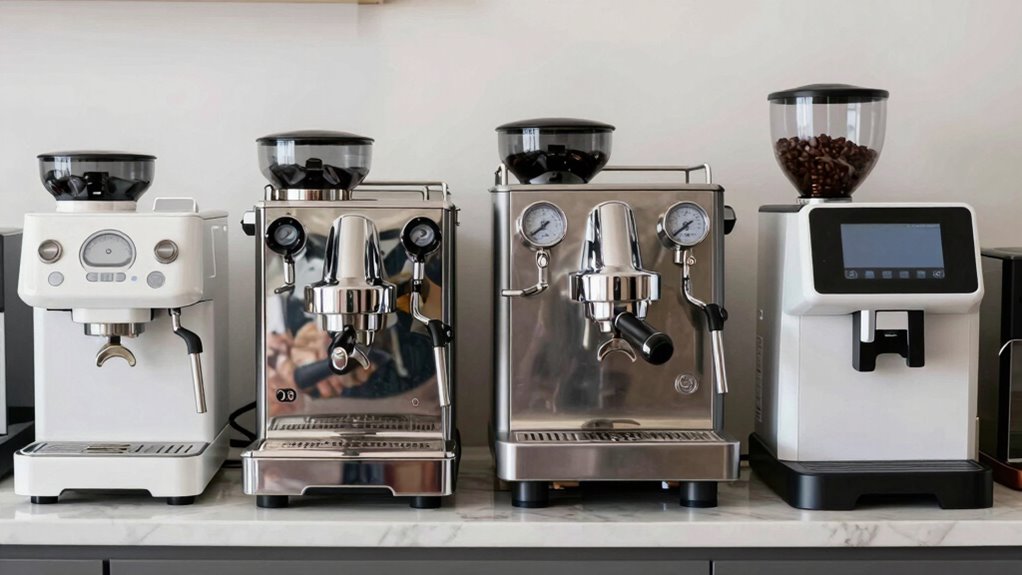
When choosing an espresso machine, it’s vital to evaluate your brewing needs and how you plan to use it. Start by considering your budget, as machines range from affordable to high-end models with advanced features. Determine what you’re willing to spend to avoid overspending on unnecessary functions. Space requirements are equally important; measure your countertop area to ensure the machine fits comfortably without cluttering your kitchen. Compact machines are ideal for small kitchens, while larger models may suit those with ample space and more frequent use. Think about your daily routine—if you brew multiple cups a day, investing in a more robust machine makes sense. Additionally, understanding how to care for your machine can extend its lifespan and improve your coffee quality. Considering maintenance requirements is essential to keep your machine running smoothly and ensure consistent results. Regular cleaning and descaling procedures are part of proper maintenance to prevent buildup and maintain optimal performance. Balancing budget and space ensures you select a machine that aligns with your needs and lifestyle. Moreover, exploring regional flavors and features can help you find a machine that enhances your unique coffee experiences.
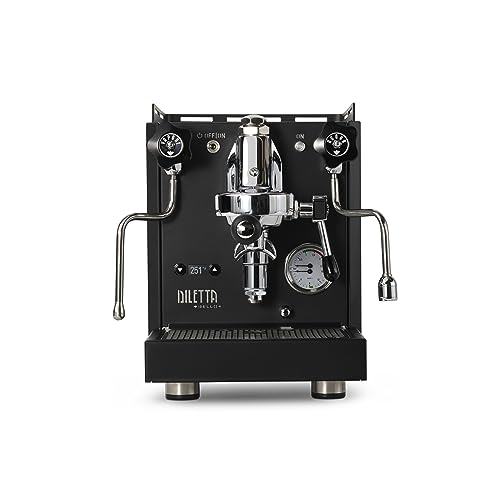
Diletta Bello+ Espresso Machine | E61 | PID Temperature Control | Shot Timer | Programmable Preinfusion | Handmade In Italy (Black)
PID Temperature Control – View and adjust your steam boiler temperature quickly with the front-mounted PID screen.
As an affiliate, we earn on qualifying purchases.
As an affiliate, we earn on qualifying purchases.
What Are Single Boiler Espresso Machines and Are They Right for You?
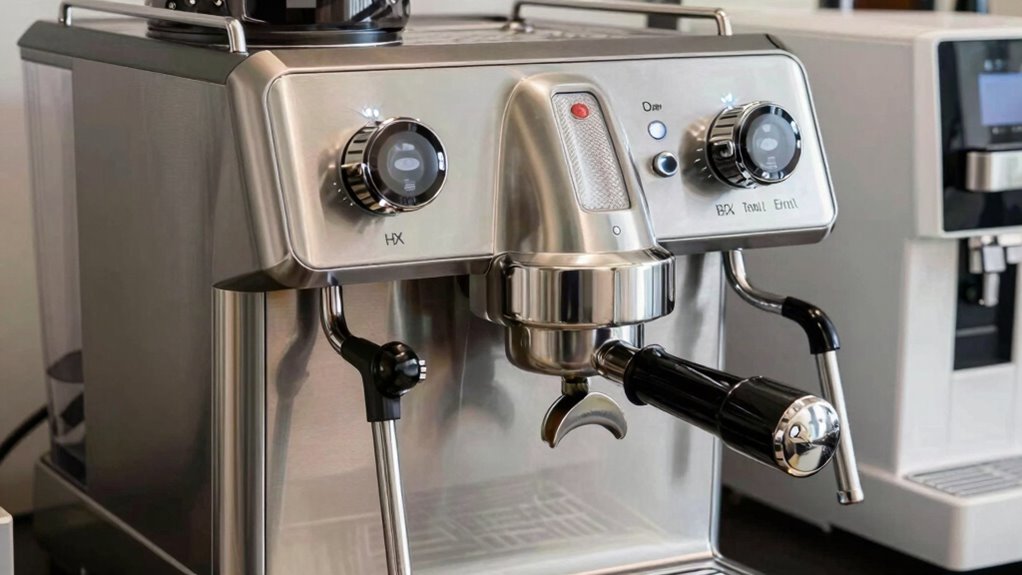
Single boiler espresso machines are a popular choice for home baristas seeking simplicity and affordability. They’re straightforward, compact, and easy to operate, making them ideal if you want reliable brewing without hassle. However, they have limitations in brewing consistency, as you need to wait for the machine to heat up or cool down between brewing and steaming. This can affect your workflow and results. Maintenance complexity is relatively low since there are fewer parts involved, but you’ll need to be diligent about descaling and cleaning to keep the machine functioning well. Consider your priorities: if you value simplicity and cost-effectiveness over speed and flexibility, a single boiler machine could be right for you.
| Feature | Benefit |
|---|---|
| Brewing consistency | Requires patience but delivers good results |
| Maintenance complexity | Easy to clean and maintain |
| Heating process | Needs time to switch between functions |
| Cost | Budget-friendly option |
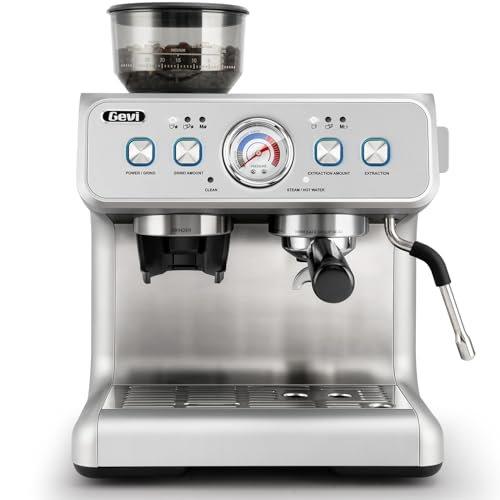
Gevi Dual Boiler Espresso Machine with Built-in Grinder, 58mm Commercial Portafilter, Barista Steam Wand, 31 Grind Settings, Stainless Steel, for Home Barista Use, Sterling Silver
𝐏𝐨𝐰𝐞𝐫𝐟𝐮𝐥 𝐚𝐧𝐝 𝐬𝐭𝐚𝐛𝐥𝐞 𝐏𝐫𝐞𝐬𝐬𝐮𝐫𝐞 𝐒𝐲𝐬𝐭𝐞𝐦 – Gevi espresso machine's high-pressure system expertly manages the flow of water, forcing…
As an affiliate, we earn on qualifying purchases.
As an affiliate, we earn on qualifying purchases.
How Do Heat Exchange (HX) Espresso Machines Work, and Are They Worth It?
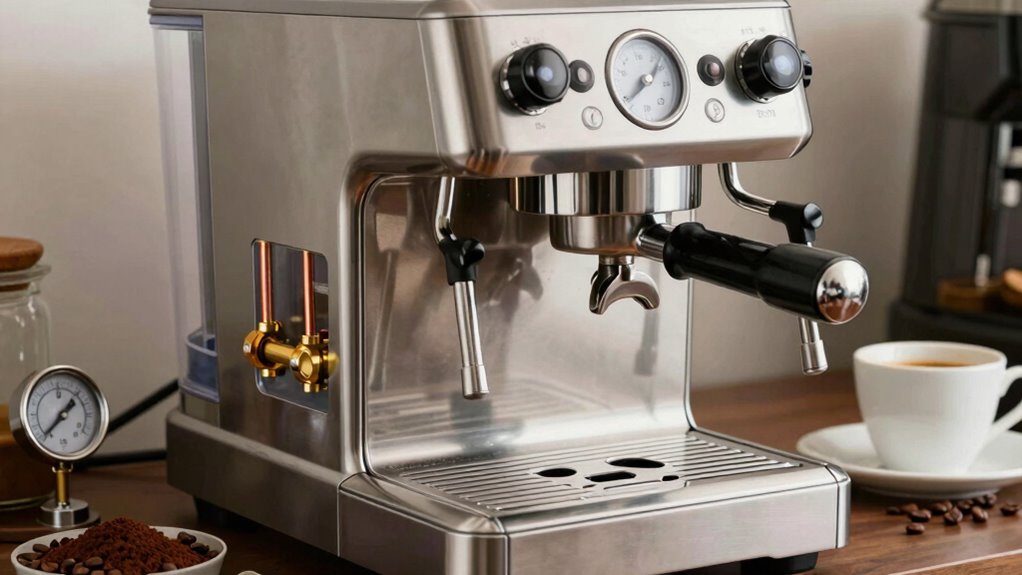
Heat exchange (HX) espresso machines work by using a single boiler with a specialized copper or stainless steel tube that runs through it, allowing water to be heated to brewing temperature while simultaneously providing steam for frothing. This design offers excellent temperature stability, ensuring consistent extraction quality. Because only one boiler heats both water and steam, HX machines are more energy-efficient than dual boiler systems, consuming less power overall. They allow you to brew espresso and steam milk with minimal wait time, making them ideal for busy environments or home use. While they may require some initial setup and temperature management, HX machines strike a good balance between performance, convenience, and efficiency—worth considering if you want quality results without the cost and complexity of dual boilers.

De'Longhi Magnifica Start Automatic Espresso Machine with Manual Milk Frother & Built in Grinder – 3 One-Touch Recipes, Easy-to-Clean, Home Barista Coffee Maker for Lattes, Cappuccino, Iced Coffee
3 ONE-TOUCH RECIPES: Enjoy Espresso, Coffee, and Americano at the touch of a button. Easily adjust the intensity…
As an affiliate, we earn on qualifying purchases.
As an affiliate, we earn on qualifying purchases.
Pros and Cons of Dual Boiler Espresso Machines
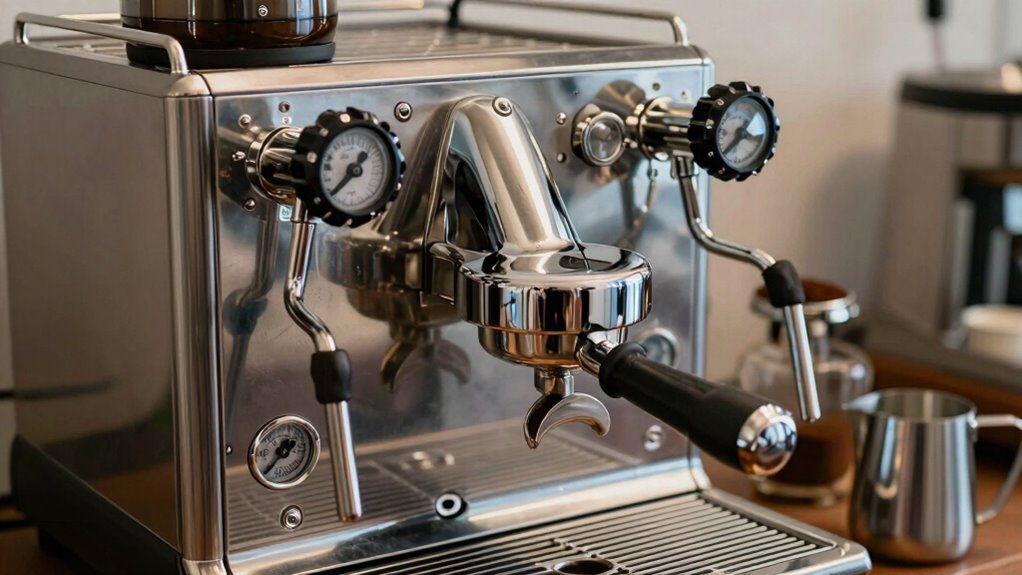
Dual boiler espresso machines offer the advantage of brewing and steaming simultaneously, giving you greater control over each process. This setup guarantees excellent temperature stability, maintaining precise heat levels for consistent shots and perfect steamed milk. Because both boilers operate independently, you don’t have to wait to switch between brewing and steaming, which improves brewing speed. Additionally, high refresh rates contribute to smoother operation and more responsive controls during use. These machines often incorporate advanced temperature control systems, which further enhance performance and consistency. The independent boilers also allow for customized brewing settings tailored to different beans and roasts. Moreover, the independent boiler design reduces the risk of temperature fluctuations that can affect espresso quality. However, dual boilers tend to be more expensive and larger, making them less ideal for small spaces or budget-conscious users. While they excel at maintaining stable temperatures, their complexity can require more maintenance and a steeper learning curve. Overall, if you want premium consistency and faster operation, dual boiler machines are a solid choice, but consider your space and budget before investing.
Are Super-Automatic Espresso Machines Good for Home Use?
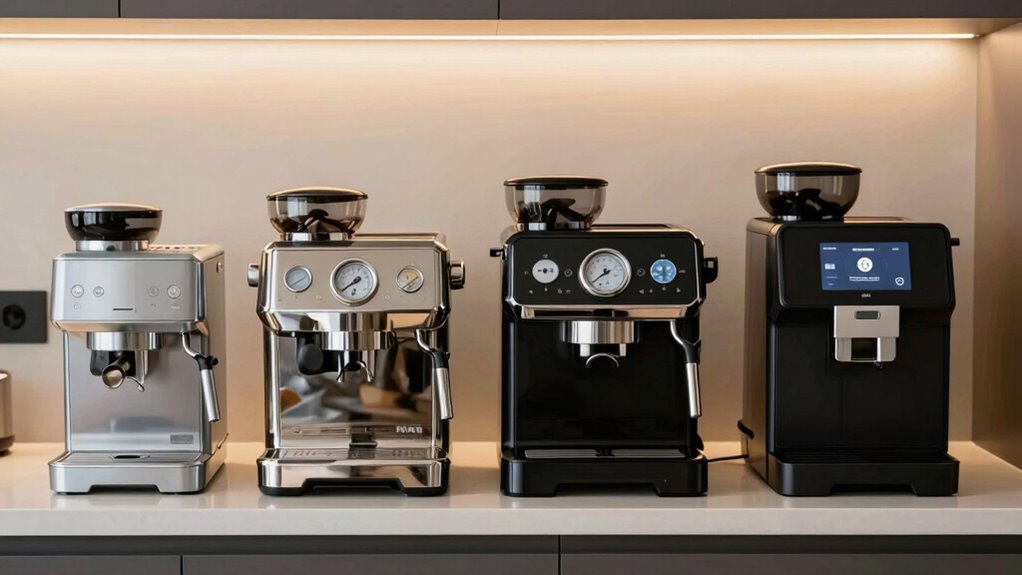
Super-automatic espresso machines can be be a great fit for home use because they simplify the brewing process and save time. With automatic maintenance features, you won’t have to worry about complex cleaning routines, making daily use hassle-free. These machines also offer user customization options, allowing you to adjust grind size, shot volume, and temperature to match your preferences. While some models may have limited control compared to manual machines, they deliver consistent results with minimal effort. If you value convenience and speed without sacrificing quality, a super-automatic machine is a solid choice for home brewing. Additionally, Free Floating technology in some models helps prevent mineral buildup, ensuring longevity and optimal performance. Understanding the mechanics of espresso extraction can help you choose a machine that best fits your needs and ensures great-tasting coffee every time. Moreover, user-friendly interfaces make it easier for beginners to operate these machines with confidence. Proper maintenance and understanding of machine components can further extend the lifespan and performance of your espresso machine. Having a basic knowledge of espresso brewing principles can also enhance your overall coffee experience and help you troubleshoot minor issues more effectively.
Frequently Asked Questions
How Much Maintenance Do Different Espresso Machine Types Require?
You’ll find that maintenance varies by machine type. Single boiler and HX machines need regular descaling and occasional calibration, roughly every 3-6 months. Dual boiler and super-automatic machines require less frequent descaling but still need calibration checks to guarantee peak performance. Overall, all machines benefit from routine cleaning, descaling when mineral buildup appears, and periodic calibration to keep your espresso tasting perfect.
Which Espresso Machine Is Best for High-Volume Coffee Shops?
You need a dual boiler espresso machine for high-volume coffee shops, where speed and consistency are key. Picture a bustling café, steam rising like a symphony of efficiency. It offers commercial capacity, handling multiple drinks simultaneously, and boasts durability considerations to withstand daily use. With precise temperature control and rapid steaming, a dual boiler keeps your flow steady, ensuring every shot is perfect even during peak hours.
Can I Upgrade My Machine From Single Boiler to Dual Boiler Later?
You can upgrade your machine from single boiler to dual boiler later, but it depends on machine compatibility. Not all machines are designed for upgrades, so check if your current model allows it. Keep in mind, upgrade costs can be significant, often approaching the price of a new machine. Consider whether the benefits outweigh the costs, and consult with a professional to guarantee a smooth transition.
What Are the Energy Consumption Differences Among These Machines?
You’ll notice that single boiler machines generally have lower power consumption and better energy efficiency because they only heat one boiler at a time. HX machines use more energy as they continuously heat water for steam and brewing, making them less energy-efficient. Dual boiler models are the most energy-consuming due to their separate heating systems, but they offer ideal performance. Super-automatic machines vary, often balancing convenience with moderate power consumption.
Are There Any Safety Concerns Specific to Super-Automatic Machines?
Super-automatic machines are generally safe, but you should stay alert to machine safety concerns. They can experience automatic malfunctions like water leaks or electrical issues, which could pose risks. Always follow the manufacturer’s instructions, keep the machine well-maintained, and unplug it when not in use. Regularly check for signs of wear or damage to prevent safety hazards and make certain of smooth operation.
Conclusion
Choosing the right espresso machine depends on your brewing style and budget. Did you know that nearly 60% of home baristas prefer machines with dual boilers for their temperature stability? Whether you want quick, automatic drinks or precise control, understanding these options helps you make an informed choice. Ultimately, investing in the right machine can elevate your coffee experience — and transforming your mornings might be more achievable than you think.