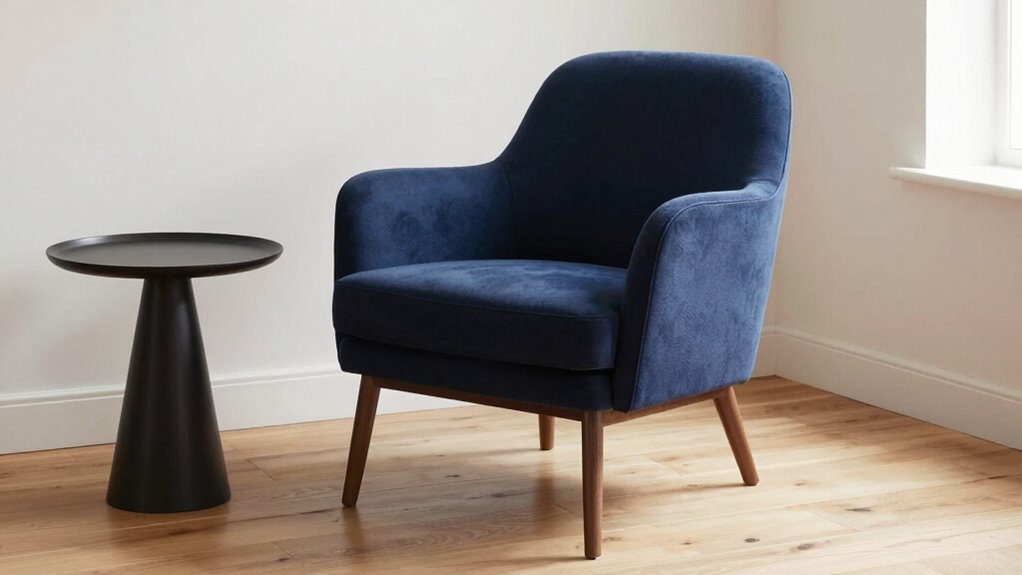

To select accent chairs that don’t look awkward, focus on matching seat height and scale to your space. Keep the chair’s seat height comfortable for your body and consistent with nearby furniture, ideally around 17-19 inches for easy sitting. Choose a size that balances with your room—smaller rooms need petite chairs, while larger spaces can handle bolder, bigger pieces. For best results, follow these guidelines to guarantee your accent chairs look stylish and harmonious in any room.
Key Takeaways
- Match chair seat height to existing furniture for seamless integration and user comfort.
- Choose proportionally scaled accent chairs based on room size and furniture ensemble.
- Ensure the chair’s height allows comfortable seating with proper posture.
- Balance scale by selecting chairs that complement, not overpower, surrounding furniture.
- Use cohesive colors, textures, and patterns to maintain harmony and prevent visual awkwardness.
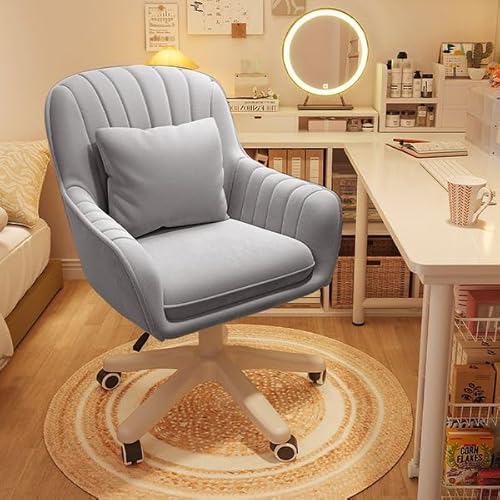
XUEGW Velvet Desk Chair with Pillow Upholstered Vanity Chair for Girls Women, Home Office Computer Task Chair with Wheels Swivel Rolling Accent Chair for Living Room, Bedroom
Premium Comfort: Expertly upholstered in soft, skin-friendly velvet fabric, this vanity chair features a thick, high-density foam seat…
As an affiliate, we earn on qualifying purchases.
As an affiliate, we earn on qualifying purchases.
Why Do Seat Height and Scale Matter When Choosing Accent Chairs?
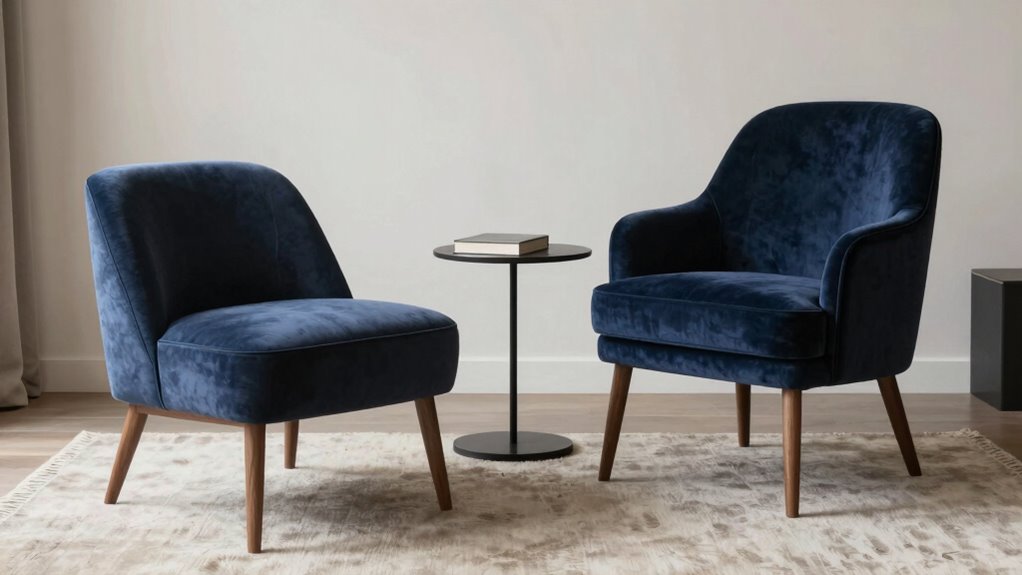
When choosing an accent chair, seat height and scale are essential because they directly impact comfort and visual harmony in your space. If the chair’s height doesn’t match your existing furniture, it can look out of place or feel uncomfortable to sit in. Proper scale ensures the chair complements the size of your other pieces, creating a balanced look. Additionally, considering color coordination enhances style harmony, making your space feel cohesive. An appropriately scaled chair with a color that aligns with your overall palette ties the room together effortlessly. Understanding visual balance helps you select furniture that enhances your room’s aesthetic and functionality. Recognizing the importance of furniture proportions guides you in choosing pieces that contribute to a harmonious environment. Being mindful of scale rules can prevent awkward pairings and create a more inviting atmosphere. When these elements are thoughtfully combined, they foster a sense of room harmony, making your space feel more inviting and well-designed. When these elements work in tandem, your accent chair becomes a seamless part of your decor, elevating the room’s aesthetic while providing comfort. Achieving this balance is key to avoiding awkwardness and creating a polished, inviting space.

Odoria Dollhouse Armchair Sofa Miniature – 1/12 Scale Accent Chair for Modern Living Room Bedroom – Mini Club Lounge Chair Wood Furniture Upholstered White
High Quality: The white dollhouse armchair is made of high-quality wood and fabric material with a cushion. It…
As an affiliate, we earn on qualifying purchases.
As an affiliate, we earn on qualifying purchases.
How Can I Measure and Decide the Right Seat Height for My Space?
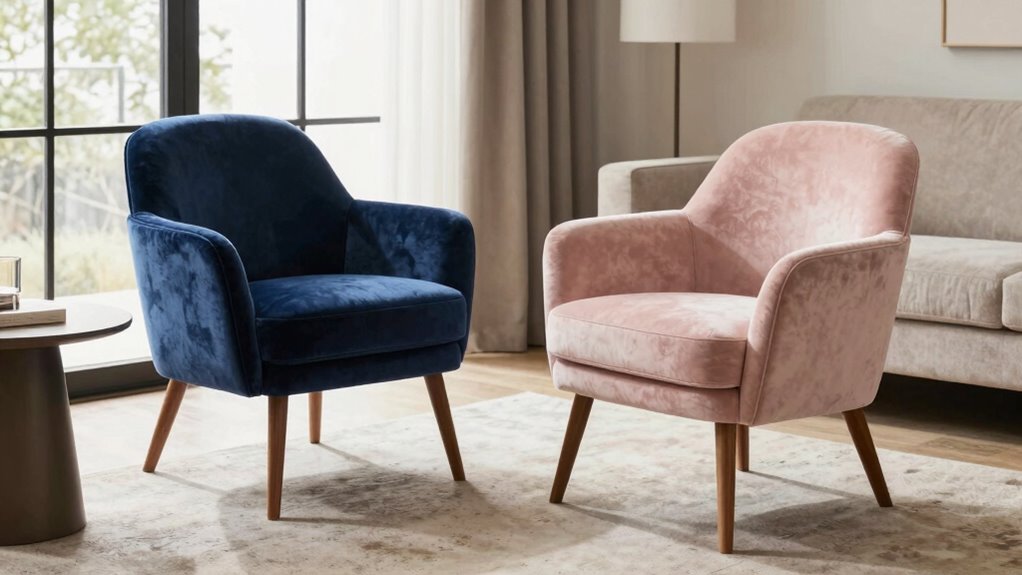
Start by measuring the height of your existing furniture to make certain your new accent chair fits well with your space. Think about how you’ll use the room—will it be for relaxing or entertaining? Consider the design harmony of your outdoor or indoor environment to ensure the new piece complements the overall style. Additionally, incorporate Indonesian decor masks or Balinese accents to add cultural richness and visual interest. Remember that piercing care and hygiene are essential for maintaining a clean and comfortable environment, especially if you plan to incorporate unique decor elements. It’s also helpful to measure your space thoroughly to prevent selecting a piece that overwhelms or looks out of place. Finally, prioritize comfort by choosing a seat height that supports your posture and makes sitting down and standing up easy.
Measure Existing Furniture Heights
To determine the right seat height for your accent chairs, you’ll need to measure your existing furniture accurately. Start by measuring the height from the floor to the top of your current chairs’ seat. Consider the shoe styles you typically wear, as thicker soles can affect how comfortable a chair feels at different heights. Also, note the paint color of your walls, as this influences the overall aesthetic and scale of your furniture choices. If your current chairs are too high or low, measure their seat depth and height to find a comfortable, proportional fit for your space. Take these measurements with a tape measure, and jot down the dimensions to compare with potential new chairs, ensuring they complement your room’s existing furniture and style. Additionally, understanding the ideal seat height for comfort can help you select pieces that promote proper posture and ease of use. Knowing the best practices for scaling furniture can further ensure your accent chairs enhance rather than disrupt your room’s harmony.
Consider Room Functionality
Understanding how your accent chairs will be used is key to choosing the right seat height. Consider the room’s primary function—whether it’s a cozy reading nook, a lively family room, or a formal sitting area. This helps determine the ideal height for comfort and aesthetic harmony. For example, in a space focused on conversation, you might prioritize a seat height that encourages easy eye contact. Also, think about color coordination and material selection to match your decor. Keep these points in mind:
- Match seat height to existing furniture for cohesion
- Use color coordination to enhance the room’s style
- Select materials that complement the function (e.g., plush for lounging)
- Ensure the height suits the room’s scale and purpose
- Cable failures can occur if furniture placement interferes with electronic setups, so consider the location of outlets and wiring when choosing your accent chairs.
This approach ensures your accent chairs are both functional and visually appealing.
Account for Person Comfort
Choosing the right seat height for your accent chairs begins with considering the comfort of those who will use them. You want ergonomic support that keeps your back aligned and prevents discomfort. To guarantee aesthetic harmony and function, measure the seated person’s thigh length and the height from their feet to their knees. Use this table as a guide:
| Person Height | Ideal Seat Height |
|---|---|
| Short (4’10”) | 16-17 inches |
| Average (5’4″) | 17-18 inches |
| Tall (6’0″)+ | 18-19 inches |
Additionally, selecting the appropriate scale ensures your accent chairs look proportionate within the space, creating a balanced and inviting environment.

OLIXIS Comfy Accent Chair for Living Room Bedroom and Waiting Room, Upholstered Mid-Century Reading Chair with Pillow and Solid Wood Legs, Wide Singe Modern Lounge Sofa (Beige)
Timeless Midcentury Modern Style: Elevate any room with this chic lounge chair’s sleek silhouette, clean lines, and minimalist…
As an affiliate, we earn on qualifying purchases.
As an affiliate, we earn on qualifying purchases.
How Do I Determine the Correct Chair Scale for Different Room Sizes?
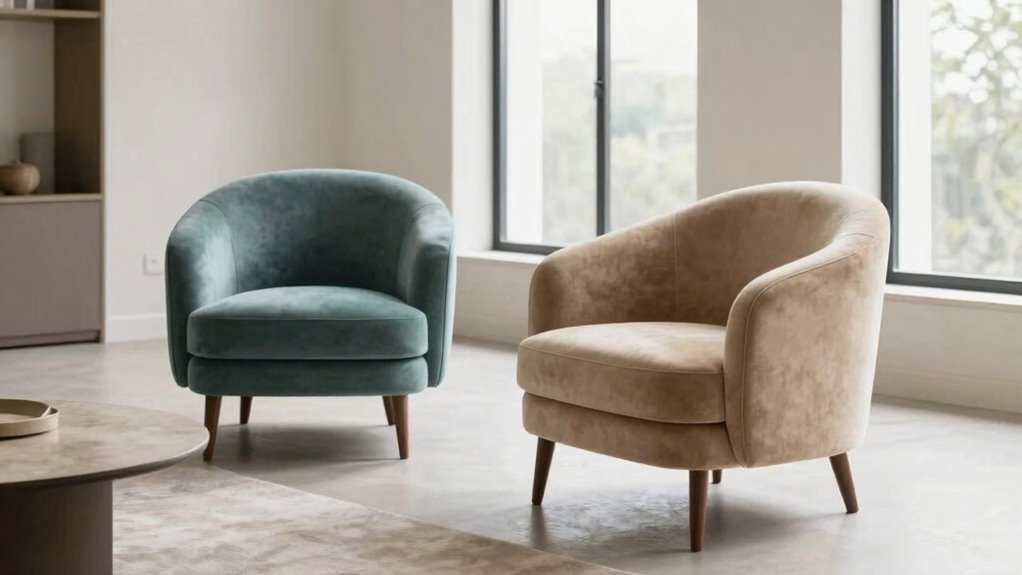
Choosing the right chair scale depends on maintaining proportional room layouts. Smaller rooms benefit from more petite, streamlined chairs, while larger spaces can handle bigger, statement pieces. Remember to match the furniture size with your existing pieces for a balanced and inviting look. Incorporating natural light can further enhance the sense of space and comfort in your room. Additionally, considering the scale rules for furniture can ensure that your seating arrangements complement the room’s dimensions and overall aesthetic. Paying attention to proportion helps create a cohesive and harmonious environment that feels both functional and stylish. Understanding visual balance can also guide you in selecting seating that complements other elements in the room.
Proportional Room Layouts
How can you guarantee your accent chair complements your room’s size without overwhelming or appearing too tiny? The key is to take into account proportional room layouts. Match the chair’s scale to the space, ensuring it fits comfortably without crowding or looking lost. To achieve this, focus on:
- Choosing a chair with a seat height that aligns with the room’s overall height
- Using color coordination to create visual harmony
- Incorporating material diversity for texture contrast
- Ensuring the chair’s width complements the surrounding furniture and open space
Scale With Furniture Size
Determining the right chair scale for different room sizes starts with evaluating the overall space and existing furniture. To create a proportionate design, choose chairs that complement the room’s dimensions without overwhelming or appearing diminutive. Larger rooms can handle bigger, statement-making accent chairs that foster visual harmony, while smaller spaces benefit from more compact, streamlined pieces that don’t disrupt flow. Measure your available space carefully, leaving enough clearance for comfortable movement. Consider the scale of surrounding furniture—an oversized chair can dominate a small room, but it can also anchor a large seating area. Striking the right balance ensures your accent chairs enhance the room’s aesthetic without looking awkward or out of place. Proper seat height is also crucial for maintaining comfort and visual balance in any room.

Big Leaf Cloud Accent Chair, Dual-Sided Cushion Accent Chair for Living Room with Acacia Wood Armrests & Sturdy Metal Frame, Ergonomic Lounge Chair for Bedroom, Cloud-Like Softness, Easy Assembly
Dual-Sided Comfort Accent Chair: Enjoy year-round adaptability with our unique dual-sided cushion. One side features cool, easy-clean faux…
As an affiliate, we earn on qualifying purchases.
As an affiliate, we earn on qualifying purchases.
What Are Tips for Matching Accent Chairs With Existing Furniture?
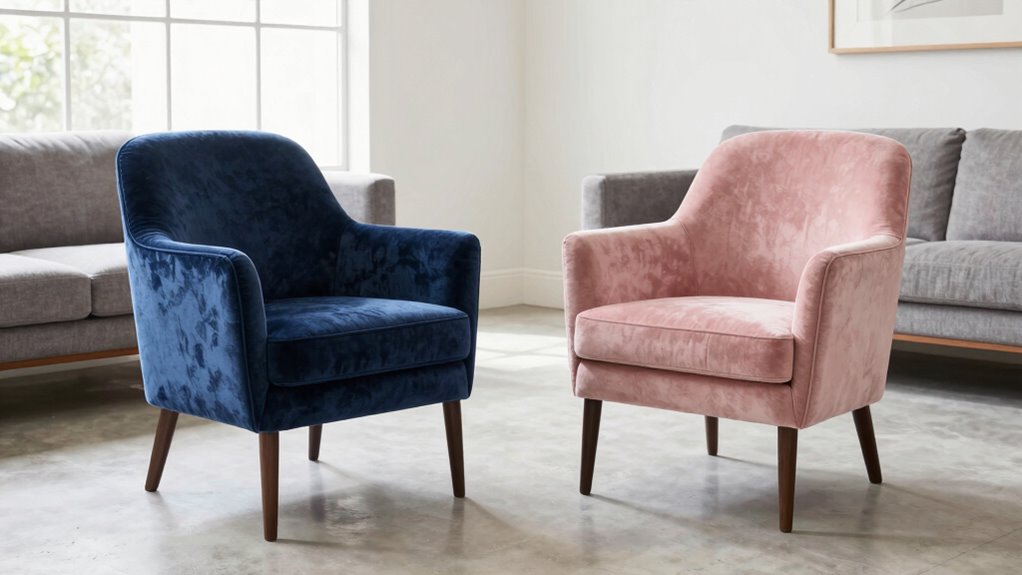
Matching accent chairs with your existing furniture can seem challenging, but focusing on balance and harmony makes it easier. To create a cohesive look, pay attention to color coordination and material matching. Choose a chair color that complements your main furniture, either by matching or contrasting subtly. Consider the texture and material—if your sofa is leather, opt for an accent chair in a similar or complementary fabric to avoid visual discord.
Here are tips to keep in mind:
- Stick to a unified color palette for a polished look
- Mix textures thoughtfully for visual interest
- Match or complement wood tones or metal finishes
- Balance scale to avoid overwhelming the space
These choices ensure your accent chair blends seamlessly with your existing furniture.
What Common Mistakes Should I Avoid When Choosing Chair Dimensions?
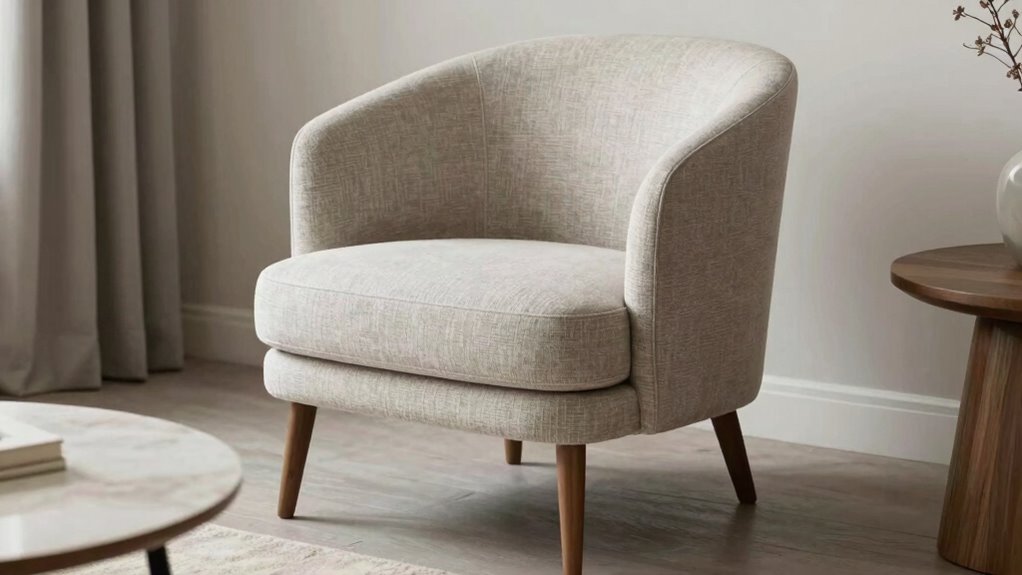
Choosing the wrong chair dimensions can disrupt the harmony of your space and make your furniture feel awkward or uncomfortable. One common mistake is selecting chairs with incorrect dimensions that don’t match your room’s scale. Overlooked proportions can make a space feel unbalanced or cramped. To avoid this, pay attention to seat height, width, and depth. Here’s a quick guide:
| Dimension | What to Watch For |
|---|---|
| Seat Height | Should be comfortable for your height |
| Width | Enough to sit comfortably without feeling cramped |
| Depth | Supports your back without pushing forward |
Ignoring these factors leads to uncoordinated furniture and discomfort. Always measure your space and consider proportions to create a cohesive, functional look. Remember, proportional design is key to achieving a balanced and inviting room.
Can You Show Examples of Well-Proportioned Accent Chairs in Various Settings?
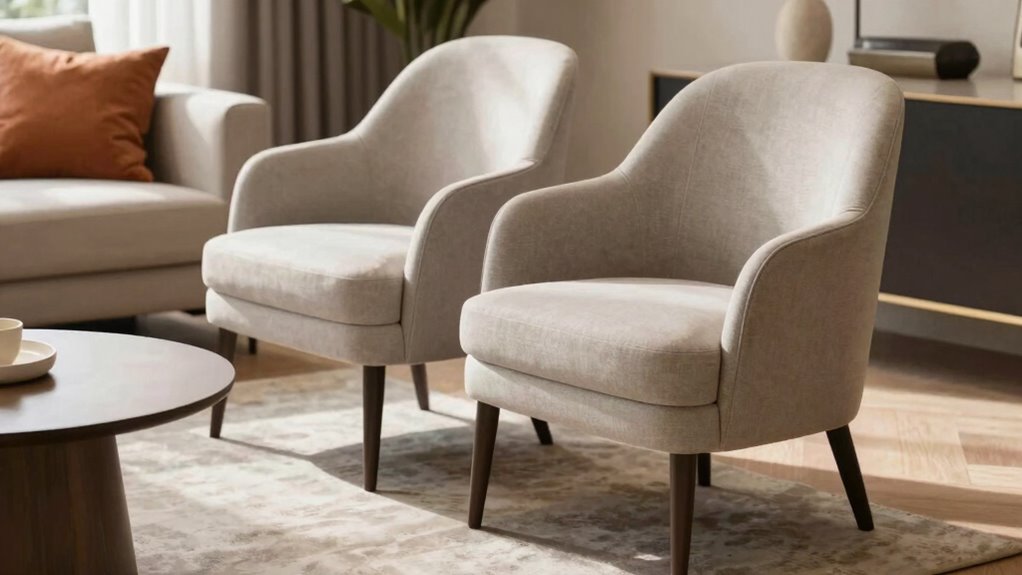
Well-proportioned accent chairs can instantly elevate the look and feel of any space, whether it’s a cozy reading nook or a spacious living room. Look for examples that balance scale with the surrounding furniture and room size. Well-chosen chairs feature harmonious color coordination with the existing palette, avoiding jarring contrasts. Fabric patterns should complement the room’s decor—think subtle textures or coordinated prints rather than overwhelming designs. Prioritizing small-space interior design principles helps ensure your accent chair enhances rather than overwhelms the room. Consider these tips: – Choose a chair with a seat height that matches your space’s scale – Incorporate fabric patterns that tie into other textiles in the room – Use color coordination to create visual harmony – Match the chair’s scale to the size of the room for a balanced look
Frequently Asked Questions
How Can I Customize Accent Chairs to Fit My Unique Space?
To customize accent chairs for your space, start with space measurement tips to guarantee the chair’s size complements your room. Explore personalization options like choosing upholstery, armrest style, and leg finish to match your decor. Consider seat height and scale rules to prevent awkwardness. Adjust these elements to fit your space perfectly, creating a comfortable and stylish accent piece that feels tailored just for you.
What Materials Are Best for Durable, Proportionate Accent Chairs?
Did you know that fabric durability and metal frame strength are key for long-lasting accent chairs? Opt for high-quality fabrics like leather or performance textiles that resist wear and stains. Pair these with a sturdy metal frame—preferably steel—for added durability and support. This combination guarantees your accent chair looks proportionate and remains comfortable over time, even with daily use. You’ll enjoy a stylish, resilient piece that fits perfectly in your space.
How Do I Style Accent Chairs for Different Interior Design Themes?
You should style accent chairs by choosing fabric that complements your interior theme, like velvet for luxe or linen for casual spaces. Incorporate pattern mixing carefully—pair solids with subtle prints or bold patterns for visual interest. Consider your overall color palette and scale, ensuring the chairs don’t overpower or get lost. Add accessories like pillows or throws to enhance your style, making the accent chairs seamlessly fit your unique decor.
Are There Ergonomic Considerations for Long-Term Comfort?
Yes, ergonomic considerations matter for long-term comfort. You should look for accent chairs with good lumbar support to keep your back aligned, and guarantee the seat depth allows your legs to rest comfortably without pressure. Adjust the chair height so your feet are flat on the floor, and your knees are at a right angle. Prioritizing these factors helps you sit comfortably for extended periods without strain.
How Do Lighting and Color Affect the Perception of Chair Scale?
Think of a vintage film set where lighting illusions change how objects appear. Bright lighting can make a chair seem larger, while softer, dimmer light creates a cozy, smaller feel. Color perception also matters; dark hues tend to make a chair look more substantial, whereas light shades can make it seem more delicate. You can manipulate lighting and color to balance scale and harmony in your space effortlessly.
Conclusion
Choosing the right accent chair is like finding the perfect puzzle piece—you want it to fit seamlessly without jarring. By paying attention to seat height and scale, you’ll create a space that feels balanced and inviting. Remember, a well-chosen chair doesn’t just sit there; it completes the picture, turning your room into a cozy masterpiece. Trust your instincts, measure twice, and enjoy the journey to finding your perfect statement piece.