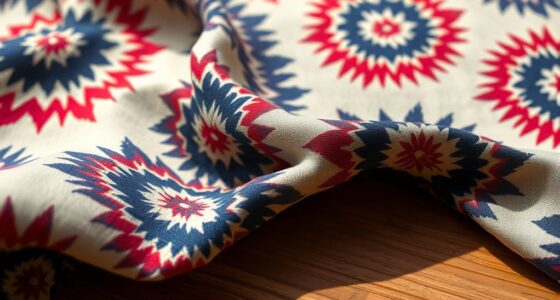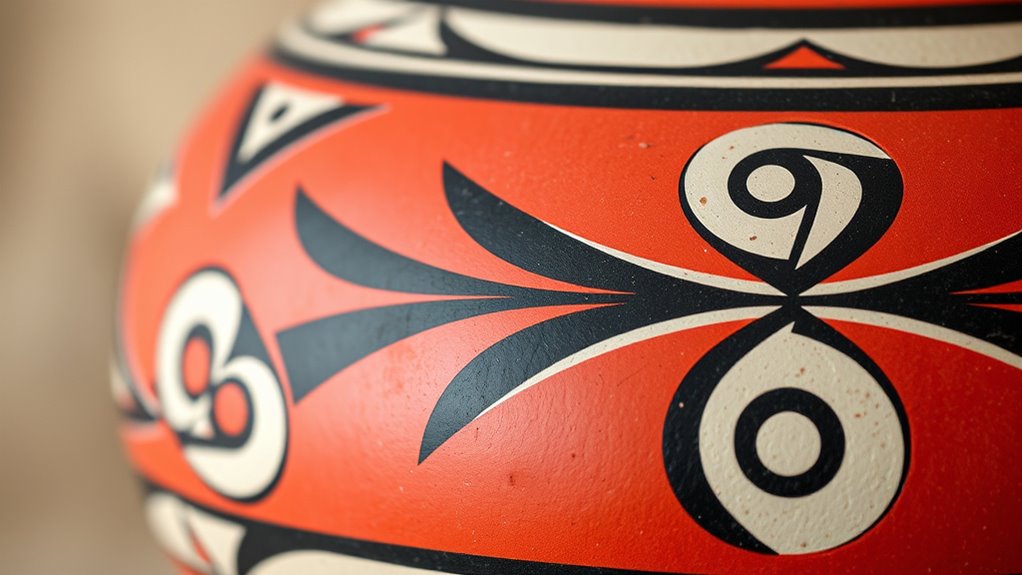

Native American pottery features intricate geometric patterns and symbolic motifs that reflect tribal stories, spiritual beliefs, and regional identity. Bright colors are carefully chosen to convey cultural meanings, often representing natural elements or social status, while patterns like zigzags or animals vary across tribes and regions. Artists use traditional techniques with natural pigments and carvings to encode their heritage. Exploring these beautiful decorations reveals the deep cultural significance behind every design—if you continue, you’ll discover more about their rich traditions.
Key Takeaways
- Native American pottery features symbolic geometric patterns representing spiritual beliefs, natural elements, and tribal stories.
- Colors like red, black, and white carry cultural meanings, indicating social roles and ceremonial significance.
- Regional styles showcase unique motifs, such as zigzags and sun symbols in the Southwest or animal designs in the Pacific Northwest.
- Incised, painted, and carved techniques add texture and depth, encoding cultural stories and spiritual connections.
- Contemporary artists blend traditional motifs with modern methods, preserving and evolving decorative traditions.

Mix and Match 11.5" Talavera Plates – Hand-Painted Mexican Pottery – Choose Your Unique Designs (1 Plate)
Handcrafted by talented artisans in Mexico, ensuring each plate is a unique piece of art.
As an affiliate, we earn on qualifying purchases.
As an affiliate, we earn on qualifying purchases.
Geometric Patterns and Their Meanings
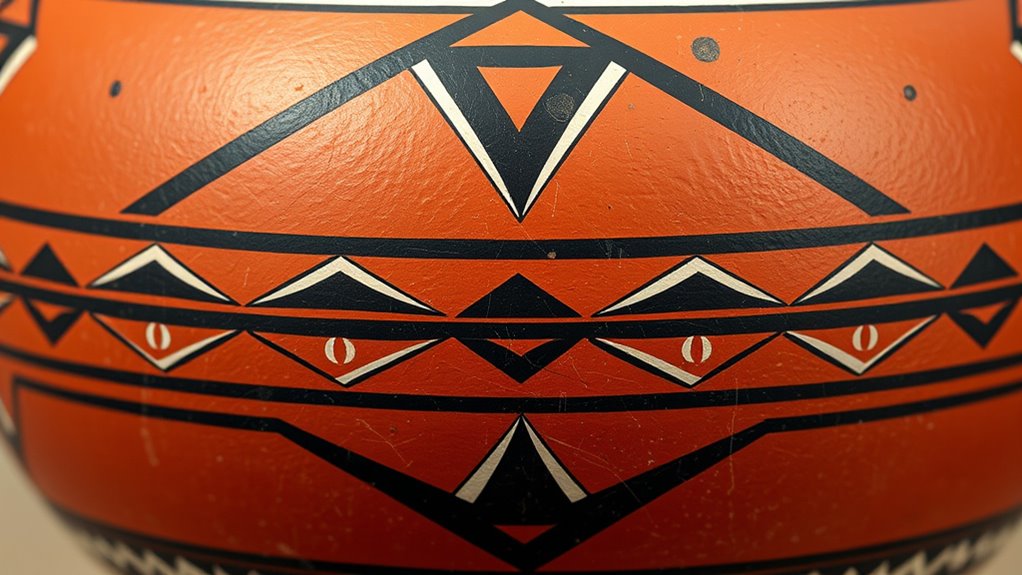
Geometric patterns are a hallmark of Native American pottery, serving both decorative and symbolic purposes. These designs often reflect ceremonial symbolism, representing spiritual beliefs or cultural stories important to each tribe. You’ll notice that the patterns are carefully chosen to convey meaning, such as life cycles, natural elements, or spiritual connections. Aesthetic preferences also play a significant role; artisans select shapes, lines, and arrangements that resonate visually and culturally. The precise, symmetrical arrangements highlight a tribe’s artistic sensibilities and cultural identity. By incorporating geometric motifs, potters create pieces that are not only beautiful but also rich with cultural significance. These patterns help preserve traditions and express collective values through intricate, meaningful designs. Additionally, the geometric arrangements demonstrate the mastery of craftsmanship and understanding of traditional techniques passed down through generations.

North American Indian Design Coloring Book (Dover Native American Coloring Books)
As an affiliate, we earn on qualifying purchases.
As an affiliate, we earn on qualifying purchases.
Symbolic Motifs Across Tribes
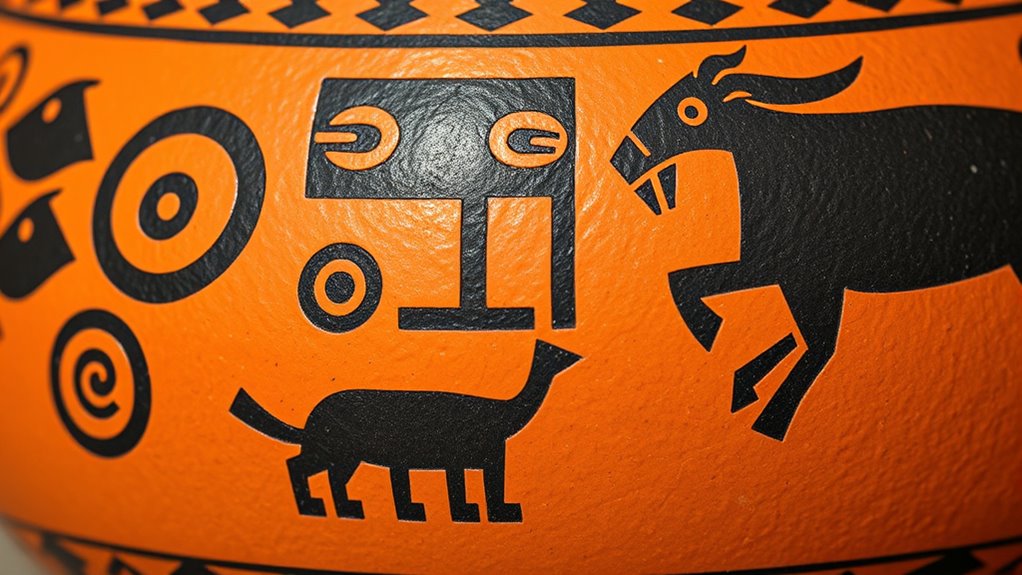
You’ll notice that different tribes use symbolic motifs to tell stories and express beliefs. These symbols often vary by region, reflecting local customs and histories. Understanding these variations helps you appreciate the deeper meanings behind each tribe’s pottery designs. Incorporating content relevance and authority into these designs further enhances their cultural significance and recognition.
Tribal Symbolism and Meaning
Across different Native American tribes, symbolic motifs in pottery serve as powerful expressions of cultural identity and spiritual beliefs. You’ll find that many patterns hold ceremonial significance, used in rituals and sacred events to invoke protection, fertility, or spiritual connection. These motifs often tell ancestral stories, preserving history and wisdom passed down through generations. For example, certain symbols represent mythological beings, natural elements, or tribal origins, reinforcing a shared sense of identity. When you observe these designs, you’re witnessing more than decoration; you’re engaging with a visual language that encodes spiritual values and collective memories. Understanding these symbols invites you to appreciate the depth of cultural meaning woven into each piece, highlighting how pottery functions as a vessel for both artistry and ancestral heritage. symbolic motifs carry meanings that extend beyond aesthetics, embodying the beliefs and traditions of the tribes.
Motif Variations by Region
Different regions shape the unique styles and motifs found in Native American pottery, reflecting the distinct cultural identities and environments of each tribe. You’ll notice that motifs vary from bold geometric patterns to intricate natural designs, often symbolizing spiritual beliefs or environmental elements. These variations serve practical purposes, like enhancing ceramic durability and supporting pottery storage. For example, Southwest tribes favor zigzags and sun symbols, while Pacific Northwest tribes incorporate animal motifs. Each region’s pottery tells a story through its symbols, connecting you to traditions and landscapes. The distinct motifs help identify the tribe’s origins and purpose, whether for daily use or ceremonial functions, emphasizing the rich diversity across Native American cultures. Additionally, the cultural significance of these motifs often reflects shared beliefs and social structures within each tribe.

United Cutlery Native American Chief Resin Sculpture | Beautiful Home Decor | Exquisite Details | Plains Indian Culture | Vibrantly Colored Polyresin | Dimensions 10" H x 8 3/4" W x 9" D
NATIVE DECOR – Add a touch of rustic charm and earthy grace to your home or office with…
As an affiliate, we earn on qualifying purchases.
As an affiliate, we earn on qualifying purchases.
Techniques and Materials Used in Decoration
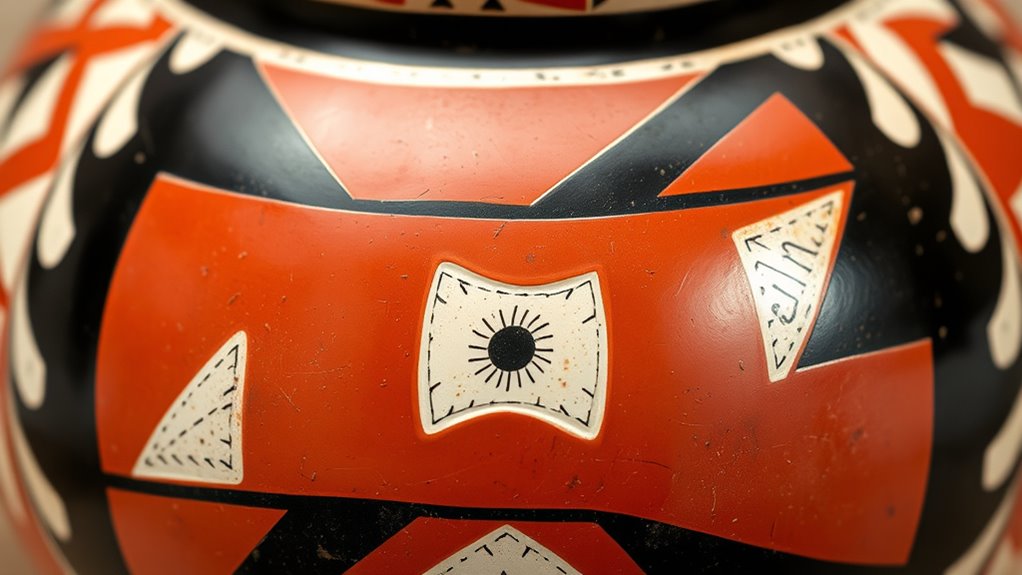
You’ll discover that Native American potters use natural pigments and dyes to create vibrant designs. Incised and carved patterns add texture and depth, while painted motifs and symbols convey cultural meanings. These techniques showcase the skill and artistry behind each piece. Additionally, the use of self-watering plant pots demonstrates how traditional methods of craftsmanship can inspire modern innovations in design and functionality.
Natural Pigments and Dyes
Native American potters often relied on natural pigments and dyes sourced from their environment to create vibrant decorations. They carefully extracted these plant dyes and minerals to achieve rich colors, enhancing their pottery’s visual appeal. These natural pigments offer earthy reds, deep blacks, and warm browns, applied through painting or brushing techniques. You might see how they used crushed minerals for vibrant turquoise or indigo plants for deep blue shades. The process involved preparing clay slips mixed with plant dyes or mineral powders to create contrasting patterns. These methods allowed for detailed, durable designs that reflected cultural symbolism. The use of natural pigments and plant dyes guaranteed their pottery remained both beautiful and connected to their surroundings. Additionally, wall organization techniques could be integrated to display their decorated pottery prominently, blending functionality with traditional aesthetics. This tradition highlights their resourcefulness and deep bond with nature.
Incised and Carved Patterns
Incised and carved patterns are prominent decorative techniques that Native American potters used to add intricate designs to their pottery. You work with carefully sourced clay, often choosing specific types for their durability and workability during ceramic firing. Using sharp tools, you carve lines and motifs into the clay surface before firing, revealing contrasting layers or textures that enhance the visual appeal. The process requires skill to guarantee the patterns remain intact through the high temperatures of ceramic firing. These techniques allow for detailed geometric, symbolic, or nature-inspired designs that are integral to cultural storytelling. Your craftsmanship reflects a deep understanding of the clay’s properties and the firing process, making certain your patterns withstand time and preserve the rich traditions of Native American pottery. Additionally, mastery of these techniques often involves understanding the materials used in decoration, ensuring the durability and vibrancy of the intricate patterns over generations.
Painted Motifs and Symbols
Have you ever wondered how Native American artisans bring their pottery to life with vibrant stories and symbols? They use painted motifs and symbols to convey ceremonial symbolism and storytelling imagery. These decorations are often created with natural mineral pigments, which are carefully applied with brushes or sticks. The designs include intricate geometric patterns, stylized animals, and spiritual symbols that hold cultural significance. You might notice bold lines and contrasting colors that emphasize the motifs’ meanings. Some artisans incorporate symbols representing rain, fertility, or protection, making each piece a narrative. This technique transforms functional pottery into a canvas of cultural expression, preserving traditions across generations. The painted motifs serve both aesthetic and spiritual purposes, creating a lasting visual language. Additionally, personality traits of the artists can influence the style and complexity of the decorations they create.

Underglaze Color Pigment Set 24 Colors Ceramic Pigments Pottery Glaze Painting DIY Crafts for Kids Adults Artists- Style B
【VIBRANT COLOR SELECTION】: Features 24 assorted underglaze colors in 2ml containers, providing a diverse palette for various ceramic…
As an affiliate, we earn on qualifying purchases.
As an affiliate, we earn on qualifying purchases.
Cultural Significance of Color Choices
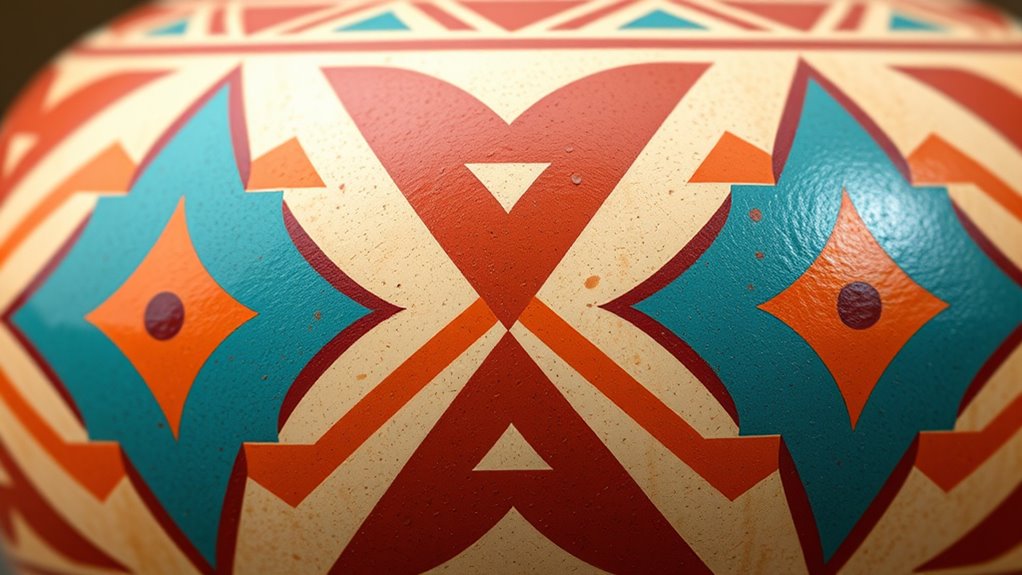
Color choices in Native American pottery often carry deep cultural meanings, reflecting spiritual beliefs, social status, and tribal identity. You’ll find that specific colors hold ceremonial significance, used in rituals and sacred events to honor spirits or mark important occasions. For example, certain tribes assign particular colors to represent elements like water or earth, reinforcing spiritual connections. Additionally, color distinctions often indicate gender roles—women might use particular hues for everyday ware, while men reserve others for ceremonial pieces. These choices help communicate social distinctions and cultural values. By understanding the significance behind these colors, you gain insight into the community’s worldview and traditions. Your appreciation deepens as you see how color choices serve as a visual language that preserves and expresses cultural identity. Recognizing the symbolic meanings of these colors enriches your understanding of the artistry and cultural heritage embedded in Native American pottery.
Regional Styles and Variations
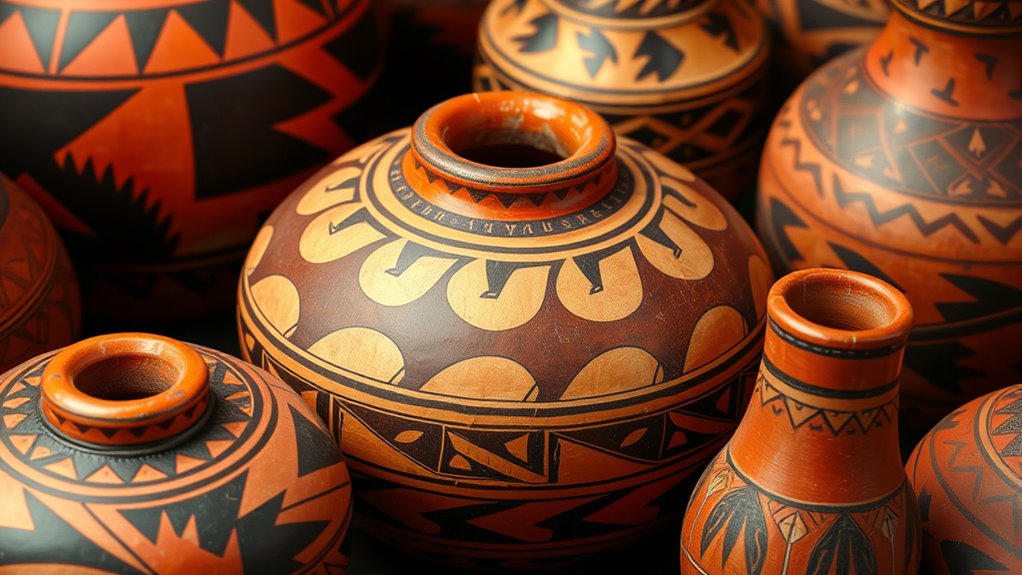
Native American pottery showcases a wide variety of regional styles and variations that reflect each tribe’s unique cultural heritage and environmental influences. You’ll notice differences in form, decoration, and techniques used across regions. For example, some tribes emphasize ceramic stabilization to strengthen their vessels, while others focus on intricate glazing techniques to add color and texture. These variations often reveal local materials and environmental conditions, shaping the pottery’s appearance. You might see smooth, polished surfaces in one area or bold painted patterns in another. Each style tells a story of tradition and environment. Data-driven innovations also influence contemporary pottery techniques, blending traditional styles with modern technology to preserve cultural identity.
Contemporary Adaptations and Preservation
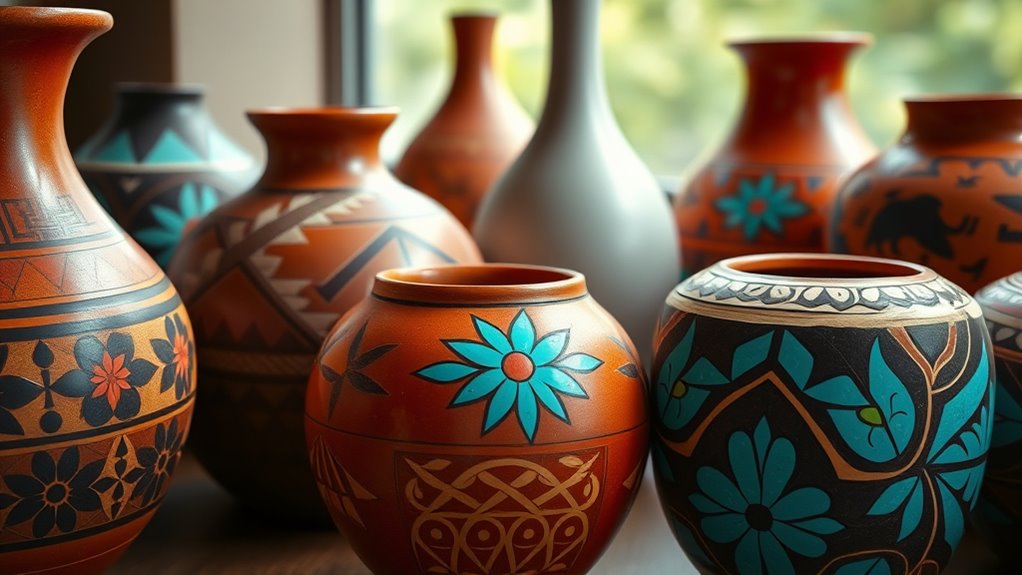
Contemporary Native American artists actively adapt traditional pottery techniques to keep their cultural heritage alive while innovating for modern audiences. They incorporate modern techniques like electric kilns and new glazing methods, which improve durability and design possibilities. Many artists also embrace digital preservation, scanning and documenting their work to protect and share their cultural knowledge globally. This approach not only preserves traditional patterns and symbols but also allows for wider recognition and appreciation of Native pottery. Some artists blend old and new styles, creating innovative pieces that honor their heritage while appealing to contemporary tastes. Additionally, efforts to protect cultural heritage through education and community engagement help ensure these traditions are passed down and celebrated. Through these adaptations, Native American pottery remains a vibrant, evolving art form, ensuring future generations can connect with and celebrate their cultural traditions in a modern world.
Frequently Asked Questions
How Do Native American Pottery Styles Influence Modern Ceramics?
Native American pottery styles influence modern ceramics by inspiring your artistic innovation and deepening your understanding of cultural symbolism. You can incorporate traditional patterns, motifs, and techniques to add authenticity and meaning to your work. By studying these styles, you’ll appreciate how they blend functional art with storytelling, allowing you to create pieces that honor Native traditions while expressing your own creativity. This connection enriches your craft and broadens your artistic horizons.
Are There Any Specific Rituals Associated With Creating Decorated Pottery?
You might wonder if creating decorated pottery involves special rituals. Often, it does. Ceremonial practices are woven into the process, with artists channeling spiritual symbolism into each piece. These rituals honor ancestors and invoke protection or blessings. As you craft, you become part of a sacred tradition, where every stroke and pattern carries deep meaning, transforming a simple vessel into a powerful symbol of cultural identity and spiritual connection.
What Are the Most Endangered Native American Pottery Traditions?
You should know that many Native American pottery traditions are endangered due to cultural preservation challenges. For example, the Acoma and Zuni pottery styles face declining practice as younger generations lose interest or face fewer opportunities to learn. These heritage challenges threaten the continuation of unique decorative techniques, making it essential to support efforts that preserve these artistic traditions, ensuring they survive and thrive for future generations.
How Do Younger Artisans Learn Traditional Decoration Techniques?
You learn traditional decoration techniques through hands-on methods like learning workshops and apprenticeship programs. As the saying goes, “You can’t teach an old dog new tricks,” but young artisans prove otherwise by immersing themselves in community-led training. They observe elders, practice skills, and participate in cultural events, preserving these techniques. This active involvement guarantees that these rich traditions stay alive, passing from generation to generation with authenticity and respect.
Are There Legal Protections for Native American Pottery Motifs?
Yes, there are legal protections for Native American pottery motifs through cultural heritage laws and intellectual property rights. You can’t simply copy or sell designs that hold cultural significance without permission, as these protections help preserve traditional artistry and respect cultural heritage. By defending these motifs legally, Native communities maintain control over their cultural expressions, ensuring their unique traditions are respected and not exploited.
Conclusion
As you explore Native American pottery, you’re uncovering a tapestry woven with stories, symbols, and colors that dance across the clay like whispers from the past. Each pattern and hue is a brushstroke of culture, a heartbeat echoing through time. By appreciating these intricate designs, you become part of a living tradition, celebrating craftsmanship that’s as enduring as the mountains and as vibrant as a sunset. Keep their stories alive—let their artistry inspire your own creative journey.