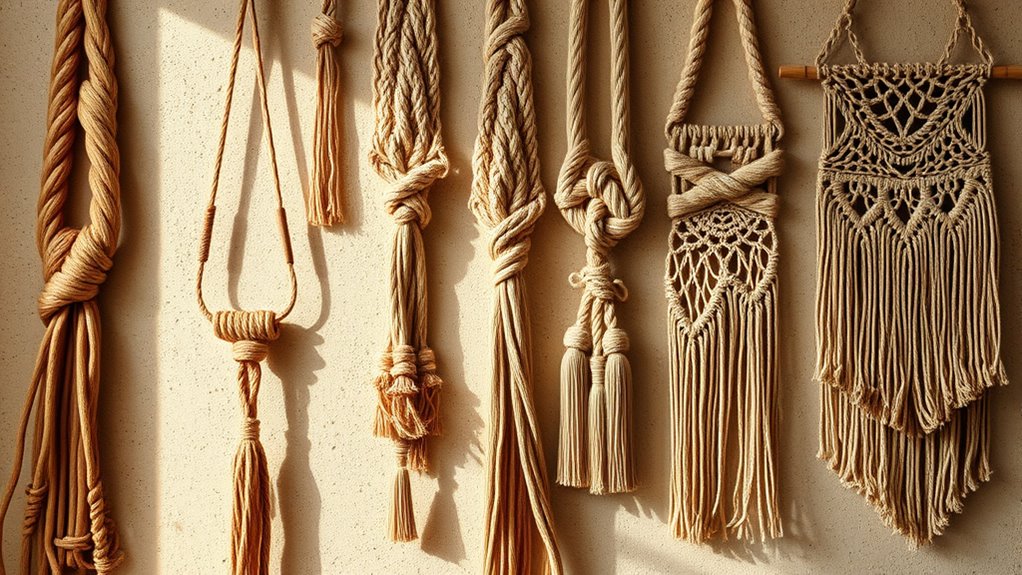

Macramé started as a sailor’s knotting craft used for practical purposes like netting, belts, and repairs during voyages. Over time, it spread through maritime trade, inspiring regional styles and decorative textile art. During the Renaissance, it became more ornate, used for clothing and home décor by the wealthy. Today, it’s embraced by the boho movement, blending old maritime techniques with modern aesthetics. Explore further to discover how this craft evolved from sailors’ tools to a popular decorative trend.

Get furniture and decor delivered free with Prime
- Fast, free delivery on millions of items
- Prime Video, Amazon Music and more included
- Member-only deals all year
Key Takeaways
- Originated as a sailor’s textile craft using knotting techniques for practical maritime purposes.
- Spread through trade, evolving into decorative textile art with cultural significance.
- Gained popularity among aristocrats during the Renaissance for ornamental clothing and décor.
- Transitioned to modern boho styles, incorporating traditional knots into contemporary home accessories.
- Demonstrates the craft’s journey from functional sailor’s tools to popular decorative and artisanal objects.
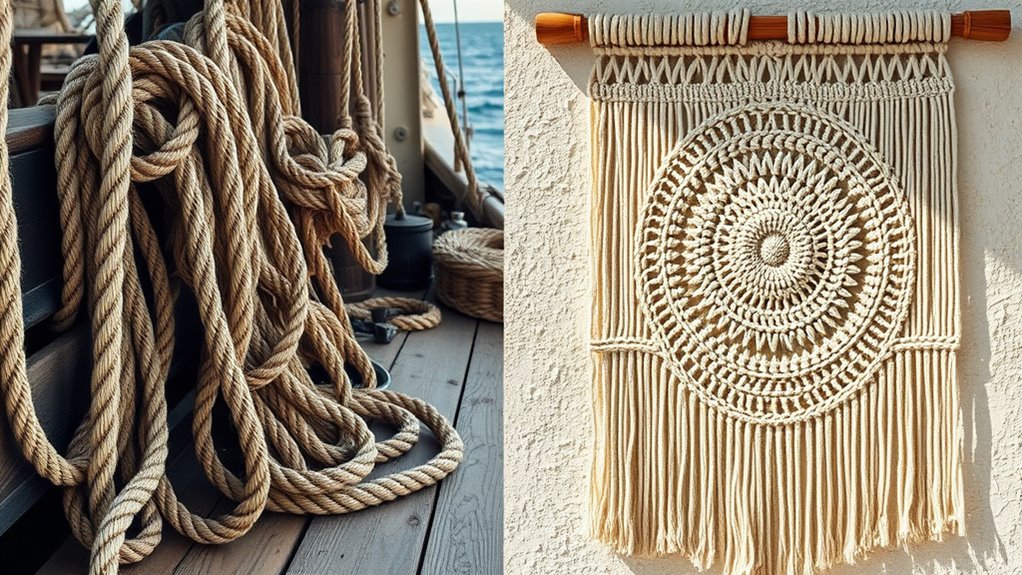
Macramé, the art of creating textiles through knotting, has a rich history that spans centuries and cultures. Its origins are deeply rooted in maritime crafts, where sailors used simple knots to create functional items like netting, belts, and decorative pieces during long voyages. These practical skills evolved into a form of textile art, showcasing both utility and beauty. As sailors traveled across oceans, they traded these knotted creations, spreading the craft to different regions and inspiring local artisans. Over time, what began as a necessity for seafarers transformed into a decorative craft, with intricate patterns and designs that reflected cultural influences.
Macramé’s maritime roots transformed simple knots into decorative textile art across cultures.
In the early days, maritime crafts relied heavily on knotting techniques that sailors mastered to repair nets or craft nautical gear. These skills proved surprisingly versatile, and sailors started making more decorative objects that could be easily carried and exchanged. As the craft spread into ports and coastal communities, it began to adapt to local styles, blending functional knots with artistic expression. Textile art from these maritime traditions often featured durable, geometric patterns, which served both aesthetic and practical purposes. These creations became symbols of craftsmanship, reflecting a community’s identity and maritime heritage.
During the Renaissance and subsequent centuries, macramé gained popularity beyond sailors, especially among aristocrats and wealthy merchants who appreciated its ornamental potential. It became a symbol of elegance and craftsmanship, often used to embellish clothing, accessories, and home décor. The craft’s association with maritime origins remained evident in the use of natural fibers like hemp, jute, and cotton, which were readily available and suited for knotting. The techniques evolved, with artisans experimenting with different knots and patterns, leading to more intricate and sophisticated textile art pieces.
Today, macramé has experienced a resurgence, especially within the boho movement, where it’s celebrated for its handcrafted, earthy aesthetic. Modern artisans draw inspiration from the craft’s nautical past, incorporating traditional knots into contemporary wall hangings, plant holders, and jewelry. Despite its modern popularity, the core techniques remain rooted in maritime craftsmanship, linking today’s boho decor to centuries-old textile art. You can see how this craft has traveled through time, from practical sailor’s tools to a popular form of artistic expression. Its evolution highlights how functional maritime crafts can transform into decorative art, connecting us to a rich history of knotting that spans cultures and centuries.
As an affiliate, we earn on qualifying purchases.
Frequently Asked Questions
What Traditional Materials Were Used in Early Macramé?
In early macramé, you mainly used natural fibers like hemp, jute, cotton, and linen, which were readily available and durable. You relied on traditional tools such as simple scissors or knives to cut the fibers and your hands to knot and weave the designs. These materials and tools helped create sturdy, functional items like textiles and decorative pieces, setting the foundation for macramé’s rich history.
How Did Macramé Influence Modern Interior Design Trends?
Did you know that over 60% of modern interior design incorporates boho decor elements? Macramé greatly influences these trends by transforming textile art into stylish wall hangings and plant hangers. You can easily add a boho touch to your space with intricate, handcrafted pieces. Its emphasis on craftsmanship and natural materials complements contemporary aesthetics, making macramé a timeless way to personalize and soften your interiors.
Are There Regional Variations in Macramé Techniques Worldwide?
Yes, there are regional variations in macramé techniques worldwide. You’ll notice different regional styles that incorporate unique cultural motifs, reflecting local traditions and aesthetics. For example, Middle Eastern macramé often features intricate patterns, while Latin American styles emphasize bold colors and geometric designs. These variations add richness and diversity, allowing you to explore a wide range of techniques and motifs that celebrate cultural heritage and craftsmanship.
What Are Common Contemporary Uses of Macramé Today?
Imagine vibrant spaces filled with intricate macramé wall hangings that dance with light and shadow, or lush greenery suspended in boho plant hangers swaying gently. Today, you see macramé used to create cozy home decor, from statement wall art to stylish plant hangers. Its versatility elevates any space, blending artistry with functionality, making your home uniquely yours with handcrafted, textured accents that invite warmth and personality.
How Did Macramé Spread From Sailors to Mainstream Fashion?
You see, macramé spread from sailors practicing maritime crafts to mainstream fashion through trade routes and cultural exchange. As sailors traveled, they shared their textile history, including knotting techniques, with communities worldwide. These skills evolved into decorative and functional art forms, gaining popularity in the 20th century. Today, you’ll find macramé in everything from home decor to fashion accessories, showcasing its rich maritime origins and timeless appeal.
Conclusion
Now that you know the incredible journey of macramé from sailors’ knots to boho chic, you might feel like you’ve uncovered the secret to timeless artistry. This craft has survived centuries of storms, fashion trends, and cultural shifts, and it’s not stopping anytime soon. So go ahead—grab some cords, get knotting, and become part of this unstoppable, legendary tradition that’s woven into the very fabric of history itself!
Halloween Picks
halloween
As an affiliate, we earn on qualifying purchases.