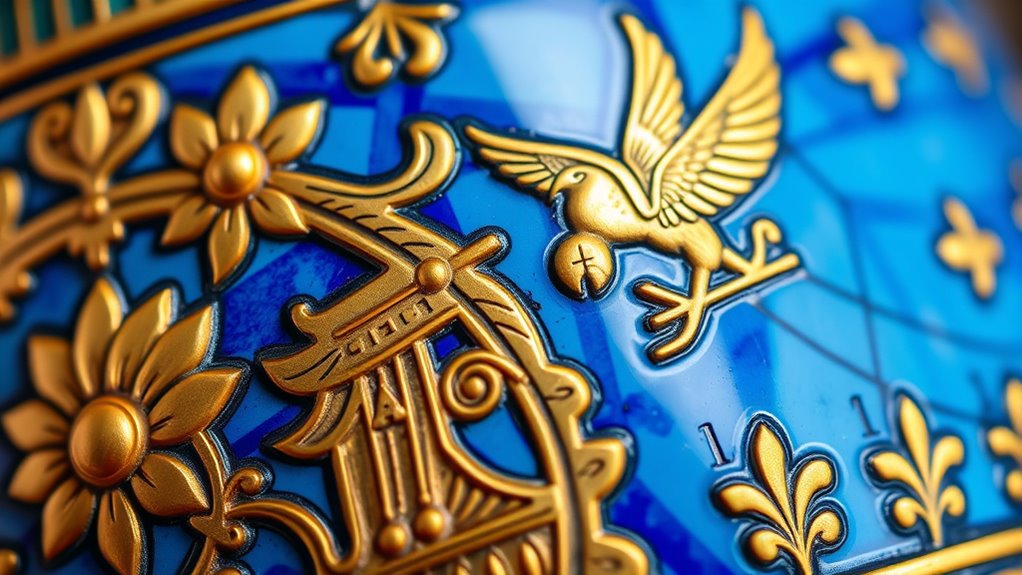

Egyptian decorative arts are filled with symbols that express deep spiritual and cultural meanings. You’ll see motifs like the Ankh, representing life and immortality, and the lotus and papyrus, symbolizing rebirth and renewal. The scarab beetle stands for transformation and protection, while hieroglyphs combine art with storytelling. Colors and materials like gold, lapis lazuli, and green enhance these symbols’ meanings. Discover how these motifs reflect Egypt’s beliefs in life, death, and divine power as you explore further.

Get furniture and decor delivered free with Prime
- Fast, free delivery on millions of items
- Prime Video, Amazon Music and more included
- Member-only deals all year
Key Takeaways
- Egyptian motifs like the Ankh, Lotus, and Papyrus symbolize life, rebirth, and spiritual renewal in art and funerary contexts.
- Symbols such as the Scarab beetle and Crook and Flail represent transformation, divine power, and authority.
- Hieroglyphic writing combines imagery and text, serving as a visual storytelling and artistic communication tool.
- Animal motifs like lions and falcons embody divine qualities, strength, and protection in decorative art.
- Colors and materials, including gold, lapis lazuli, and malachite, enhance symbolic meanings of eternity, rebirth, and divine power.
Egyptian Egyptian motifs wall art
As an affiliate, we earn on qualifying purchases.
As an affiliate, we earn on qualifying purchases.
The Significance of the Ankh in Egyptian Art
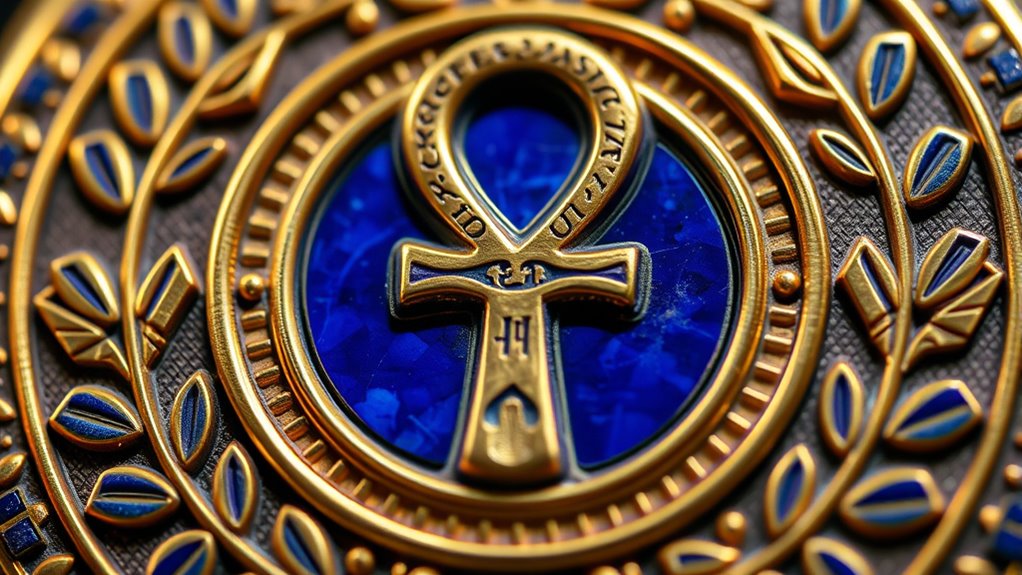
The ankh, often seen in Egyptian art, symbolizes life and immortality. As a key element of ancient Egyptian iconography, it appears in various artifacts, tombs, and religious scenes, emphasizing its importance. Its design, a cross with a loop at the top, conveys a sense of eternal life. When you examine its use, you’ll notice the symbolic color palettes that accompany it often include gold, representing divine power, and vibrant hues like blue and green, symbolizing rebirth and fertility. These colors enhance the ankh’s spiritual significance, reinforcing its role as a conduit to the divine. Understanding the ankh’s placement and colors helps you appreciate how ancient Egyptians expressed their beliefs about life, death, and the afterlife through carefully chosen motifs and palettes. Additionally, the use of specific motifs in conjunction with the ankh often underscores themes of protection and divine blessing in Egyptian art.
Lotus and Papyrus: Symbols of Life and Rebirth

You see the lotus and papyrus frequently featured in Egyptian art, where they symbolize life and rebirth. Their sacred botanical significance connects them to spiritual renewal, making them essential in ritual contexts. Exploring their artistic and symbolic roles reveals much about ancient Egyptian beliefs and practices. Additionally, their depiction often reflects iconography that conveys deeper spiritual meanings within Egyptian culture.
Sacred Botanical Significance
Have you ever wondered why the lotus and papyrus hold such profound significance in Egyptian art? These plants symbolize life and rebirth, rooted in their sacred botanical roles. Think of them as more than decorative motifs; they embody the spiritual essence of renewal. To understand their importance:
- The lotus, a sacred tree, blooms in muddy waters, representing purity and rebirth.
- Papyrus, a medicinal plant, was essential in daily life and spiritual rituals.
- Both plants served as symbols of eternal life, often depicted in tombs and temples to invoke rebirth in the afterlife.
- Their use in symbolic communication highlights their role in conveying spiritual messages throughout Egyptian history.
Their presence highlights Egypt’s deep connection to nature’s cycles, emphasizing their role as sacred trees and medicinal plants crucial to spiritual and physical well-being.
Artistic Representation in Art
In Egyptian art, the lotus and papyrus are more than decorative elements; they serve as powerful symbols of life and rebirth. You’ll notice these motifs frequently appear in ceremonial attire, where they adorn clothing and headdresses, emphasizing divine renewal. Architectural ornamentation also highlights their significance, with carvings and painted murals showcasing these plants to evoke vitality and regeneration. The lotus often appears in symmetrical patterns, symbolizing the cycle of rebirth, while papyrus reeds emphasize the connection to the Nile’s life-giving waters. By integrating these motifs into various art forms, Egyptians visually express their beliefs in renewal and eternal life. Their use in ceremonial and architectural contexts underscores the importance of nature’s symbols in conveying spiritual concepts across different artistic representations. Additionally, these motifs are often linked to AI’s impact on cultural preservation, illustrating how ancient symbols continue to influence modern interpretations of identity and spirituality.
Symbolic Meaning in Rituals
The lotus and papyrus plants hold profound symbolic meaning in Egyptian rituals, representing life, renewal, and rebirth. These ancient symbols carry deep ritual significance, often appearing in ceremonies and funerary practices. When you observe their use, imagine how they embody the cycle of life and the promise of renewal after death. To visualize their impact:
- The lotus blooms at dawn, symbolizing rebirth and the sun’s daily renewal.
- The papyrus scrolls, made from papyrus stalks, signify knowledge and eternal life.
- Both plants are frequently depicted in ritual artifacts, emphasizing their role in spiritual rebirth and renewal.
Their use reflects a core aspect of ancient symbolism, reminding you of the eternal cycle of life, death, and rebirth in Egyptian beliefs.
The Scarab Beetle: A Motif of Transformation and Protection
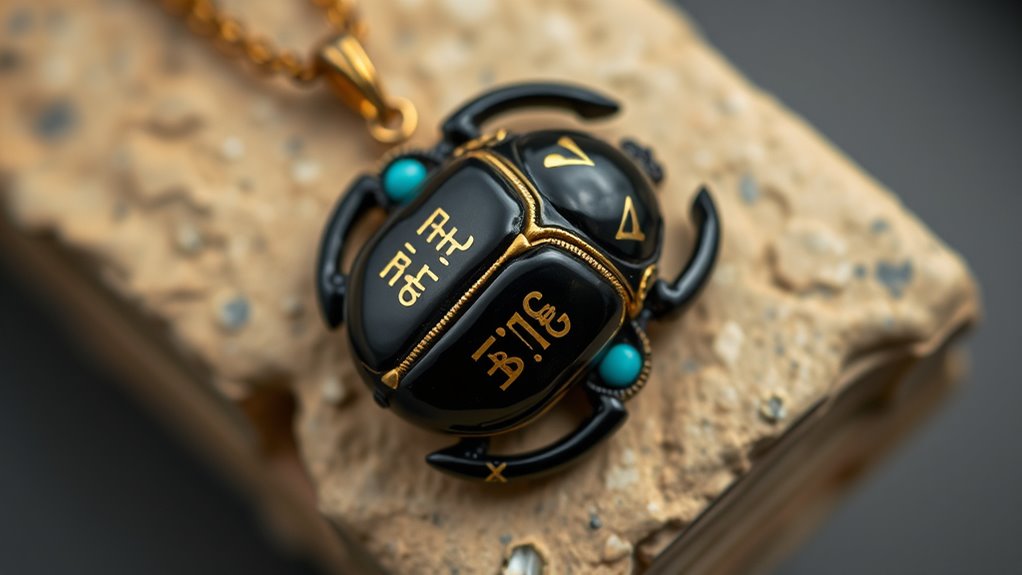
Because of its unique behavior and symbolism, the scarab beetle became a powerful motif in Egyptian decorative arts, representing both transformation and protection. The scarab beetle, known for rolling dung into balls, symbolizes renewal and rebirth, embodying transformational symbolism. Artists depicted it on amulets, jewelry, and funerary objects to invoke protection and safeguard the deceased in the afterlife. Its rounded shape and dynamic motion convey the cycle of life, death, and rebirth, reinforcing its role as a symbol of continual renewal. The scarab’s association with the sun god Ra further enhances its protective qualities, believed to ward off evil. Additionally, the material used in creating scarab amulets often contributed to their protective and symbolic powers. As a motif, it connects the physical and spiritual domains, reminding you of the eternal cycle of transformation and divine safeguarding.
Hieroglyphic Writing as Visual Art
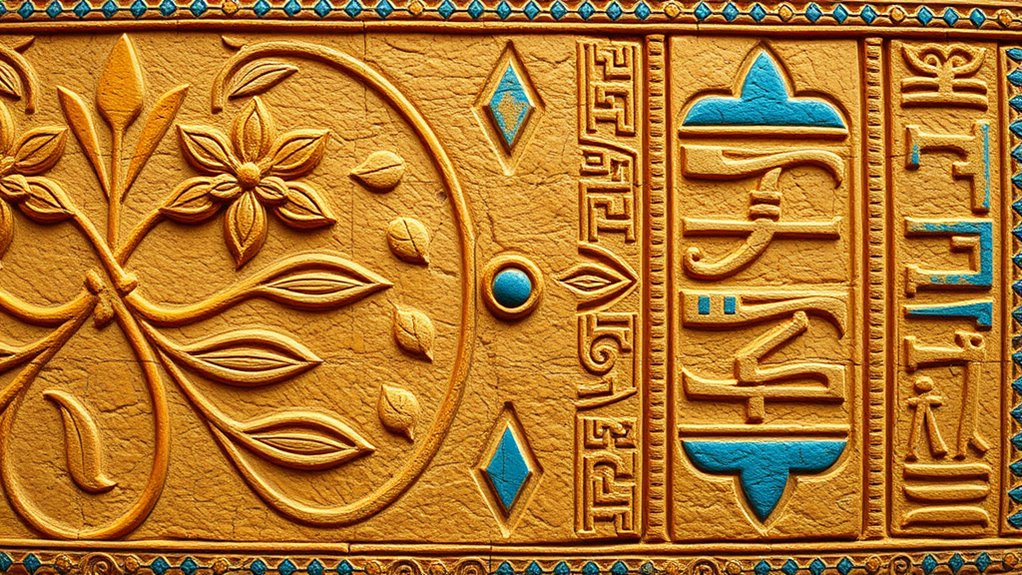
Egyptian decorative arts often integrate symbolic motifs like the scarab beetle to convey deeper meanings, but their visual language extends beyond symbols to the very structure of writing itself. Hieroglyphic writing serves as a form of visual art, blending storytelling with imagery. As you explore this system, you’ll notice how hieroglyphic storytelling uses images to depict actions, objects, and ideas seamlessly. The evolution of this visual language reflects Egypt’s desire to encode complex concepts into elegant symbols. To understand this, consider:
Hieroglyphics blend storytelling and imagery, transforming writing into visual art that encodes complex ideas elegantly.
- Symbols representing sounds, not just ideas
- Carved inscriptions blending text with imagery
- Artistic compositions that narrate stories visually
This integration of form and meaning elevates hieroglyphics from mere writing to a sophisticated art form. Understanding hieroglyphs as a visual language reveals how the Egyptians prioritized both communication and artistic expression in their decorative arts.
Depictions of Gods and Goddesses in Decorative Objects
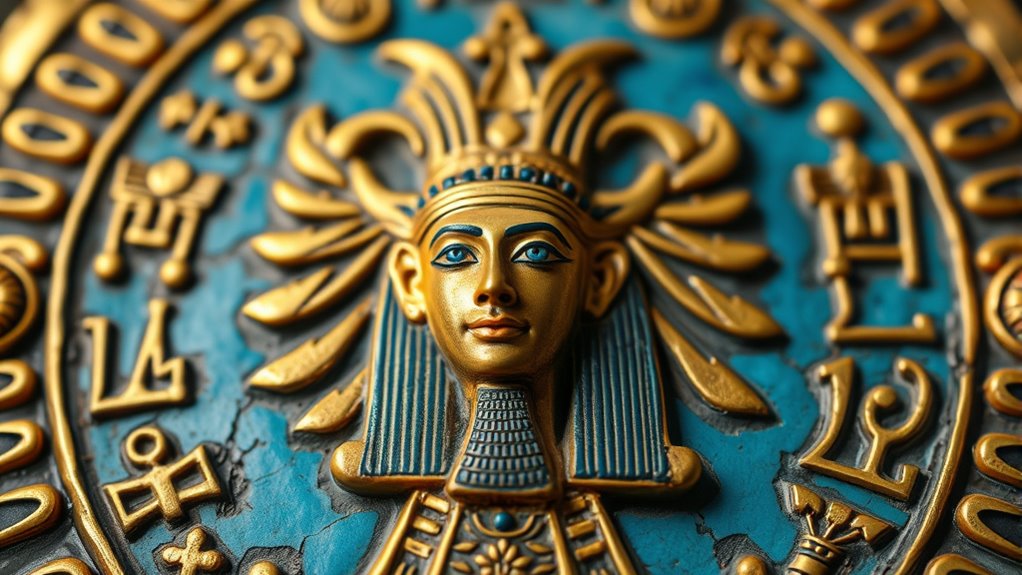
Depictions of gods and goddesses adorn many decorative objects, serving both as expressions of faith and symbols of divine power. These images often tell stories through hieroglyphic storytelling, blending imagery with symbolic meaning. You notice that each figure embodies divine symbolism, conveying specific attributes like protection, fertility, or kingship. Artists carefully depict deities such as Osiris, Isis, or Hathor, emphasizing their divine roles. The objects serve as sacred talismans, connecting the physical and spiritual worlds. The following table illustrates common deities and their symbolic representations:
| Deity | Common Symbols | Significance |
|---|---|---|
| Osiris | Crook, flail, atef crown | Resurrection, afterlife |
| Isis | Throne, scepter | Motherhood, magic |
| Hathor | Cow horns, scepter | Love, joy |
| Anubis | Jackal head, scales | Mummification, protection |
| Bastet | Cat, sistrum | Home, fertility |
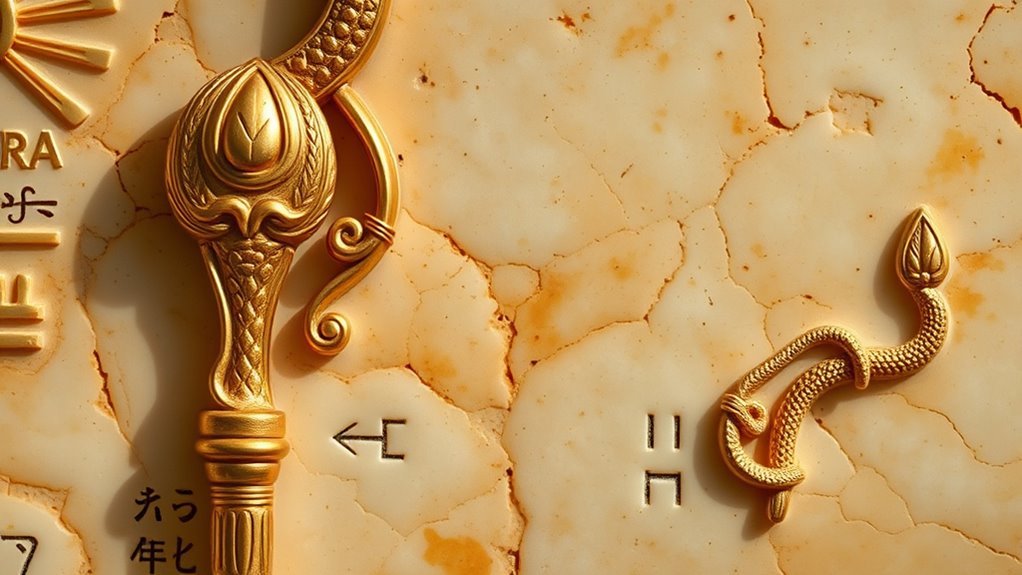
The crook and flail are more than decorative objects; they symbolize royal authority and leadership in Egyptian culture. You’ll see these symbols in rituals, where they represent the divine power of the pharaoh. Their presence underscores the connection between spiritual authority and political rule.
Symbolic Significance in Rituals
The crook and flail are powerful symbols that convey authority and divine legitimacy during rituals in ancient Egypt. They embody cultural symbolism and ritualistic symbolism, reinforcing the ruler’s divine right. When you observe their use, you notice three key aspects:
- They are held by gods and pharaohs during ceremonies, emphasizing their divine connection.
- The crook symbolizes shepherding and care, representing the ruler’s role as protector.
- The flail signifies authority over agriculture and fertility, linking the ruler to sustenance and prosperity.
- Their prominent display during rituals highlights their importance in visual storytelling and symbolic communication.
Together, these symbols elevate the ritual’s significance, reminding participants of the ruler’s divine role and reinforcing societal order through visual language rooted in cultural and ritualistic symbolism.
Representation of Royal Authority
The crook and flail serve as immediate visual indicators of royal authority in ancient Egypt, symbolizing the ruler’s power and divine mandate. These objects are key royal insignia, representing the king’s role as shepherd and protector of his people. When displayed in art and sculpture, they reinforce the image of the pharaoh’s supreme authority and connection to the gods. The crook signifies leadership and care, while the flail suggests strength and discipline. You’ll often see these symbols in throne symbolism, emphasizing the ruler’s divine right to govern. Their presence underscores the idea that the pharaoh’s authority is both earthly and divine, making them essential elements in conveying the majesty and legitimacy of Egyptian kingship.
Use of Colors and Materials in Symbolic Contexts
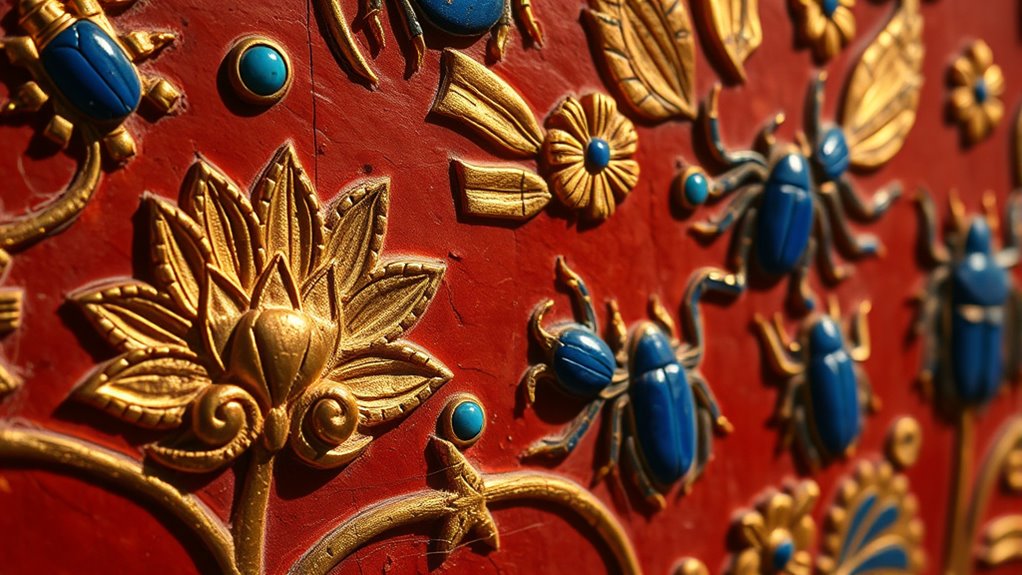
Colors and materials in Egyptian decorative arts carry deep symbolic meanings that reflect spiritual beliefs, social status, and cultural values. Understanding color symbolism and material significance helps you grasp their importance. A keen awareness of home theatre technology can also enhance your viewing experience by choosing the right projector and setup for optimal image quality. 1. Lapis Lazuli and Gold**: These materials symbolize divine power and eternity, often used in royal artifacts to convey authority. 2. Green and Malachite: Green represents rebirth and fertility, highlighting renewal in both life and afterlife. 3. Red and Carnelian**: Red signifies energy, protection, and life force, making it common in amulets and ritual objects.
The Role of Animals in Egyptian Decorative Motifs
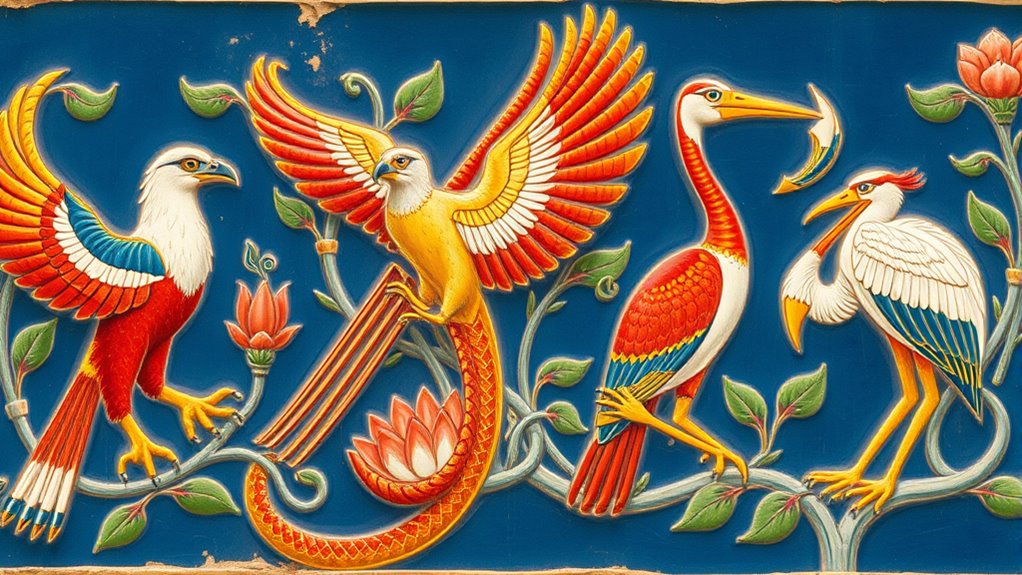
Animals played a vital role in Egyptian decorative arts, embodying divine qualities and conveying symbolic messages. You’ll notice animal symbolism appears throughout their decorative motifs, from jewelry to wall carvings. These motifs often depict animals like cats, lions, falcons, and crocodiles, each representing specific traits such as protection, power, or fertility. For example, the lion symbolizes strength and kingship, while the falcon signifies the sky god Horus. By integrating these animals into their art, Egyptians expressed complex spiritual ideas and reinforced social hierarchies. The animal motifs are not random; they serve as visual links to divine forces and natural forces. Understanding symbolism helps us appreciate how these animals elevate decorative motifs into meaningful symbols of faith, power, and protection. As you explore Egyptian art, you’ll see how these symbolic animals elevate decorative motifs into meaningful symbols of faith, power, and protection.
Ritual and Funerary Symbols in Tomb Art
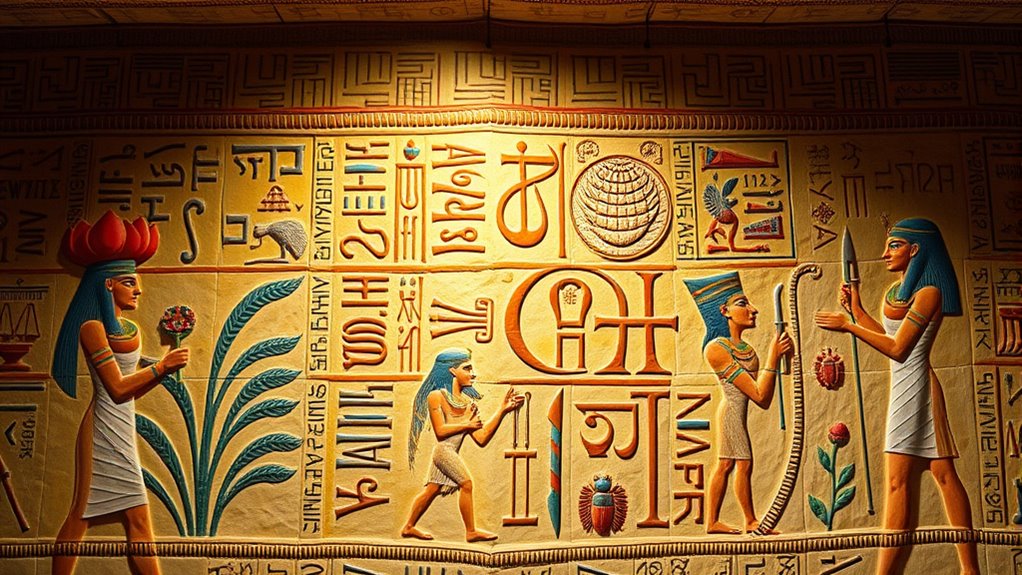
In ancient Egyptian tomb art, ritual and funerary symbols serve as essential tools to guarantee a safe journey to the afterlife. These symbols reflect ancient burial rituals and help guide the deceased. You’ll notice:
- Offering scenes: Depicting food, drink, and goods to nourish the soul in the afterlife.
- Funeral procession symbols: Including boats and banners that represent the soul’s journey and protection.
- Protective amulets and spells: Inscribed to ward off evil and ensure divine favor during the passage.
- The materials used in tomb art, such as ceramic and recycled products, often carried symbolic meaning related to renewal and eternity.
These motifs reinforce the importance of proper rituals and spiritual safeguards. They serve as visual reminders of the customs performed to secure the deceased’s passage, emphasizing the spiritual significance of the tomb’s artwork in ensuring eternal life.
The Influence of Nature and the Afterlife on Design Elements
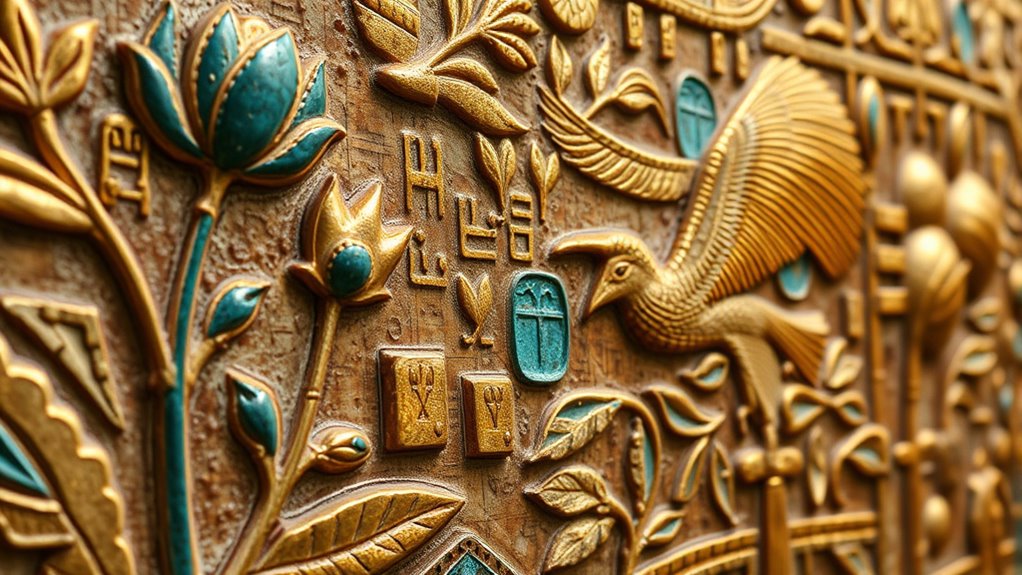
The ancient Egyptians drew deep inspiration from nature and their beliefs about the afterlife when designing their artwork and artifacts. You’ll notice how flora symbolism plays a crucial role, with lotus and papyrus representing rebirth and renewal. These plants often appear in jewelry, carvings, and tomb decorations, emphasizing the connection between life and the divine. Celestial motifs also dominate their designs, illustrating stars, the sun, and the moon to symbolize eternity and the journey of the soul. These elements serve not just decorative purposes but reinforce spiritual concepts, guiding the deceased toward the afterlife. By blending natural imagery with celestial symbols, the Egyptians created a visual language that encapsulated their worldview—where nature and the cosmos intertwined in the ongoing cycle of life, death, and rebirth, and symbolic motifs played a key role in conveying these profound ideas.
Frequently Asked Questions
How Did Egyptian Motifs Evolve Over Different Dynasties?
As you explore Egyptian motifs, you’ll notice they evolved with Dynastic shifts, reflecting shifts in power and culture. Despite these changes, there’s remarkable Artistic continuity, with symbols like the ankh and scarab remaining central. Over time, motifs became more intricate, blending traditional meanings with new influences. This evolution showcases how Egyptian art maintained its core symbolism while adapting to new dynasties, preserving cultural identity through consistent visual language.
What Symbols Were Used to Depict Egyptian Royalty?
You see, Egyptian royalty was depicted with symbols so powerful, they could almost control the universe! They used the royal emblem, like the mighty ankh and the scepter, to symbolize life and authority. Crown symbols, such as the Pschent, combined the red and white crowns, representing unification and supreme power. These motifs made the pharaohs appear divine, eternal, and invincible—truly larger-than-life figures etched in history forever.
How Are Egyptian Decorative Arts Preserved Today?
You can see Egyptian decorative arts preserved today through careful restoration techniques that stabilize and repair artifacts, ensuring their longevity. Museums and experts often create modern reproductions to make these works accessible and protect original pieces. By using advanced methods and respectful conservation practices, you help maintain Egypt’s artistic heritage for future generations, allowing you to appreciate the intricate motifs and symbolism that define this ancient culture.
What Is the Significance of Color Choices in Egyptian Art?
They say “a picture is worth a thousand words,” and in Egyptian art, color choices speak volumes. You see, color psychology and cultural symbolism guide their selections, reflecting beliefs, social status, and spiritual meanings. Bright hues like blue symbolize divinity, while green signifies fertility. Your understanding of these colors helps you appreciate how Egyptians conveyed complex messages and values through their deliberate, meaningful use of color in art.
How Did Egyptian Motifs Influence Later Art and Design Styles?
You see that Egyptian motifs heavily influenced later art and design styles through their use of ancient symbolism and distinctive patterns. These motifs, like the lotus or the scarab, became symbols of rebirth and protection, inspiring countless cultures. Their stylistic influence persists in modern decorative arts, architecture, and jewelry, showcasing how ancient Egyptian symbolism continues to shape aesthetic expressions across centuries and civilizations.
Conclusion
You now hold the secret to Egypt’s breathtaking artistry, where every motif pulses with divine power and eternal meaning. These symbols aren’t just decorations—they’re the very heartbeat of an ancient civilization’s soul. By understanding these motifs, you decipher a universe of mystique, protection, and rebirth. Your appreciation transforms you into a guardian of history’s most mesmerizing artistry, forever connected to the timeless magic that still whispers through Egypt’s glorious, eternal designs.
Halloween Picks
halloween
As an affiliate, we earn on qualifying purchases.