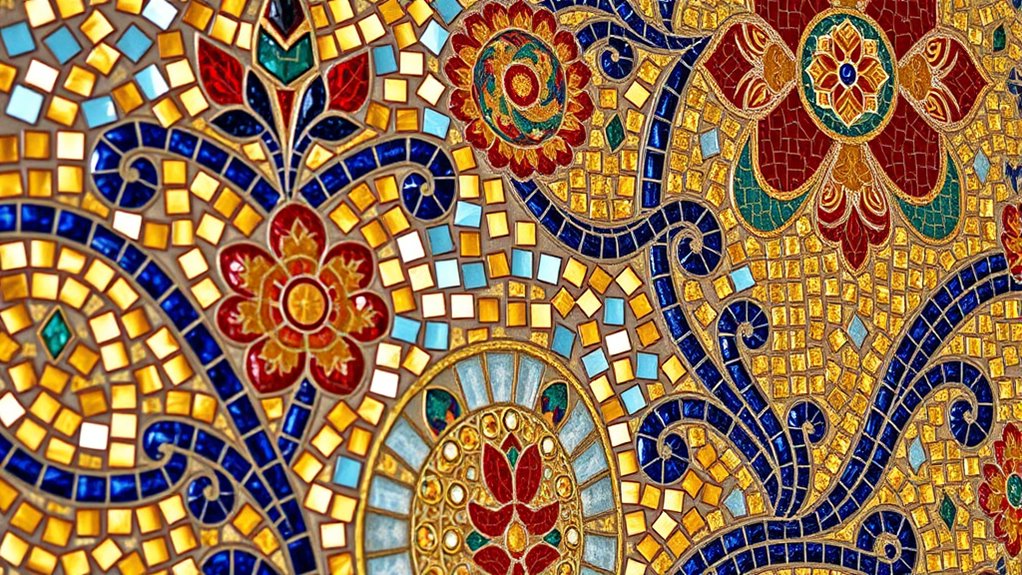

Byzantine mosaics influence modern design through their intricate patterns, vivid colors, and rich symbolism that convey spiritual and divine themes. You’ll notice their impact in religious spaces, architecture, and even in contemporary art and fashion. Their use of gold, detailed iconography, and geometric motifs inspire aesthetic choices today. Exploring the history and techniques behind Byzantine mosaics reveals how their legacy continues to shape visual storytelling and design innovation—if you want to uncover more, keep exploring this fascinating art form.

Get furniture and decor delivered free with Prime
- Fast, free delivery on millions of items
- Prime Video, Amazon Music and more included
- Member-only deals all year
Key Takeaways
- Byzantine mosaics utilize gold tesserae and vibrant colors to create luminous, spiritually symbolic imagery that influences religious art and architecture.
- Their intricate geometric patterns and iconography serve as visual sermons, inspiring modern religious and decorative design.
- The use of materials like gold leaf and glass tesserae set a standard for durability and brilliance, impacting contemporary mosaics and mixed media works.
- Byzantine motifs and color schemes are incorporated into fashion, interior decor, and digital art, blending tradition with modern aesthetics.
- Preservation and reinterpretation of Byzantine mosaics inform contemporary design approaches emphasizing spiritual symbolism and intricate craftsmanship.
As an affiliate, we earn on qualifying purchases.
Origins and Historical Development of Byzantine Mosaics
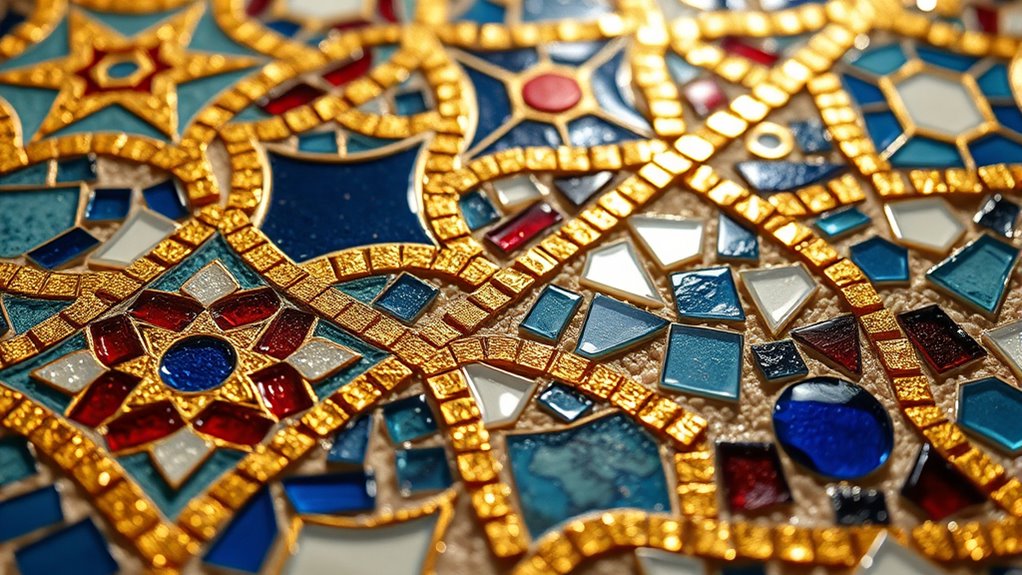
Byzantine mosaics have their roots in late antique art, evolving from earlier Roman techniques that emphasized intricate designs and religious imagery. Over time, these methods developed into distinctive Byzantine mosaic techniques, characterized by detailed iconography and radiant gold backgrounds. You’ll notice how Byzantine cultural influences shaped the themes, often depicting Christian figures and biblical stories with a sense of divine grandeur. The shift from classical Roman styles to a more spiritual and symbolic approach marked a significant evolution. As Byzantine mosaics matured, they became more than decorative art; they conveyed theological messages and spiritual authority. This blending of Roman artistic traditions with Christian symbolism laid the foundation for the stunning mosaics that continue to influence art and design today. Additionally, these mosaics serve as a testament to the enduring legacy of cultural influence in artistic expression.
Materials and Techniques Used in Creating Byzantine Mosaics
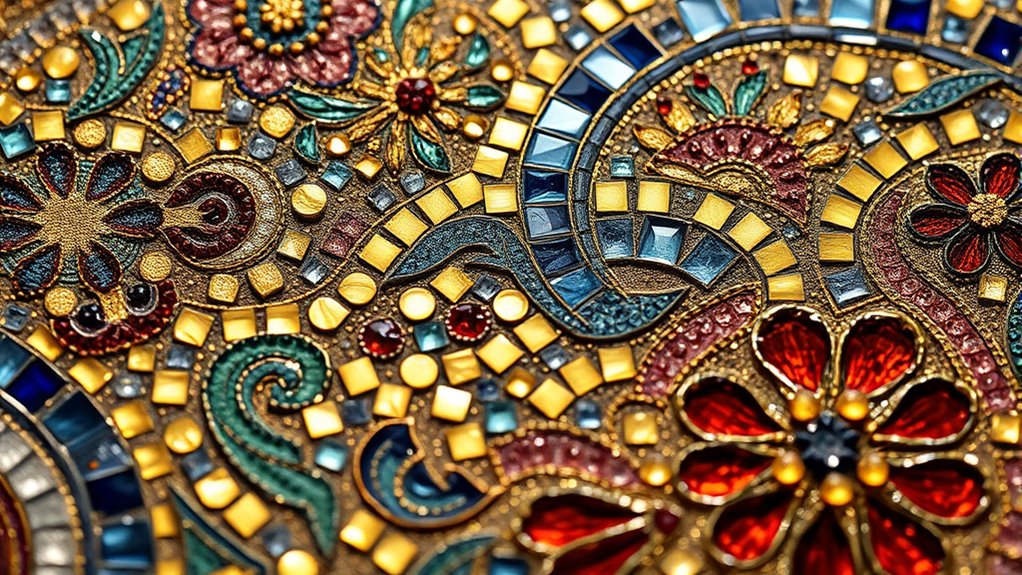
Building on their rich symbolic themes, Byzantine mosaics showcase remarkable craftsmanship through carefully chosen materials and precise techniques. You’ll notice the use of gold tesserae, which reflect divine light and elevate the spiritual tone. Artists applied lime mortar as a sturdy adhesive, ensuring durability and sharpness in detail. The placement of tesserae requires meticulous skill, creating shimmering surfaces that captivate viewers. The materials symbolize spiritual wealth and transcendence, while the techniques emphasize harmony and order. Additionally, the contrast ratio in the mosaics enhances the depth and vibrancy of the images, contributing to their mesmerizing effect.
Iconography and Symbolism in Byzantine Art
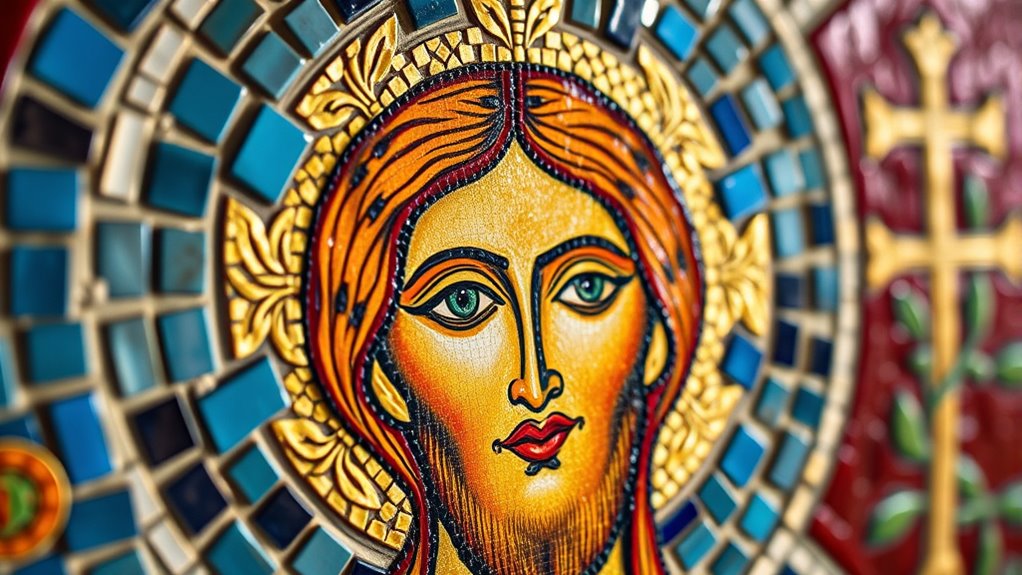
You’ll notice that Byzantine mosaics are filled with sacred imagery that conveys spiritual messages. The colors chosen aren’t random; each hue symbolizes deeper meanings, like purity or divinity. Understanding these symbols helps you appreciate the profound message behind the art. Additionally, the symbolic significance of specific motifs can reveal insights into the religious beliefs and cultural values of the Byzantine era.
Sacred Imagery Significance
Have you ever wondered why certain figures and symbols dominate Byzantine mosaics? It’s because these iconic religious motifs serve as visual sermons, conveying sacred stories and spiritual truths to believers. Every image, from Christ Pantocrator to saints, is deliberate, embodying divine authority and holiness. Sacred geometric patterns weave through these scenes, symbolizing the order and perfection of the divine sphere. These motifs aren’t just decorative—they carry deep theological meaning, guiding viewers toward reflection and devotion. By using familiar symbols and motifs, Byzantine artists connect the earthly with the divine, reinforcing spiritual messages across generations. The use of iconography in Byzantine mosaics ensures that these sacred images remain meaningful and accessible to viewers, fostering a deeper spiritual connection. This sacred imagery transforms mosaics into visual theology, making complex ideas accessible and inspiring faith through powerful, recognizable symbols.
Symbolic Color Usage
Color in Byzantine mosaics is far more than aesthetic choice; it’s a deliberate tool to convey meaning and spiritual significance. You’ll notice that specific colors carry distinct symbolic meanings, known as color symbolism, which guide viewers’ understanding of religious themes. Sacred hues like gold represent divine light and eternity, emphasizing the heavenly domain. Blue often symbolizes heaven and spiritual truth, while red signifies sacrifice, passion, or divine love. Green reflects renewal and eternal life, and white stands for purity and holiness. Byzantine artists carefully select these colors to enhance the spiritual message, making the mosaics not just decorative but deeply meaningful. By using these sacred hues, they reinforce theological concepts and inspire reverence, transforming the artwork into a visual language of faith and divine presence. Additionally, understanding the cultural context in which these mosaics were created helps deepen appreciation for their symbolic use of color and the spiritual messages conveyed.
Architectural Integration of Mosaics in Byzantine Structures
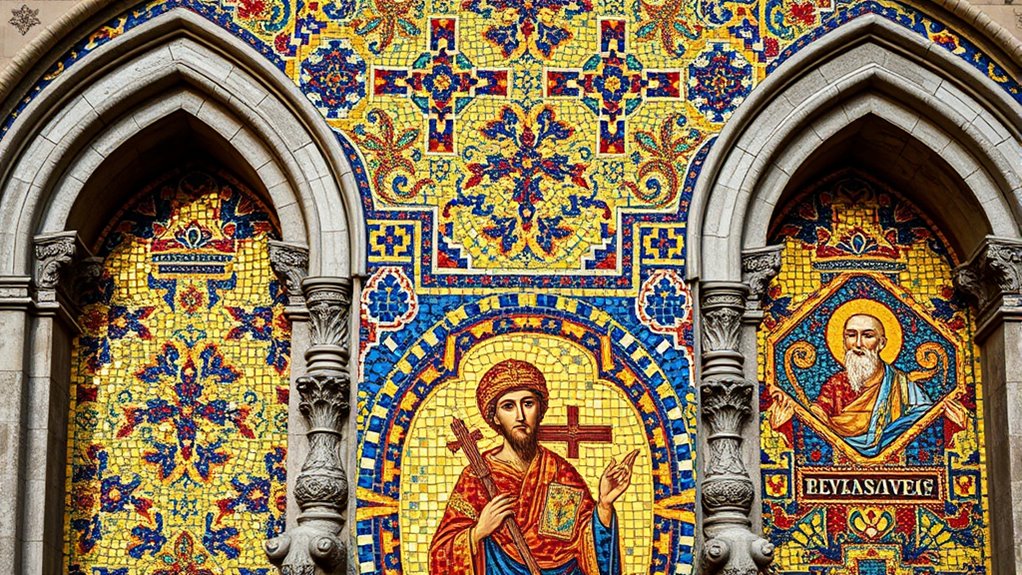
In Byzantine architecture, mosaics are seamlessly integrated into the very fabric of the structures, serving both decorative and symbolic purposes. You notice how mosaics are often embedded into walls, domes, and apses, creating a unified visual experience. This integration draws a parallel to medieval textiles, where intricate patterns are woven directly into fabric, enhancing both beauty and meaning. Byzantine architects designed their buildings to maximize the visual impact of mosaics, often placing them where natural light highlights their brilliance. The structural elements support and frame the mosaics, making them an essential part of the architecture rather than mere ornamentation. This careful integration reflects a sophisticated understanding of space, texture, and symbolism, elevating mosaics from decoration to integral components of Byzantine structural design. Additionally, the use of vertical storage solutions in Byzantine structures helped to emphasize the height and grandeur of the mosaics, creating a sense of awe and spiritual elevation.
Evolution of Byzantine Mosaics Through Different Periods
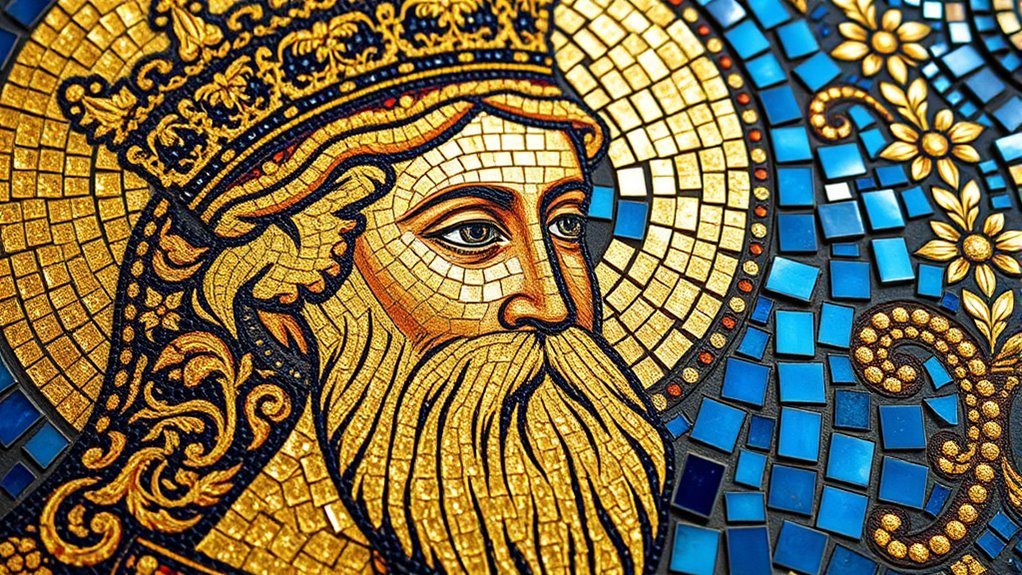
The evolution of Byzantine mosaics reflects a dynamic progression influenced by changing artistic styles, religious themes, and technological advancements. During early periods, mosaics emphasized simple, symbolic imagery with limited use of geometric patterns. As techniques improved, artists experimented with innovative tessellations, creating more complex and intricate designs. In later periods, mosaics showcased elaborate geometric patterns that enhanced visual depth and harmony, often transforming surfaces into vibrant, unified artworks. This progression also saw a shift from primarily religious motifs to more diverse decorative schemes, integrating cultural influences from surrounding regions. You can observe how each period’s mosaics became richer in texture and complexity, demonstrating an ongoing mastery of tessellation techniques. This evolution reflects both technological progress and a desire for increasingly sophisticated visual storytelling. Additionally, the incorporation of cultural influences contributed to the diversification and richness of mosaic designs across different eras.
The Artistic Legacy of Byzantine Mosaics in Religious Settings
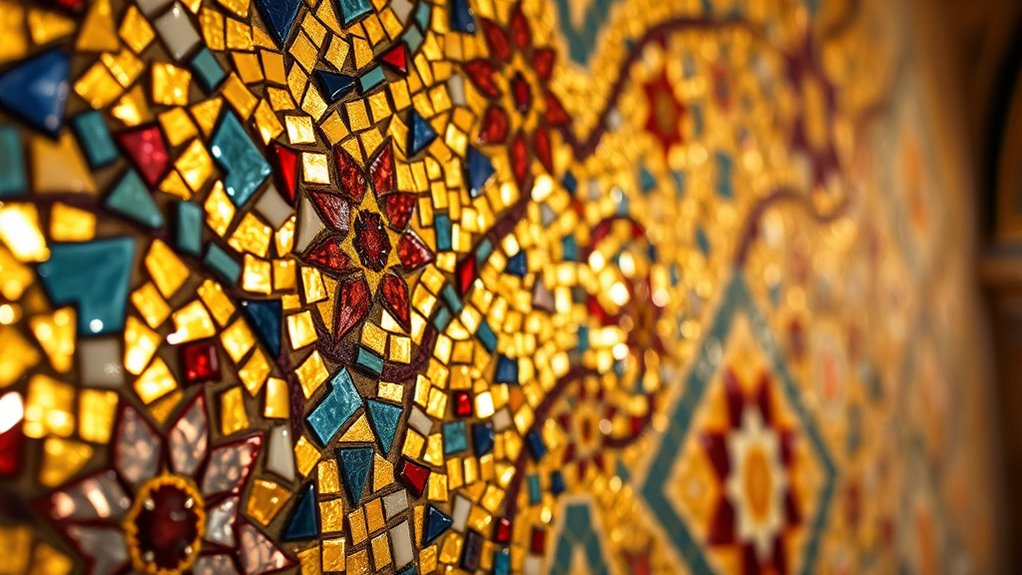
Byzantine mosaics in religious settings are rich with divine symbolism that conveys spiritual messages. You’ll notice the intricate techniques and carefully chosen materials that bring these images to life and inspire awe. These artistic choices continue to influence religious art and architecture today. The use of color symbolism plays a vital role in conveying theological concepts through these mosaics.
Divine Symbolism in Mosaics
Divine symbolism plays a central role in Byzantine mosaics, transforming religious spaces into visual sermons that communicate spiritual truths. The use of mosaic tesserae creates intricate images filled with symbolic meaning. These mosaics depict saints, angels, and biblical scenes that embody divine symbolism, reinforcing faith and doctrine. You’ll notice how light and color enhance the spiritual message, guiding viewers’ focus to sacred figures. Here’s a look at some key symbols:
| Symbol | Meaning |
|---|---|
| Halo | Holiness and divine |
| Eagle | Resurrection and Christ |
| Lamb | Sacrifice and salvation |
This deliberate symbolism elevates mosaics beyond decoration, turning them into powerful expressions of faith, inspiring reverence and contemplation. Additionally, the artistic techniques employed in creating Byzantine mosaics contribute to their enduring spiritual impact.
Techniques and Materials Used
To create their stunning mosaics, artisans employed a combination of innovative techniques and carefully selected materials that have left a lasting artistic legacy. They used glass tesserae, small colored pieces, to craft vibrant, durable images, often blending shades for depth. Gold leaf was applied behind glass tesserae to produce a luminous effect, highlighting divine figures and sacred scenes with a shimmering, otherworldly glow. Artists meticulously set each tessera into mortar, creating intricate patterns and symbolic imagery. The use of gold leaf not only added richness but also reflected light, enhancing the spiritual atmosphere of religious spaces. These techniques required precision and skill, resulting in mosaics that continue to inspire with their brilliance and symbolic power. Their mastery of materials established a standard for religious art for centuries. Compatibility, in terms of craftsmanship and symbolism, played a crucial role in the enduring influence of Byzantine mosaics.
Influence of Byzantine Mosaics on Medieval and Renaissance Art
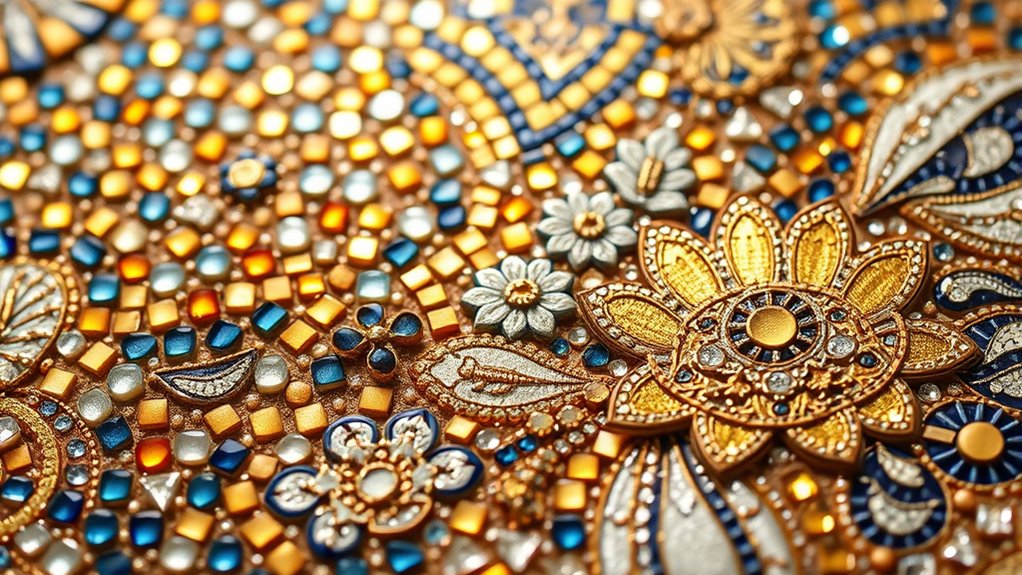
Have you ever noticed how the intricate patterns and luminous colors of Byzantine mosaics continue to influence medieval and Renaissance art? Their vibrant, gold-adorned designs inspired artists to adopt similar shimmering aesthetics, seen in medieval tapestries and renaissance frescoes. Byzantine techniques emphasized symbolism and divine themes, which became central to later religious art. The use of vivid color palettes and detailed iconography shaped visual storytelling across centuries. Artists incorporated mosaic-inspired motifs into their work, blending flat, stylized figures with rich backgrounds. This cross-influence created a shared visual language that bridged eras. To illustrate, consider the following:
| Influence Aspect | Example Artwork |
|---|---|
| Pattern and Color | Medieval Tapestries |
| Iconography and Style | Renaissance Frescoes |
| Symbolism | Religious Themes |
| Technique Adaptation | Mural and Panel Art |
Modern Interpretations and Adaptations of Byzantine Styles
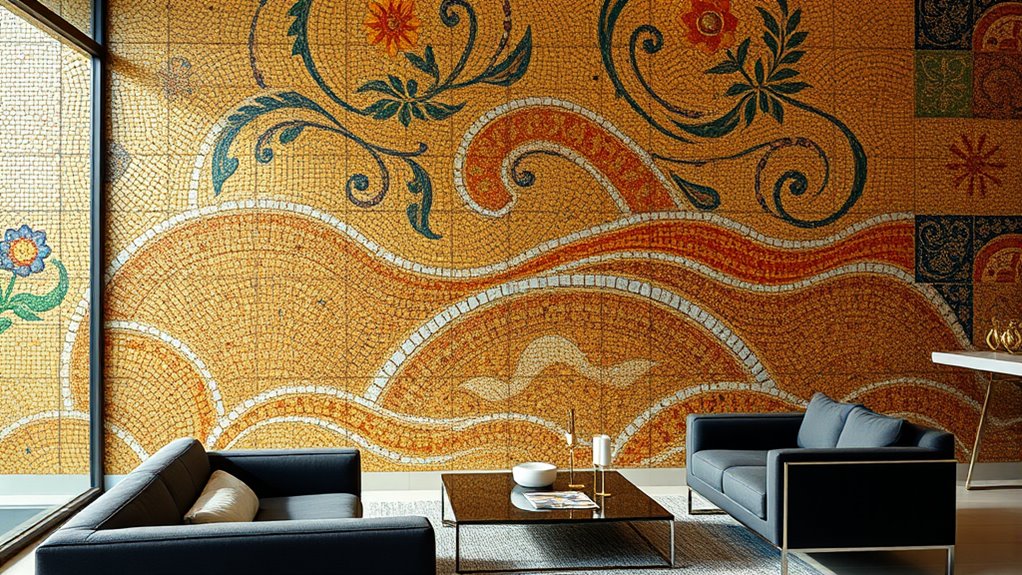
Modern artists and designers continue to draw inspiration from Byzantine mosaics, reinterpreting their rich colors, intricate patterns, and symbolic motifs through contemporary lenses. They often adapt these elements to suit modern aesthetics, blending medieval craftsmanship with current techniques. For example, some use digital tools to recreate detailed mosaics or incorporate traditional methods into new media. Mosaic restoration plays a crucial role in preserving Byzantine artworks, allowing artists to study authentic techniques and patterns, then adapt them creatively. These modern interpretations honor the complexity and spirituality of Byzantine art while pushing boundaries in design. Additionally, the study of dream symbolism can inspire artists to embed deeper meanings into their work, connecting subconscious themes with visual motifs. As a result, you see Byzantine-inspired motifs in everything from fashion to architecture, showcasing how ancient craftsmanship remains relevant and influential today.
Incorporating Byzantine Aesthetics Into Contemporary Design
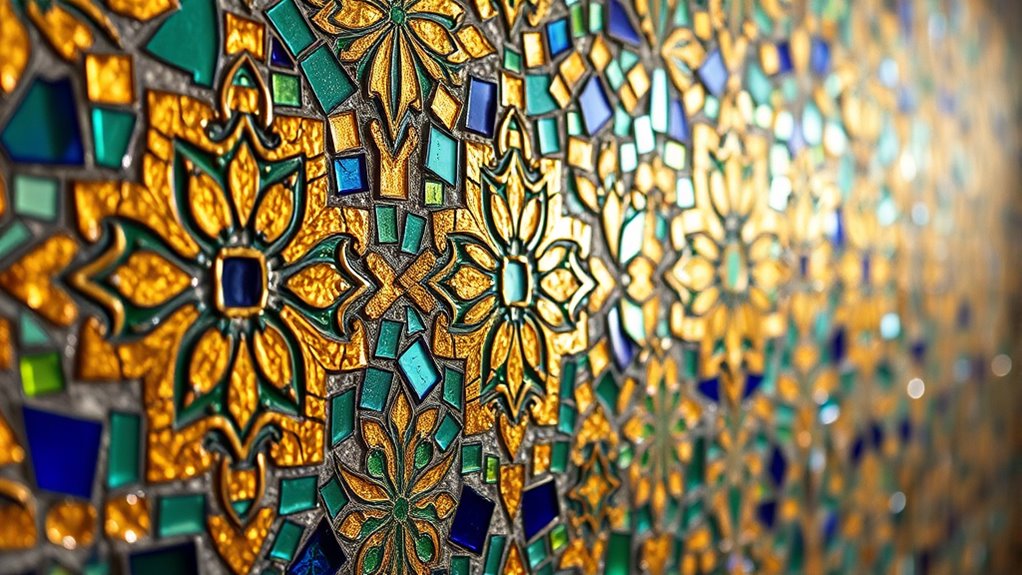
Contemporary designers are increasingly blending Byzantine aesthetics into their work, creating striking visuals that honor historical craftsmanship while appealing to modern tastes. You can incorporate Byzantine textiles’ intricate patterns and vibrant colors into upholstery, wallpapers, or fashion, adding a layer of richness. Medieval embroidery motifs, with their detailed geometric and floral designs, serve as inspiration for contemporary embellishments on garments or decorative items. By using these elements, you evoke the opulence and spiritual symbolism characteristic of Byzantine art. Combining modern materials with traditional Byzantine motifs results in a unique fusion that feels both timeless and current. This approach allows you to pay homage to Byzantine craftsmanship while crafting fresh, innovative designs that resonate with today’s audience. Additionally, considering the vetted – floating on water nature of Byzantine mosaics can inspire innovative use of reflective surfaces and textures in contemporary decor.
Frequently Asked Questions
How Did Byzantine Mosaics Influence Secular Art Beyond Religious Contexts?
Byzantine mosaics influenced secular art by inspiring artists to incorporate intricate, detailed designs and vibrant colors into their work. You’ll notice their use of artistic techniques like tessellation and perspective, which added depth and complexity beyond religious themes. This impact encouraged the integration of secular themes, such as courtly life and myth, into mosaics and paintings, elevating the overall sophistication and richness of secular art during and after the Byzantine era.
What Are the Challenges in Restoring Ancient Byzantine Mosaics Today?
You face several challenges when restoring ancient Byzantine mosaics today. Preservation techniques must combat deterioration caused by environmental factors like moisture and pollution. Structural stabilization is essential to prevent further damage, especially if the mosaics are on unstable surfaces or exposed to vibrations. You need skilled artisans and advanced materials to carefully clean, repair, and safeguard these masterpieces, ensuring they endure for future generations while respecting their original artistry.
Are There Modern Materials That Replicate Traditional Byzantine Mosaic Techniques?
Think of modern materials as a bridge connecting past and present. Yes, you can find modern adhesive and tesserae manufacturing that replicate traditional Byzantine mosaic techniques. These materials mimic ancient glass and stone, allowing artists to craft mosaics with authentic appearance and durability. By using these innovative supplies, you bring the spirit of Byzantine artistry into today’s world, blending tradition with modern technology seamlessly.
How Does Byzantine Mosaic Design Influence Contemporary Interior Decorating?
Byzantine mosaic design influences your contemporary interior decorating through rich iconography and symbolism, creating meaningful focal points. You can incorporate their distinctive color palettes—vivid golds, deep blues, and vibrant reds—to add elegance and depth. These mosaics inspire you to blend traditional motifs with modern styles, enhancing your space with spiritual and cultural significance while maintaining a timeless aesthetic.
Can Byzantine Mosaic Principles Be Applied to Digital or Virtual Art Forms?
Yes, you can apply Byzantine mosaic principles to digital or virtual art forms. You might incorporate digital abstraction techniques to mimic the intricate, shimmering qualities of mosaics, creating layered virtual ornamentation. Use pixel arrangements and color contrasts to evoke the sense of depth and richness found in Byzantine art. This approach allows you to blend traditional aesthetics with modern technology, producing unique, visually compelling virtual works inspired by mosaic craftsmanship.
Conclusion
As you explore the intricate world of Byzantine mosaics, you’ll realize their lasting impact isn’t just in history but in the subtle ways they continue to inspire. Their rich symbolism and timeless beauty hint at stories yet to be uncovered, waiting for you to interpret and reinvent. The question remains: how will future designers draw upon this ancient art to shape what’s next? The answer lies just beneath the surface, ready to be revealed.
Halloween Picks
halloween
As an affiliate, we earn on qualifying purchases.