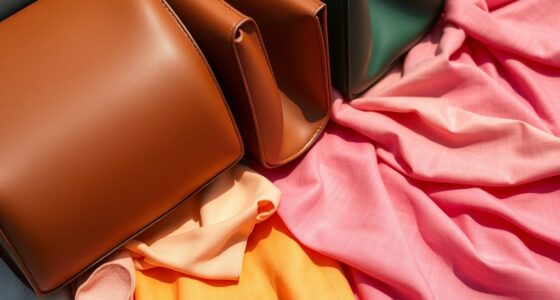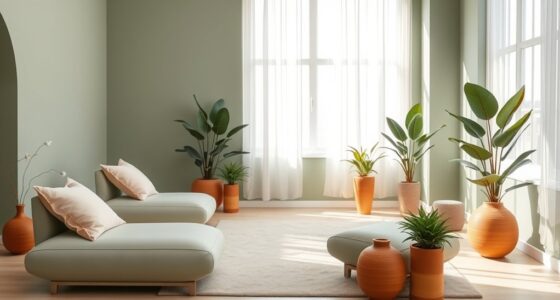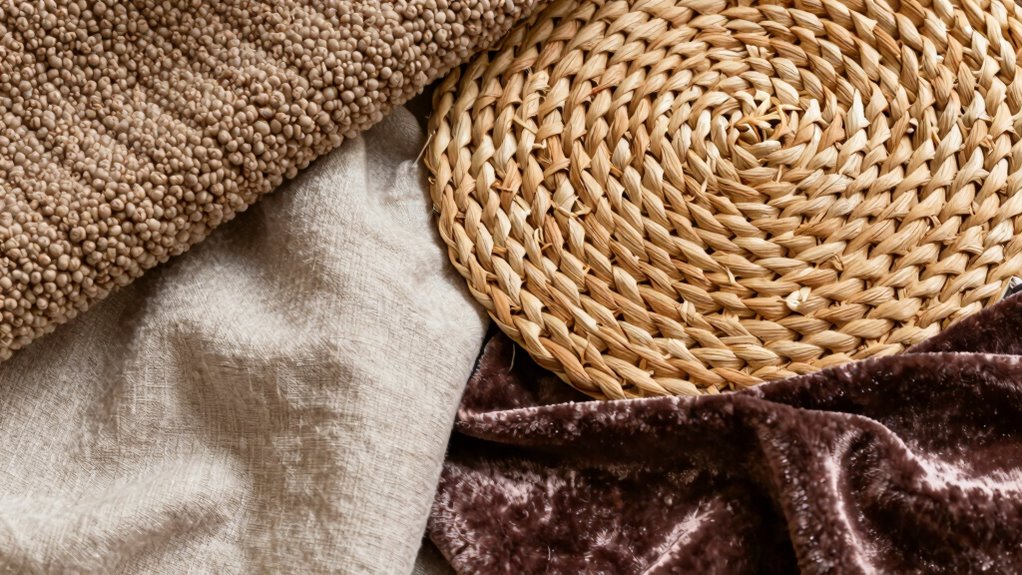

Layering textures like bouclé, linen, rattan, and velvet creates depth and visual interest in your space. Mix large statement pieces with smaller accents, balancing bold and soft textures to keep harmony. Vary scales and contrast materials thoughtfully, pairing plush velvet with natural rattan or crisp linen for texture and tone. Avoid overdoing it or clashing colors—focus on cohesion. Explore how combining these textures can transform your interior with simplicity and style as you continue exploring.

Get furniture and decor delivered free with Prime
- Fast, free delivery on millions of items
- Prime Video, Amazon Music and more included
- Member-only deals all year
Key Takeaways
- Mix large, plush textures like velvet with lighter materials such as linen to create visual contrast and tactile interest.
- Use a cohesive color palette to unify different textures and prevent visual clutter.
- Vary the scale of textures—pair bulky rattan furniture with delicate Bouclé cushions for balance.
- Balance bold textures with softer neutrals to maintain harmony and avoid overwhelming the space.
- Incorporate strategic layering with both dominant and subtle textures to craft depth and sophistication.
As an affiliate, we earn on qualifying purchases.
Why Mixing Textures Elevates Your Interior Design
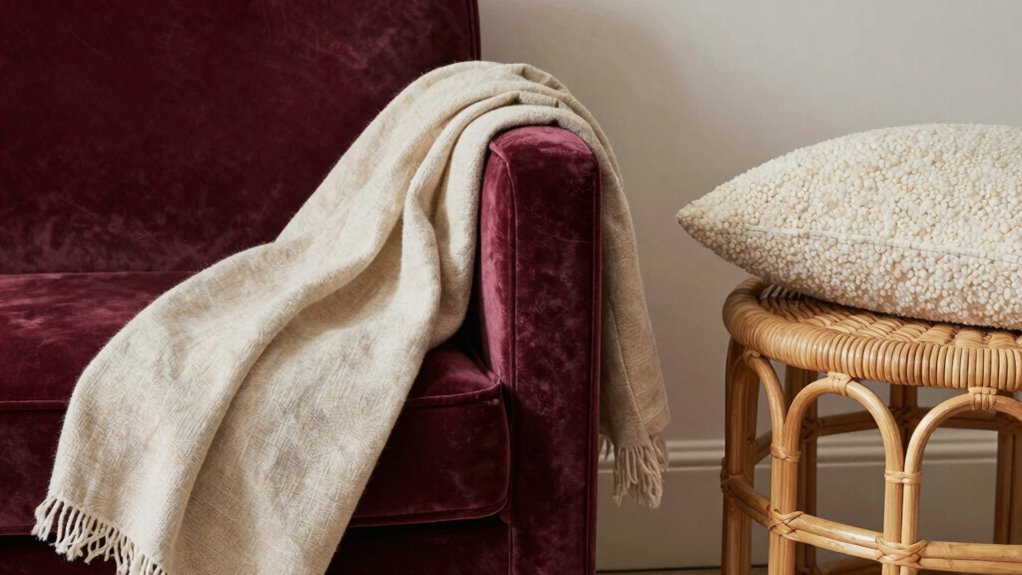
Mixing textures in your interior design instantly adds depth and interest to a space. It creates tactile contrast, engaging your senses and making the environment more inviting. When you combine different textures, you introduce visual interest that keeps the eye moving, preventing your room from feeling flat or monotonous. For example, pairing a soft velvet with a coarse rattan or smooth linen enhances the overall aesthetic and adds layers of personality. This variety draws attention to specific areas and highlights design details. Texture layering also balances the room, making it feel warm and cozy rather than sterile. Incorporating material diversity within your decor not only enriches the visual experience but also reflects a thoughtful approach to design. Understanding the performance of different textiles can help you select materials that are both beautiful and durable. Additionally, experimenting with interior design basics allows you to create harmonious and engaging spaces. Exploring various design principles, such as balance and contrast, can further enhance your interior styling. By thoughtfully mixing different tactile elements, you create a dynamic space that’s both stylish and comfortable, elevating your interior from simple to sophisticated.
Understanding Bouclé, Linen, Rattan, and Velvet: Character and Uses
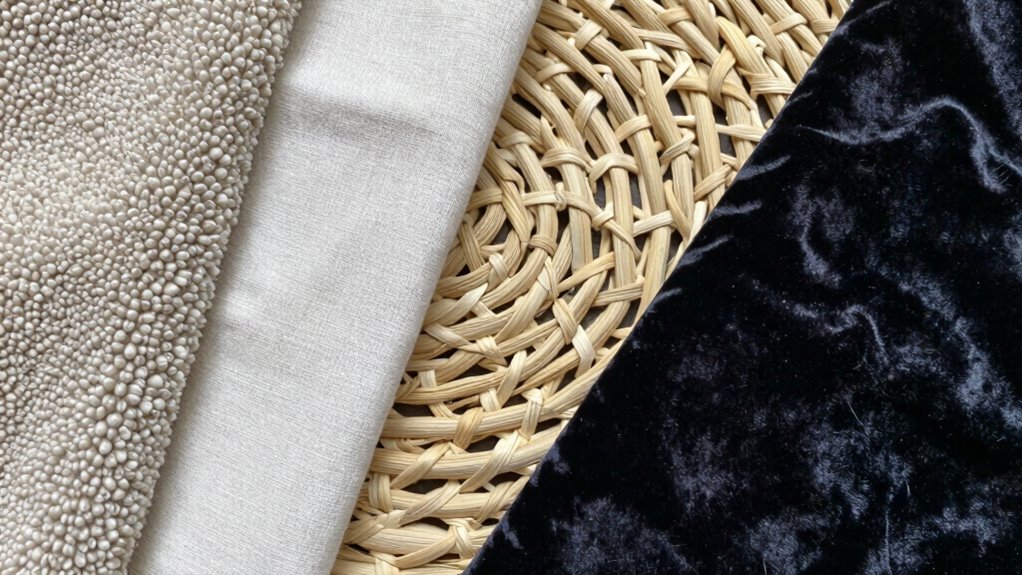
Bouclé, linen, rattan, and velvet each bring unique textures that influence both the feel and look of a space. You’ll find that their character suits specific styles and environments, from cozy lounges to airy living areas. Understanding their features helps you choose the right material for your design goals. Additionally, selecting the appropriate cabling solutions ensures a seamless integration of these textures into your overall design aesthetic. Recognizing the material properties of each texture can further enhance your ability to layer textures effectively and create a balanced environment. Being aware of their maintenance requirements can also help sustain the desired look and feel over time. For example, understanding how different cleaning methods impact each material can prevent damage and prolong their beauty.
Material Feel and Look
Understanding the unique textures and appearances of materials like bouclé, linen, rattan, and velvet is essential for creating compelling layered designs. Each material offers distinct material feel and look that influence your space’s overall vibe. Bouclé feels cozy and textured, with a nubby surface adding visual interest; linen provides a crisp, lightweight feel with a matte finish. Rattan delivers a natural, tactile quality with a smooth yet textured surface, ideal for a relaxed look. Velvet feels plush and luxurious, with a rich sheen that adds depth. When choosing these materials, consider fabric durability, especially for high-traffic areas. Also, understand cleaning methods: linen and rattan often require gentle cleaning, while velvet may need delicate vacuuming or professional care to preserve its appearance. Selecting authentic vintage furnishings can further enhance the rustic charm and authenticity of your decor. Additionally, understanding material properties such as colorfastness and wear resistance can help ensure your choices remain beautiful over time. Recognizing how each material texture interacts with light and other surfaces can further refine your layered design approach. Moreover, being aware of potential material vulnerabilities, like fading or fraying, can help you make more informed decisions for longevity and aesthetics.
Ideal Spaces and Styles
Different textures and materials can dramatically shape the ambiance of your space, guiding you toward the right choices for your style. Bouclé adds cozy sophistication, perfect for modern or Scandinavian decor, while linen offers a breezy, casual vibe suited for coastal or rustic themes. Rattan brings warmth and natural appeal, ideal for boho or tropical spaces, and velvet adds richness, fitting classic or luxe styles. When planning seasonal decor, consider how these textures influence your furniture placement—lighter linen or rattan work well in open layouts, while plush bouclé and velvet add depth. Use this table to match textures with spaces, and keep in mind the material characteristics that influence durability and maintenance. Selecting the right wood finishes can further enhance the look and feel of your decor.
How to Layer Textures Effectively in Your Space
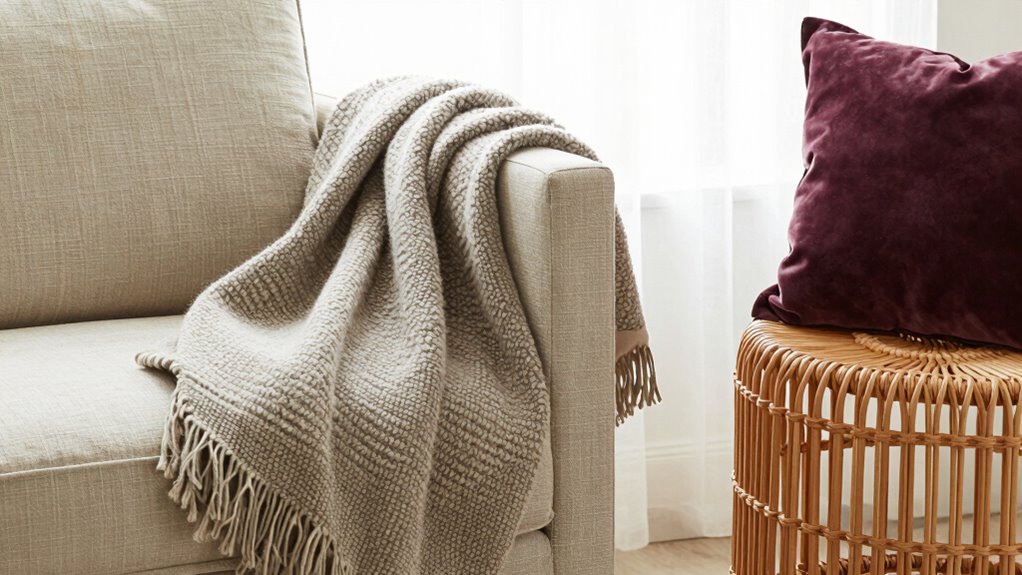
To layer textures effectively, start by mixing different materials thoughtfully so they complement each other without clashing. Varying the scales of textures adds depth and keeps the space interesting, while balancing bold pieces with neutral tones creates harmony. Incorporating sound vibrations into your design can also enhance the overall ambiance, promoting a sense of well-being and harmony within your space. Additionally, paying attention to natural light can highlight the textures and create a warm, inviting atmosphere. Keep these points in mind to create a cohesive, inviting environment that feels both dynamic and balanced.
Mix Textures Thoughtfully
Layering textures effectively starts with intentional pairing; when you combine different materials, they should complement rather than compete. Focus on fabric patterns and color coordination to create harmony. Mix smooth velvet with textured rattan or linen for visual interest without chaos. Consider contrasting textures to add depth, but keep your color palette cohesive to avoid disarray. Use this guide to balance your selections:
| Texture Type | Fabric Pattern | Color Coordination |
|---|---|---|
| Bouclé | Solid | Neutral shades |
| Linen | Stripes | Earth tones |
| Rattan | Woven | Warm hues |
| Velvet | Monochrome | Jewel tones |
| Mixed Textures | Subtle patterns | Complementary shades |
Additionally, incorporating layering techniques ensures your space feels thoughtfully curated rather than cluttered. Paying attention to texture layering principles can further enhance the depth and cohesiveness of your design. Exploring material contrast strategies can help create a more dynamic and inviting environment. Understanding material compatibility can also guide you in selecting textures that naturally harmonize.
Vary Material Scales
Varying material scales is essential for creating visual interest and balance in your space. By intentionally mixing large, medium, and small textures, you introduce scale variation that keeps the eye engaged. For example, pairing a bulky rattan armchair with delicate linen cushions creates a dynamic material contrast. This variation prevents your decor from feeling flat or monotonous. Think about how different textures interact at different sizes; bold velvet curtains alongside tiny Bouclé accent pillows add depth. Remember, the goal is to create harmony through contrast, not chaos. When you balance large, impactful pieces with smaller, subtler textures, you enhance the overall cohesion of your design. Mastering scale variation ensures each texture complements the next, resulting in a thoughtfully layered, visually compelling space. Additionally, incorporating Vetted – Floating on Water elements can introduce an unexpected lightness and serenity that elevates your layered textures, highlighting the importance of texture layering in creating a well-rounded aesthetic.
Balance With Neutrals
Balancing textures with neutral tones creates a serene, cohesive environment that allows each element to shine. Neutral shades serve as a versatile backdrop for different textures, making color coordination easier and ensuring your space feels harmonious. As seasons change, neutrals adapt effortlessly, providing a timeless foundation. To layer textures effectively, consider these tips:
- Use a mix of matte and glossy neutrals to add depth and interest.
- Incorporate natural materials like linen or rattan to evoke seasonal warmth.
- Balance bold textures like velvet with softer, subtle neutrals for calmness.
- Update accent pieces seasonally to keep the neutrals fresh and engaging.
This approach maintains visual balance and highlights the beauty of each texture, regardless of the season.
Practical Tips for Combining Bouclé, Linen, Rattan, and Velvet
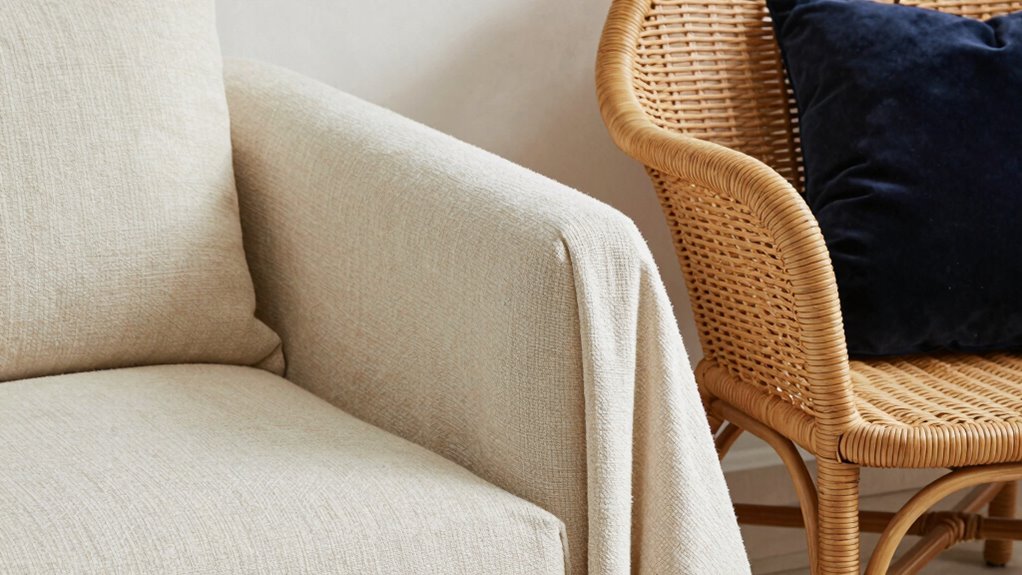
Combining textures like bouclé, linen, rattan, and velvet can elevate your space with rich visual interest and tactile contrast. To achieve this, focus on texture contrast by pairing soft, plush velvet with the more structured linen or rattan. This creates depth and keeps the room engaging. Color coordination is key—stick to a cohesive palette or use neutral tones to unify different textures. Mix warm and cool hues thoughtfully to enhance harmony. Keep proportions in mind: balance larger textured pieces with smaller accents to avoid overwhelming the space. Don’t be afraid to layer different textures in one area; just ensure they complement each other through consistent color schemes. Practicality and intentional pairing will help you craft a sophisticated, inviting environment.
Common Mistakes to Avoid When Layering Textures
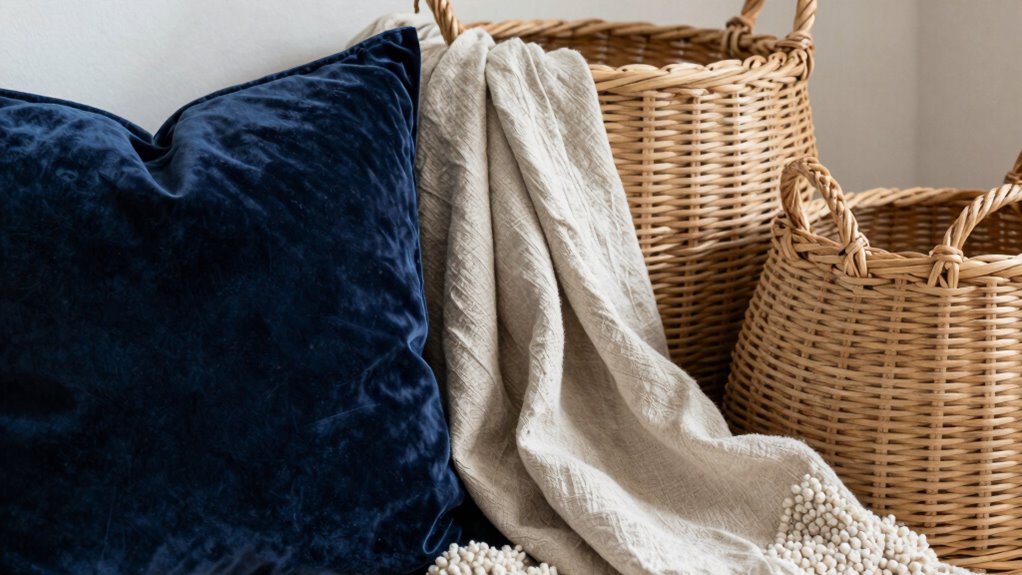
One common mistake to avoid when layering textures is overdoing it, which can make a space feel cluttered and chaotic rather than inviting. To keep your design cohesive, pay attention to these pitfalls:
Avoid overdoing textures to keep your space inviting and cohesive.
- Ignoring fabric durability—choose textiles that withstand daily use, especially in high-traffic areas.
- Clashing colors—ensure your textures’ hues coordinate smoothly to maintain visual harmony.
- Overloading different textures—limit the variety to prevent overwhelming the space.
- Neglecting balance—distribute textures evenly for a layered look that feels intentional and sophisticated.
Inspiring Examples of Texture Layering in Real Homes
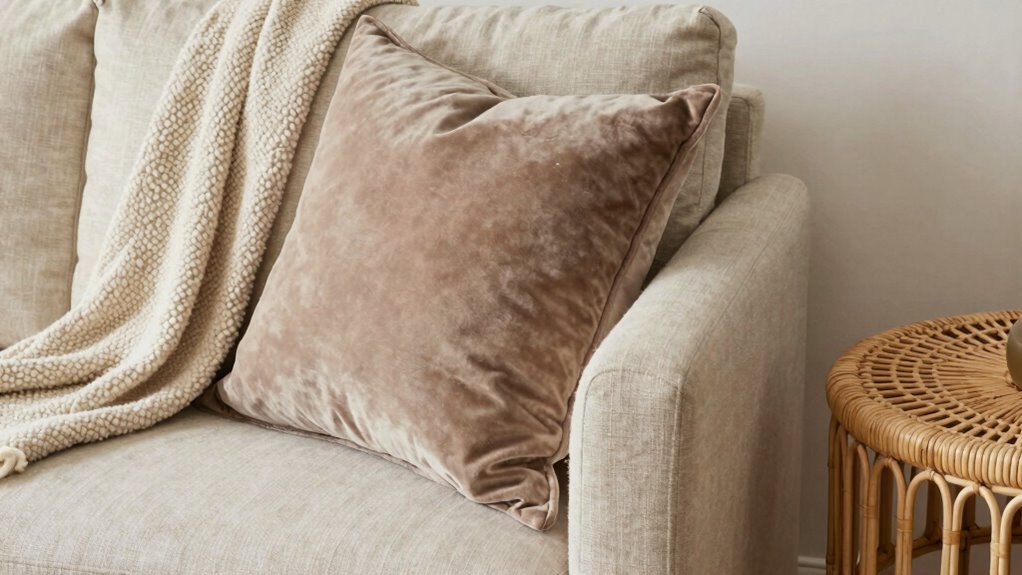
Looking at real homes, you’ll find inspiring examples of how thoughtful texture layering can transform a space. For instance, combining soft velvet cushions with a woven rattan chair creates a tactile contrast that invites touch. Notice how fabric combinations like linen drapes paired with a boucle sofa add depth without overwhelming the room. Effective color coordination also plays a key role—muted tones in cushions and throws can unify different textures, creating harmony. In some homes, layering a textured rug over sleek hardwood floors grounds the space, while varied fabrics in similar shades keep the look cohesive. These examples demonstrate how balancing fabric choices and color coordination can elevate your interior, making it inviting, stylish, and full of visual interest.
Frequently Asked Questions
Can Texture Layering Work in Small Rooms Effectively?
Yes, texture layering can work in small rooms effectively. You can use space-saving strategies like multi-functional furniture to maximize your space while adding depth. Incorporate different textures such as bouclé, linen, rattan, and velvet to create visual interest without clutter. Focus on balanced placement to avoid overwhelming the room, making it feel cozy yet stylish. This approach enhances your small space’s personality and warmth without sacrificing functionality.
How Do I Maintain Different Textured Fabrics Over Time?
Think of textured fabrics like good friends—you need to care for them to keep the bond strong. To sustain different textured fabrics over time, choose durable options suited for each material. Regularly clean textured fabrics with appropriate methods—vacuum for bouclé, gentle spot cleaning for linen, and delicate wiping for rattan and velvet. This proactive approach ensures fabric durability and keeps your layered look fresh, vibrant, and inviting for years to come.
Are There Specific Color Schemes That Complement Layered Textures?
You should choose color pairings that enhance the layered textures and create the mood you want. Soft neutrals like beige and taupe work well for a calming, sophisticated vibe, while bold contrasts like navy and mustard add energy. Warm tones evoke coziness, while cool shades promote tranquility. By thoughtfully selecting your color schemes, you can elevate the textured layers and craft a harmonious, inviting space.
What Lighting Enhances Textured Materials in a Space?
You should use natural light to highlight textured materials like bouclé and velvet, as it enhances their depth and richness. Additionally, accent lighting, such as wall sconces or spotlights, creates shadows that emphasize the layers and tactile qualities of linen and rattan. Position your lighting carefully to avoid glare, and aim for a warm tone to complement the natural textures, making your space feel inviting and dynamic.
How Do I Balance Bold Textures With Minimalistic Decor?
To balance bold textures with minimalistic decor, you should focus on contrast color to make each element stand out without overwhelming the space. Keep the palette simple, using neutral tones to highlight tactile harmony among bouclé, linen, rattan, and velvet. Limit accessories and clutter, allowing the textures to be the focal point. This approach creates a sophisticated environment where bold textures shine within a clean, minimalistic framework.
Conclusion
By blending bouclé, linen, rattan, and velvet, you weave a rich tapestry that reflects your unique style. Think of textures as threads in a fabric—each one adds depth, warmth, and personality. When you layer them thoughtfully, you create a sanctuary where every touch tells a story. Embrace the process, and let your space become a canvas of subtle symbolism, inviting comfort and elegance to coexist in perfect harmony.
Fall Picks
fall essentials
As an affiliate, we earn on qualifying purchases.