
TL;DR

Get furniture and decor delivered free with Prime
- Fast, free delivery on millions of items
- Prime Video, Amazon Music and more included
- Member-only deals all year
Luxury velvet throw pillows add color and tactile warmth, but velvet is a fabric construction made from different fibers, so feel, durability, and care vary by product. Compare fiber content, pile, stitching, insert, and care instructions, then check a color swatch in your own lighting before you buy.
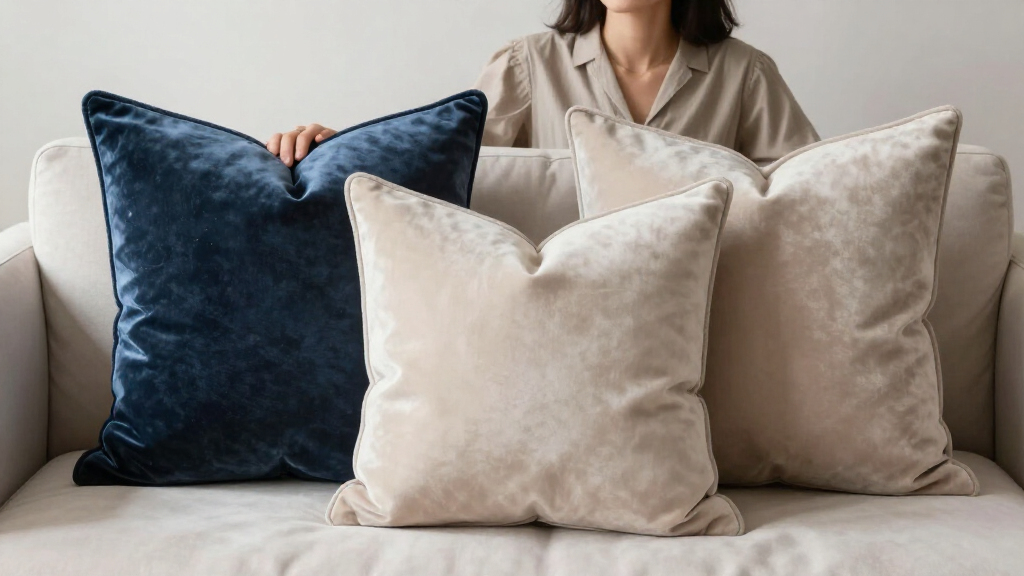
A velvet pillow can look midnight blue from across the room and flash a brighter, softer blue when you brush your hand over it. That small shift is part of the fabric’s charm—and one reason a photo can’t tell you everything.
This guide helps you choose luxury velvet throw pillows by what they’re actually made of, how they feel, and how they’ll hold up in your home. You’ll also learn how to style them, check the insert, and care for the fabric without guessing.
Velvet describes a fabric construction; check whether the pillow uses cotton, polyester, viscose, silk, or a blend.
Pile direction changes how velvet reflects light, so compare a swatch in your room’s daylight and evening lighting.
Look for dense pile, sound seams, a well-fitted insert, and clear care instructions instead of trusting a luxury label or high price.
Mix velvet with linen, wool, or cotton and use a shared color palette to make a sofa arrangement feel relaxed.
Follow the specific care label, test spot-cleaning methods out of sight, and rotate pillows exposed to direct sun.
What makes velvet pillows feel luxurious?
Luxury velvet throw pillows feel special when fabric, finish, construction, and insert work together. Velvet is a fabric construction, not a fiber: it may use cotton, polyester, viscose, silk, or a blend, and each choice affects softness, sheen, durability, price, and care. The word “luxury” has no standard definition, so look for the details behind the label.
Those details matter because they shape how the pillow performs in your room. A dense pile can feel plush and create richer color, but its surface may show pressure marks more clearly. A smooth zipper and reinforced seams are practical signs that the cover may handle regular use better; they don’t guarantee durability, so consider how often you’ll lean on it and check the maker’s care guidance too. For example, a natural-fiber velvet might be worth the added cost as a carefully placed accent, while a polyester option may be a more practical choice for a busy family room.
The pile acts like a tiny field of reflective threads. Brush it one way and the color may look deep; brush it the other and the surface catches more light. This shifting appearance gives velvet dimension, but it also means a color viewed in a product photo may not match what you see from your sofa. Crushed or embossed velvet adds still more variation: that texture can disguise small changes in the pile, though its pattern may compete with other busy fabrics nearby.
Judge the details, not the adjective. Check fiber content, stitching, finish, insert, and care instructions before deciding a pillow is worth its price. The right tradeoff depends on whether you value a particular feel, easier upkeep, or a distinctive finish most.
Choose the velvet fiber that fits your room
Luxury velvet throw pillows suit different homes depending on the fiber and finish, so the best choice comes down to feel, use, and care. Cotton, polyester, viscose, silk, and blends can all form velvet, but they don’t behave the same way. Read the product description and care label instead of assuming every velvet cover is delicate or washable.
| What to check | Why it matters | Room example |
|---|---|---|
| Fiber content | Shapes feel, sheen, durability, and care needs | Compare a cotton velvet accent pillow with an easier-care polyester blend for a family room |
| Pile and finish | Change how the surface reflects light and shows marks | Choose a smooth pile for a quieter look or a crushed finish for visible texture |
| Construction | Seams, closures, and cover fit affect how it wears | Check the zipper and stitching on a pillow you expect to use daily |
| Care label | Cleaning directions depend on the specific materials and build | Confirm instructions before placing a pillow where spills are likely |
For instance, a viscose velvet cushion in a sunny reading nook may look luminous, but the color and care requirements need a closer check. Performance velvet can be useful in a high-use space, yet claims vary by product. “Performance” does not automatically mean stainproof or machine washable.
Fiber and finish tell you more than a price tag alone. Look for clear disclosures about composition, manufacture, and care; a certification may provide specific information, but it does not guarantee every aspect of a product’s quality or sustainability.
Build a sofa arrangement that looks relaxed
Luxury velvet throw pillows look most inviting when you mix scale, texture, and color while giving each cushion room to breathe. Common decorative sizes include 18 × 18 and 20 × 20 inches, though actual dimensions vary. A slightly larger insert can make a cover look fuller when the cover and insert are designed to work together.
Try this simple order for a three-seat sofa:
- Start at the corners. Place one larger pillow at each end, perhaps 20 × 20 inches, to frame the sofa.
- Add a different texture. Pair velvet with linen, wool, or smooth cotton so the arrangement feels layered rather than matched.
- Choose one smaller accent. An 18 × 18 pillow in a related shade adds a focal point without crowding the seats.
- Sit down and adjust. Move cushions that press into your back or leave too little space for a cup and a book.
A deep green velvet pillow can sit beside a warm cream linen cushion and a small rust-colored accent. The contrast feels deliberate, like a dark leaf against pale stone, while the shared earthy palette keeps the mix calm.
Try the same palette on an accent chair with just one cushion, or on a bed where a velvet pillow sits in front of crisp cotton. There’s no magic pillow count: let the room’s scale and the furniture’s actual use guide you.
Check the color and insert before you buy
Luxury velvet throw pillows can change color under daylight, warm lamps, and shifting viewing angles, so check the shade where you plan to use it. If a shop offers a swatch, put it beside your sofa in morning light and again in the evening. A blue that looks crisp on screen may turn almost ink-dark beneath a warm lamp. This check helps you decide whether you like the full range of the shade, rather than relying on one flattering view.
The insert shapes both comfort and appearance. Down and feather fills tend to feel soft and compressible; they can be easy to shape into a relaxed, lived-in look, though they need regular fluffing and may not suit everyone. Polyester and other synthetic fills are often easier to maintain and may suit shoppers who avoid animal products, but can feel firmer or less moldable. Firmness matters too: a pillow that looks perfectly full in a photo may feel stiff when you lean back, so consider whether it’s mainly decorative or meant to support you.
Before ordering, confirm whether the cover and insert come together. If they’re separate, check their dimensions and intended fit. For example, a 20 × 20-inch cover and a compatible, slightly larger insert may create a plumper shape, but an oversized insert can strain seams or bunch the cover. A loose fit, meanwhile, may leave corners looking limp. Matching the insert to the cover keeps the pillow comfortable while helping its shape look intentional.
Choose shades by the room’s palette, not only by trend. Jewel tones can bring depth to a neutral sofa, while earthy green, terracotta, or soft brown can sit comfortably beside wood, wool, and leather. One velvet accent can warm a room without turning every surface into a statement.
Keep velvet looking inviting with gentle care
Luxury velvet throw pillows stay attractive longer when you follow the manufacturer’s care label and respond gently to marks. Cleaning directions depend on fiber, dye, backing, and construction, so don’t assume a velvet cover can go in the washing machine. Test any spot-cleaning method in an inconspicuous area first.
Velvet can show pressure marks where someone has leaned against it or brushed the pile in a different direction. That shading is often a change in how the surface catches light, not a permanent color change. Smooth the pile gently in its natural direction, and avoid scrubbing it as if it were a flat cotton sheet.
Lint, dust, pet hair, and fingerprints may stand out on some velvets. A family-room pillow that sits beside a shedding dog will need more attention than one on a rarely used guest bed. Check the label before using a vacuum attachment or other cleaning tool.
Sunlight can fade many fabrics over time. If a pillow sits in a bright window, rotate it now and then or move it away from prolonged direct sun. These small habits help keep the color even, though they can’t reverse fading that has already happened.
Decide whether velvet fits your everyday life
Velvet works in everyday rooms when the specific cover matches your household’s use and you’re comfortable with its care needs. A wipe-clean claim or a performance label only helps when the maker explains what it means for that fabric. Check the stated fiber blend, cleaning instructions, and any test details instead of treating broad claims as a promise.
Think about where the pillow will land: against a pet’s favorite sofa corner, under a child’s snack-filled movie night, or on a bed used mainly for reading. In a busy home, a removable cover and replaceable insert can make upkeep simpler because you may be able to clean or replace one part without dealing with the whole pillow. A more delicate fabric may work well as a decorative accent in a lower-traffic spot, where its look matters more than frequent handling.
Mixing textures can also make a room feel less precious. Velvet beside relaxed linen or sturdy cotton keeps the soft surface from looking too formal, and leather or wool can add a useful change in feel. The combination also gives you practical flexibility: a durable companion fabric can take more everyday contact while velvet supplies a smaller note of sheen. Try one pillow first; if you enjoy its look and routine of care, add another.
The useful key facts for your purchase are concrete: composition, pile, seams, insert, size, and label instructions. Each answers a different question: how the pillow feels, how it changes in the light, how it may wear, whether it supports you, and what upkeep it asks of you. A thoughtful buyer compares those details. A matching pair can be lovely, but a mixed arrangement often feels more personal.
Frequently Asked Questions
What makes a velvet throw pillow luxurious?
There’s no standard definition of “luxury” for pillows. Look for details you can verify, such as the fiber content, a dense and even pile, neatly finished seams, a suitable insert, and clear care instructions.
Can you wash velvet pillow covers?
It depends on the fiber, dye, backing, and construction. Follow the manufacturer’s label and test any spot-cleaning method in an inconspicuous area before treating a visible mark.
Why does velvet look like a different color from different angles?
Velvet’s pile reflects light differently when viewed or brushed from different directions. A pillow can look darker from one side and brighter from another, and room lighting can shift the color further.
What insert should you use for a velvet pillow?
Down and feather inserts tend to feel soft and compressible, while synthetic fills are often easier to maintain and may suit people avoiding animal products. Check that the insert fits the cover; an appropriately fuller insert can add shape, but one that is too large can strain seams.
Are velvet pillows practical in a home with pets or children?
They can be, but care needs vary by product and household. Check the fiber content and care label, consider a removable cover for a frequently used room, and think about how the surface may show pet hair, lint, or fingerprints.
Conclusion
Choose the pillow by its materials, construction, insert, and care label, then check its color in your own room. When those details fit your home, velvet adds a soft, shifting glow—the kind that changes with every passing cloud.
Halloween Picks
halloween
As an affiliate, we earn on qualifying purchases.