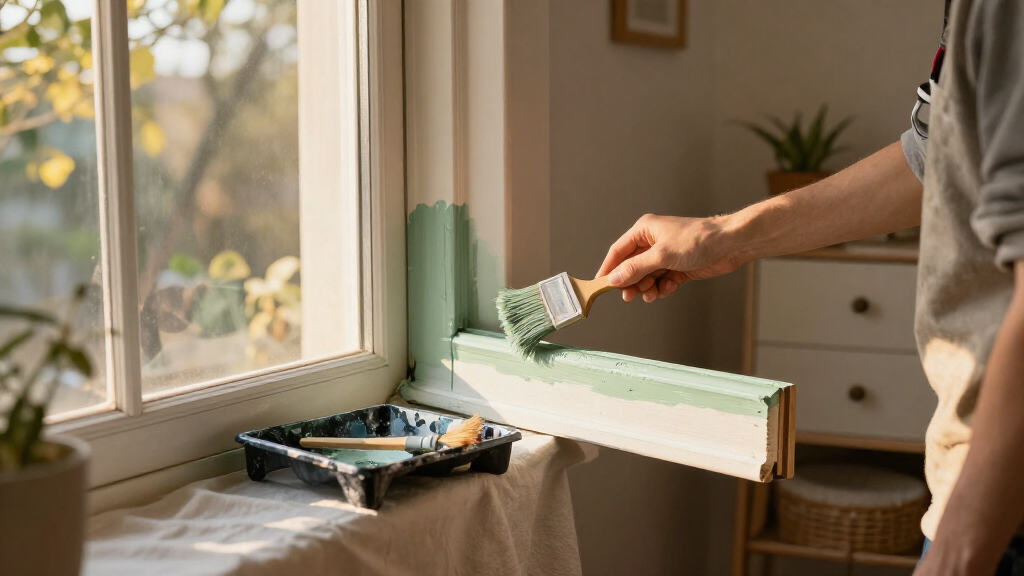

TL;DR
Interior designers are using painted window frames to add color and definition to rooms, with examples ranging from tonal woodwork to contrasting green trim. The idea is a decorative refresh, but the examples do not establish a standard weekend timeline or show that every window material is suitable for paint.
Interior designers are using window-frame color as an additional layer in room schemes, turning a commonly white or overlooked feature into a visual accent. The examples show contrasting and tonal approaches, while the accompanying guidance notes that some frames, including uPVC, may be better left unpainted.

Get furniture and decor delivered free with Prime
- Fast, free delivery on millions of items
- Prime Video, Amazon Music and more included
- Member-only deals all year
The projects illustrate several ways to use the frame as part of a room’s palette rather than treating it as a neutral boundary. In a home office designed by Laura Stephens, a coral frame sits against a rich ochre scheme. Stephens says deeper tones on woodwork and decorative details can ground a room and define architectural features without dominating them.
Color designer Barbara Corley Blom takes a tonal approach, deepening details such as doors, skirting boards and window frames within palettes built around related shades. She says this can give the eye moments of rest as people move between rooms. In a bathroom designed by Ali Heath, green window trim contrasts with plaster-pink walls and ceiling; Farrow & Ball color curator Joa Studholme says the green makes the window stand out and gives the traditional space an upbeat feel.
Other examples show color working across adjoining spaces. Lonika Chande used a green window frame alongside oxblood joinery, describing the frame as another color layer that helps soften the visual shift between the room and garden. For people who do not want to paint a frame, or have uPVC windows, designer James Arkoulis of Howark Design used a white painted detail around a kitchen window to add character without changing the frame’s overall color.
Make window frames part of the room with color
Designers use painted frames to add contrast, deepen a tonal palette or connect a room visually to the garden. The examples offer inspiration, but do not confirm a weekend timeline or suitability for every frame.
Five ways to treat a frame
The right approach depends on the room’s existing colors and the effect you want.
Coral against ochre
Laura Stephens uses a deeper frame color to define the window within a rich room scheme.
Related shades
Barbara Corley Blom deepens details like window frames within palettes of related colors.
Green with pink
Ali Heath’s bathroom pairs green trim with plaster-pink walls and ceiling.
Outline the window
James Arkoulis adds a white painted detail around the window without changing the frame’s overall color.
Choose the visual effect
Color can make a frame stand out, blend into the scheme or link the room to its surroundings.
- Choose a contrasting accent.
- Use deeper trim to define architectural details.
- Use related shades for a tonal look.
- Echo colors from nearby joinery or the garden view.
Check before painting
The article gives no preparation steps, product choices or project durations.
Some frames, including uPVC, may be better left unpainted.
Read the frame manufacturer’s advice and paint labels before choosing a coating.
Consider nearby walls and woodwork, and use a decorative outline if the frame should stay as it is.
Window Frames Join the Color Scheme
The design approach offers a way to change how a room reads without repainting every wall or replacing its windows. A frame can echo an existing color, introduce a contrasting accent or visually connect an interior to a garden view. That makes the idea relevant to renters or homeowners seeking a smaller decorative change, although permission and material suitability still matter.
The examples also make clear that the result depends on the wider palette. A deeper shade can make trim feel grounding; a close tonal match can keep the scheme cohesive; and a bright contrast can draw attention to a view. Those are design effects described by the designers, not guaranteed outcomes for every room. The article presents visual inspiration, not evidence that a frame-painting project can always be completed in a weekend.
Products Worth Considering

Philips Hue Bridge Pro Starter Kit with 4 A19 E26 Color Smart Bulbs

iRobot Roomba Max 715 Robot Vacuum with AutoEmpty Dock

Google Nest Thermostat E Smart Thermostat with Temperature Sensor Bundle – White
As an affiliate, we earn on qualifying purchases.
Five Ways Designers Treat Trim
The featured rooms demonstrate five distinct treatments rather than one prescribed formula. Stephens uses coral against ochre; Blom deepens details within a tonal palette; and Heath’s bathroom pairs green trim with pink walls. Chande’s example uses the frame as a layer alongside richly colored joinery, while Arkoulis adds a decorative white outline to a kitchen window.
The projects are credited to designers and photographers: Laura Stephens’s office and Ali Heath’s bathroom are photographed by Boz Gagovski; Blom’s project by Monica Johanessen; Chande’s by Milo Brown; and Howark Design’s kitchen by Christopher Horwood. The examples are presented as inspiration, and no project budgets, preparation instructions, paint quantities or completion times are supplied.
“Choosing to use a deeper tone on woodwork and decorative details works particularly well because it gives the room a sense of grounding and gently frames architectural features without overpowering them.”
— Laura Stephens, interior designer
Materials and Project Timing Vary
The examples do not specify how long the projects took, so the claim that a window-frame refresh can fit into a weekend is not confirmed for every home. There are no details on surface preparation, primer, paint types, drying times or the condition of the frames. Those factors can affect both the work involved and the finish.
The guidance flags uPVC frames as a case where painting may not be suitable, but does not provide product-specific instructions or say which coatings would work. It also does not address whether frames are inside or outside the home, local restrictions, warranties, or whether a particular finish could affect the window’s operation. Readers should check manufacturer guidance and paint labels before choosing a product.
Check the Frame Before Painting
For anyone considering the idea, the next step is to identify the frame material and check the manufacturer’s advice before buying paint. Decide whether the aim is a tonal finish, a deeper grounding color or a contrast that draws attention to a view, then test how the proposed shade works with nearby walls and woodwork.
Where the frame should not be painted, Arkoulis’s decorative-outline example shows another route: add a painted detail around the window instead. The article provides no announced follow-up projects or testing results; any practical decision will depend on the individual window and the products approved for it.
Source: rss
Key Questions
Can painting window frames change a room’s appearance?
The featured examples show frames used as contrasting accents, tonal details or visual links to a garden. The effect depends on the room’s existing colors and the shade selected.
Can uPVC window frames be painted?
The guidance says people with uPVC frames may prefer not to paint them. It does not provide product-specific advice, so check the frame manufacturer’s instructions and paint-product labels before proceeding.
Does the article confirm that the job takes a weekend?
No. It offers the idea of a weekend refresh but gives no project durations, preparation steps or drying times. The actual schedule will depend on the frame and products used.
What if I do not want to paint the frame itself?
James Arkoulis’s kitchen example uses a white decorative detail around the window to add character without changing the frame’s overall color.
Source: livingetc.com