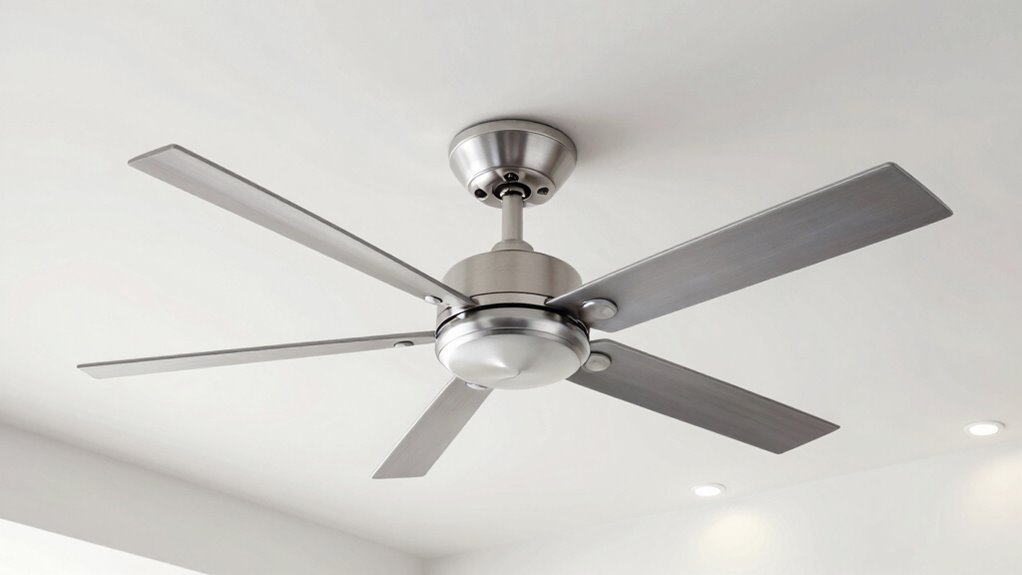

Choosing the right ceiling fan size involves matching the blade span to your room’s dimensions and ceiling height. Smaller blades (42-44 inches) work well in small spaces, while larger ones (52-60 inches) suit bigger rooms. High ceilings may need fans with longer downrods or bigger blades for better airflow, whereas standard ceilings need fans hung at 8-9 feet. Understanding airflow basics helps you pick the most efficient fan. Keep going to learn how to get the perfect fit for your space.

Get furniture and decor delivered free with Prime
- Fast, free delivery on millions of items
- Prime Video, Amazon Music and more included
- Member-only deals all year
Key Takeaways
- Match fan blade span to room size: 42-44 inches for small, 48-54 inches for medium, 56-60 inches for large spaces.
- Measure ceiling height to select appropriate fan type and downrod length for optimal airflow and clearance.
- Larger rooms and high ceilings require fans with bigger blade spans or longer downrods for effective air circulation.
- Proper airflow (CFM) depends on correct sizing, improving energy efficiency and maintaining comfort.
- Regular installation and maintenance ensure maximum airflow, quiet operation, and energy savings.
Ceiling fan with 52 inch blade span
As an affiliate, we earn on qualifying purchases.
As an affiliate, we earn on qualifying purchases.
Why Picking the Right Ceiling Fan Size Is Key to Comfort
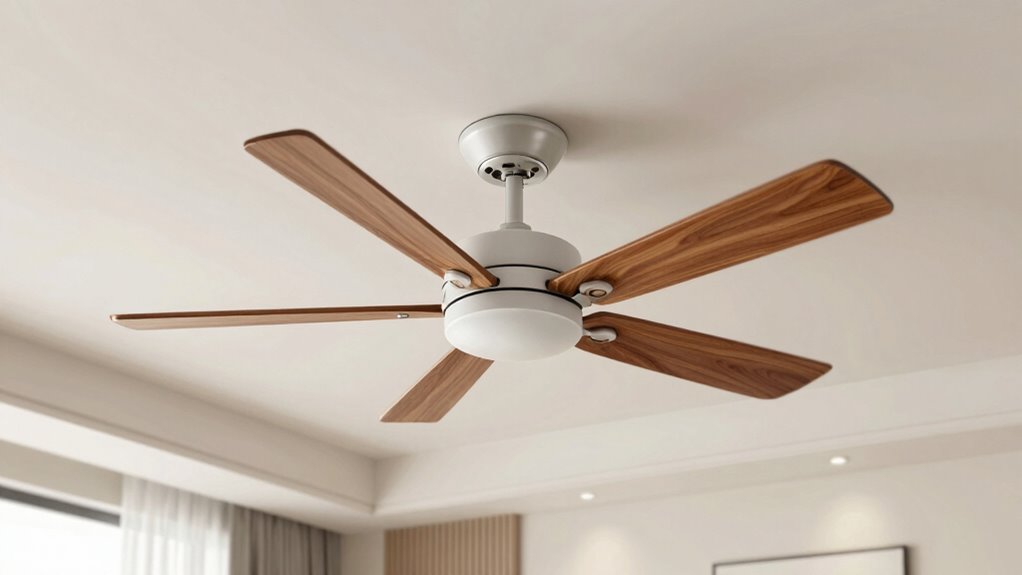
Choosing the right ceiling fan size is essential because an ill-fitting fan won’t circulate air effectively or may cause noise and discomfort. When selecting a fan, consider its aesthetics—an appropriately sized fan complements your room’s decor without overpowering it. A fan that’s too small may struggle to move enough air, leaving you feeling stuffy, while one that’s too large can produce excessive noise or create an overpowering presence. Noise levels are vital for comfort; a properly sized fan runs smoothly and quietly, enhancing your space rather than disrupting it. Ensuring the fan fits your room’s dimensions and style helps optimize airflow and maintains a peaceful environment. Additionally, understanding blade span and ceiling height is crucial for choosing the right size, as these factors directly impact airflow and overall comfort. Proper fan placement can also improve efficiency and reduce noise, making your space more comfortable. Recognizing the importance of room size and layout ensures you select a fan that provides optimal airflow without overwhelming the space. It’s beneficial to consider fan weight and installation requirements to ensure safe and effective setup, particularly for higher ceilings or larger rooms. Selecting the correct fan size and type based on your specific room dimensions and layout can significantly improve energy efficiency and comfort. Ultimately, choosing the right size enhances both comfort and visual harmony in your space.
How to Measure Your Room and Ceiling Height for Perfect Fan Sizing
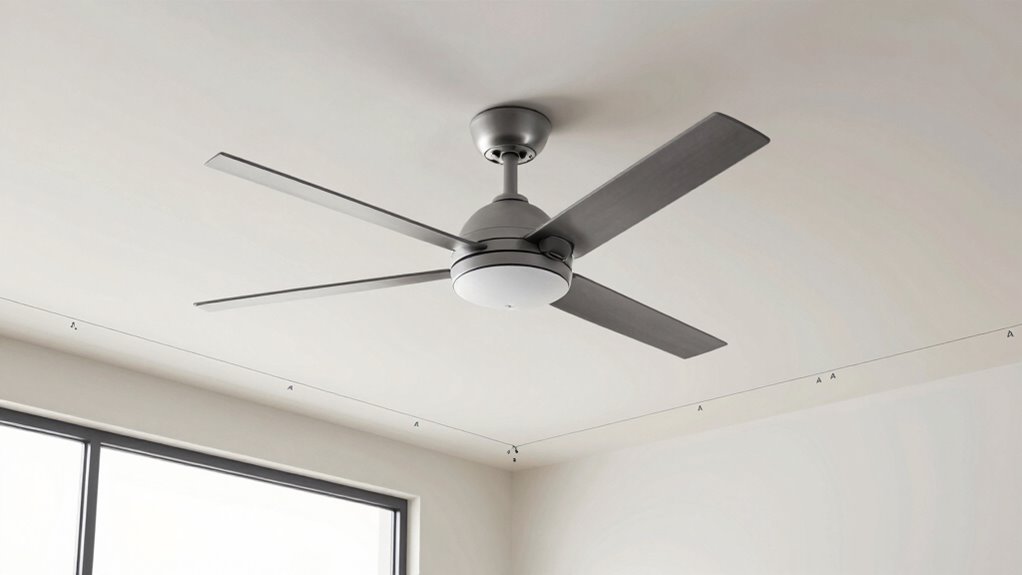
To select the perfect ceiling fan size, start by accurately measuring your room and ceiling height. Use a tape measure to determine the length and width of the space, guaranteeing you capture the full dimensions. For ceiling height, measure from the floor to the ceiling, noting whether it’s standard, high, or vaulted. This measurement helps determine the appropriate fan size and placement for ideal airflow. Consider your decorating styles when choosing fan material choices—modern fans often feature sleek metals, while traditional styles favor wood finishes. Proper measurements ensure the fan complements your room’s design and functions efficiently. Additionally, understanding airflow efficiency can help you select a fan that effectively circulates air without unnecessary energy use. Recognizing the relationship between blade size and airflow can further optimize your fan’s performance for your specific space. Taking into account ceiling fan placement ensures optimal air circulation and comfort throughout your room. Moreover, selecting the right blade pitch can significantly impact the fan’s airflow and efficiency, making your space more comfortable. Being aware of energy consumption can also help you choose a fan that balances performance with cost savings.
What Blade Span Is Best for Your Room Size?
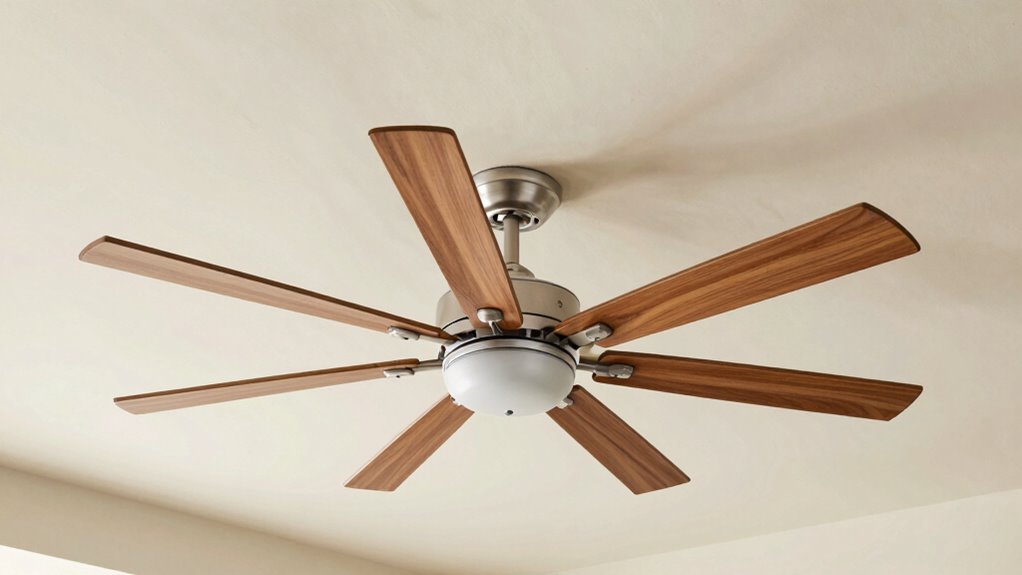
The right blade span guarantees your ceiling fan effectively circulates air without overpowering or underperforming in the space. For small rooms, a blade span of 29-36 inches is ideal, providing efficient airflow without overwhelming the area. Medium-sized rooms benefit from a 42-52 inch blade span, ensuring even circulation and maintaining fan aesthetics. Larger rooms, like living rooms or open-concept spaces, require a 52-72 inch span to cover the area adequately. When choosing decorative blades, consider how their style complements your room’s decor while maintaining proper size for airflow. The right blade span balances fan performance and aesthetics, ensuring your fan looks great and functions effectively without dominating the room or falling short.
How Airflow Affects Fan Efficiency and Energy Savings

Proper airflow from your ceiling fan directly impacts both its efficiency and energy consumption. When airflow efficiency is optimized, your fan circulates air effectively, reducing the need for additional cooling or heating, which conserves energy. A well-designed fan creates consistent airflow, minimizing hot or cold spots and improving comfort. To visualize this, consider the following:
| Airflow Level | Effect on Efficiency | Impact on Energy Savings |
|---|---|---|
| High | Maximizes airflow | Reduces energy use |
| Moderate | Adequate circulation | Moderate savings |
| Low | Inefficient airflow | Higher energy costs |
Additionally, understanding blade span helps in selecting a fan that provides optimal airflow for your space. Ensuring airflow efficiency is maintained can significantly enhance your fan’s performance and longevity. Properly balanced blades and fan placement also play crucial roles in achieving consistent airflow. Consistent airflow also contributes to air circulation, which improves overall comfort. Efficient airflow guarantees you get the most comfort with less energy, making your fan a smart investment in energy conservation.
How to Match Your Ceiling Fan Size to Your Room’s Dimensions : A Step-by-Step Guide
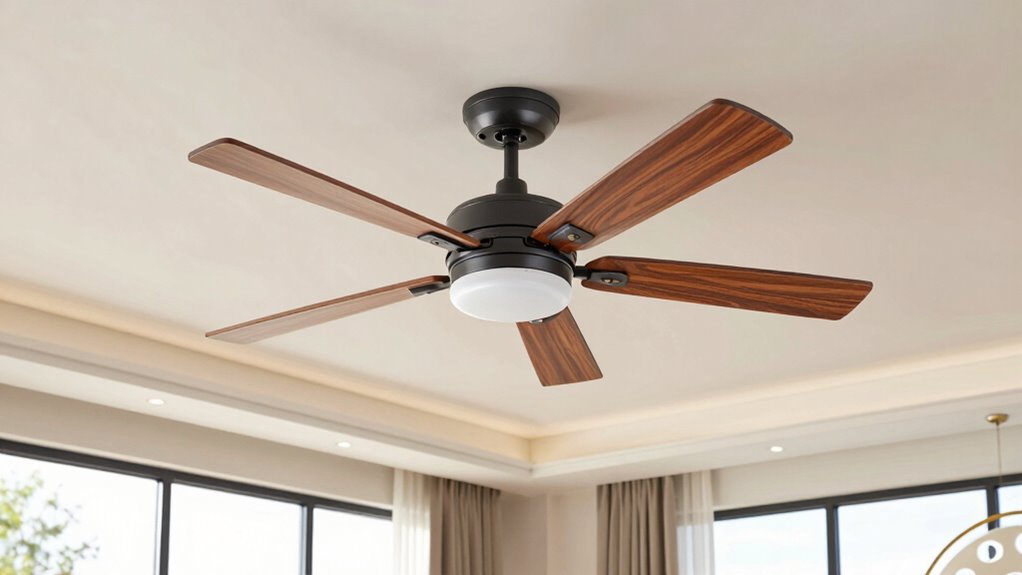
Choosing the right ceiling fan size is vital for ideal comfort and efficiency, and it starts with measuring your room accurately. To do this, determine the room’s square footage and select a fan with the appropriate blade span—generally, 42-44 inches for small rooms, 48-54 inches for medium spaces, and 56-60 inches for larger areas. Fan placement is essential; hang the fan so it’s centered in the room and at the proper height—usually 8 to 9 feet above the floor. Aesthetic considerations also matter: pick a fan style and finish that complement your decor. Proper sizing and placement ensure maximum airflow and a balanced look, making your room more comfortable and visually appealing. Additionally, understanding the effectiveness of security systems can help you feel safer in your home environment. When selecting a fan, consider the energy efficiency of inverter motors, which can help reduce your energy bills while maintaining optimal airflow. Ensuring your fan has the right airflow capacity according to your room size is crucial for effective cooling. Recognizing the impact of ceiling height on airflow can also guide you in choosing the most suitable fan configuration. Moreover, choosing a fan with adjustable blade pitch can enhance airflow performance based on your specific room dimensions.
Common Mistakes to Avoid When Buying a Ceiling Fan
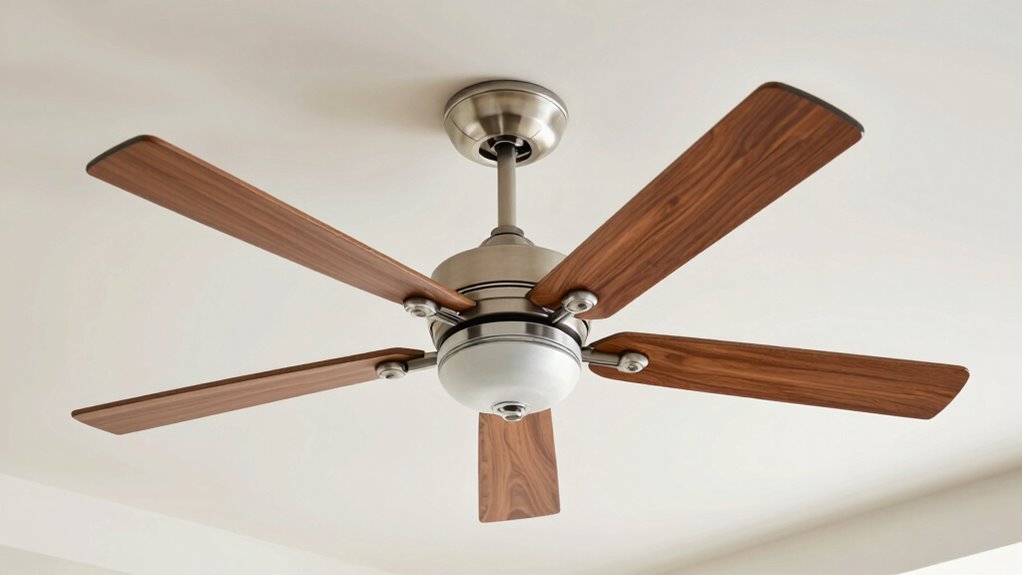
One common mistake is ignoring your room’s size, which can lead to choosing a fan that’s too small or too large. You also need to take into account your ceiling height, as a fan that’s too low or too high won’t work effectively. Pay attention to these details to make sure your fan functions properly and looks great. Additionally, consulting comprehensive architectural solutions can help you select the right fan size for your space. Considering the airflow efficiency of the fan can further enhance comfort and energy savings.
Ignoring Room Size
Many people overlook the importance of matching a ceiling fan’s size to their room, which can lead to ineffective cooling or discomfort. Choosing a fan without considering room size can also clash with your decorating styles and ceiling fan aesthetics, making your space feel unbalanced. A small fan in a large room won’t circulate enough air, while a large fan in a small room might seem overwhelming or out of place. To avoid this mistake, measure your room accurately and select a fan with the appropriate blade span. This ensures ideal airflow and complements your interior decor. Proper sizing not only enhances comfort but also maintains the overall aesthetic harmony of your space. Additionally, understanding airflow basics can help you choose a fan that effectively cools your space. Being aware of the ceiling height can further refine your selection, ensuring optimal airflow and comfort. Considering room layout and furniture placement can also optimize the fan’s effectiveness and overall room ambiance.
Overlooking Ceiling Height
When installing a ceiling fan, overlooking the ceiling height can lead to poor airflow and an uncomfortable environment. Ceiling height directly impacts airflow enhancement, as fans need proper clearance to circulate air effectively. If your ceiling is too high, the fan’s blades may not move enough air downward, reducing cooling efficiency. Conversely, low ceilings require fans with shorter downrods or flush mounts to prevent obstructions and ensure proper airflow. Failing to account for ceiling height can result in uneven cooling and wasted energy. Always measure your ceiling height carefully and select a fan size and mounting style that promotes ideal airflow. Proper consideration of ceiling height helps you avoid hot spots and maximizes the fan’s cooling performance.
Tips for Installing and Maintaining Your Ceiling Fan for Long-Lasting Performance
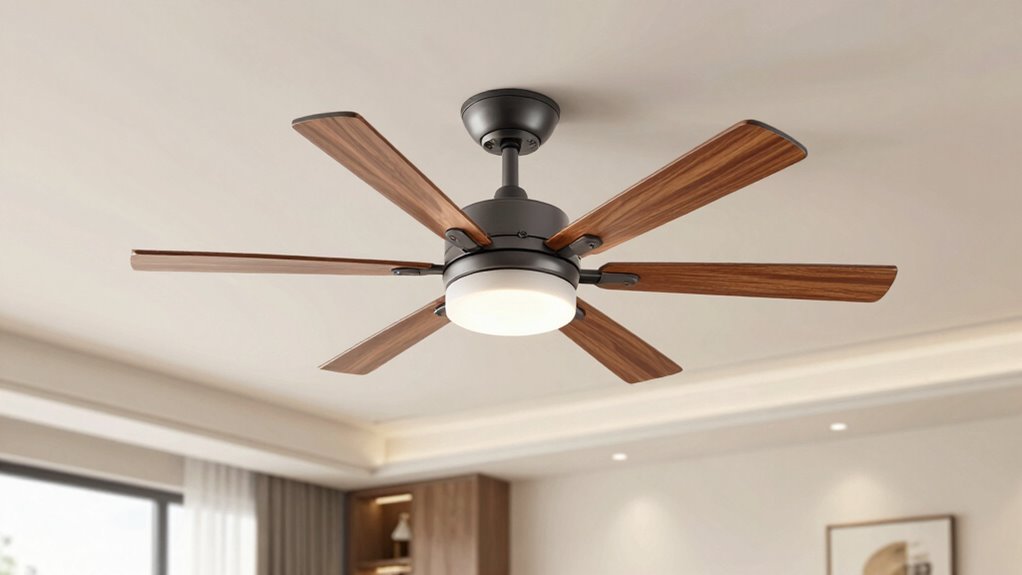
Proper installation and regular maintenance are essential to guarantee your ceiling fan operates efficiently and lasts for years. Start by ensuring the fan motor is securely connected and free of dust or debris. Regularly clean the blades to prevent dust buildup, which can affect airflow and balance. When maintaining your fan, consider these tips:
- Check the fan motor for any unusual noise or wobbling, and tighten or replace components as needed.
- Clean the blade material with a damp cloth to preserve their shape and performance.
- Inspect the mounting hardware to ensure the fan stays securely attached to the ceiling.
Following these steps helps prevent unnecessary wear and keeps your fan running smoothly, extending its lifespan and maintaining ideal airflow.
Frequently Asked Questions
How Does Ceiling Fan Placement Affect Airflow Distribution?
Your fan placement directly influences airflow patterns in your room. Positioning the fan centrally guarantees even airflow distribution, preventing hot or cold spots. If you place it too close to walls or corners, airflow becomes restricted, creating uneven comfort. Proper fan positioning promotes efficient airflow, helping circulate air effectively throughout the space, making it more comfortable. Adjusting the fan’s height and location optimizes airflow patterns for maximum comfort and energy efficiency.
Can a Fan Be Too Large or Too Small for a Room?
A fan that’s too large or small can cause issues like increased fan noise and decreased energy efficiency. Studies show that improper sizing reduces airflow by up to 30%, making your AC work harder. If your fan is too big, it might circulate air unevenly and create noise. Conversely, a too-small fan won’t move enough air, wasting energy and failing to cool effectively. Always choose a size suited for your room to optimize comfort.
What Are the Signs of an Inefficient or Underperforming Ceiling Fan?
If your ceiling fan isn’t cooling the room effectively, you might notice higher energy consumption, which means it’s working harder than it should. Additionally, increased noise levels or rattling sounds suggest it’s underperforming. You may also feel uneven airflow or hot spots, indicating it’s not circulating air properly. These signs point to an inefficient fan, so consider cleaning, balancing, or replacing it to improve performance and save energy.
How Does Ceiling Fan Height Influence Its Effectiveness?
Think of your ceiling fan as a dance partner; if it’s too high or too low, the performance falters. When your fan hangs too close to the ceiling, it can’t circulate air effectively—like a dancer stumbling on the stage. Aim for the right blade height, which depends on your ceiling clearance. Proper height guarantees ideal airflow, making your space cooler and more comfortable without missing a beat.
Are There Specific Fan Features Best Suited for High Ceilings?
For high ceilings, you should look for fans with long blade design and powerful motor efficiency. Fans with adjustable or longer downrods help position the blades correctly for ideal airflow. Choose models with a good balance of blade design and motor power, ensuring efficient circulation without wobbling. This combination enhances cooling performance, reduces energy costs, and keeps your space comfortable regardless of ceiling height.
Conclusion
Choosing the right ceiling fan size guarantees comfort, efficiency, and longevity. Measure accurately, select the appropriate blade span, and match your fan to your room’s dimensions. Avoid common mistakes, consider airflow and energy savings, and maintain your fan properly. By doing so, you create a cool, comfortable space, save on energy costs, and enjoy long-lasting performance. Keep these tips in mind, and you’ll enjoy a perfectly cooled room, a peaceful environment, and a smart investment that pays off.
Halloween Picks
halloween
As an affiliate, we earn on qualifying purchases.