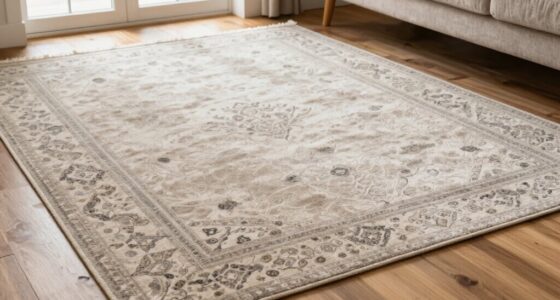
To manage echo and acoustics in rooms, focus on controlling sound reflections by using soft textiles like rugs, curtains, and furniture, which absorb excess noise. Incorporate acoustic panels or diffusers at key reflection points to scatter sound evenly. Adjust room size and shape awareness, and consider installing electronic sound masking or barriers for enhanced sound control. Properly maintaining and positioning these solutions helps create a clear, comfortable space. Keep exploring for more tips on fine-tuning your room’s acoustic environment.
Key Takeaways
- Use porous and diffusive materials to absorb and scatter sound waves, reducing reflections and echo.
- Strategically place soft textiles like rugs, curtains, and furniture at reflection points to dampen sound.
- Optimize room shape and size to minimize long reverberation times and uncontrolled echoes.
- Install acoustic panels, diffusers, and soundproofing elements at key reflection points for targeted sound control.
- Utilize electronic sound masking and barrier systems to manage external noise and enhance overall acoustics.

24 Pack Black 12 x 12 x 2 Inches Pyramid Designed Acoustic Foam Panels, Sound Proof Foam Panels for Walls, High Density and Flame-Retardant Acoustic Panels, Sound Panels for Recording and Home Studio
Exceptional Sound Absorption:These pyramid acoustic panels are engineered to effectively absorb sound waves, reducing echo and reverberation. With…
As an affiliate, we earn on qualifying purchases.
As an affiliate, we earn on qualifying purchases.
Understanding Room Acoustics and Echoes

Have you ever wondered why some rooms make voices sound clear and pleasant, while others create confusing echoes? It all comes down to sound wave behavior and how sound interacts with the space. When you speak, sound waves travel through the room, bouncing off surfaces and creating reflections. These reflections, or echoes, depend on echo timing—the interval between the original sound and its reflection reaching your ears. If echoes arrive too quickly or too slowly, they can distort sounds or cause muddiness. In rooms with good acoustics, reflections are well-managed, aiding clarity and warmth. Properly managing reverberation time ensures that echoes do not overlap excessively, maintaining sound quality. Poorly designed spaces, however, cause overlapping echoes that muddle speech and music. Understanding how sound waves behave helps you optimize room acoustics for clearer, more pleasant sound experiences.

VEVOR 2 Pcs Sound Dampening Blankets, Soundproof Curtains with 96 x 80 in, Soundproof Blanket with Grommets, Studio Grommeted Blanket, for Window, Door, Light Blocker, Music Recording, Black
Sound Absorption & Noise Reduction: Made with a polyester woven surface and recycled cotton filling, this 3-layer physical…
As an affiliate, we earn on qualifying purchases.
As an affiliate, we earn on qualifying purchases.
The Impact of Room Size and Shape on Sound
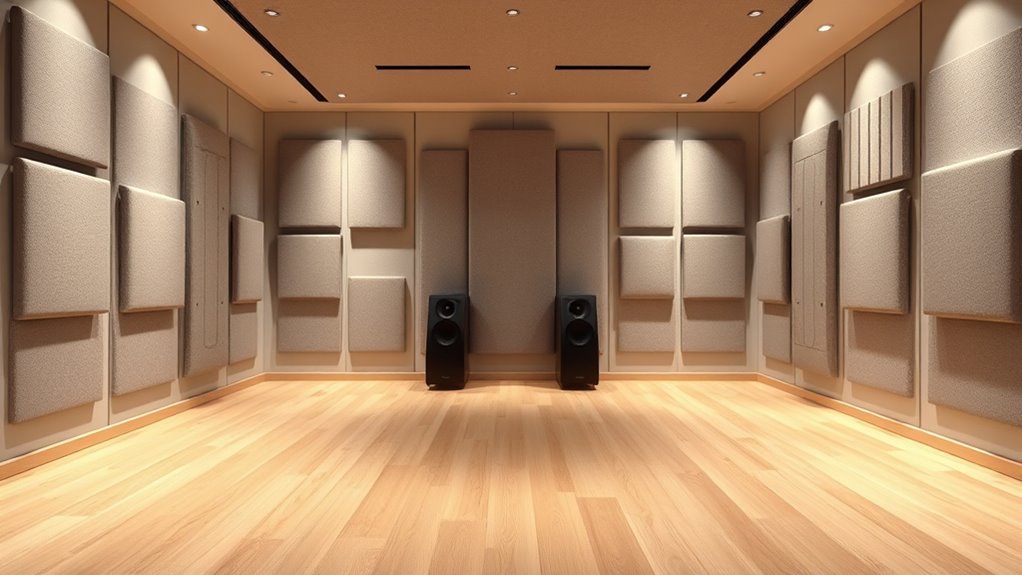
The size and shape of a room play a essential role in shaping its acoustic environment. Larger rooms with increased volume tend to produce longer reverberation times, which can cause echo issues. Conversely, small rooms may feel muffled due to limited sound diffusion. Shape distortion, such as irregular walls or unusual angles, can scatter sound waves unevenly, affecting clarity. Consider the following examples:
| Room Type | Effect on Sound |
|---|---|
| Rectangular | Predictable reflections, manageable echo |
| Square | Potential for standing waves and muddiness |
| Irregular shape | Increased diffusion, less echo |
| Long, narrow | Focused sound, possible flutter echoes |
| Circular or dome | Unique echoes, potential distortion |
Understanding these influences helps you optimize room design for better sound management. Additionally, incorporating self-watering plant pots can help create a more calming environment, indirectly enhancing acoustic comfort by reducing stress and noise sensitivity.

TroyStudio Acoustic Sound Diffuser Panels, 19.7 X 19.7 X 1 inches 12 Pcs Black PVC Plastic 3D Wall Panel, Recording Studio Acoustical Treatment Diffusion panel, Art Decorative Ceiling Tiles
【BASIC INFO】: Size – 19.7'' X 19.7'' X 1'', pack of 12, coverage 32.34 square feet; Lightweight -…
As an affiliate, we earn on qualifying purchases.
As an affiliate, we earn on qualifying purchases.
Choosing the Right Materials for Sound Absorption

Choosing the right materials can make a big difference in controlling room acoustics. Porous absorbing materials like foam or mineral wool help reduce echo, while diffusive surfaces scatter sound waves to create a balanced environment. By selecting these options carefully, you can tailor your space for clearer, more comfortable sound. Additionally, incorporating elements like soundproofing techniques can further enhance acoustic quality by minimizing external noise interference.
Porous Absorbing Materials
Selecting the right porous absorbing materials is essential for effectively controlling sound in a room. Porous materials, such as foam panels, mineral wool, or fiberglass, excel at sound absorption by trapping sound waves within their structure. When sound hits these materials, it converts acoustic energy into heat, reducing echo and reverberation. You should consider the thickness, density, and surface area of the porous materials to maximize their effectiveness. Thicker and denser options typically absorb lower frequencies better, while increased surface area enhances overall sound absorption. Installing these materials on walls, ceilings, or other reflective surfaces can dramatically improve room acoustics. Additionally, understanding the materials’ properties can help you select the most suitable options for your specific space. By choosing suitable porous materials, you’ll create a more balanced sound environment, minimizing unwanted echoes and improving clarity.
Diffusive Surface Options
While porous materials absorb sound waves to reduce echo, incorporating diffusive surfaces helps scatter remaining sound energy, preventing focused reflections. Geometric diffusers break up reflections by dispersing sound waves in multiple directions, creating a more even sound field. Reflective surfaces can be beneficial when strategically placed to control sound distribution without causing unwanted echoes. Selecting the right diffusive option depends on your room’s size and purpose. Use geometric diffusers on walls or ceilings to enhance clarity, while reflective surfaces can be tuned for specific acoustic goals. Here’s a quick comparison:
| Diffuser Type | Best Use |
|---|---|
| Geometric diffusers | Dispersing sound evenly, reducing flutter echoes |
| Reflective surfaces | Redirecting sound, controlling reflections |

Atlas Sound AM1200 Low Profile Sound Masking System UL2043
Includes Two 2 In. X 4 In. Internal Speakers
As an affiliate, we earn on qualifying purchases.
As an affiliate, we earn on qualifying purchases.
Strategic Placement of Furniture and Soft Items

Strategically placing furniture and soft items can considerably reduce echo and improve room acoustics. Your furniture arrangement plays a key role in breaking up sound reflections, so avoid placing large, flat surfaces directly opposite each other. Instead, position sofas, chairs, and tables to create multiple sound-absorbing surfaces. Adding decorative soft items like rugs, curtains, cushions, and drapes further dampens sound waves, preventing excessive reverberation. Distributing these items throughout the room ensures sound is absorbed evenly, rather than bouncing around unchecked. Incorporating sound-absorbing materials such as acoustic panels or wall hangings can further enhance sound quality. Keep in mind that the goal is to diffuse sound energy, not just absorb it, so balance soft items with other acoustic treatments. Proper furniture placement and soft items can make a noticeable difference in creating a clearer, more comfortable sound environment.
Installing Acoustic Panels and Diffusers
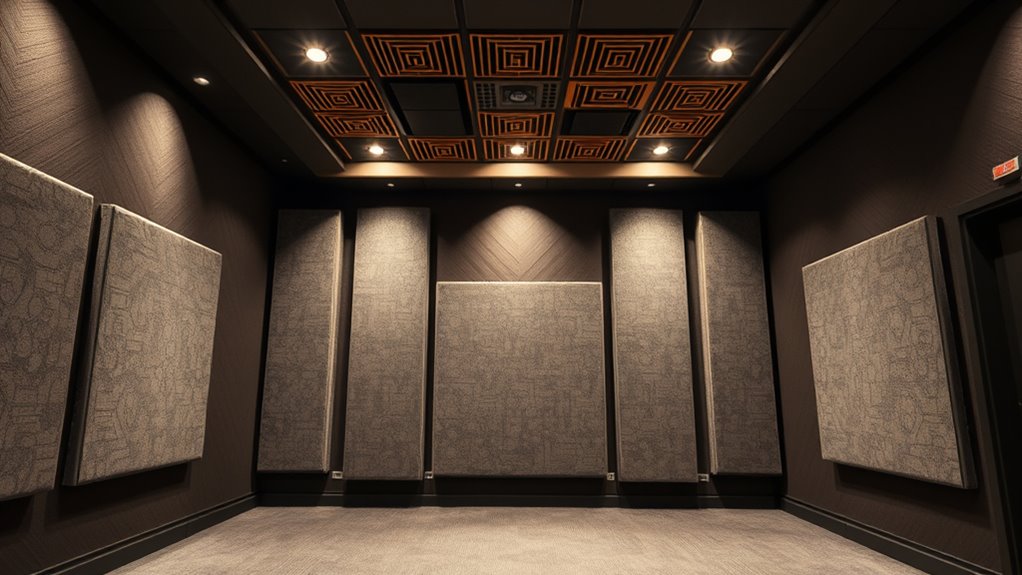
When installing acoustic panels and diffusers, you’ll want to focus on ideal placement to maximize their effectiveness. Choosing the right diffuser materials also plays a key role in achieving the desired sound quality. By carefully considering these points, you can considerably improve your room’s acoustics. Additionally, understanding the integration of IRAs with existing soundproofing strategies can help optimize both savings and acoustic performance.
Optimal Panel Placement
To achieve effective sound absorption and diffusion, you need to carefully consider where you place acoustic panels and diffusers within a room. Proper panel placement ensures maximum absorption optimization, reducing echo and unwanted reflections. Focus on placing panels at primary reflection points, such as walls opposite speakers or behind listening positions. Use a mirror to identify these spots; if you see the reflection from your position, that’s where a panel should go. Avoid clustering panels in one area; instead, spread them evenly to balance sound absorption throughout the space. Also, consider the room’s shape and furniture layout, which influence how sound waves travel. Thoughtful panel placement enhances clarity, making your room acoustically balanced and more enjoyable.
Choosing Diffuser Materials
Selecting the right diffuser materials is essential for effectively managing sound reflections and creating a balanced acoustic environment. Fiber optic materials can be used for diffusers, offering high durability and excellent sound diffusion qualities. They are lightweight and easy to install, making them ideal for customized acoustic treatments. When choosing materials, consider their density and texture, as these factors influence how sound waves scatter. Durable fiber optic diffusers work well in both professional and home settings, while foam options provide cost-effective solutions for smaller spaces. Additionally, the impact of material texture on sound diffusion can significantly enhance the acoustic performance of your room. By selecting suitable materials, you ensure your diffusers perform at their best, enhancing clarity and reducing unwanted echoes in your room.
Utilizing Rugs, Curtains, and Soft Textiles
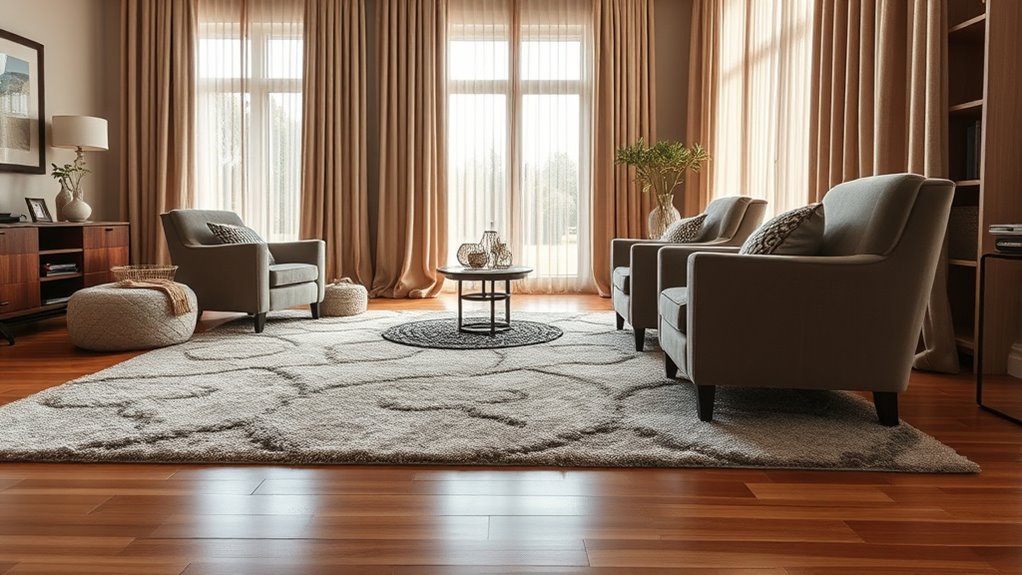
Rugs, curtains, and soft textiles are effective tools for controlling echo and improving room acoustics. These items absorb sound waves, reducing reverberation and creating a cozy atmosphere. Incorporating fiber art and decorative textiles enhances both function and style, making your space more inviting. Strategically placing rugs on hard floors or hanging curtains can make a noticeable difference. Consider this emotional impact:
| Comfort & Warmth | Visual Appeal |
|---|---|
| Soft textiles create a cozy environment | Vibrant rugs and curtains add personality |
| Absorb echoes, making conversations clearer | Elevate your room’s aesthetic with decorative textiles |
| Reduce noise pollution | Reflect your unique style |
| Enhance intimacy and relaxation | Feel more at home with thoughtful accents |
Additionally, understanding sound absorption principles can help you select the most effective textiles for your space.
Electronic Solutions for Sound Management
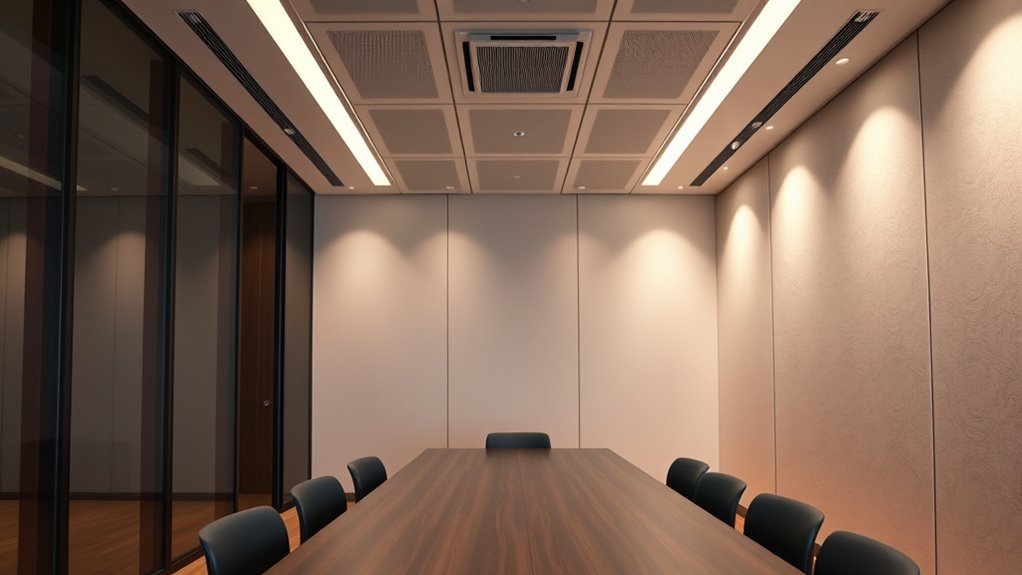
Electronic solutions for sound management offer precise and adaptable ways to control acoustics in any space. Sound masking systems emit a soft, ambient sound that reduces distractions and enhances privacy, making environments more comfortable. Electronic sound barriers work by actively blocking or redirecting unwanted noise, providing targeted noise reduction in specific areas. These systems can be easily adjusted to suit changing needs, giving you control over the acoustic environment. Unlike traditional methods, electronic solutions are quick to install and require minimal ongoing maintenance. They are especially useful in open offices, healthcare facilities, or conference rooms where sound control is critical. By integrating sound masking and electronic sound barriers, you create a tailored acoustic environment that minimizes echo, improves speech clarity, and boosts overall comfort. Acoustic environment can be customized to meet the unique needs of each space, ensuring optimal sound quality and privacy.
Tips for Maintaining Optimal Acoustic Conditions
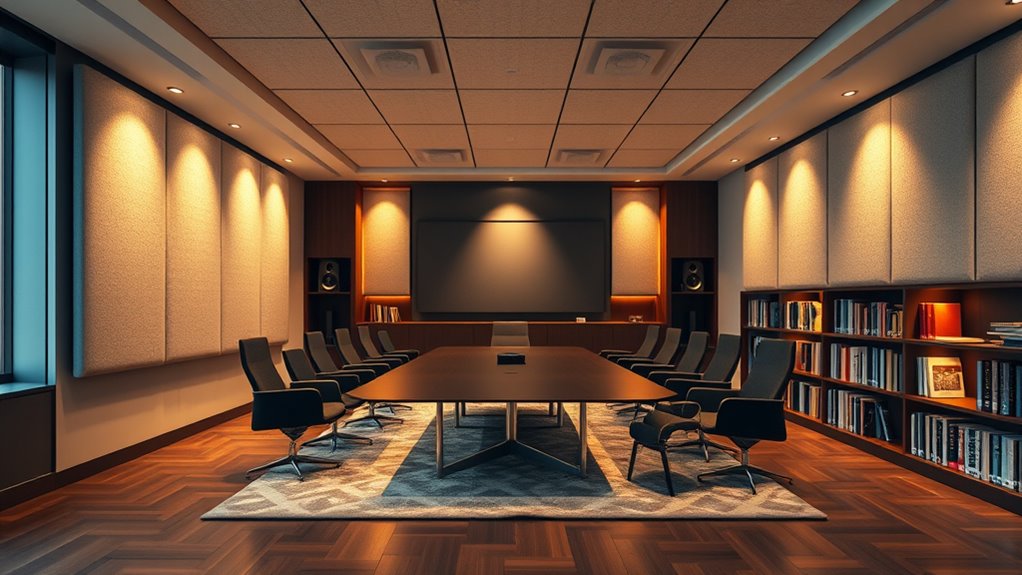
To maintain ideal acoustic conditions, regular inspection and adjustment of sound management systems are essential. Implement soundproofing techniques like sealing gaps, adding acoustic panels, and using heavy curtains to prevent sound leakage and minimize echo. These measures help manage background noise reduction, creating a clearer and more comfortable environment. Keep an eye on existing soundproofing elements to guarantee they stay effective, replacing or upgrading materials as needed. Adjust placement of sound-absorbing materials to target problem areas and optimize sound quality. Regularly evaluate the acoustics by listening for unwanted echoes or noise and make necessary modifications. Additionally, integrating crochet styles for locs can be used as a creative way to enhance acoustic treatments with customized fabric coverings or decorative elements. Consistent maintenance ensures your space remains acoustically balanced, fostering better communication, concentration, and overall comfort.
Frequently Asked Questions
How Can I Reduce Echo Without Changing Room Furnishings?
You can reduce echo by installing acoustic panels on your walls, which absorb sound waves and cut down on reverberation. Soundproof barriers like thick curtains or foam panels also work well, especially in spaces where you can’t change furniture. These solutions are easy to add and highly effective, helping you create a quieter, more controlled environment without altering your room’s existing furnishings.
What Are the Signs of Poor Room Acoustics?
You notice muffled sounds, excessive echo, or difficulty understanding conversations, which are signs of poor room acoustics. You might also feel discomfort from loud reflections or find that sound bounces unpredictably. To improve this, consider adding sound absorption materials like acoustic panels. These panels help reduce reflections and echo, creating a clearer, more comfortable environment for speech and listening.
Can Plants Improve Room Sound Quality?
Plants can indeed improve room sound quality by enhancing sound absorption. Think of them as natural acoustic panels—strategically placing plants like ferns or pothos near walls or corners reduces echo. For example, I added a few large leafy plants to my living room, and the difference was clear: the space felt calmer, with less echo. Proper plant placement can soften sound reflections, making your room more acoustically comfortable.
How Do I Measure Room Reverberation Time Accurately?
To measure room reverberation time accurately, you should perform room calibration first by using a sound level meter and a calibrated test signal, like a pink noise or impulsive sound. Record the decay of sound after the source stops, focusing on sound absorption effects. Use software or manual calculations to determine how long it takes for the sound to decay by 60 dB. This method gives you a precise reverberation time for better acoustic control.
Are There Budget-Friendly Acoustic Treatment Options?
You can find budget-friendly acoustic treatment options by exploring DIY solutions and affordable panels. Using household items like thick blankets, heavy curtains, or foam mats can help reduce echo effectively. You might also consider building your own panels with inexpensive materials like rockwool or fiberglass, then covering them with fabric. These DIY options are cost-effective and customizable, making them perfect for improving room acoustics without breaking the bank.
Conclusion
Think of your room as a musical instrument; when you manage its echoes and acoustics well, it produces beautiful, clear sound. By understanding your space, choosing the right materials, and making strategic adjustments, you can turn a noisy echo chamber into a harmonious haven. Keep experimenting and fine-tuning, and you’ll craft an environment where every note and word resonates perfectly—like tuning a guitar until it sings just right.