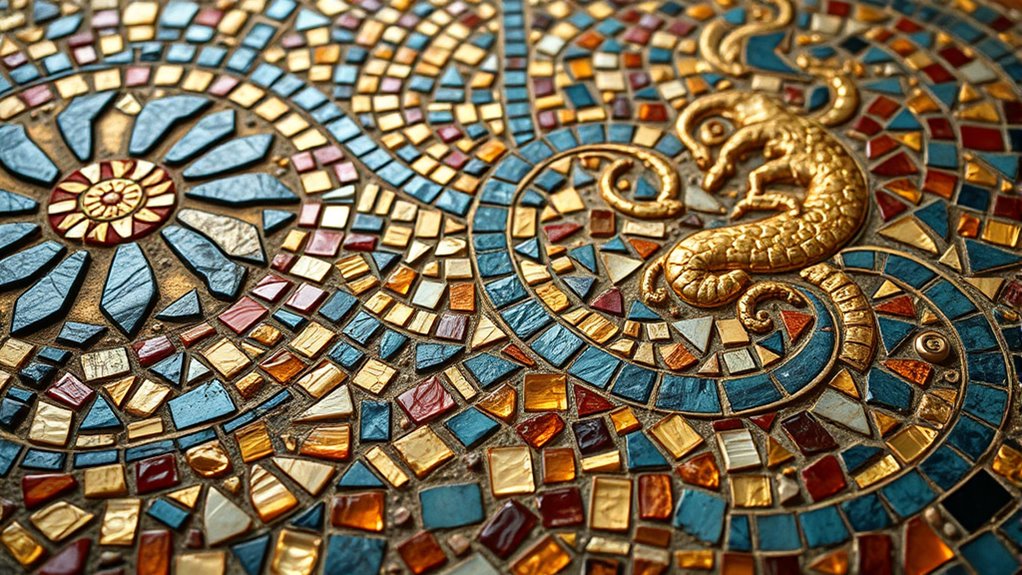

Roman mosaics showcase impressive craftsmanship, combining tiny glass, stone, or ceramic pieces called tesserae to create detailed images and patterns. Artists carefully select colors and arrange tesserae onto surfaces, secured with lime mortar. These mosaics often depict mythological stories, daily life scenes, and symbols of power, reflecting social status and cultural values. Their intricate designs and durability have influenced art for centuries. Exploring further reveals how these masterpieces shaped history and continue to inspire today.

Get furniture and decor delivered free with Prime
- Fast, free delivery on millions of items
- Prime Video, Amazon Music and more included
- Member-only deals all year
Key Takeaways
- Roman mosaics were created using small tesserae of glass, stone, or ceramic, precisely arranged to form detailed images and patterns.
- They depicted mythological scenes, daily life, and symbolic motifs to convey cultural values and social status.
- Mosaics served as decorative art in public and private spaces, reflecting wealth, social hierarchy, and regional styles.
- The techniques involved careful planning, adhesive application, and grouting to ensure durability and intricate designs.
- Regional variations and artistic styles highlight local resources, cultural influences, and the importance of mosaic art in Roman society.
As an affiliate, we earn on qualifying purchases.
The Materials and Techniques Behind Roman Mosaics

Roman mosaics showcase remarkable craftsmanship, achieved through carefully selected materials and refined techniques. You’ll notice the use of Roman tesserae, small square pieces made from glass, stone, or ceramic, which form the intricate patterns and images. These tesserae are precisely cut to fit tightly together, creating detailed and durable designs. To guarantee stability, artisans apply lime mortar as the adhesive, spreading it evenly over the surface before placing each tessera. The lime mortar’s quick-drying properties allow for efficient assembly, while its strength secures the tesserae in place. By combining high-quality tesserae with expert application of lime mortar, Roman artists created mosaics that have endured for centuries, showcasing their skill and attention to detail. The durability of these mosaics is largely due to the use of adhesive materials, which ensured their longevity over time.
Iconography and Themes in Roman Mosaic Art
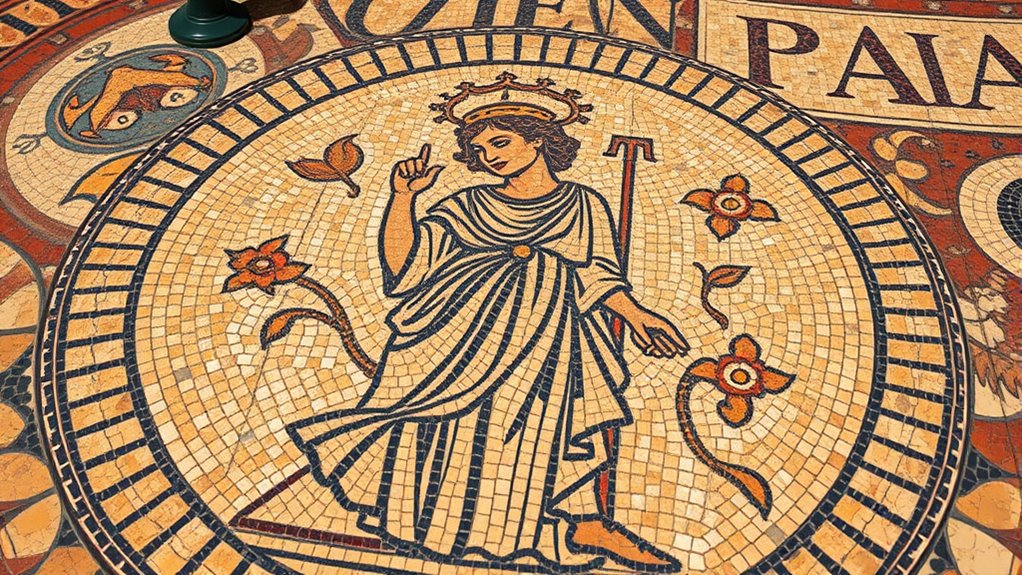
Roman mosaics often feature mythological figures and symbols that tell stories or convey beliefs. You’ll also notice scenes from daily life, capturing moments from leisure to work. Additionally, geometric and floral patterns serve decorative purposes, adding beauty and structure to these masterpieces. A variety of styles can be observed across regions and periods, reflecting local artistic influences and cultural values.
Mythological Depictions and Symbols
Mythological depictions and symbols play a pivotal role in conveying stories and beliefs through mosaic art, transforming everyday surfaces into vivid narratives. You’ll notice that mythological symbolism often appears as central motifs, representing gods, heroes, and legendary events. These divine narratives serve to communicate cultural values and religious beliefs, making abstract ideas tangible. Bright colors and intricate patterns emphasize important figures and moments, immersing viewers in mythic worlds. Whether depicting the gods’ triumphs or heroic exploits, mosaics use symbolism to evoke reverence and awe. These mythological themes not only decorate but also educate, reinforcing social ideals and spiritual beliefs. As you observe such mosaics, you’re witnessing a visual language that bridges myth and reality, celebrating divine power and legendary heroism.
Daily Life Scenes
Daily life scenes in mosaic art offer a vivid glimpse into the routines and social activities of ancient Rome, capturing moments from entertainment to work and leisure. You’ll notice scenes depicting people in a Roman garden, enjoying leisure activities or socializing amidst lush surroundings. These images often adorn mosaic flooring, transforming everyday spaces into storytelling canvases. Such mosaics reflect daily pursuits like hunting, dining, or participating in athletic competitions, giving you insight into Roman customs and values. The detailed iconography emphasizes familiar settings, making the mosaics relatable and lively. By depicting scenes of daily life, Roman mosaic artists brought a sense of realism and vibrancy to homes and public spaces, allowing you to connect with the social fabric of ancient Rome through intricate, colorful storytelling embedded in durable mosaic flooring. Additionally, the use of iconography in these mosaics helped convey complex narratives and cultural symbolism, enriching the viewer’s understanding of Roman society.
Geometric and Floral Motifs
Scenes of everyday life in Roman mosaics often incorporate intricate geometric patterns and vibrant floral motifs, transforming floors into a tapestry of visual interest. Your appreciation for tile craftsmanship reveals how artisans skillfully combine shapes and colors to create complex designs. Geometric motifs, with their precise lines and symmetry, symbolize order and harmony, while floral patterns add vitality and natural beauty. The use of vivid colors in these motifs isn’t random; it’s deeply tied to color symbolism, representing different themes like fertility, prosperity, or protection. As you observe these mosaics, you notice how the careful arrangement of tiles brings these themes to life. This blend of technical mastery and symbolic storytelling elevates Roman mosaics from mere decoration to meaningful works of art. Additionally, the color symbolism in these designs demonstrates how art served not only decorative purposes but also conveyed cultural and spiritual messages.
The Social and Cultural Significance of Mosaics

Mosaics in Roman homes and public spaces often served as symbols of wealth and social status, showcasing the owner’s taste and influence. They also reflected community identity, with specific designs and motifs representing local traditions or values. By understanding these elements, you can see how mosaics went beyond decoration to shape social and cultural identity. Additionally, the use of artistic techniques in mosaic creation demonstrates the high level of craftsmanship valued in Roman society.
Symbolism and Status
Ancient Roman mosaics served as powerful symbols of social status and cultural identity, conveying messages about wealth, power, and prestige. Their intricate designs often held symbolic meaning, reflecting the owner’s place within the social hierarchy. Wealthier families commissioned elaborate mosaics to showcase their affluence, using vibrant colors and complex patterns to stand out. These artworks weren’t just decoration—they communicated social standing and political influence. For the elite, mosaics acted as visual assertions of dominance and sophistication. In contrast, simpler designs were typical for lower classes, emphasizing modesty. By carefully choosing motifs and craftsmanship, patrons expressed their identity and reinforced their position in society. Mosaics, consequently, served as silent yet potent markers of social stratification and cultural values in ancient Rome. Additionally, the craftsmanship involved in creating mosaics highlighted regional artistic traditions and technological skills, further emphasizing the cultural significance of these artworks.
Community Identity Expression
Ever wonder how communities in ancient Rome used mosaics to express their shared identity? In public spaces like forums, baths, and temples, mosaics served as visual symbols of community values and collective pride. They often depicted mythological stories, historical events, or local achievements, imbuing these areas with symbolic meaning that reinforced social bonds. These mosaics weren’t just decorative; they communicated messages about the community’s identity, beliefs, and status. By displaying intricate designs and meaningful imagery in prominent locations, Romans created a sense of unity and shared culture. These artworks helped define the character of the community, making their public spaces more than just functional areas—they became expressions of collective identity and cultural pride. Additionally, the design and craftsmanship of mosaics reflected the community’s artistic skills and economic prosperity.
The Process of Creating a Roman Mosaic
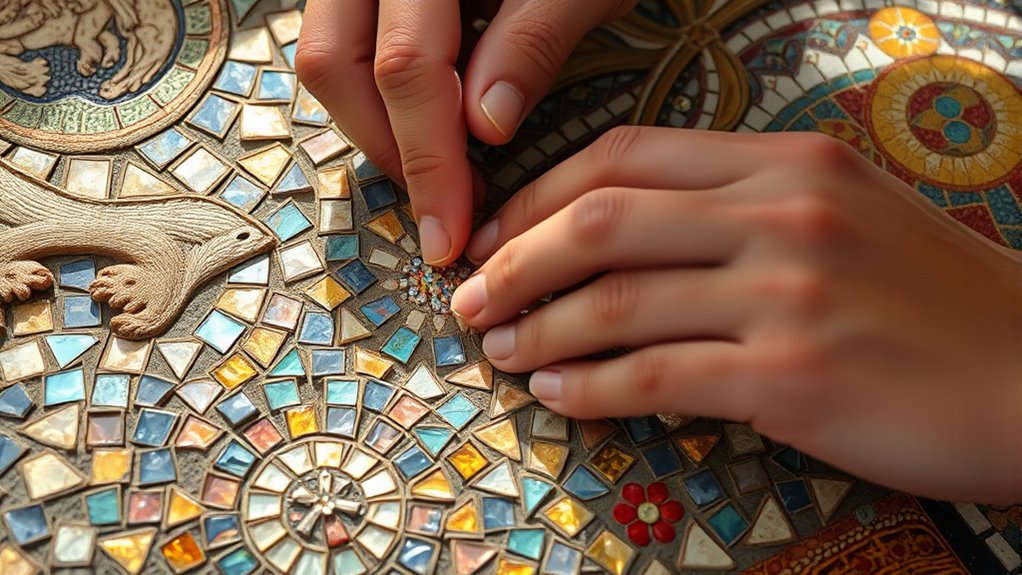
Creating a Roman mosaic involves a meticulous process that transforms small colored stones and tiles into intricate works of art. First, you select your mosaic tesserae, carefully choosing colors and shapes to fit your design. Next, you arrange these tesserae onto a prepared surface, following your pattern precisely. Once the tesserae are in place, you apply grout to fill the gaps between them, securing each piece and enhancing the mosaic’s durability. Grout application requires skill to ensure even coverage without disturbing the tesserae placement. You might use tools to press the tesserae firmly into the surface and remove excess grout. This careful process results in a vibrant, long-lasting mosaic that showcases the craftsmanship and artistic vision of Roman artisans. Proper surface preparation ensures the mosaic’s stability and longevity over time.
Notable Examples of Roman Mosaic Masterpieces

Roman mosaics stand as stunning attestations to the skill and creativity of their artisans, showcasing a range of themes from everyday life to mythological scenes. Notable masterpieces like the Alexander Mosaic from Pompeii display intricate detail and storytelling mastery. Some mosaics incorporate medieval symbolism, blending Christian motifs with classical imagery, revealing how later cultures reinterpreted Roman art. Today, modern reinterpretations breathe new life into these ancient works, often emphasizing their symbolic layers or adapting their designs for contemporary aesthetics. These masterpieces continue to inspire, demonstrating the enduring power of mosaic art. The techniques employed in creating these mosaics highlight the advanced craftsmanship and artistry of ancient Roman artisans. Whether admired for their craftsmanship or their layered meanings, these examples highlight the lasting legacy of Roman mosaic artistry and its influence across centuries.
Regional Styles and Variations in Roman Mosaics

Regional styles in Roman mosaics reflect the diverse cultural influences and local traditions that shaped their development across the empire. You’ll notice differences in regional craftsmanship and iconography that reveal local tastes and resources. For example:
- In North Africa, mosaics often feature vibrant colors and geometric patterns, showcasing skilled craftsmanship rooted in local traditions.
- In Gaul, you’ll see more subdued palettes and themes derived from regional iconography, emphasizing mythological scenes and everyday life.
- In the Eastern provinces, mosaics incorporate intricate designs and exotic motifs influenced by Hellenistic art, highlighting regional craftsmanship and cultural exchange.
- The regional variations also reflect differing access to materials and resources, which influenced the complexity and style of the mosaics produced in each area.
These variations demonstrate how local influences shaped mosaic art, blending indigenous styles with Roman techniques to create uniquely regional masterpieces.
Preservation and Restoration of Ancient Roman Mosaics
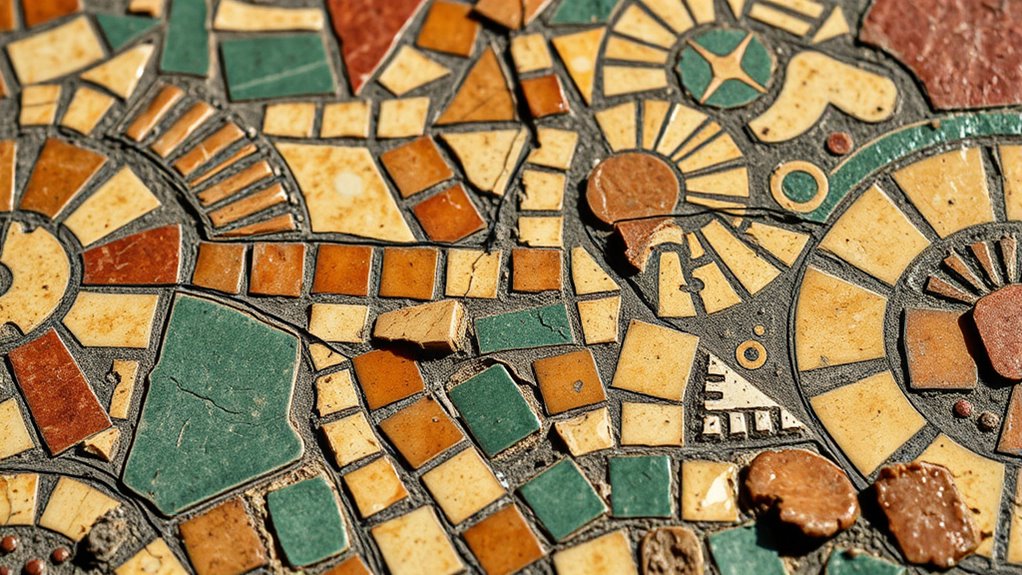
Preserving and restoring ancient Roman mosaics involves a variety of techniques to stabilize and conserve these intricate artworks. You’ll encounter challenges like material deterioration and previous repairs that complicate restoration efforts. Understanding the strategies for material conservation helps ensure these mosaics endure for future generations. Incorporating eco-friendly materials during restoration can also minimize environmental impact and ensure the longevity of the mosaics.
Conservation Techniques Employed
Conservation techniques for ancient Roman mosaics involve careful assessment and targeted interventions to guarantee their longevity. You start by analyzing the mosaic tesserae to identify damage or looseness. Then, you select appropriate adhesive materials that match the original mortar to secure loose pieces without harming the artwork. Finally, cleaning methods are carefully applied to remove dirt and encrustations without damaging the tesserae.
Key steps include:
- Examining tesserae and underlying structure for deterioration.
- Applying compatible adhesive materials to reattach or stabilize loose tesserae.
- Using gentle cleaning techniques to preserve the mosaic’s original colors and details.
These methods ensure that the mosaics remain intact for future generations while respecting their historical integrity.
Common Restoration Challenges
Restoring ancient Roman mosaics presents several challenges that can threaten their long-term preservation. Material degradation, caused by environmental factors and previous repair attempts, complicates the process. You must address issues like loose tesserae, surface dirt, and structural instability, which hinder accurate restoration. Understanding these restoration challenges is essential for effective preservation. The table below summarizes common issues faced during restoration:
| Challenge | Cause | Impact |
|---|---|---|
| Material Degradation | Age, moisture, pollutants | Weakening tesserae, loss |
| Surface Erosion | Weathering, abrasion | Loss of detail, surface roughness |
| Structural Instability | Previous repairs, vibrations | Mosaic detachment or collapse |
Additionally, employing self-reflection techniques can help restorers better understand the historical significance and original craftsmanship of the mosaics, leading to more sensitive and accurate preservation efforts.
Material Preservation Strategies
To effectively preserve ancient Roman mosaics, you need to adopt targeted strategies that address their unique vulnerabilities. Material decay and the archaeological context are critical factors. First, controlling environmental conditions like humidity and temperature prevents further deterioration. Second, careful cleaning using non-invasive methods removes dirt without damaging the mosaic’s materials. Third, ongoing monitoring helps detect early signs of decay, allowing timely intervention. These strategies ensure the mosaics retain their integrity while respecting their archaeological context. Preservation efforts focus on stabilizing fragile tesserae and protecting them from future damage. Additionally, understanding the material composition of the mosaics aids in selecting appropriate conservation techniques. By understanding the materials and environment, you can develop effective preservation plans that extend the life of these ancient artworks and honor their historical significance.
Influence of Roman Mosaics on Later Artistic Traditions

Roman mosaics profoundly shaped the development of artistic traditions that followed, influencing both technical methods and stylistic choices across centuries. Their use of Roman mosaic symbolism conveyed complex stories, religious themes, and social status, inspiring later artists. You can see this influence in Byzantine, medieval, and Renaissance mosaics, which adopted similar techniques and motifs. Roman mosaic workshops served as centers for innovation, spreading their craftsmanship and design principles throughout the empire and beyond. These workshops trained artisans in precise tessellation and color use, setting standards for future decorative arts. The emphasis on symbolism and craftsmanship became a legacy, inspiring artists in various cultures to incorporate mosaics into their visual language and decorative repertoire. Additionally, the techniques and motifs developed by Roman artisans continue to inform modern mosaic practices, ensuring their enduring legacy. Your appreciation of later mosaic art is rooted in this enduring Roman influence.
The Role of Mosaics in Roman Domestic Spaces
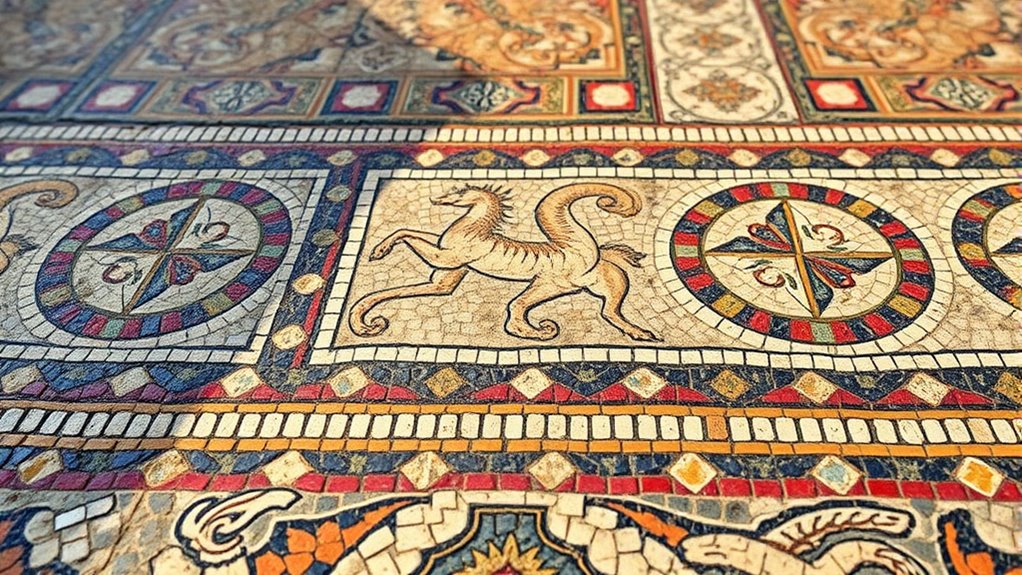
Mosaics played a pivotal role in transforming ordinary domestic spaces into showcases of wealth, taste, and cultural identity. As you explore Roman homes, you’ll notice how Roman mosaic craftsmanship elevates everyday rooms. Mosaics served to enhance the domestic aesthetic, creating vibrant focal points that reflected personal style and social status. Creating a cozy farmhouse bedroom ambience, for example, often involves the use of authentic materials and decorative touches to evoke warmth and charm. Consider these examples: 1. Entrance halls featuring intricate geometric or mythological designs to impress visitors. 2. Private bathing areas adorned with colorful, detailed scenes for relaxation and leisure. 3. Dining rooms showcasing elaborate mosaics that demonstrated wealth and artistic appreciation. Through these mosaics, Roman households expressed identity and sophistication, turning simple spaces into durable, beautiful works of art that reflected their cultural values.
The Legacy of Roman Mosaic Art in Modern Design
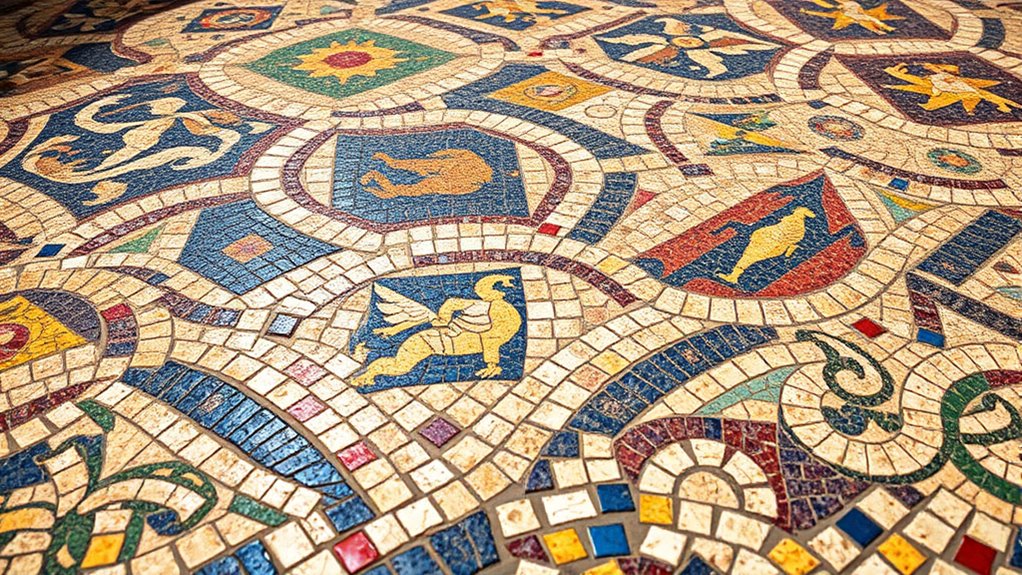
The influence of Roman mosaic art continues to shape modern design, inspiring contemporary architects and interior decorators alike. Roman mosaic symbolism often highlights themes like power, prosperity, and cultural identity, ideas still echoed in today’s decorative choices. You’ll notice the use of intricate mosaics in public buildings and private homes, reflecting a tradition rooted in Roman politics where mosaic art conveyed authority and societal values. Modern designers incorporate these historic motifs to add depth and narrative to spaces, blending old-world symbolism with contemporary aesthetics. The legacy of Roman mosaics reminds you that art can serve as both decoration and communication, connecting past ideals with present creativity. Additionally, understanding wiring basics and safety considerations can help you appreciate the craftsmanship and technical skill involved in creating these enduring artworks. Ultimately, Roman mosaic art’s enduring influence encourages you to appreciate craftsmanship and symbolism in your own design projects.
Frequently Asked Questions
How Did Roman Mosaics Influence Contemporary Decorative Arts?
Roman mosaics influence contemporary decorative arts by inspiring the medieval revival and shaping modern interpretations of intricate designs. You can see their impact in today’s decorative tiles, wall art, and flooring, where artisans replicate the detailed patterns and vibrant colors. This legacy encourages you to blend historical techniques with modern aesthetics, creating unique pieces that honor ancient craftsmanship while fitting contemporary spaces.
What Symbolic Meanings Are Embedded in Specific Mosaic Motifs?
You’ll notice that specific mosaic motifs often carry symbolic meanings, like mythological representations that embody virtues or tales. For example, images of gods and heroes symbolize strength, wisdom, or protection. Animals and geometric patterns also carry symbolic motifs, representing fertility, harmony, or eternity. These motifs reveal how Romans used mosaics to communicate cultural values, beliefs, and stories, turning decorative art into a visual language rich with layered symbolism.
Were Mosaics Used Exclusively for Aesthetic Purposes or Also Functional?
Mosaics are like silent sentinels, serving both aesthetic and functional purposes. You’ll find they weren’t just for decoration; they provided structural durability, especially in floors and walls. Romans used mosaics to strengthen surfaces while showcasing intricate designs, making them both beautiful and practical. Their durability meant they endured centuries, proving mosaics were essential for more than just visual appeal—they were crucial in architecture’s backbone.
How Did Social Status Affect Mosaic Design Choices in Rome?
Your social status greatly influenced your mosaic design choices in Rome. If you belonged to the upper class, you’d opt for intricate, luxurious mosaics that showcased your wealth and social hierarchy. Wealthier individuals used costly materials like gold and colorful stones to create elaborate patterns, reflecting their status. Conversely, lower classes had simpler designs, emphasizing practicality over opulence. Your mosaic would serve as both a display of your social standing and a symbol of wealth.
What Tools and Methods Did Ancient Artisans Use for Intricate Mosaic Work?
You use small tools like tweezers and chisels to place mosaic tesserae precisely, creating intricate designs. Ancient artisans relied on adhesive techniques involving mortar or lime to secure the tesserae firmly onto surfaces. They carefully cut and arrange the tesserae, often using color variations to achieve detailed imagery. These methods allowed for intricate patterns and vibrant mosaics that have endured for centuries, showcasing their skill and craftsmanship.
Conclusion
By exploring Roman mosaics, you reveal a world so vibrant and intricate, it’s like stepping into history’s most dazzling masterpiece. These stunning artworks didn’t just decorate—they defined an era, shaping art for centuries to come. When you admire their beauty, you’re witnessing the incredible ingenuity of ancient craftsmen whose creations continue to inspire and amaze, proving that Roman mosaics are truly the crown jewels of artistic legacy—timeless, breathtaking, and forever magnificent.
Columbus Day / Indigenous Peoples' Day Picks
long weekend sales
As an affiliate, we earn on qualifying purchases.