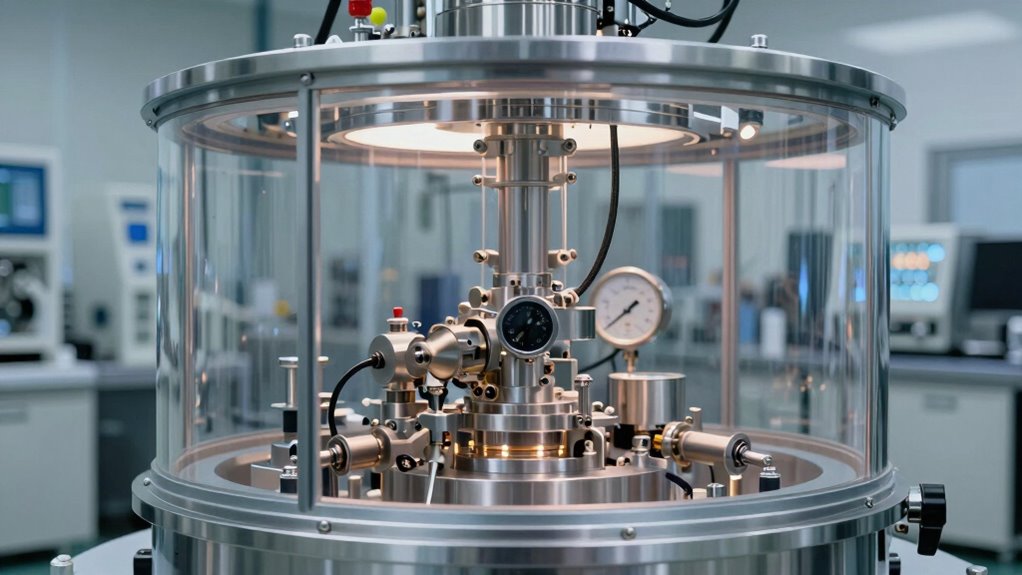

A vacuum chamber works by removing air and gases from materials, creating a low-pressure environment that encourages trapped moisture and contaminants to escape. You use it for degassing when high-purity, contamination-free results are needed, such as in electronics or resin casting. The process involves applying heat and creating a vacuum to speed up outgassing. If you want to guarantee your materials are properly prepared, understanding how this all works will help you succeed.
Key Takeaways
- Degassing removes trapped gases and moisture from materials by creating a low-pressure environment in the vacuum chamber.
- Proper heating and bake-out techniques accelerate gas and contaminant release during degassing.
- Maintaining appropriate vacuum levels and temperature ensures effective removal of impurities and prevents contamination.
- Regular chamber maintenance, leak checks, and seal integrity are essential for optimal degassing performance.
- When high purity, minimal trapped gases, or contaminant removal are required, degassing in a vacuum chamber is necessary.

VEVOR 5 Gallon Vacuum Chamber and 3.5 CFM Pump Kit, Stainless Steel Chamber, Single Stage Vacuum Pump Degassing Chamber Kit, with Acrylic Lid, Oil, 4.92 ft Hose, for Degassing Resin Silicone Epoxies
Efficient Degassing Performance: Our 3.5 CFM vacuum pump is engineered specifically for degassing and de-bubbling applications, achieving an…
As an affiliate, we earn on qualifying purchases.
As an affiliate, we earn on qualifying purchases.
What Is a Vacuum Chamber and Why Does It Matter?
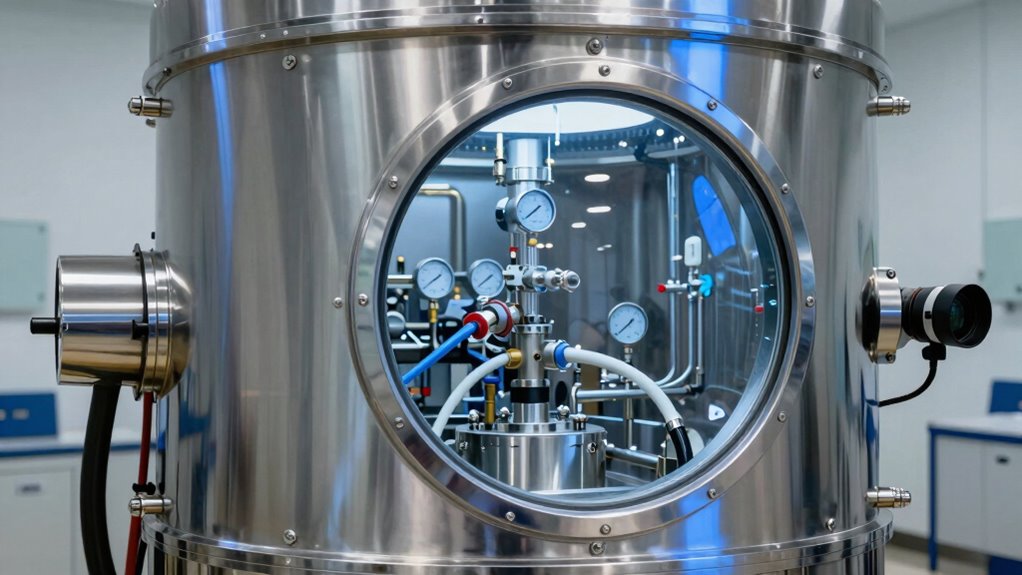
A vacuum chamber is a sealed container from which air and other gases are removed, creating a low-pressure environment. This controlled setting is essential for processes like degassing, scientific experiments, or manufacturing. Maintaining vacuum safety is critical—you need to follow proper procedures to avoid accidents and ensure the chamber’s integrity. Regular chamber maintenance helps prevent leaks, contamination, and equipment failure, which could compromise your work or pose safety risks. Always check seals, gauges, and valves before use, and handle the chamber with care. Proper vacuum chamber maintenance helps ensure consistent performance and safety during operation. Understanding why a vacuum chamber matters means recognizing its role in achieving precise results and safe operation. Proper maintenance and safety protocols keep your work efficient and secure, allowing you to rely on the chamber when it counts. Additionally, understanding the pressure levels inside the chamber helps optimize its performance for specific applications. Being aware of vacuum safety protocols is crucial to prevent potential hazards during operation. Moreover, monitoring vacuum integrity ensures consistent results and avoids costly downtime. Recognizing the importance of degassing processes can improve the effectiveness of your chamber’s performance and longevity.

BVV 10" Vacuum Chamber Digital Heat Pad – UL-listed Lab Heating Pad with Precise Temperature Control – Vacuum Heat Pad for 2 & 3 Gallon Pots and 1.6 Flat Chambers – With Easy Peel & Stick Installation
Temperature control: The lab heating pad features a UL-listed Fahrenheit Digital Controller that maintains your set temperature with…
As an affiliate, we earn on qualifying purchases.
As an affiliate, we earn on qualifying purchases.
When Do You Need to Use a Vacuum Chamber for Degassing?
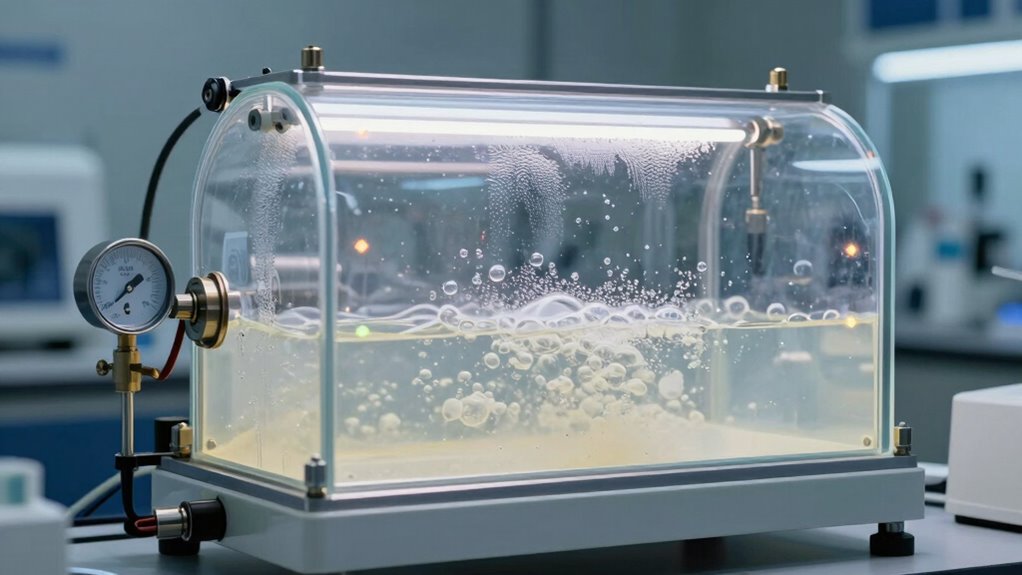
You should use a vacuum chamber for degassing whenever removing trapped air or gases from materials is essential to achieve ideal purity and performance. This is especially true for applications like resin casting, electronics, or precision coatings, where even tiny bubbles can compromise quality. Using a vacuum helps eliminate contaminants that impair material properties. Additionally, vacuum safety protocols are crucial to prevent accidents during operation. Regular chamber maintenance is vital to prevent leaks and maintain peak performance, making your degassing process more efficient. If you’re working with sensitive materials or require high purity, a vacuum chamber is your best tool. Recognizing these conditions guarantees you use a vacuum chamber at the right time, maximizing results and safety. Moreover, understanding degassing techniques can further enhance the effectiveness of your process and prevent issues down the line. Proper chamber operation practices also ensure consistent results and extend the lifespan of your equipment.

Avid Armor Ultra Series USV32: Premium Chamber Vacuum Sealer Machine High-Performance Vacuum Chamber Sealer for Professional and Home Use, Ideal Commercial Vacuum Sealer Machine for Food Preservation
Ensures Leak-Free Sealing – Keep your liquid-rich foods fresh for longer with the Avid Armor vacuum sealer machine….
As an affiliate, we earn on qualifying purchases.
As an affiliate, we earn on qualifying purchases.
How Does Degassing Work in a Vacuum Chamber?
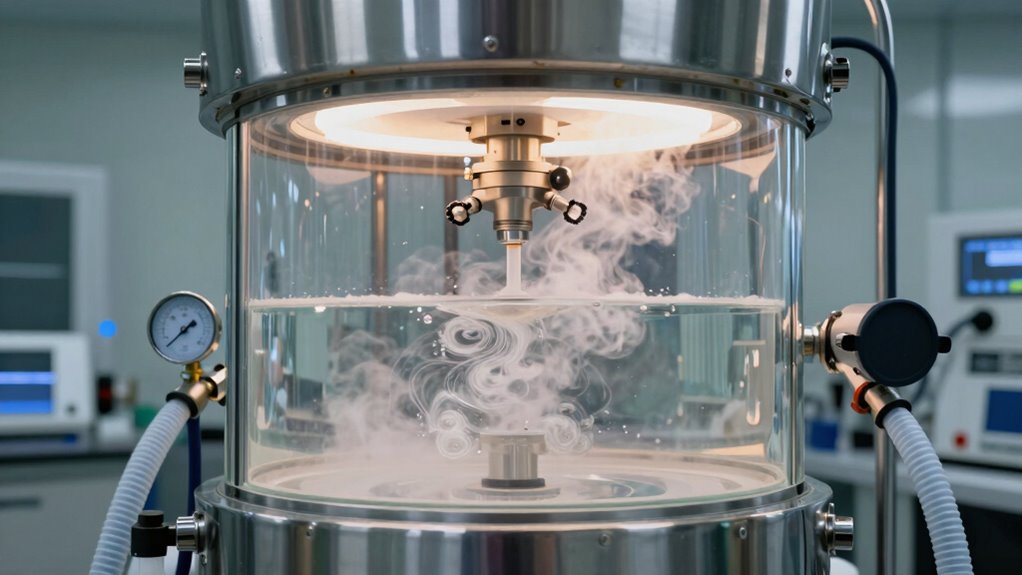
When you start degassing in a vacuum chamber, you eliminate trapped gases that can affect your process. This also helps reduce surface moisture, which can cause contamination or imperfections. By doing so, you guarantee a cleaner, more stable environment for your materials. Additionally, proper degassing techniques are essential for achieving material integrity and ensuring optimal performance in your applications.
Removing Trapped Gases
Removing trapped gases from a vacuum chamber, known as degassing, is essential for achieving a pure, high-quality vacuum. During this process, you carefully heat the chamber or materials inside to encourage gases to escape. Material compatibility is crucial; choosing appropriate materials prevents outgassing and guarantees efficient removal. Proper chamber maintenance, like regular cleaning and leak checks, helps keep trapped gases at bay and maintains ideal vacuum conditions. You may also use specialized techniques such as bake-out to accelerate gas release from surfaces. Additionally, understanding the behavior of gases under different temperatures helps optimize degassing procedures. By understanding how trapped gases behave and managing your chamber’s environment, you ensure better vacuum quality, reduce contamination, and extend equipment lifespan. These steps are vital for consistent, reliable operation in sensitive applications requiring ultra-high vacuum levels. Implementing proper chamber care and understanding the behavior of gases contribute significantly to successful degassing processes.
Reducing Surface Moisture
How does degassing in a vacuum chamber help reduce surface moisture? When you create a vacuum, the low pressure lowers the surface tension holding moisture on surfaces. This facilitates moisture removal by making water molecules less tightly bound. As the chamber’s pressure drops, moisture evaporates more easily, escaping into the vacuum environment. The process also benefits from controlled temperature, which accelerates evaporation without damaging sensitive materials. The table below highlights key factors influencing moisture removal:
| Factor | Effect on Moisture Removal |
|---|---|
| Surface Tension | Reduces water adhesion to surfaces |
| Temperature | Increases evaporation rate |
| Pressure | Lowers boiling point, aiding moisture escape |
| Material Type | Determines how easily moisture is released |
| Duration | Longer exposure improves thorough drying |
This process ensures surfaces are moisture-free, preventing corrosion or contamination. Additionally, understanding the degassing process helps optimize the timing and conditions needed for effective moisture removal. Recognizing the importance of vacuum pressure is essential for achieving optimal drying results in degassing applications. Implementing proper vacuum protocols can further enhance the efficiency of the moisture removal process. A thorough understanding of surface moisture behavior under vacuum conditions allows for better control and improved outcomes in various manufacturing and cleaning processes.
VEVOR 5 Gallon Vacuum Chamber and 3.5 CFM Pump Kit, Stainless Steel Chamber, Single Stage Vacuum Pump Degassing Chamber Kit, with Acrylic Lid, Oil, 4.92 ft Hose, for Degassing Resin Silicone Epoxies
Efficient Degassing Performance: Our 3.5 CFM vacuum pump is engineered specifically for degassing and de-bubbling applications, achieving an…
As an affiliate, we earn on qualifying purchases.
As an affiliate, we earn on qualifying purchases.
What Factors Affect How Well Vacuum Degassing Works?
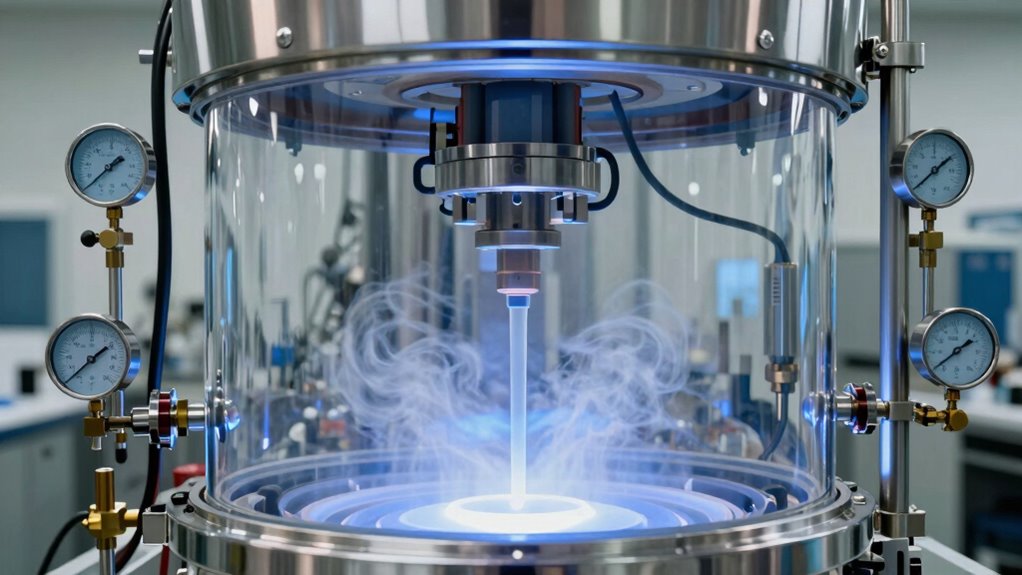
Several factors influence the effectiveness of vacuum degassing, and understanding them helps you optimize the process. Pressure effects are essential; lower pressure promotes faster removal of trapped gases, but if the pressure isn’t reduced enough, degassing may be incomplete. Material compatibility also matters—some materials outgas more readily than others, affecting how quickly and thoroughly they can be degassed. Temperature plays a role too; higher temperatures generally improve gas release but must stay within material limits to prevent damage. Additionally, the initial gas content and the surface area exposed impact efficiency. Ensuring your vacuum chamber is properly sealed and maintaining consistent pressure levels helps optimize degassing results. Proper chamber sealing is critical to prevent leaks that can compromise vacuum quality. It is also important to monitor gas diffusion rates during the process, as this can significantly influence overall efficiency. Moreover, the characteristics of the outgassing materials themselves can determine the optimal degassing conditions. Understanding material outgassing properties can help tailor the process for different substances, improving speed and effectiveness. Being aware of pressure control techniques further ensures that the vacuum environment remains optimal throughout the process. By considering these factors, you can improve the process’s speed and effectiveness.
How to Perform Degassing With a Vacuum Chamber
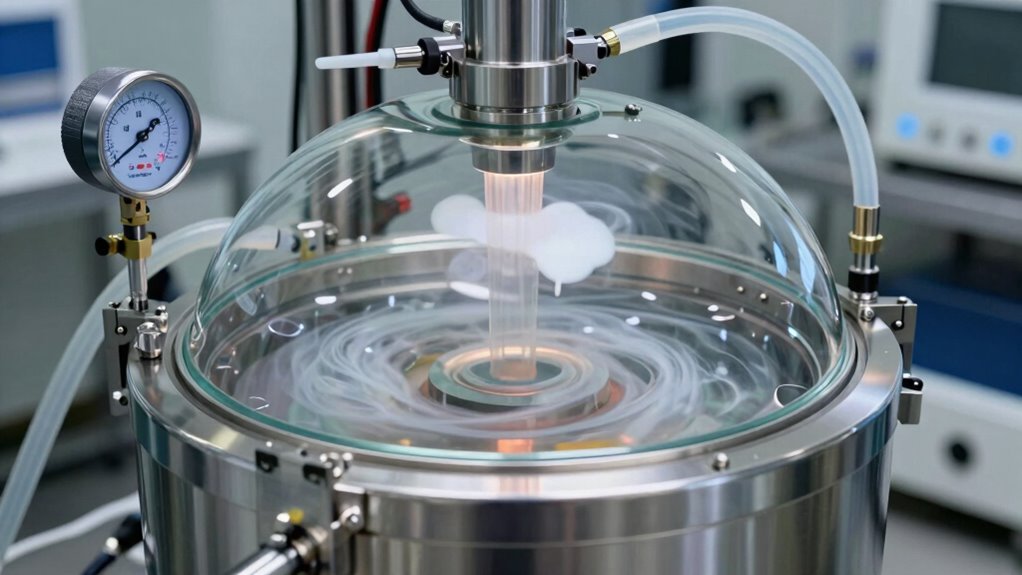
To perform degassing effectively, you need to prepare the material properly before placing it in the vacuum chamber. Keep a close eye on the process to guarantee everything runs smoothly and safely. Monitoring helps you make adjustments quickly and achieve the best results. Understanding dream symbolism can also help interpret subconscious signals during intense or unusual degassing sessions. Additionally, maintaining a clean vacuum chamber ensures optimal performance and safety during the process.
Preparing the Material
Before placing your material into the vacuum chamber, it’s vital to prepare it properly by removing any trapped gases and contaminants. Start with thorough surface cleaning to eliminate dirt, oils, and residues that could hinder degassing. Use appropriate cleaning methods, such as solvent wiping or ultrasonic cleaning, depending on your material. Confirm the surface is dry and free of particles. Proper material preparation reduces the risk of introducing new gases during the process and guarantees more effective degassing. If necessary, cut or shape the material beforehand to fit the chamber. By taking these steps, you optimize the degassing process, minimize contamination, and improve the quality of your final product. Effective material preparation is an essential first step in achieving successful vacuum degassing.
Monitoring the Process
How can you guarantee that your degassing process is proceeding correctly? You need to monitor key indicators like pressure levels, temperature, and material behavior. Regularly check chamber gauges and ensure the vacuum is stable. Pay attention to material compatibility—some materials outgas more than others—and adjust your process accordingly. Proper chamber maintenance prevents leaks and contamination, which can skew readings and affect results. Use the following table to keep your process on track:
| Parameter | Ideal Range | Monitoring Tip |
|---|---|---|
| Vacuum Pressure | Below 10^-3 Torr | Use calibrated gauges |
| Temperature | Consistent with material specs | Use reliable thermometers |
| Material Outgassing | Minimal, steady rate | Observe for signs of contamination |
| Chamber Integrity | No leaks | Perform regular leak checks |
| Chamber Cleanliness | Free of debris and residuals | Schedule routine maintenance |
Consistent monitoring ensures effective degassing and chamber longevity.
Troubleshooting Common Vacuum Chamber and Degassing Problems
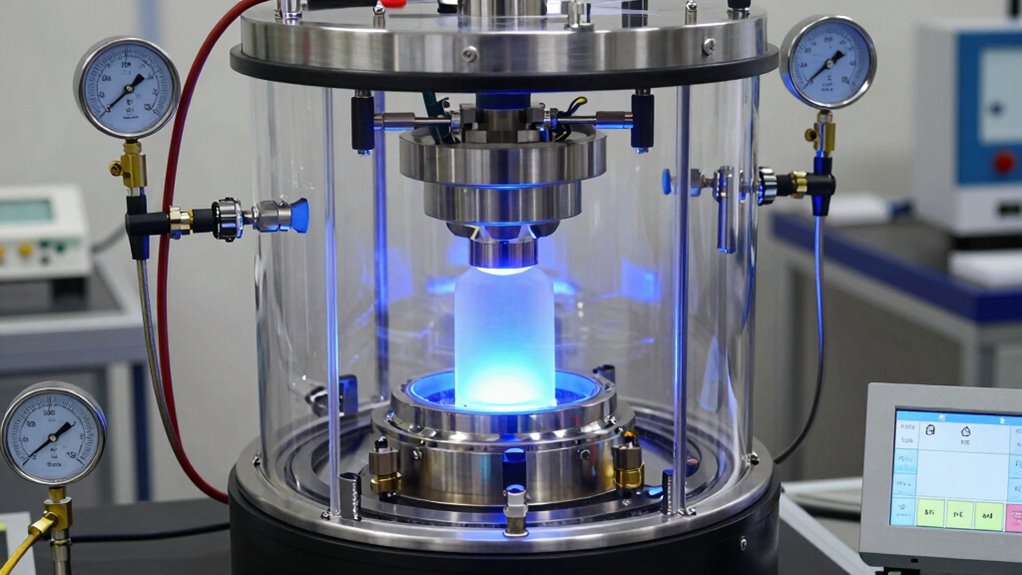
When your vacuum chamber isn’t reaching the desired vacuum level or degassing stalls unexpectedly, it’s often due to common issues that can be quickly identified and resolved. First, check for vacuum leaks, which can occur around seals or fittings, allowing air to enter and preventing proper vacuum. Second, inspect for chamber contamination, such as residual particles or oils that hinder degassing efficiency. Third, ensure all valves and gauges are functioning correctly, as faulty equipment can give false readings or fail to maintain vacuum. Addressing vacuum leaks involves resealing or replacing worn seals. Minimizing chamber contamination requires thorough cleaning before use. Regular maintenance and careful inspection help prevent these problems, ensuring your vacuum chamber operates efficiently and degassing proceeds smoothly.
Key Applications of Vacuum Chambers and Degassing in Industry and Labs
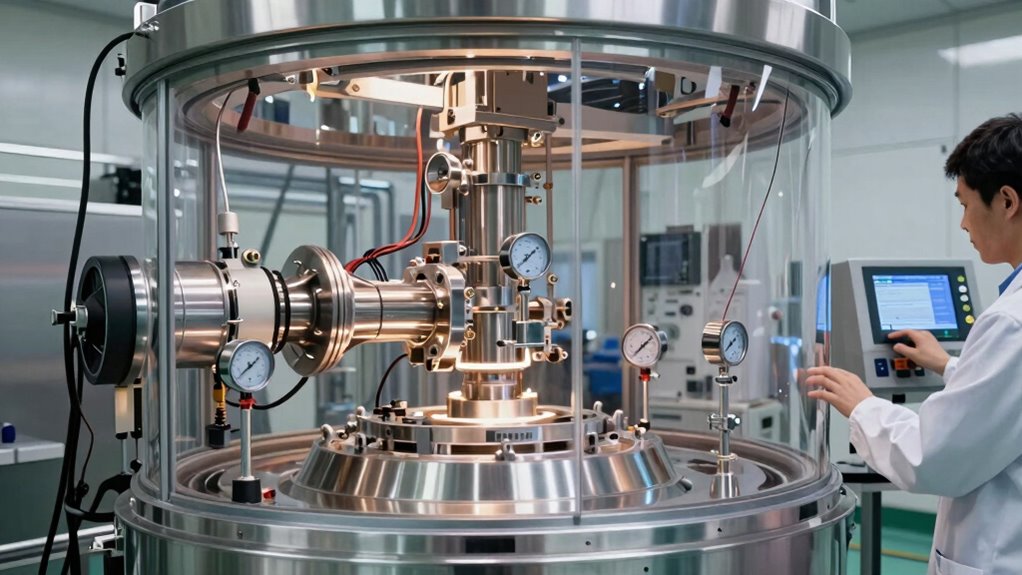
Vacuum chambers play a crucial role across various industries and laboratories, enabling precise control over environmental conditions. They’re essential for applications like material testing, electronics manufacturing, and scientific research, where contaminant-free environments are critical. When selecting a chamber, you must consider material compatibility to prevent reactions that could compromise your process or damage the chamber. Degassing is indispensable for removing volatile substances from materials before further processing. Regular chamber maintenance ensures peak performance and prevents issues like leaks or contamination that could affect results. In labs, vacuum chambers facilitate experiments requiring a controlled atmosphere, while in industry, they support processes like vacuum coating or degassing of raw materials. Proper use and upkeep of chambers are key to achieving consistent, high-quality outcomes.
Signs You Should Consider Using a Vacuum Chamber
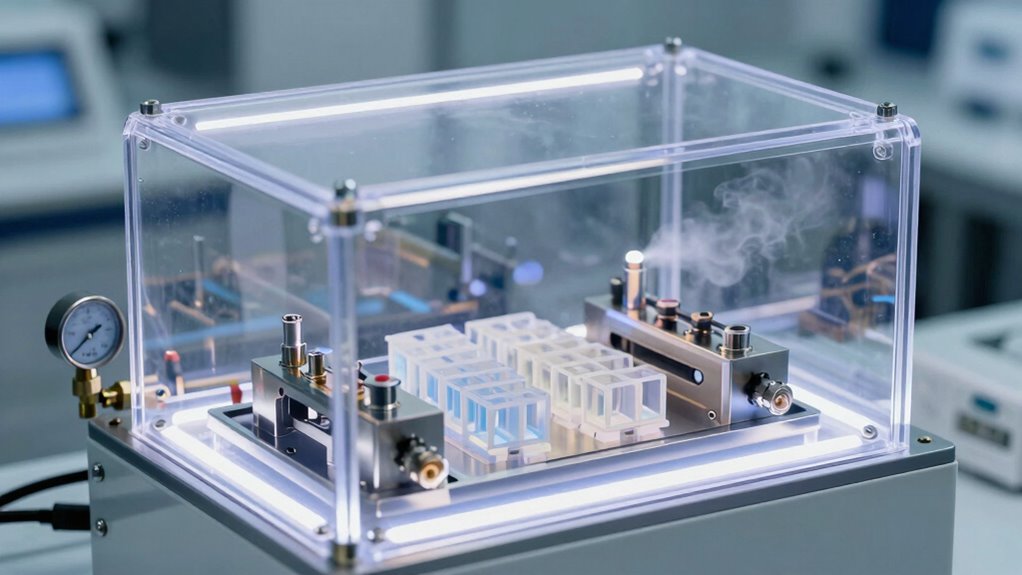
Are you noticing persistent contamination or impurities in your manufacturing or research processes? If so, it’s time to consider using a vacuum chamber. Signs include:
- Frequent material safety concerns due to trapped gases or moisture.
- Inconsistent product quality caused by surface impurities or oxidation.
- Increasing chamber maintenance needs to remove residual contaminants.
A vacuum chamber helps eliminate these issues by providing a controlled environment that reduces impurities and improves material safety. Regular chamber maintenance is vital to keep it functioning effectively, especially when dealing with sensitive materials. If contamination persists despite standard cleaning, or if degassing processes aren’t achieving desired purity levels, a vacuum chamber may be your solution. Recognizing these signs early can save time, ensure safety, and maintain high-quality results.
Final Tips for Choosing and Using a Vacuum Chamber Effectively
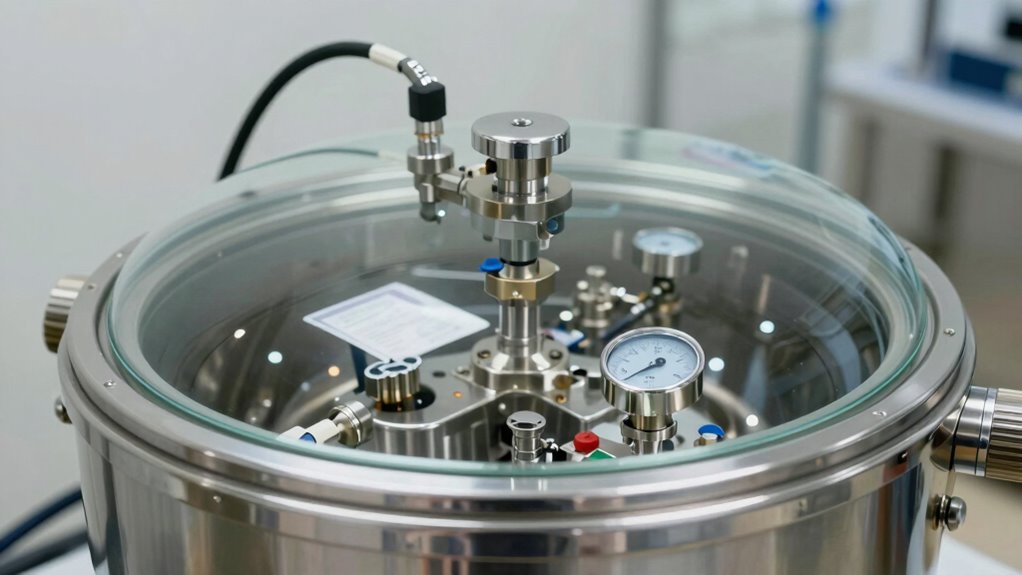
Choosing and using a vacuum chamber effectively requires careful consideration of your specific application needs and operational parameters. To guarantee maximum performance, prioritize regular vacuum maintenance to prevent leaks and maintain proper degassing. Always follow safety protocols to protect yourself and your equipment; chamber safety is essential when handling high vacuum pressures. Before starting, verify that your chamber is properly sealed and compatible with your materials. Use appropriate gauges and monitoring tools to track vacuum levels and detect leaks early. Keep the chamber clean and free of contaminants that could compromise vacuum integrity. Additionally, follow manufacturer guidelines for operation and maintenance. By paying attention to vacuum maintenance and chamber safety, you’ll improve efficiency, extend your chamber’s lifespan, and ensure safe, reliable degassing processes.
Frequently Asked Questions
Can Vacuum Degassing Remove All Types of Gases From Materials?
Vacuum degassing can’t remove all types of gases from materials because of material limitations and gas removal efficiency. Some gases, like those trapped deep within materials or chemically bonded, are difficult to extract fully. You need to contemplate these factors to determine if vacuum degassing suits your process. It works well for many gases, but for complete removal, alternative methods might be necessary depending on the specific material and gas involved.
How Long Does the Degassing Process Typically Take?
Think of degassing as a race against time, where patience is your ally. Typically, the process takes anywhere from a few hours to overnight, depending on material thickness and gas absorption rates. During vacuum chamber calibration, you monitor how quickly gases escape. You’ll know it’s complete when gas levels stabilize, signaling that your materials are sufficiently de-gassed. Rushing can leave residual gases, so patience guarantees thorough results.
Are There Safety Concerns When Operating a Vacuum Chamber?
When operating a vacuum chamber, safety precautions are essential to prevent handling hazards. Always wear appropriate protective gear, such as gloves and eye protection, and guarantee proper training before use. Keep the chamber well-maintained, check for leaks, and never bypass safety interlocks. Be aware of pressure buildup risks, and handle vacuum equipment with care to avoid accidents. Following these safety measures helps protect you and ensures smooth operation.
What Materials Are Most Suitable for Vacuum Degassing?
Think of materials as dance partners—some move smoothly, others stumble. For vacuum degassing, you want materials with high compatibility and low surface porosity, like metals such as stainless steel or aluminum. These materials resist outgassing and prevent contaminants from lurking in tiny surface pores. Avoid porous or organic materials, as they trap gases that can hinder the process. Selecting the right material guarantees a seamless, effective degassing performance.
How Do Temperature and Pressure Settings Influence Degassing Efficiency?
Adjusting temperature and pressure settings directly impacts degassing efficiency. You should optimize temperature to increase the material’s vapor pressure, encouraging trapped gases to escape more easily. Maintaining proper pressure control, usually a deep vacuum, reduces ambient pressure, helping gases outgas faster. By fine-tuning temperature and pressure, you ensure thorough degassing, preventing residual gases that could compromise the quality of your final product.
Conclusion
Now that you understand how vacuum degassing works and when it’s needed, the question is—are you ready to take the next step? Whether you’re tackling tricky materials or optimizing your process, the right vacuum chamber can make all the difference. But there’s more to discover that could impact your success. Don’t settle for less—dive deeper, experiment, and reveal the full potential of vacuum degassing. Your breakthrough might be just one chamber away.