
When choosing materials for laser cutting, stick to safe options like wood, acrylic, leather, and certain metals, as these respond well and produce fewer harmful fumes. Avoid plastics like PVC and vinyl, which emit toxic fumes and can damage equipment. Always check labels or MSDS sheets to identify hazards. Following proper safety precautions, like wearing goggles and ensuring ventilation, helps protect you—continue exploring to learn more about safe practices and material choices.
Key Takeaways
- Safe materials include wood, acrylic, leather, and certain metals, which produce minimal toxic fumes and respond well to laser cutting.
- Materials like PVC, vinyl, polyester, and some plastics release hazardous fumes and should be avoided or require special ventilation.
- Always check labels, hazard symbols, or MSDS sheets to identify potential chemical hazards before laser cutting.
- Use proper safety equipment such as laser goggles, ventilation, and fume extractors to protect against harmful emissions.
- Test small sections and follow manufacturer guidelines to ensure safe, effective cuts while minimizing fire and health risks.

FreeMascot IPL 200nm-2000nm Laser Safety Glasses for Laser Hair Removal Treatment and Laser Cosmetology Operator Eye Protection with Case (Green)
Wavelength: 200nm-2000nm, broad spectrum protection, block UV, Blue, Red and Infrared Laser Light
As an affiliate, we earn on qualifying purchases.
As an affiliate, we earn on qualifying purchases.
Which Materials Are Safe to Cut With a Laser?
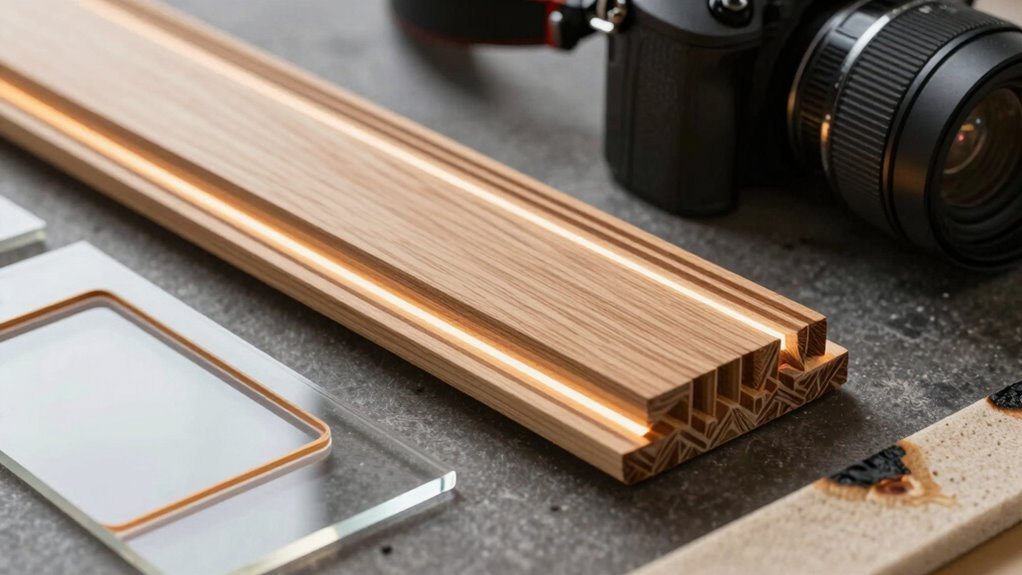
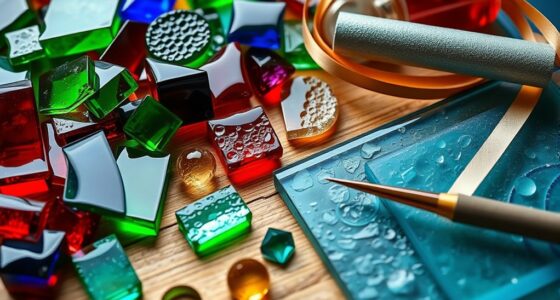
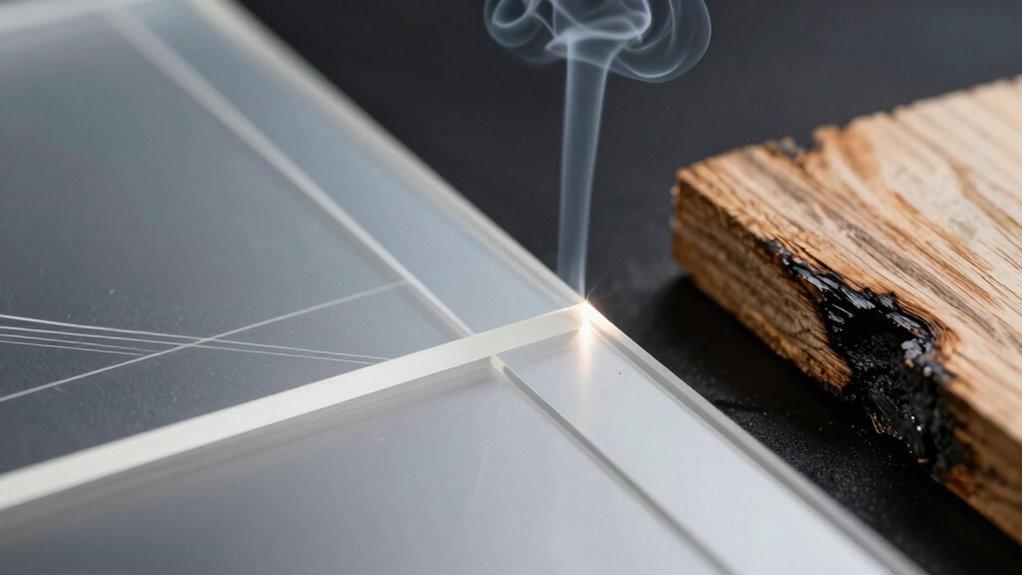
Have you ever wondered which materials are safe to cut with a laser? When considering material compatibility, many common options are suitable for laser cutting and engraving. Wood, acrylic, and leather are popular choices because they respond well to laser precision without harmful fumes. Metal sheets like aluminum or stainless steel require specialized equipment but are also compatible with certain lasers. Cardboard and paper are easy to work with, making them ideal for prototypes and crafts. It’s important to check the specific laser’s capabilities and the material’s properties before starting your project. Choosing the right materials ensures clean cuts and detailed laser engraving, maximizing safety and quality. Understanding the laser’s power and wavelength is crucial for safe and effective cutting of different materials. Additionally, familiarity with laser safety protocols helps prevent accidents and ensures a secure working environment.
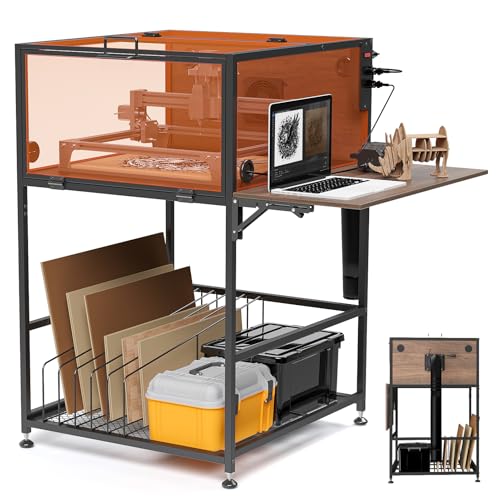
Crafit Laser Engraver Enclosure Cabinet with Exhaust, Laser Engraving Table with Ventilation Fan, Heavy Duty Laser Cutter Protective Cover Tent with Eye Protection, Insulates against Noise Fumes Odors
【Enclosed Cabinet & Universal Fit】Crafit Laser Engraver Cabinet offers an interior space of W24.8"xD27.1"xH12.6" that fits most laser…
As an affiliate, we earn on qualifying purchases.
As an affiliate, we earn on qualifying purchases.
What Materials Are Dangerous or Risky to Laser Cut?
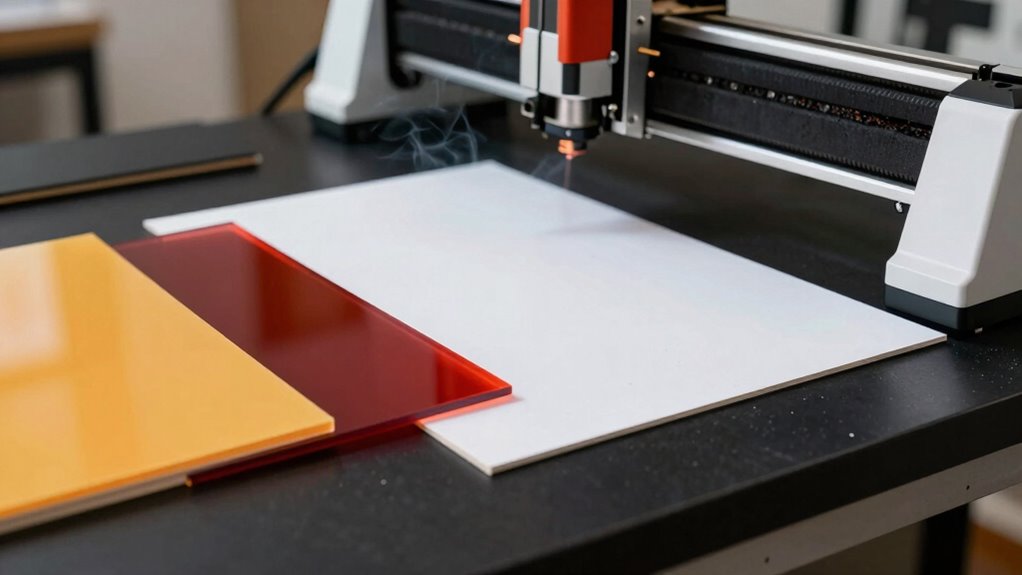
Certain materials pose significant risks when laser cut, potentially releasing toxic fumes, causing fires, or damaging your equipment. Materials like PVC, vinyl, and certain plastics contain chemicals that produce hazardous fumes when heated. These chemical hazards can cause health issues if inhaled and may corrode your machine’s components. Additionally, materials like polyester and acrylic can produce harmful vapors. Cutting these materials without proper ventilation or protective measures could lead to dangerous inhalation and fire hazards. Always research your material beforehand, and avoid laser cutting anything known to emit toxic fumes or contain hazardous chemicals. Proper safety precautions are essential to prevent accidents and protect your health. Understanding material composition is crucial to ensure safe laser cutting practices. Material safety data can provide detailed information on potential hazards associated with different materials. Being aware of the hazardous fumes produced by specific materials can help you make safer choices and prevent health risks during laser cutting. Moreover, understanding the chemical properties of your materials can help you identify which substances are safe to cut and which should be avoided. For example, consulting material safety data sheets can give you specific warnings about particular substances.

Bocolon 5PCS Laser Engraving Double Color ABS Plastic Sheet,Two-Tone Laserable Engraving Plastic Sheets for Name Badge,Office Label,Laser Artistic Product,Size 11.73" x 11.73",Black/White
Package Include — The package includes 5 pieces high grade black ABS plastic sheets 11.8×11.8 inches and 0.05…
As an affiliate, we earn on qualifying purchases.
As an affiliate, we earn on qualifying purchases.
How Can You Identify Hazardous Materials Before Cutting?
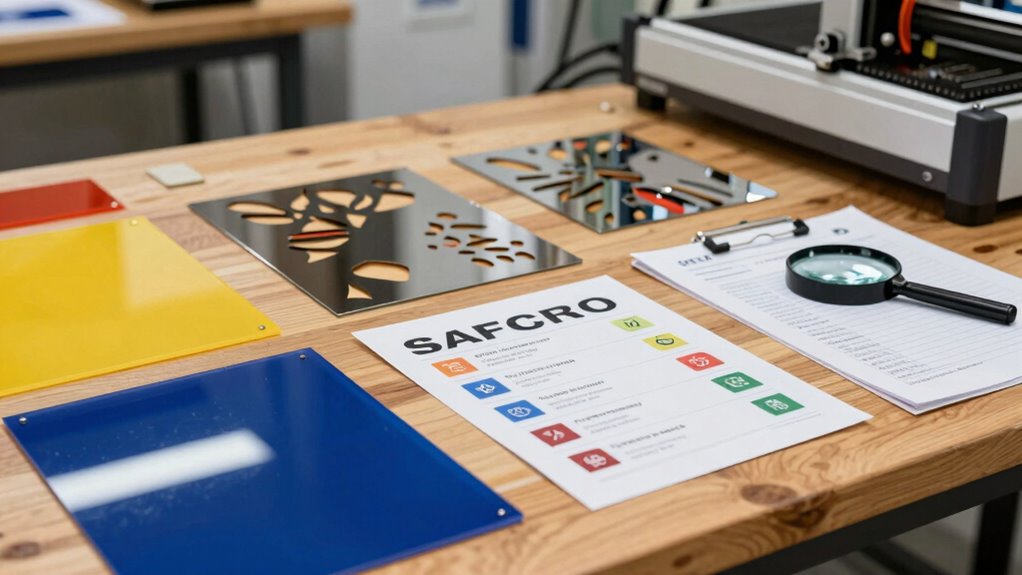
Wondering how to guarantee your laser cutting project stays safe? The key is to carefully check material labeling before you start. Always look for clear labels that specify the material type and any warnings. Hazard symbols on packaging or Material Safety Data Sheets (MSDS) are especially important—they quickly communicate potential dangers like toxicity, flammability, or chemical hazards. Familiarize yourself with common hazard symbols so you can identify risky materials at a glance. If labels or symbols are missing or unclear, don’t assume the material is safe; instead, research or consult the manufacturer. Proper identification helps you choose appropriate safety measures and avoid cutting materials that could release harmful fumes or cause equipment damage. Being vigilant about labeling and hazard symbols keeps your workspace safe. Material safety labels can also assist in verifying material properties and safety compliance. Additionally, understanding the types of hazardous materials involved allows for better preparation and risk mitigation. Always stay informed about regulatory standards to ensure your safety practices meet industry requirements. Incorporating knowledge of aerosol or chemical hazards can further enhance safety protocols during laser cutting.

Twotrees TTS-55 Pro Laser Engraver 5500mW Laser Engraving Machine,Laser Cutter,30000mm/min Speed,0.08mm Laser Spot Engraver Machine for DIY,Wood,Metal,Acrylic,Glass,Stainless Steel
【Upgraded Laser Power with Air Assist Support】The TTS-55 PRO features a powerful 5500 mW (5.5W) laser (Class II)…
As an affiliate, we earn on qualifying purchases.
As an affiliate, we earn on qualifying purchases.
What Safety Precautions Should You Take When Laser Cutting Different Materials?

Once you’ve identified the materials you’ll be cutting, taking the right safety precautions guarantees your workspace remains safe. Always wear proper laser safety gear, including goggles designed for the specific laser wavelength, to protect your eyes from harmful radiation. Make certain your workspace has adequate ventilation requirements, especially when cutting materials that release fumes or smoke, like plastics or treated woods. Use exhaust systems or fume extractors to remove hazardous particles from the air. Keep flammable materials away from the laser cutter, and avoid inhaling fumes by working in well-ventilated areas. Regularly inspect your equipment for any damage or misalignment. Ensuring heat buildup is properly managed is crucial to prevent fires or damage to your equipment. Proper material handling and storage can also significantly reduce safety risks during laser cutting. Additionally, understanding the comogenic ratings of materials helps in selecting safer options and minimizing skin or respiratory irritation. Being aware of flammability concerns associated with certain materials can further prevent dangerous incidents. Properly managing fume emissions and monitoring material properties are essential for maintaining a safe working environment. Following these precautions helps prevent accidents and minimizes health risks, ensuring safe and effective laser cutting sessions.
Best Practices for Safe and Effective Laser Cutting of Various Materials
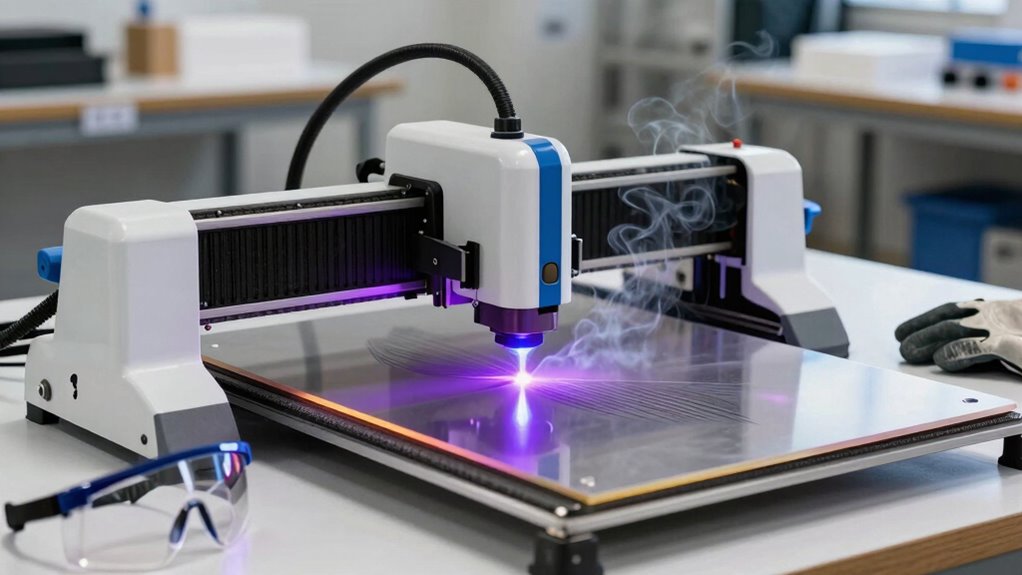
To guarantee safe and effective laser cutting across different materials, you need to understand the specific settings and techniques best suited for each one. Start by consulting material compatibility charts to identify suitable parameters and avoid damage or hazards. Regular laser engraver maintenance is vital; keep lenses clean, check for alignment issues, and ensure proper ventilation. Adjust laser power, speed, and focus based on the material’s thickness and composition, reducing the risk of fires or toxic fumes. Test small sections before full cuts to optimize settings. Always follow manufacturer recommendations and safety guidelines. Properly maintained equipment and tailored settings help produce clean cuts while ensuring safety for you and your workspace. Understanding material properties is essential for selecting the correct laser parameters and preventing accidents. Additionally, staying informed about material hazards can help you implement appropriate safety measures and prevent potential health risks. Being aware of toxic fumes and emissions generated during cutting can also enhance safety protocols and protect your health.
Frequently Asked Questions
Can Recycled or Reclaimed Materials Be Safely Laser Cut?
Recycled and reclaimed materials can be laser cut safely if you verify their safety first. You need to guarantee they’re free of hazardous substances like paint, glue, or chemical residues, which can release harmful fumes when laser cut. Always test a small section and consult safety guidelines for reclaimed safety. Proper ventilation and protective gear are essential to avoid health risks. When in doubt, seek advice from material experts.
Are There Specific Coatings or Finishes That Affect Laser Safety?
Think of coatings as the silent guardians or hidden villains in laser cutting. Yes, certain coatings or finishes can influence laser safety, especially if they contain hazardous substances like lead or chlorinated plastics. These coating effects can produce toxic fumes or cause equipment damage. Always check the finish safety and make sure coatings are compatible with laser processes to prevent health risks and ensure safe, high-quality cuts.
How Does Humidity or Environmental Conditions Impact Laser Cutting Safety?
Humidity effects and environmental impact can influence laser cutting safety by affecting material behavior and machine performance. High humidity may cause condensation, leading to uneven cuts or increased risk of electrical issues. Conversely, low humidity can generate static, risking fires or equipment damage. Verify proper climate control, maintain consistent environmental conditions, and monitor humidity levels to keep your laser cutting process safe and efficient.
Is It Safe to Laser Cut Composite or Layered Materials?
You shouldn’t laser cut composite or layered materials without caution. These materials pose serious composite hazards and layered risks, releasing toxic fumes and dangerous particulates that can harm your lungs and equipment. The layered structure might also cause unpredictable burns or fires. So, if you’re considering it, verify material safety data sheets, guarantee proper ventilation, and wear protective gear—because overlooking these dangers could have severe consequences.
What Are the Disposal Considerations for Hazardous Laser-Cut Waste?
When disposing of hazardous laser-cut waste, you should follow proper disposal regulations to guarantee safety. Handle hazardous waste carefully, avoiding spills or inhalation, and store it in clearly labeled, sealed containers. Contact authorized waste disposal services to take care of the waste responsibly. Never pour hazardous waste down drains or discard it with regular trash, as improper disposal can harm the environment and violate legal standards.
Conclusion
By mastering the materials, methods, and safety measures, you’ll minimize risks and maximize results. Stay savvy about what’s safe and steer clear of dangerous dangers. Keep your workspace well-watched, wear the right wearables, and always follow fine, firm guidelines. When you’re mindful and methodical, your laser cutting becomes a safe, stunning, and sensational skill. So stay sharp, stay safe, and let your creativity carve a clear, confident path forward!