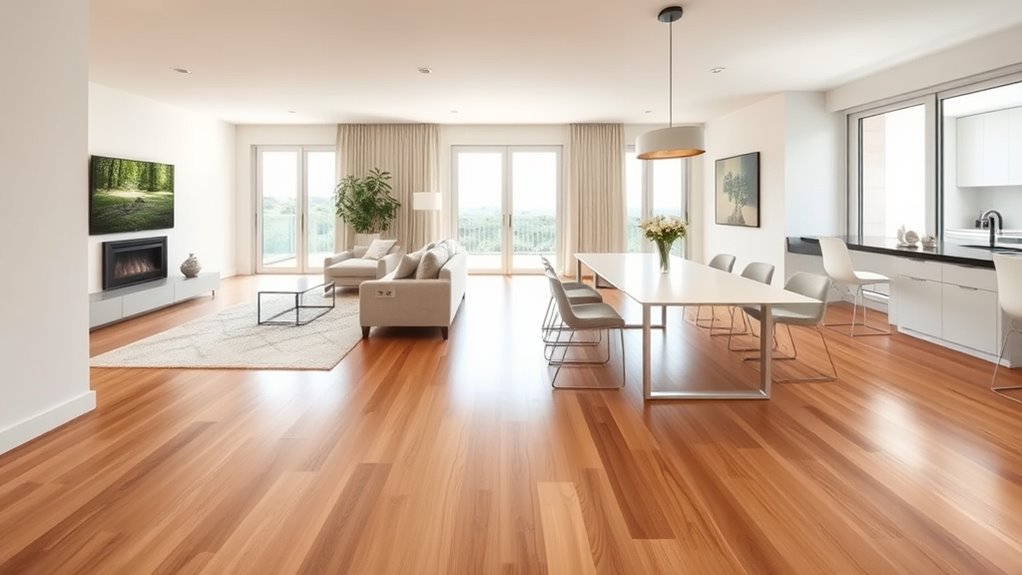
In open-plan living, zoning large spaces helps you create distinct areas for different activities without sacrificing the airy feel. Use multifunctional furniture, like storage ottomans and sofa beds, to define zones while keeping the space flexible. Natural light from large windows or skylights highlights these areas, while color, texture, and rugs subtly separate zones. Thoughtful design guarantees your space feels open yet organized, so you can enjoy both functionality and style—discover how to master this balance as you explore further.

Get furniture and decor delivered free with Prime
- Fast, free delivery on millions of items
- Prime Video, Amazon Music and more included
- Member-only deals all year
Key Takeaways
- Use multifunctional furniture to define zones without sacrificing openness.
- Incorporate natural lighting to visually separate areas and create inviting spaces.
- Apply varied textures, colors, and rugs to distinguish different zones subtly.
- Implement clever layout planning to carve out functional zones while maintaining flow.
- Utilize visual cues like lighting fixtures and decor to enhance zone recognition without physical barriers.
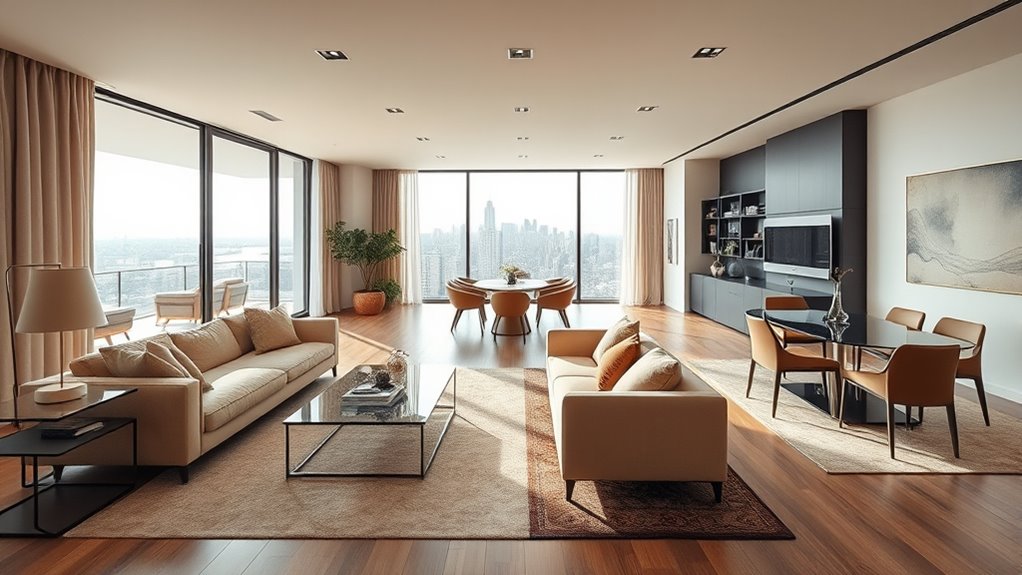
Have you ever wondered why open-plan living has become so popular? It’s because it creates a sense of spaciousness and flexibility that traditional layouts often lack. When you remove walls and barriers, your large space transforms into a versatile area where you can easily adapt to different activities. But without proper zoning, that openness can feel chaotic or overwhelming. That’s where clever design strategies come into play, helping you carve out distinct zones without sacrificing the overall airy feel.
One of the most effective ways to define different areas is by using multifunctional furniture. These pieces serve multiple purposes, saving space and adding visual interest. For example, a sofa bed can function as seating during the day and a guest bed at night. An island in your kitchen can double as a dining table or workspace, while storage ottomans can act as both seating and hidden compartments. Incorporating multifunctional furniture allows you to create specific zones within the open space, making it easy to switch between activities without feeling cluttered. Plus, these pieces help maintain the seamless flow that makes open-plan living so appealing.
Multifunctional furniture creates distinct zones while maintaining an open, cohesive flow.
Natural lighting plays a *vital* role in zoning large spaces. Large windows, glass doors, and skylights flood your home with daylight, making each zone feel inviting and connected to the outdoors. When you position furniture thoughtfully, you can highlight certain areas with natural light, creating visual boundaries without physical barriers. For instance, placing a sofa or a bookshelf near a window can subtly separate a living area from a dining or work zone. This use of natural lighting not only enhances the aesthetic appeal but also boosts your mood and energy levels, making your entire living space feel more lively and welcoming.
Color schemes and textures further help in defining zones while maintaining harmony. Light, neutral tones can unify the space, while different textures or accent colors differentiate one zone from another. Rugs can anchor a seating area or dining space, adding both comfort and visual separation. Consistent lighting fixtures, like pendant lights or lamps, can also delineate zones without disrupting the open flow.
In essence, zoning large open-plan spaces is about balancing openness with functionality. Using multifunctional furniture, maximizing natural lighting, and thoughtful placement create distinct areas that serve your needs, all while preserving the airy, cohesive atmosphere. With these strategies, your open-plan living space becomes a flexible, inviting environment tailored perfectly to your lifestyle.
As an affiliate, we earn on qualifying purchases.
Frequently Asked Questions
How Can I Improve Sound Privacy in Open-Plan Areas?
You can improve sound privacy in open-plan areas by using soundproofing techniques like installing acoustic panels on walls and ceilings. These panels absorb sound waves, reducing noise transfer between zones. Additionally, consider adding rugs, curtains, or furniture to dampen sound further. Using strategically placed room dividers or shelving units with soft materials also helps create quieter zones, making your space more private and comfortable without sacrificing openness.
What Are the Best Lighting Strategies for Large Open Spaces?
To optimize lighting in large open spaces, maximize natural light by installing large windows or skylights that flood the area with daylight. Use layered lighting with ambient fixtures like ceiling lights or recessed LEDs to create even illumination. Incorporate task lighting for specific zones and accent lights to highlight architectural features. This combination guarantees a well-lit, inviting environment that adapts to different activities and times of day.
How Do I Choose Furniture for Zoning Without Walls?
Imagine your space as a flowing river, and furniture as the rocks guiding the current. To zone without walls, focus on strategic furniture placement to create visual boundaries, like a sofa to define the living area or a bookshelf as a divider. Use rugs, lighting, and color variation to enhance these zones, making each area feel distinct yet connected, helping you navigate your open space effortlessly.
What Are Affordable Ways to Define Different Zones?
You can define zones affordably by using decorative rugs to visually separate areas and add style without spending much. Room dividers, like folding screens or open shelving units, also work well to create distinct spaces. These options are versatile and budget-friendly, helping you establish clear zones in your open-plan area while maintaining a welcoming, cohesive look. Plus, they’re easy to move or change as your needs evolve.
How Can I Maximize Storage in Open-Plan Designs?
You can maximize storage in open-plan designs by cleverly using storage solutions like built-in shelves or under-stair drawers, turning empty spaces into treasure troves. Think of decorative dividers not just as room separators, but as stylish storage options—think open bookcases or curtain systems with hidden compartments. These tricks keep your space tidy while adding personality, proving that sometimes, the best storage ideas are the ones you barely notice.
Conclusion
Embracing open-plan living is like opening your home’s doors to endless possibilities. By zoning large spaces thoughtfully, you create a harmonious flow that feels as natural as a river’s current. Remember, each zone is a brushstroke in your home’s masterpiece, balancing function and style. When you master the art of zoning, your spacious rooms become a canvas where comfort and practicality dance together beautifully, turning your house into a welcoming haven.
Fall Picks
fall essentials
As an affiliate, we earn on qualifying purchases.