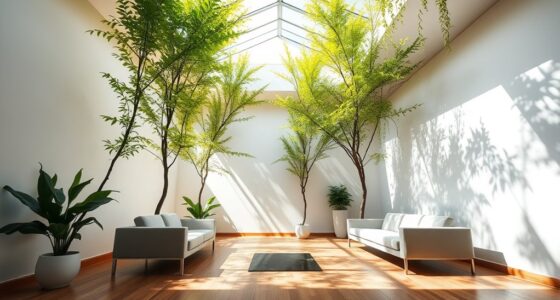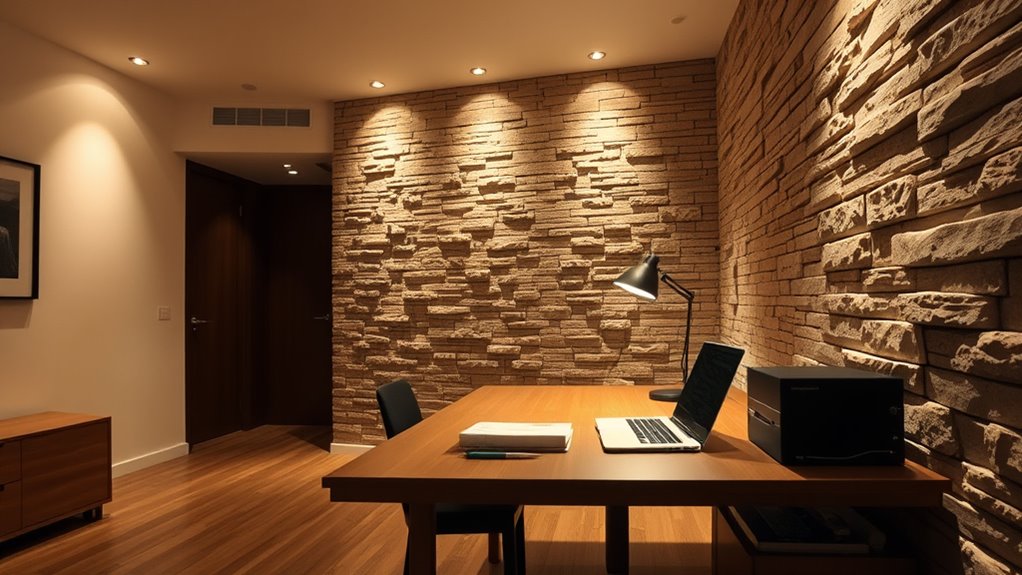

Layering your lighting with ambient, task, and accent fixtures creates a well-balanced, inviting space. Ambient lighting provides your overall brightness, while task lights focus on specific activities like reading or cooking. Accent lights add depth and highlight special features or decor. By combining these layers, you guarantee safety, enhance functionality, and set the perfect mood. Keep exploring to discover how to optimize each layer for your unique space and style.

Get furniture and decor delivered free with Prime
- Fast, free delivery on millions of items
- Prime Video, Amazon Music and more included
- Member-only deals all year
Key Takeaways
- Combine ambient, task, and accent lighting to create a balanced, functional, and visually appealing space.
- Use dimmable fixtures in all layers for flexibility in mood and energy efficiency.
- Strategically position task lights to focus on specific activities, reducing glare and shadows.
- Highlight artwork and architectural features with accent lighting to add depth and personality.
- Ensure proper installation and safety measures, including secure fixtures and energy-efficient options like LEDs.

Have you ever wondered how to create a space that feels both functional and inviting? Layering your lighting effectively is the key. It’s not just about illuminating a room; it’s about designing a balanced lighting scheme that enhances safety considerations, boosts energy efficiency, and sets the right mood. When you plan your lighting layers—ambient, task, and accent—you can transform any space into a welcoming environment that’s practical and stylish.
Start with ambient lighting, which provides overall illumination and sets the foundation. Think of it as the room’s primary glow, ensuring you can see comfortably without harsh shadows. For safety considerations, this layer is essential—adequate ambient light helps prevent accidents and creates a sense of security. To maximize energy efficiency, opt for LED fixtures or energy-efficient bulbs, which consume less power and last longer. Recessed lighting, ceiling-mounted fixtures, or large pendant lights are excellent choices here, especially if you choose dimmable options. Dimming allows you to adjust the brightness based on the time of day or activity, conserving energy when full illumination isn’t necessary.
Start with ambient lighting using dimmable LED fixtures for safety, efficiency, and a warm, welcoming glow.
Moving to task lighting, this layer focuses on activities that require more direct light. Whether you’re cooking, reading, or working at a desk, task lighting ensures you have enough brightness to perform tasks safely and comfortably. It’s pivotal to position these lights carefully to avoid glare and shadows that could cause discomfort or accidents. Under-cabinet lights in kitchens, adjustable desk lamps, or focused pendant lights are perfect for this purpose. When selecting fixtures, consider energy efficiency—use LED bulbs here as well to reduce your electricity bills and carbon footprint. Proper task lighting not only increases safety by reducing eye strain but also helps you save energy by illuminating only specific areas instead of the whole room.
Finally, accent lighting adds depth, dimension, and personality to your space. It highlights artwork, architectural features, or decorative objects, making your room feel more dynamic and inviting. Properly placed accent lights create visual interest and ambiance, but it’s essential to avoid overdoing it. Strategically use spotlights, wall sconces, or picture lights to draw attention without overwhelming the space. For safety considerations, ensure that all accent fixtures are securely installed and that cords are tucked away. To promote energy efficiency, choose fixtures with dimmable features or integrate smart lighting controls, so you can easily adjust lighting levels and save energy when full brightness isn’t needed. Additionally, incorporating wall organization solutions and aesthetic fixtures can enhance both the style and functionality of your lighting plan.
dimmable LED ambient ceiling lights
As an affiliate, we earn on qualifying purchases.
As an affiliate, we earn on qualifying purchases.
Frequently Asked Questions
How Do I Determine the Right Balance of Lighting Layers?
To determine the right balance of lighting layers, focus on establishing a clear lighting hierarchy. Start with ambient fixtures for overall brightness, then add task lighting where needed, and finish with accent fixtures to highlight features. Select fixtures that complement each other and fit your space’s purpose. Adjust the intensity of each layer to create a harmonious flow, ensuring no layer overpowers the others for a well-balanced, inviting environment.
What Are Common Mistakes to Avoid in Layered Lighting?
Avoid clashing with light color or fixture placement, which can create uneven lighting or visual confusion. Don’t overdo it by using too many fixtures or relying on harsh, cool tones that diminish warmth. Instead, balance ambient, task, and accent lighting thoughtfully, ensuring each layer complements the others. Remember, improper fixture placement can cast unwanted shadows or glare, undermining your layered lighting’s purpose and elegance.
Can Layering Lighting Save Energy in My Home?
Layering lighting can save energy in your home if you use energy-efficient bulbs and smart lighting. By strategically combining ambient, task, and accent lights, you can turn off or dim unnecessary lights, reducing overall energy consumption. Smart lighting allows you to control brightness and schedule lighting, maximizing efficiency. This way, you enjoy better lighting without wasting electricity, making your home more eco-friendly and cost-effective.
How Do I Choose the Best Fixtures for Each Layer?
To choose the best fixtures for each layer, focus on fixture placement and color temperature. For ambient lighting, pick fixtures that evenly distribute light across the room, like ceiling-mounted or recessed lights. For task lighting, select focused fixtures such as under-cabinet or reading lamps with adjustable brightness. Use warm color temperatures (around 2700K-3000K) for cozy ambiance, and cooler tones (around 4000K) for task areas to boost visibility.
What Are Innovative Trends in Layered Lighting Design?
You’re witnessing lighting design reach its zenith with trends like smart fixtures that seem to have a mind of their own. These fixtures effortlessly adapt to your mood, with color-changing options that transform a space in seconds. Innovative designs incorporate dynamic control, syncing with music or circadian rhythms, creating an immersive environment. Embrace these cutting-edge trends to elevate your space into a futuristic, personalized sanctuary that dazzles and delights.
Conclusion
Just as a master painter uses light to create depth and mood, layering your lighting transforms your space into a harmonious masterpiece. By thoughtfully combining ambient, task, and accent lighting, you control the atmosphere like a skilled director guiding a scene. Remember, the right balance turns an ordinary room into a sanctuary of comfort and style—your personal version of the Sistine Chapel, where every detail is deliberately illuminated for maximum impact.
Fall Picks
fall essentials
As an affiliate, we earn on qualifying purchases.