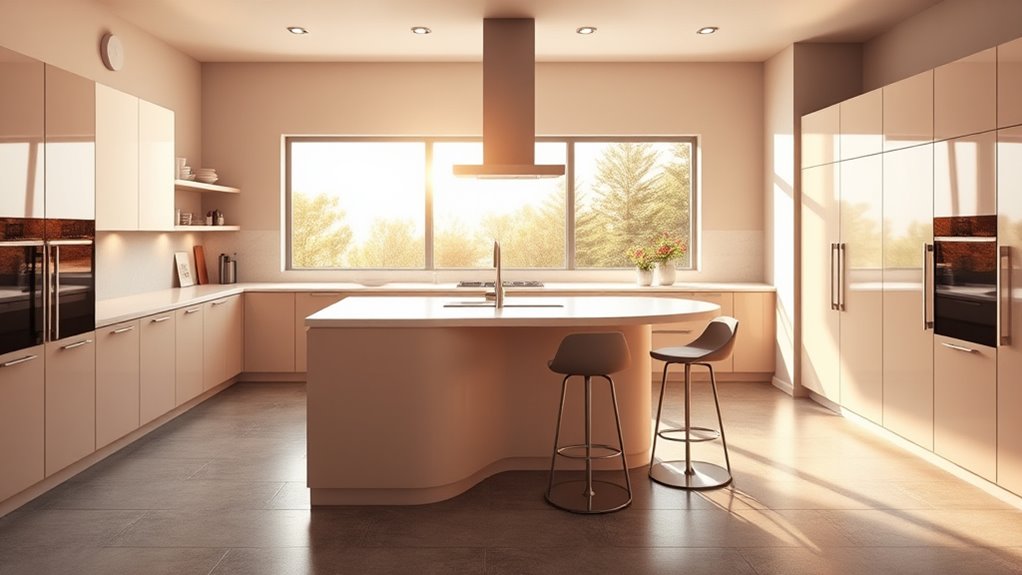

To create an ergonomic kitchen that’s comfortable and accessible, focus on thoughtful appliance placement, keeping your most-used tools within easy reach to reduce strain. Incorporate proper lighting—both general and task-specific—to enhance visibility and safety. Arrange appliances in a functional work triangle to minimize unnecessary movement, and consider installing heavy appliances at waist level. These strategies support your daily routines and safety, and exploring more will help you design a space that truly suits your needs.

Get furniture and decor delivered free with Prime
- Fast, free delivery on millions of items
- Prime Video, Amazon Music and more included
- Member-only deals all year
Key Takeaways
- Position appliances strategically within easy reach to minimize bending, stretching, and unnecessary movement during cooking and cleaning.
- Incorporate proper lighting, including task and ambient sources, to enhance visibility and reduce eye strain in key work areas.
- Design the work triangle (refrigerator, stove, sink) to streamline workflow and decrease fatigue.
- Store heavy appliances at waist level or slightly above to prevent bending and facilitate safe handling.
- Ensure clear pathways and accessible storage options to accommodate all users, promoting safety and ease of movement.
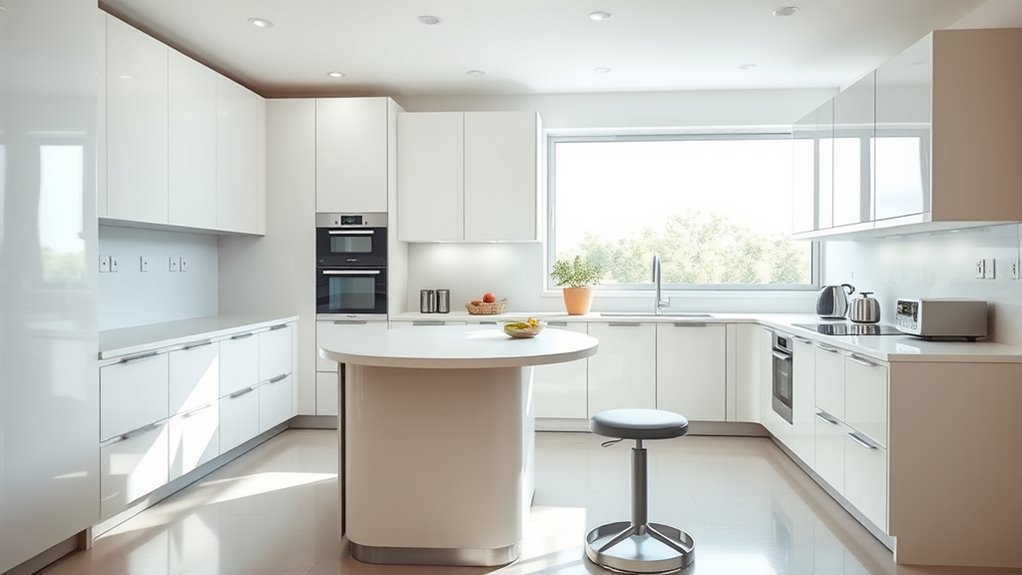
Have you ever wondered how a well-designed kitchen can make cooking easier and more comfortable? It all starts with thoughtful planning, especially when it comes to appliance placement and lighting considerations. Proper appliance placement ensures that everything you need is within reach, reducing unnecessary movement and strain. For example, positioning your refrigerator, stove, and sink in a classic work triangle minimizes the steps you take while cooking. This layout not only boosts efficiency but also keeps you comfortable during meal prep. Keep in mind that heavy appliances should be installed at waist level or slightly above to avoid bending or awkward lifting, which can cause fatigue or injury over time. Smaller appliances, like toasters or mixers, should be stored conveniently but not cluttering your main workspace. When appliances are properly placed, you can focus on cooking rather than hunting down tools or reaching over obstacles. Ensuring proper container choice can also improve safety and aesthetics in your kitchen environment.
Lighting considerations play an essential role in creating a functional and inviting kitchen. Good lighting helps you see clearly, which is vital for safety and precision. Start with general lighting that evenly illuminates the entire space, such as ceiling-mounted fixtures or recessed lights. Then, add task lighting directly over work areas like countertops, sink, and stove. Under-cabinet lighting is a popular choice because it reduces shadows and brightens your workspace without causing glare. Proper lighting placement not only improves visibility but also enhances the overall ambiance, making your kitchen a pleasant place to spend time. When planning lighting, consider natural light sources like windows and skylights, which can reduce energy use and create a welcoming atmosphere. Adjustable fixtures and dimmer switches allow you to tailor the lighting to different tasks and moods, making your kitchen more ergonomic and comfortable.
Combining smart appliance placement with strategic lighting considerations creates a kitchen that’s both practical and inviting. When appliances are easy to access and lighting is sufficient, you reduce physical strain and improve safety. You’ll notice that cooking becomes more enjoyable when you don’t have to reach awkwardly or strain your eyes. Ergonomic design isn’t just about aesthetics; it’s about creating a space that supports your health and efficiency. With careful planning, you’ll find yourself spending less time on frustrating adjustments and more time enjoying your culinary creations. Ultimately, a well-thought-out kitchen layout makes your daily routines smoother, safer, and more comfortable—turning your kitchen into a space where functionality meets comfort seamlessly.
ergonomic kitchen appliances placement
As an affiliate, we earn on qualifying purchases.
As an affiliate, we earn on qualifying purchases.
Frequently Asked Questions
How Can I Customize My Kitchen for Specific Physical Limitations?
You can customize your kitchen for specific physical limitations by incorporating adaptive tools like grab bars, easy-grip utensils, and adjustable-height counters. Start with a personalized layout that maximizes accessibility, such as lower cabinets or pull-out shelves. These modifications make cooking easier and safer, allowing you to work comfortably. By tailoring your space with adaptive tools and personalized layouts, you create a kitchen that truly fits your needs and enhances your independence.
What Are the Best Materials for Ergonomic Kitchen Countertops?
Imagine slicing through a smooth, warm surface—your perfect ergonomic countertop material. You’ll want durable options like quartz or granite, which offer sturdy, easy-to-clean surfaces. For ergonomic surface options, consider materials like solid surface or laminate, providing seamless, comfortable workspaces that reduce strain. These materials enhance your kitchen’s comfort and accessibility, making cooking and prep easier on your body, while also standing up to daily use.
How Do I Ensure Safety in an Ergonomic Kitchen?
To guarantee safety in your ergonomic kitchen, follow safety tips like keeping pathways clear, storing sharp objects safely, and using non-slip mats. Regularly inspect appliances and tools for hazards, and use proper techniques to prevent strain or injury. Hazard prevention is key—always turn off appliances when not in use, handle hot items carefully, and maintain good lighting. Staying vigilant and organized helps create a safe, efficient cooking environment for everyone.
Are There Eco-Friendly Options for Ergonomic Kitchen Design?
Imagine a garden thriving with eco-friendly choices. You can incorporate sustainable materials like bamboo countertops and recycled cabinetry to reduce your carbon footprint. Opt for energy-efficient appliances that save power and water, much like a well-tended garden conserves resources. These eco-friendly options make your ergonomic kitchen not only comfortable and accessible but also gentle on the planet, helping you create a sustainable space that benefits both you and the environment.
What Is the Cost Range for Professional Ergonomic Kitchen Remodeling?
You can expect a cost estimate for professional ergonomic kitchen remodeling to range between $10,000 and $50,000, depending on factors like size, materials, and customization. Your budget considerations are vital; high-end features and eco-friendly options can increase costs. To get a precise quote, consult with a contractor who specializes in ergonomic design, ensuring the remodel fits your needs and budget while maximizing comfort and accessibility in your kitchen.
Conclusion
By embracing ergonomic kitchen design, you create a space that feels like a well-tailored suit—comfortable, accessible, and perfectly suited to your needs. When your kitchen works with you, not against you, cooking becomes a joy rather than a chore. Remember, an ergonomic kitchen is the backbone of a happier, healthier home. So, invest in your space today, and watch how it transforms your daily routines into smooth, seamless experiences—your kitchen’s true secret ingredient.
Fall Picks
fall essentials
As an affiliate, we earn on qualifying purchases.