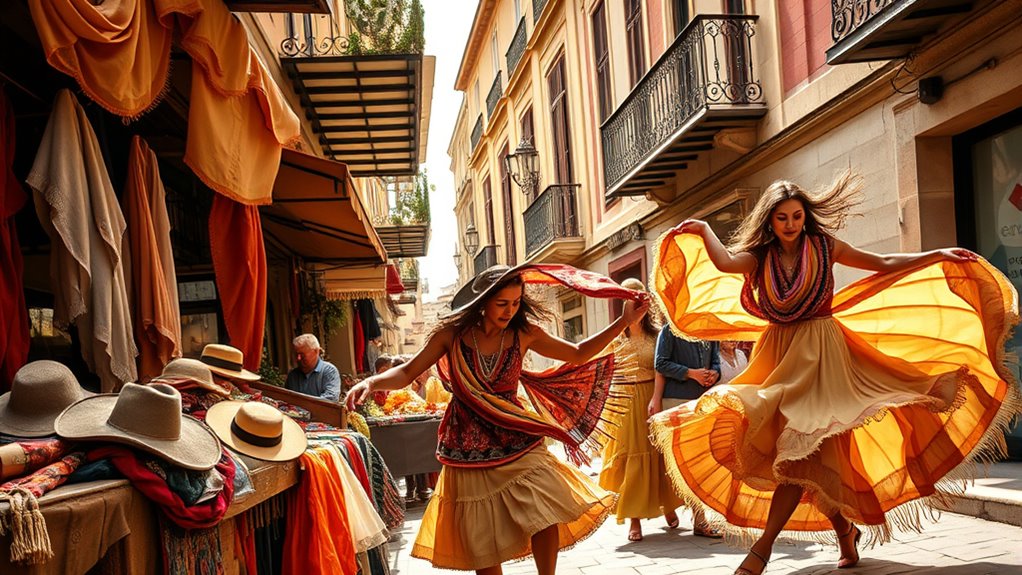

The boho style originates from a mix of historical influences, including the French Revolution’s push for individuality and freedom, which inspired artistic expression beyond societal norms. It also draws from Romani culture, known for vibrant, handcrafted textiles and nomadic lifestyles that embrace authenticity and artistry. Over time, the rebellious spirit of the 1960s hippies merged these elements into a relaxed, eclectic aesthetic. To uncover how these influences continue shaping boho today, keep exploring these interconnected cultural roots.
Key Takeaways
- Boho fashion roots trace back to early 20th-century artists and writers rejecting societal norms for individual expression.
- The 1960s-70s hippie movement popularized eclectic, relaxed styles inspired by peace, love, and nature.
- Art Nouveau’s emphasis on organic forms and craftsmanship influenced boho’s decorative textiles and flowing silhouettes.
- Romani culture contributed nomadic traditions, vibrant artistry, and layered textiles embodying freedom and eclecticism.
- Boho’s origins are a blend of rebellious art, natural motifs, and Romani influences celebrating creativity and individuality.
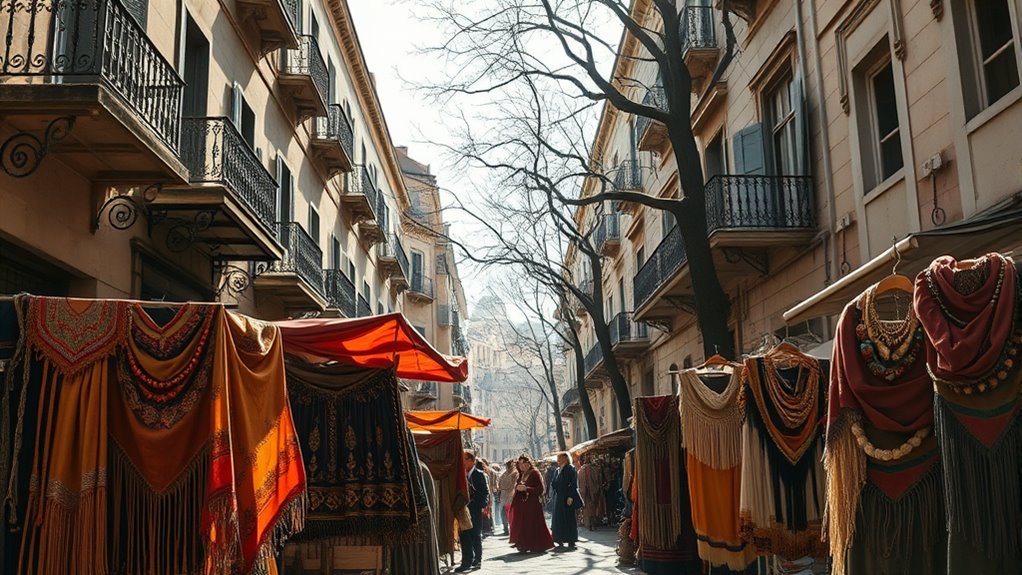
Have you ever wondered where the boho style originated? It’s a fascinating journey that weaves through history, blending influences from various cultures and movements. To understand its roots, you need to look back to the early 20th century, when artists and writers began rejecting traditional societal norms in favor of more free-spirited, expressive lifestyles. This desire for individuality and artistic expression laid the groundwork for what would eventually become boho fashion and culture. The hippie movement of the 1960s and 70s played a pivotal role, championing peace, love, and a return to nature. Their eclectic, carefree style drew inspiration from various sources, emphasizing comfort, individuality, and a mix of vintage and ethnic elements. This movement popularized layered clothing, flowing fabrics, and a relaxed aesthetic that still influences boho today.
Boho style evolved from rebellious, free-spirited movements embracing individuality, vintage elements, and a relaxed, eclectic aesthetic.
However, the roots of boho go even deeper, connecting to the late 19th-century art nouveau movement. Art nouveau was all about embracing organic forms, intricate patterns, and a sense of fluidity. Its emphasis on craftsmanship, natural motifs, and decorative arts resonated with the boho ethos of creativity and non-conformity. Many boho elements, like ornate jewelry, embroidered textiles, and flowing silhouettes, can trace their origins to this artistic style. Both movements share a love for artistic expression rooted in nature and craftsmanship, which set the stage for the bohemian lifestyle.
Furthermore, the cultural influences that shaped boho aren’t limited to Europe. Romani culture, with its nomadic traditions and vibrant artistry, considerably contributed to the boho aesthetic. Romani communities brought a sense of wanderlust, free spirit, and colorful craftsmanship that became integral to boho fashion. Their handmade jewelry, embroidered garments, and layered textiles exemplify the eclectic, worldly vibe that defines boho style. The nomadic lifestyle also echoes the boho value of freedom and non-materialism, emphasizing an authentic, unconventional way of living.
In essence, boho’s origins are a tapestry woven from the rebellious spirit of the hippie movement, the artistic innovation of art nouveau, and the nomadic traditions of Romani culture. It’s a style born from a desire to break free from societal constraints, celebrate creativity, and embrace a diverse, inclusive worldview. When you wear boho, you’re participating in this rich history—expressing individuality, appreciating craftsmanship, and honoring a legacy of freedom and artistic exploration.
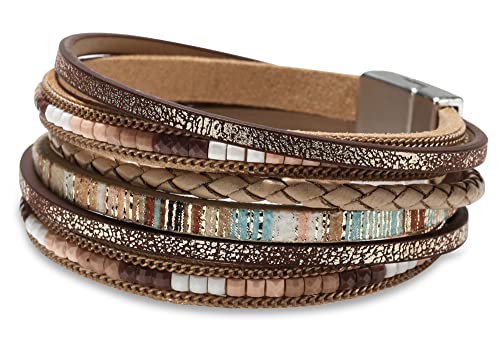
Fesciory Leather Wrap Bracelets for Women, Boho Leopard Multi-Layer Crystal Beads Cuff Bracelet Jewelry (Boho Braid(Brown))
【UNIQUE DESIGN】 This women leather bracelet features multilayer Leopard print leather cord and combination with beads. It is…
As an affiliate, we earn on qualifying purchases.
As an affiliate, we earn on qualifying purchases.
Frequently Asked Questions
How Did Boho Fashion Influence Modern Interior Design?
Boho fashion influences your modern interior design by encouraging vintage aesthetics and eclectic decor. You’re likely to incorporate bold patterns, earthy tones, and mixed textures, creating a relaxed, worldly vibe. This style invites you to blend antique pieces with contemporary items, fostering a personalized, cozy space. By embracing boho’s free-spirited essence, you craft an environment that feels vibrant, unique, and effortlessly stylish.
Are There Specific Regions in France Linked to Boho Origins?
You’ll find the Provençal regions in France are closely linked to boho origins, like the roots of a mighty oak spreading wide. Gypsy communities, especially in Provence, contributed markedly to boho’s vibrant, eclectic style. These areas became melting pots of Romani culture, inspiring the free-spirited aesthetic that still influences boho fashion and interior design today. Their rich traditions continue to echo through France’s picturesque Provençal landscapes.
What Role Did Romani Music Play in Shaping Boho Culture?
Romani music, especially its lively Romani melodies, played a crucial role in shaping boho culture by infusing it with Gypsy influence. You can hear this in the vibrant rhythms and expressive melodies that inspire boho fashion, art, and lifestyle. The Gypsy influence brought a sense of freedom, wanderlust, and individuality, which resonates deeply within boho aesthetics. This musical heritage continues to inspire your appreciation for eclectic, free-spirited styles.
How Did the French Revolution Impact Boho Artistic Expression?
Imagine walking through a Parisian alley after the French Revolution, where revolutionary art and political symbolism flourish. You see artists channeling upheaval into their work, breaking away from tradition. The revolution deeply impacted boho artistic expression by inspiring a free-spirited, rebellious style that embraced unconventional materials and themes. It encouraged artists to challenge norms, infusing boho culture with a sense of activism and individuality rooted in revolutionary ideals.
Is Boho Style Connected to Any Particular Political Movements?
You’ll find that boho style is closely linked to counterculture movements and political activism. It embodies a free-spirited, non-conformist attitude that challenges mainstream norms. By embracing eclectic patterns, natural fabrics, and vintage pieces, people express their support for social change and individuality. This style often reflects a desire for peace, equality, and environmental consciousness, making it a visual statement of your involvement in broader political and cultural conversations.

Mexican Spanish Embroidered: Looking Flower Pattern
As an affiliate, we earn on qualifying purchases.
As an affiliate, we earn on qualifying purchases.
Conclusion
As you step into the world of Boho, you’re drawn into a tapestry woven with the vibrant colors of Romani caravans and the rebellious spirit of the French Revolution. Imagine flowing fabrics dancing in the breeze, layered jewelry catching the sunlight, and a sense of freedom that whispers stories of history and wanderers. This style isn’t just fashion; it’s a living, breathing homage to centuries of movement, revolution, and soulful expression.

Women Boho Wildflowers Cottagecore Shirt Vintage Butterfly Floral Botanical Graphic Tees Garden Lover Tops (Sand, L)
MATERIAL: Cotton blend, soft and comfortable.
As an affiliate, we earn on qualifying purchases.
As an affiliate, we earn on qualifying purchases.

EAWIN Roman Emperor Crown Laurel Wreath Gold Leaf Headband Toga Costume Accessory Caesar Circlet Wedding Headpiece
Gold Leaf Julius Caesar Circlet Top off your toga costume will make you feel like a Greek /…
As an affiliate, we earn on qualifying purchases.
As an affiliate, we earn on qualifying purchases.