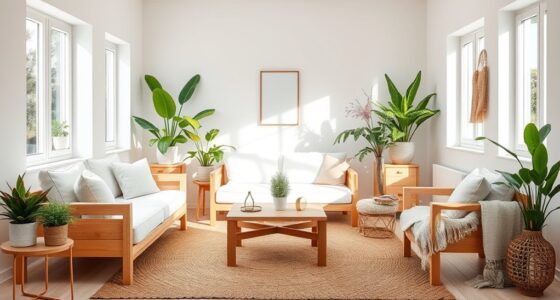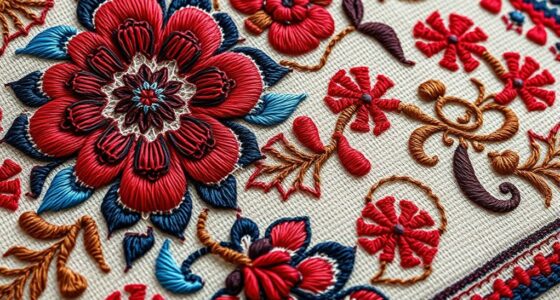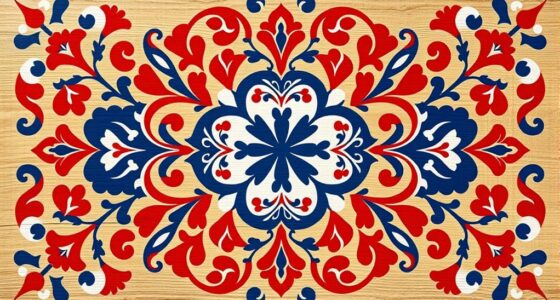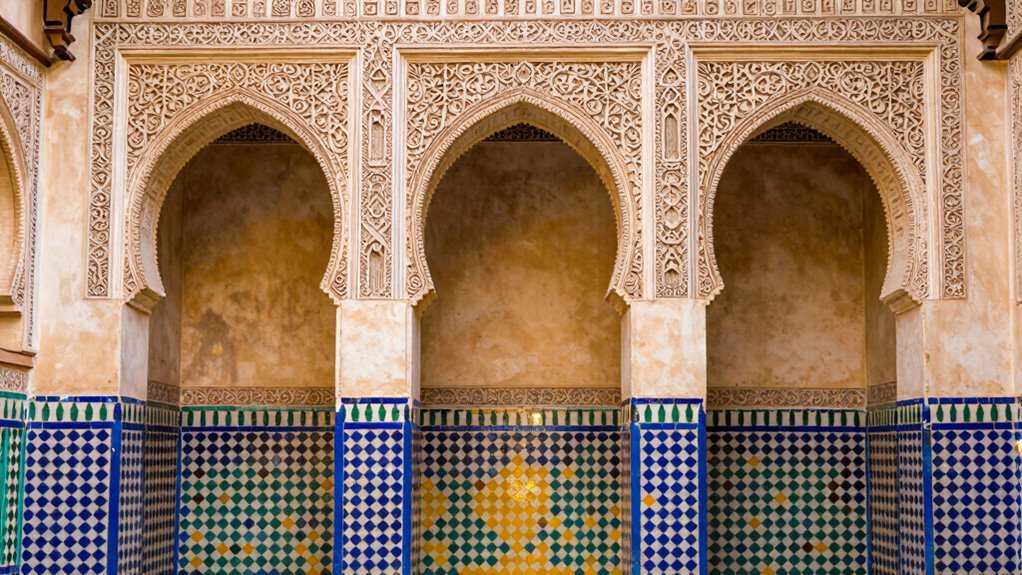

Moroccan design features distinctive arches—horseshoe or pointed shapes—that symbolize protection and spiritual connection. Zellige tiles are handcrafted with vibrant colors and intricate geometric patterns, adding warmth and texture inspired by desert landscapes. The color palette often includes deep reds, blues, greens, and yellows, each carrying cultural meanings like passion, protection, and joy. These elements create a warm, inviting atmosphere full of history and artistry—exploring them further reveals the rich stories behind Moroccan decor.
Listen free for 30 days with Audible
Thousands of audiobooks and originals — cancel anytime.
As an affiliate, we earn on qualifying purchases.
Key Takeaways
- Moroccan arches feature distinctive horseshoe or pointed shapes symbolizing protection, spiritual connection, and cultural identity.
- Zellige tiles are handcrafted from clay, showcasing intricate geometric patterns and vibrant colors inspired by desert landscapes.
- Warm color palettes, including reds, blues, and earthy tones, evoke desert landscapes, spiritual symbolism, and lively atmospheres.
- Arches and zellige work together to create inviting, culturally rich spaces with a sense of harmony, openness, and craftsmanship.
- Colors and design motifs reflect Morocco’s history, artisanship, and spiritual traditions, reinforcing cultural storytelling through visual elements.
As an affiliate, we earn on qualifying purchases.
What Are the Signature Features of Moroccan Architectural Arches?
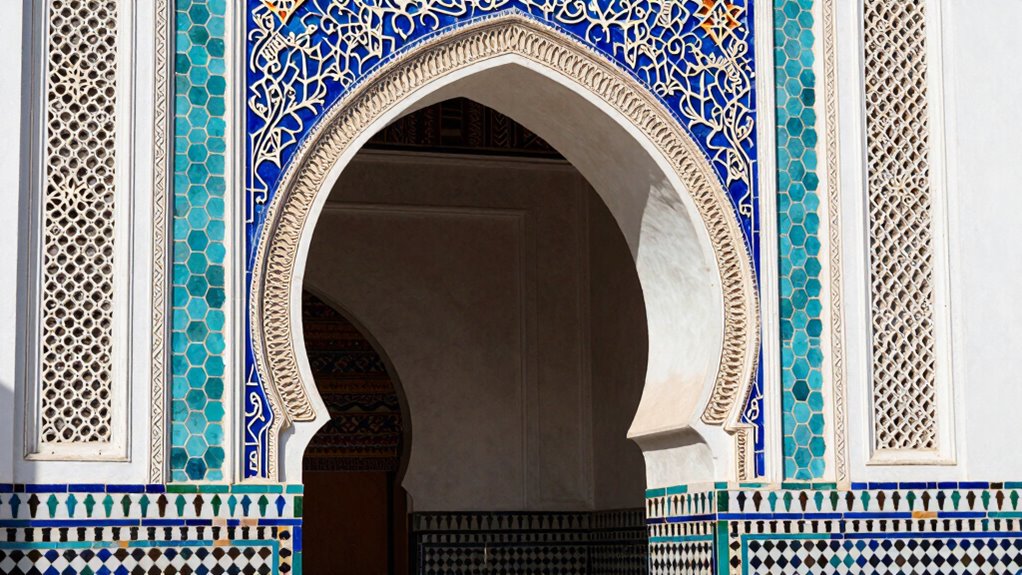
Moroccan architectural arches stand out for their distinctive shapes and intricate details. You’ll notice how they serve as key examples of architectural ornamentation, combining beauty with purpose. These arches often feature horseshoe or pointed designs, emphasizing their elegant curves. The emphasis on structural symmetry guarantees that each arch balances perfectly within the overall design, creating harmony and stability. Decorative elements like carved stucco or tilework highlight the craftsmanship behind the arches, making them focal points in Moroccan architecture. Their unique shapes and detailed ornamentation reflect cultural influences and artistic traditions. As you observe these arches, you see how they blend form and function, serving as both structural supports and artistic statements that define Moroccan style. Additionally, the use of colorful tiles and intricate patterns further enhances their visual appeal, emphasizing the vibrant aesthetic characteristic of Moroccan design. The symbolic significance of these arches often relates to spiritual and cultural meanings, adding depth to their architectural role. The cultural heritage embedded in the design elements underscores their importance beyond mere aesthetics. Furthermore, the attention to architectural symbolism reveals how deeply intertwined Moroccan architecture is with its cultural identity. Moreover, the craftsmanship involved demonstrates the importance of attention to detail in preserving traditional artistic techniques.
How Is Zellige Tile Work Made and What Makes It Unique?

Zellige tile work is crafted through a meticulous process that combines traditional techniques with artistic skill. You start with raw clay, which is kneaded and shaped by hand, reflecting traditional tile crafting methods. The tiles are then fired in a kiln to harden before being glazed using glazed ceramic techniques. Unlike mass-produced tiles, each piece is unique, showcasing slight variations that add character. Once glazed, the tiles are cut into precise shapes, often irregular, to fit intricate patterns. The craftsmanship requires patience and expertise, ensuring durability and a vibrant finish. What makes zellige truly special is its handcrafted nature, creating a mosaic surface with depth, texture, and a luminous quality that machine-made tiles can’t replicate. Traditional craftsmanship plays a crucial role in maintaining the authenticity and uniqueness of each tile, emphasizing the cultural heritage behind the art.
What Are the Most Common Colors in Moroccan Interiors and Their Meanings?
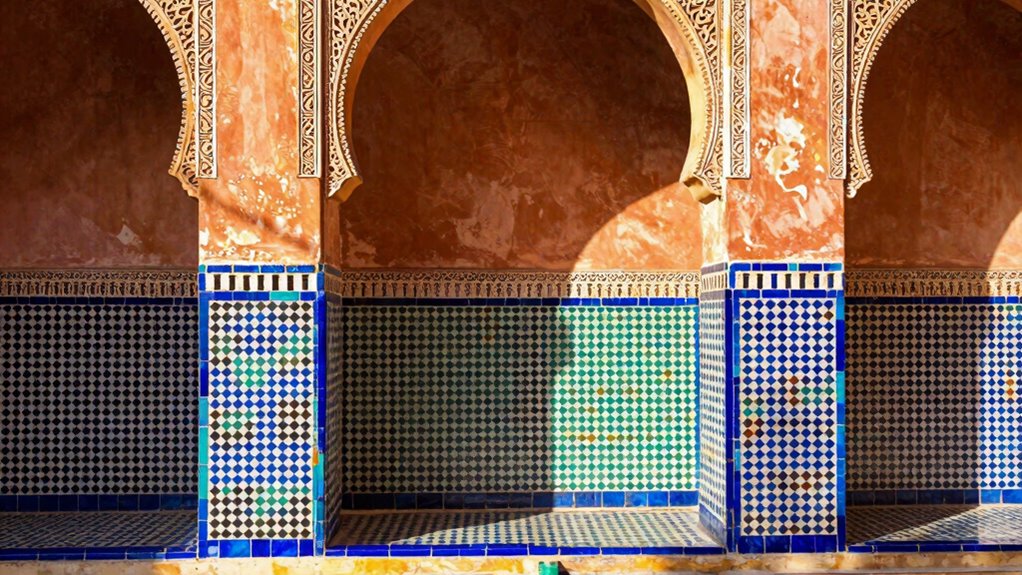
Have you ever noticed how certain colors instantly evoke a sense of warmth, spirituality, or liveliness in Moroccan interiors? These colors aren’t random—they carry meaning rooted in tradition and modern design. For example:
- Deep reds and terracottas symbolize passion and vitality, often seen in traditional textiles.
- Vibrant blues represent spirituality and protection, inspired by the Mediterranean and Islamic influences.
- Earthy greens evoke nature and growth, blending seamlessly into contemporary color schemes.
- Bright yellows and oranges embody joy and energy, brightening spaces with warmth and optimism.
These colors are carefully chosen, whether in traditional textiles or modern decor, creating a rich, layered atmosphere that’s both timeless and current. Additionally, sustainable textile practices can incorporate eco-friendly dyes that reduce pollution and support environmentally conscious design, reflecting a growing emphasis on sustainable materials and their environmental benefits in Moroccan interior decor. Incorporating color psychology principles can enhance the emotional impact of these hues, making spaces more inviting and balanced. Moreover, understanding cultural symbolism behind the colors can deepen the authenticity and emotional resonance of Moroccan-inspired interiors.
How Do Moroccan Arches and Tiles Create a Unique Interior Atmosphere?
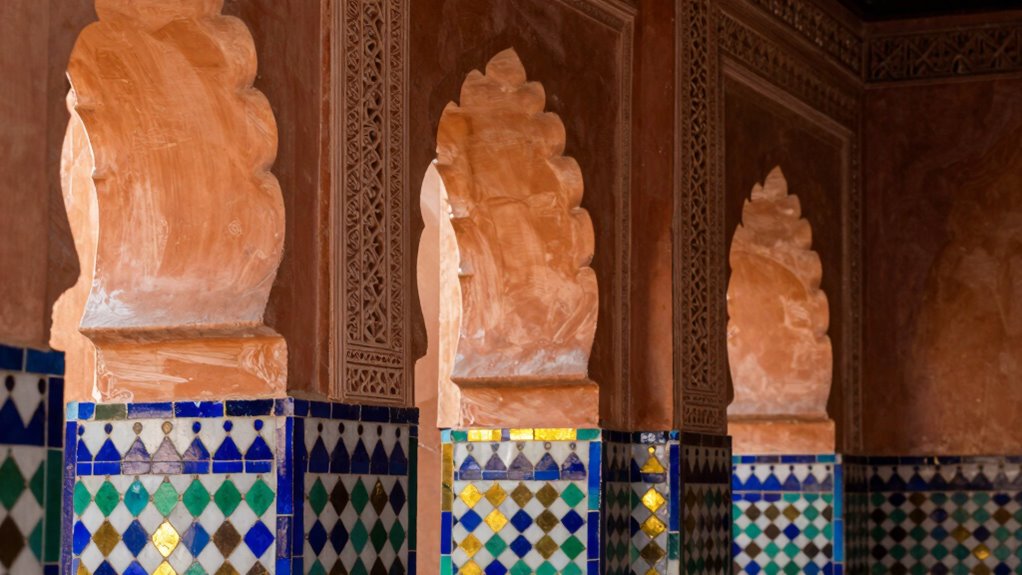
Archways and intricate tilework are the defining features that instantly transform an interior into an enchanting space. Their Mediterranean influence creates a sense of timeless elegance, blending history with artistry. The arches evoke a feeling of openness and flow, inviting you to explore the space without distraction. Meanwhile, the zellige tiles, with their geometric patterns and vibrant colors, reflect desert inspiration—drawing from the natural hues of sand, sun, and earth. Together, these elements craft a warm, inviting atmosphere that feels both exotic and cozy. The combination of arches and tiles not only emphasizes craftsmanship but also enhances the overall mood, making your interior feel like a serene desert oasis infused with cultural richness.
Tips for Incorporating Moroccan Design Elements Into Your Home?
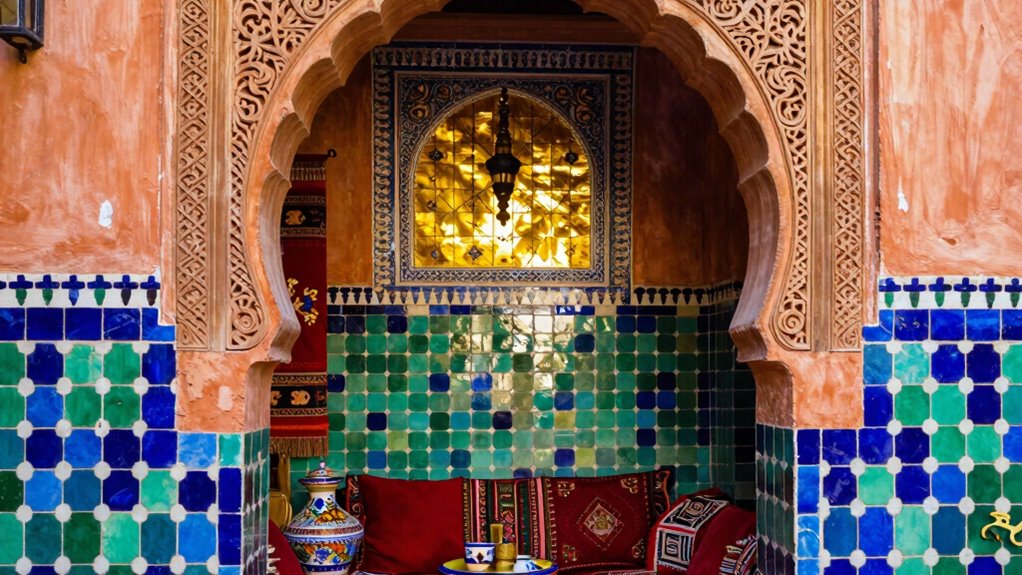
To infuse your home with Moroccan charm, start by incorporating key design elements like vibrant textiles, intricate patterns, and warm color palettes. Embrace traditional craftsmanship by selecting handcrafted items that showcase authentic techniques, adding depth and character. To blend tradition with modern adaptations, consider these tips:
- Use bold, patterned textiles like rugs and cushions to create visual interest.
- Incorporate zellige tiles in kitchens or bathrooms for a striking, handcrafted surface.
- Choose arches and niches to add architectural authenticity.
- Mix vibrant colors with neutral backgrounds for a balanced, inviting space.
- Pay attention to cabling solutions to ensure your lighting and fixtures complement the aesthetic seamlessly. Additionally, integrating traditional Moroccan design elements can elevate the overall ambiance and authenticity of your space.
- Incorporate Moroccan architectural features such as ornate doorways and carved wooden screens to further enhance the cultural atmosphere.
- Consider the use of Moroccan decorative motifs to add intricate detail and visual interest throughout your decor. Exploring authentic craftsmanship can also help you select genuine pieces that truly reflect Moroccan artistry.
How Do Color Palettes Influence the Mood of Moroccan Spaces?
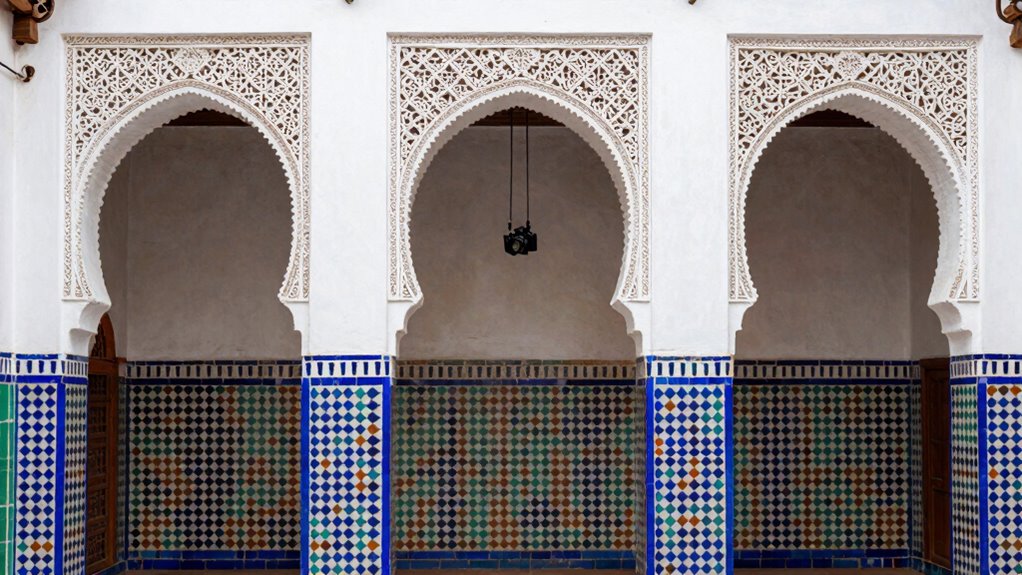
Warm tones in Moroccan spaces create a sense of comfort and relaxation that makes you feel at home. Bright colors, on the other hand, energize the room and lift your spirits. Understanding how these palettes influence mood helps you design spaces that suit your desired atmosphere. Incorporating color psychology principles can further enhance the emotional impact of your design choices. Additionally, selecting colors based on their emotional associations can deepen these effects and support positive mental health in inhabitants. Recognizing the spiritual significance of certain colors in Moroccan culture can also add meaningful depth to your interior design. Being aware of color symbolism helps in choosing the most appropriate hues for different spaces.
Warm Tones Enhance Comfort
Color palettes play a essential role in shaping the mood of Moroccan spaces, and warm tones are especially effective at creating a sense of comfort and inviting warmth. These hues evoke Mediterranean warmth and Desert aesthetics, making you feel instantly at home. Consider these aspects:
- Rich terracotta and ochre hues mimic desert landscapes, grounding your space.
- Deep reds and oranges foster a cozy, intimate atmosphere.
- Golden yellows reflect sunlight, adding brightness and cheerfulness.
- Warm browns and beiges provide a neutral backdrop that enhances other accents.
- Incorporating color harmony principles can help balance these warm tones for a more cohesive design.
- Understanding color psychology can further enhance the emotional impact of your chosen palette, ensuring your space feels both welcoming and harmonious.
Bright Colors Stimulate Energy
Vibrant hues energize Moroccan spaces, transforming their atmosphere into lively, stimulating environments. Bright colors like reds, yellows, and blues add vibrant accents that instantly lift the mood. These bold palettes create energetic spaces where you feel more alert and inspired. Using vivid colors intentionally influences how you experience a room, making it feel more dynamic and welcoming. Whether in textiles, ceramics, or wall paint, these lively tones encourage movement and conversation. They evoke passion and joy, making your space feel alive. By incorporating these vibrant accents thoughtfully, you invite an energetic vibe that invigorates daily life. Color Palettes play a crucial role in setting the overall ambiance and emotional impact of a space. Incorporating design elements like arches and zellige further enhances this lively atmosphere by adding texture and visual interest.
What Are the Cultural Stories Behind Moroccan Design Elements?
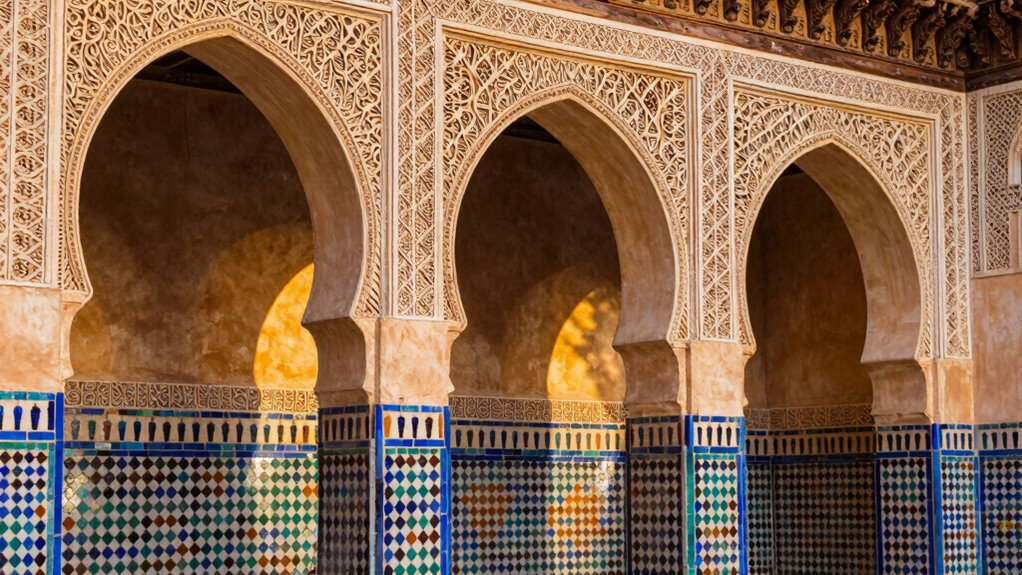
You can see that Moroccan design elements carry rich historical significance, telling stories of the country’s diverse past. Each pattern and motif often symbolizes deeper meanings tied to cultural identity and spiritual beliefs. Understanding these stories helps you appreciate the true depth behind Moroccan artistry.
Rich Historical Significance
Moroccan design elements are deeply rooted in the country’s rich history and cultural narratives, reflecting centuries of tradition and influence. These elements carry stories of medieval craftsmanship, where artisans perfected intricate techniques, and desert inspiration, echoing the landscapes that shaped Morocco’s identity. To understand their significance, consider these points:
- The arches symbolize gateways to spiritual and social spaces.
- Zellige tiles showcase medieval craftsmanship through their precise geometric patterns.
- Colors like deep reds and vibrant blues echo desert landscapes and historic trade routes.
- Design motifs often tell stories of cultural exchanges, blending Arab, Berber, and Andalusian influences.
Each element embodies a historical narrative, connecting Morocco’s past to its enduring artistic legacy.
Symbolism and Identity
Many Moroccan design elements are rich with symbolism that reflects the country’s cultural identity and spiritual beliefs. These symbolism meanings often embody protection, harmony, and spiritual connection. For example, arches symbolize gateways to sacred spaces, representing spiritual passage and openness. Zellige tiles are more than decorative; they embody cultural symbolism of unity and infinity through intricate geometric patterns. Bright colors like blue and green carry specific meanings—blue symbolizes protection and spirituality, while green reflects fertility and paradise. These elements serve as visual stories that connect you to Morocco’s history and faith. By understanding the cultural symbolism behind these design features, you gain deeper insight into Morocco’s identity—an ongoing dialogue between tradition, spirituality, and beauty expressed through every detail.
Frequently Asked Questions
How Do Moroccan Design Elements Influence Modern Architectural Trends Worldwide?
Moroccan design elements shape modern architecture worldwide by inspiring global influence and contemporary adaptations. You’ll notice arches, intricate Zellige tiles, and vibrant colors in trendy designs, adding a touch of exotic elegance. These elements encourage creative reinterpretations, blending traditional craftsmanship with modern aesthetics. As you explore new buildings or renovations, you’ll see how Moroccan styles seamlessly incorporate into contemporary architecture, enriching spaces with cultural depth and visual appeal.
What Are the Common Materials Used Alongside Arches and Zellige in Moroccan Decor?
You’ll often find traditional plaster framing the intricate zellige tiles, creating a harmonious blend of textures. Ornate lanterns hang nearby, casting warm, flickering light that highlights the beauty of these materials. Together, these elements evoke a sense of timeless elegance, contrasting the smooth plaster with the vibrant, glazed tiles. This combination brings warmth and authenticity to Moroccan decor, making every space feel both historic and inviting.
How Do Moroccan Design Elements Vary Between Different Regions Within Morocco?
You’ll notice regional aesthetics markedly influence Moroccan design, with craftsmanship variations shaping unique styles. In Marrakech, vibrant colors and intricate tile work highlight urban elegance, while in the Atlas Mountains, more rustic, natural materials emphasize simplicity. Coastal areas incorporate seaside hues and maritime motifs, contrasting with desert regions’ earthy tones. These regional differences reflect local culture and craftsmanship, making each Moroccan space distinct and beautifully diverse.
Can Moroccan Arches and Tiles Be Adapted for Outdoor Use?
Yes, Moroccan arches and tiles can be adapted for outdoor use. To guarantee outdoor durability, you should choose weather-resistant materials and apply proper sealants to protect against moisture and temperature changes. Using glazed or treated tiles helps enhance weather resistance, making them suitable for patios, gardens, or exterior walls. Proper installation and maintenance will keep these beautiful elements vibrant and intact even in outdoor settings.
What Maintenance Practices Are Recommended for Preserving Moroccan Zellige and Painted Finishes?
Think of your Moroccan zellige and painted finishes as delicate treasures that need care. Regular cleaning techniques like gentle dusting and mild soap prevent buildup, while sealing methods safeguard against moisture and stains. Re-seal periodically to maintain their vibrancy and durability. By respecting these practices, you preserve the intricate beauty and cultural richness of your Moroccan design, allowing it to shine brightly for years to come.
Conclusion
By embracing Moroccan arches, zellige, and vibrant colors, you craft spaces that echo the soul of ancient souks and palaces. These elements invite you to step into a world where artistry and history intertwine, transforming your home into a vibrant, soulful retreat. Just as Marrakech’s markets tell stories through their intricate details, your space can become a mosaic of culture, tradition, and personal expression—turning every room into a timeless masterpiece.
NFL season / tailgating Picks
team gear
As an affiliate, we earn on qualifying purchases.